Canada Macro Daily(Beta Mode)
Tariffs Lift USD/CAD Ahead of BoC Survey
Market Snapshot
| Asset | Level | Change |
|---|---|---|
| S&P/TSX | 35,369.10 | +0.50% |
| USD/CAD | 1.41 | +0.12% |
| EUR/CAD | 1.61 | +0.26% |
| WTI Crude | 83.68 | -6.30% |
| Natural Gas | 2.80 | -2.51% |
| Gold | 4,100.40 | +0.81% |
| Brent Crude | 89.73 | -7.28% |
| Bitcoin | 65,133.71 | -0.32% |
| Canada 2Y Govt Yield | 2.27% | +1.00% |
| Canada 10Y Govt Yield | 3.42% | -3.43% |
Prior Economic Events
| Data | Prior | Cons | Actual |
|---|---|---|---|
| No events available | |||
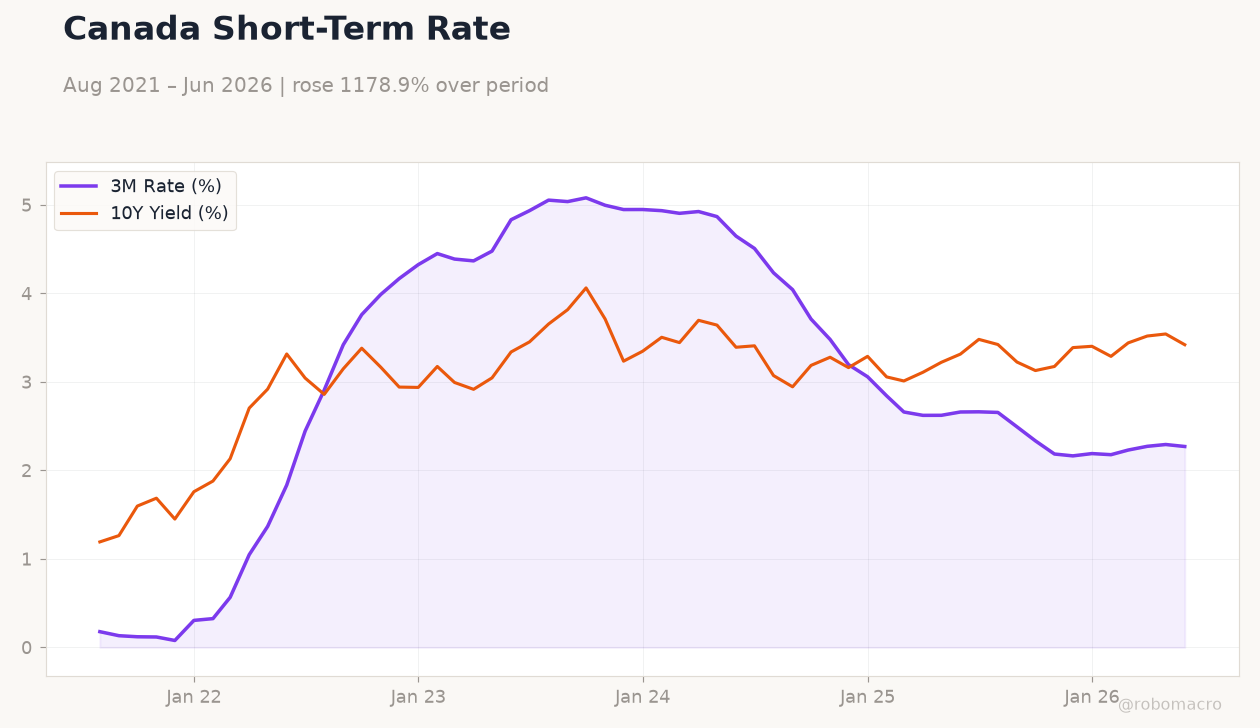
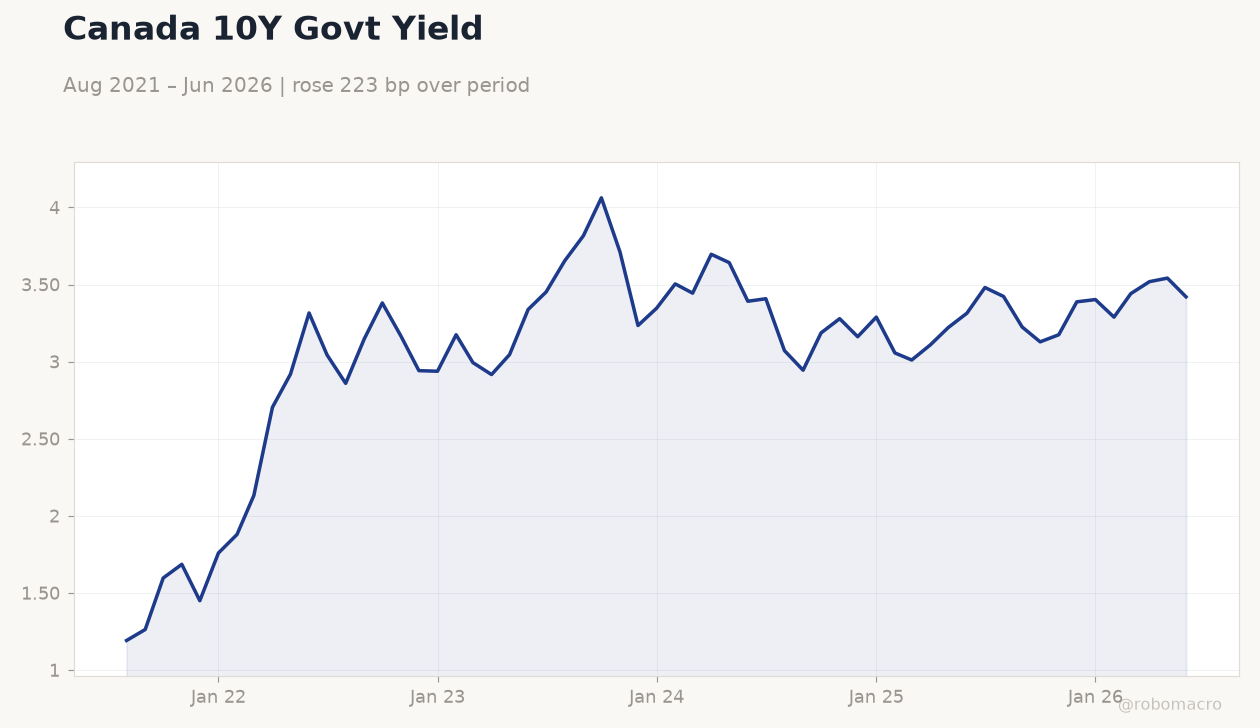 Canada 10Y Govt Yield | Type: macro_line | 10Y Yield (%): 3.42 (2026-06-01) | Range: 1.192–4.062 | Trend(6pt): 1.192,3.381,3.234,3.056,3.518,3.42
Today's Economic Events
| Data | Prior | Cons | Time |
|---|---|---|---|
| BoC Market Participants Survey | - | - | 06:30 |
| Friday (2026-07-31) | |||
| GDP Month-over-Month | 0.50 | 0.20 | 04:30 |
| GDP Month-over-Month Prel | 0.10 | - | 04:30 |
- TSX rises 0.50% while USD/CAD edges up 0.12% to 1.41 amid renewed US tariff threats.
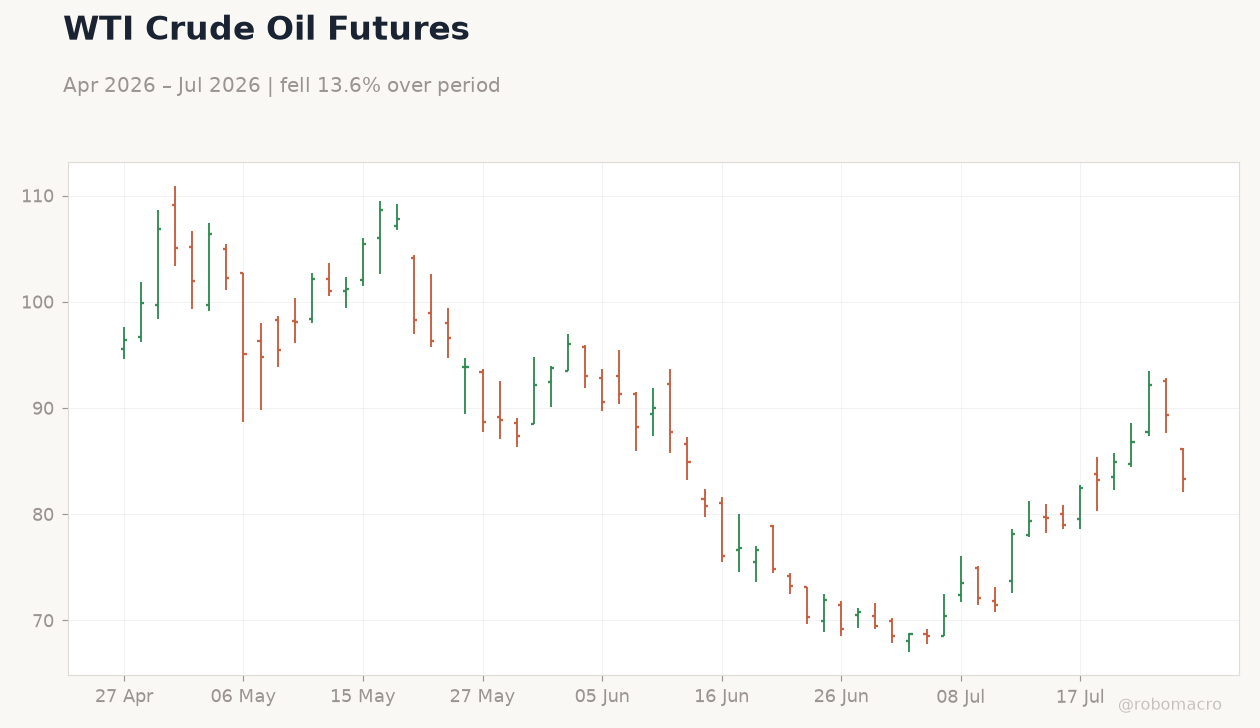
- WTI crude falls 6.30% to $83.68 as geopolitical easing weighs on energy prices.
- Canada 10-year yield drops 3.43% to 3.42% as markets price resilient domestic data.
Yesterday's Recap
Canadian markets showed modest gains despite external tariff noise. The S&P/TSX climbed 0.50% to 35,369.10, supported by financials and materials. USD/CAD advanced 0.12% to 1.41 while EUR/CAD gained 0.26% to 1.61.
Canada 2-year yields rose 1.00% to 2.27% and the 10-year yield fell 3.43% to 3.42%, reflecting a flattening curve. WTI crude dropped 6.30% to $83.68 and Brent fell 7.28% to $89.73 on softer global demand signals. Natural gas declined 2.51% to $2.80.
Gold advanced 0.81% to 4,100.40 as a hedge against trade uncertainty. No major Canadian data prints occurred on 26 July, leaving market moves driven by US tariff headlines and cross-border flows. Institutional activity around Royal Bank of Canada shares highlighted ongoing investor focus on domestic banks.
The Day Ahead
The BoC Market Participants Survey at 06:30 ET will provide fresh insight into rate expectations. Markets will parse the results for clues on the timing of any further easing. Attention then shifts to Friday’s GDP release, where consensus calls for a 0.2% month-over-month gain after a 0.5% prior print.
A softer figure could reinforce bets on additional Bank of Canada accommodation. No other high-impact Canadian releases are scheduled through mid-week. Energy traders will monitor US inventory data for further oil-price direction.
CAD crosses remain sensitive to any escalation in US-Canada tariff rhetoric. Housing starts data already showed modest support from lower borrowing costs.
Other Economic Notes
Canada’s economy continues to demonstrate resilience even as US tariffs become more targeted. Retail sales and housing data have held up better than expected, supporting consumer spending. Institutional flows into Royal Bank of Canada shares signal confidence in domestic banks despite external pressures.
Broader themes include the drag from lower oil prices on the current account and the limited insulation Canadian policy has from Fed actions. <i>↓ p.2</i>