Canada Macro Daily(Beta Mode)
TSX Rises as Oil Slides Ahead of Trade Data
Market Snapshot
| Asset | Level | Change |
|---|---|---|
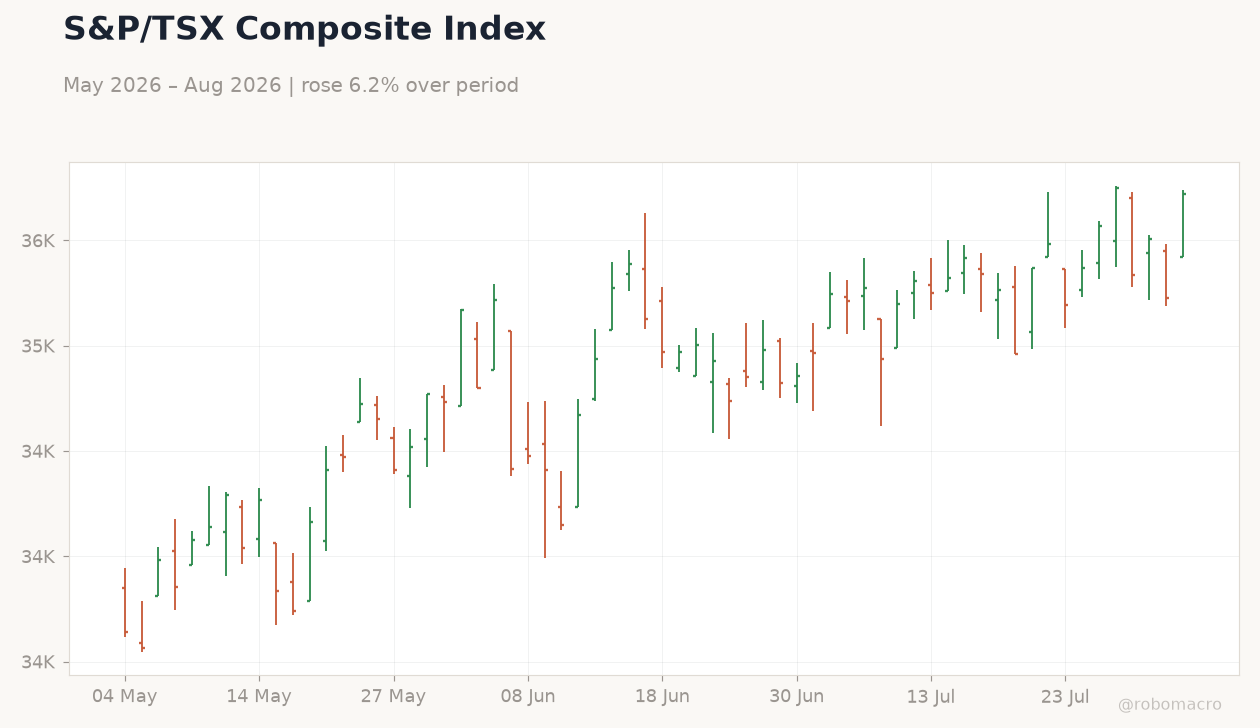
| S&P/TSX | 35,707.83 | +1.37% |
| USD/CAD | 1.40 | +0.01% |
| EUR/CAD | 1.62 | +0.26% |
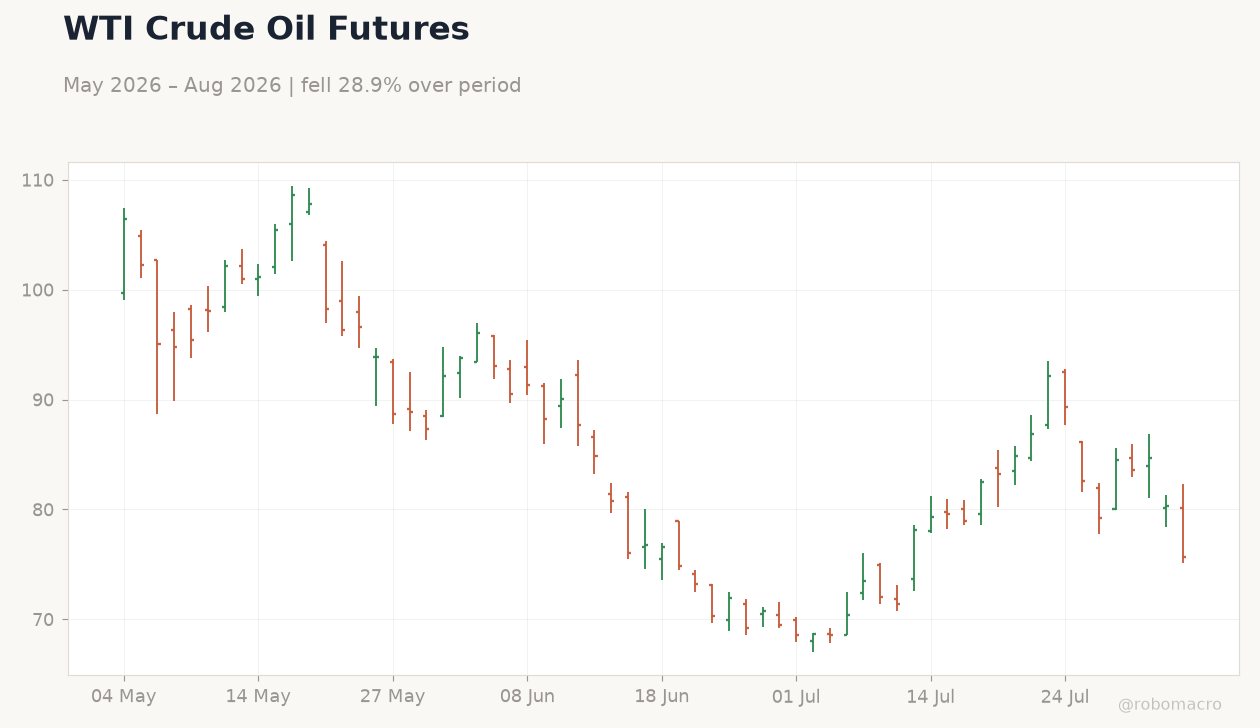
| WTI Crude | 75.64 | -5.85% |
| Natural Gas | 2.66 | -4.24% |
| Gold | 4,144.60 | +2.75% |
| Brent Crude | 79.09 | -5.59% |
| Bitcoin | 63,916.66 | +0.72% |
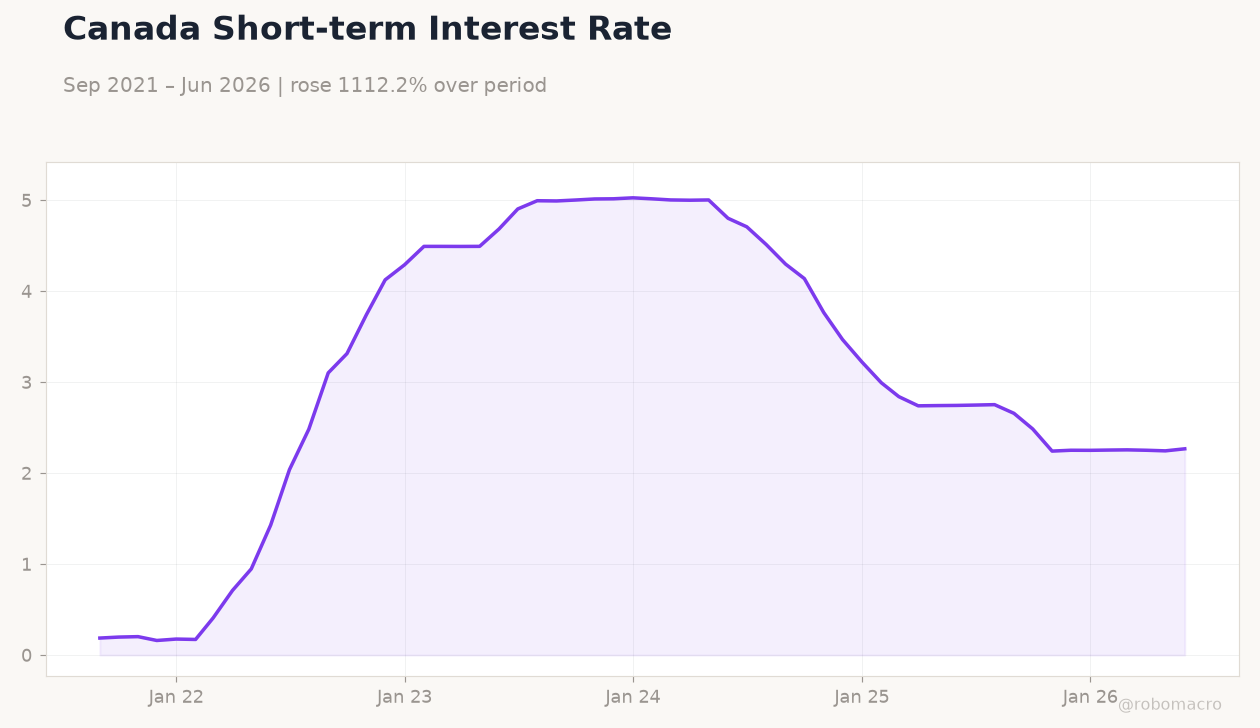
| Canada 2Y Govt Yield | 2.27% | +1.00% |
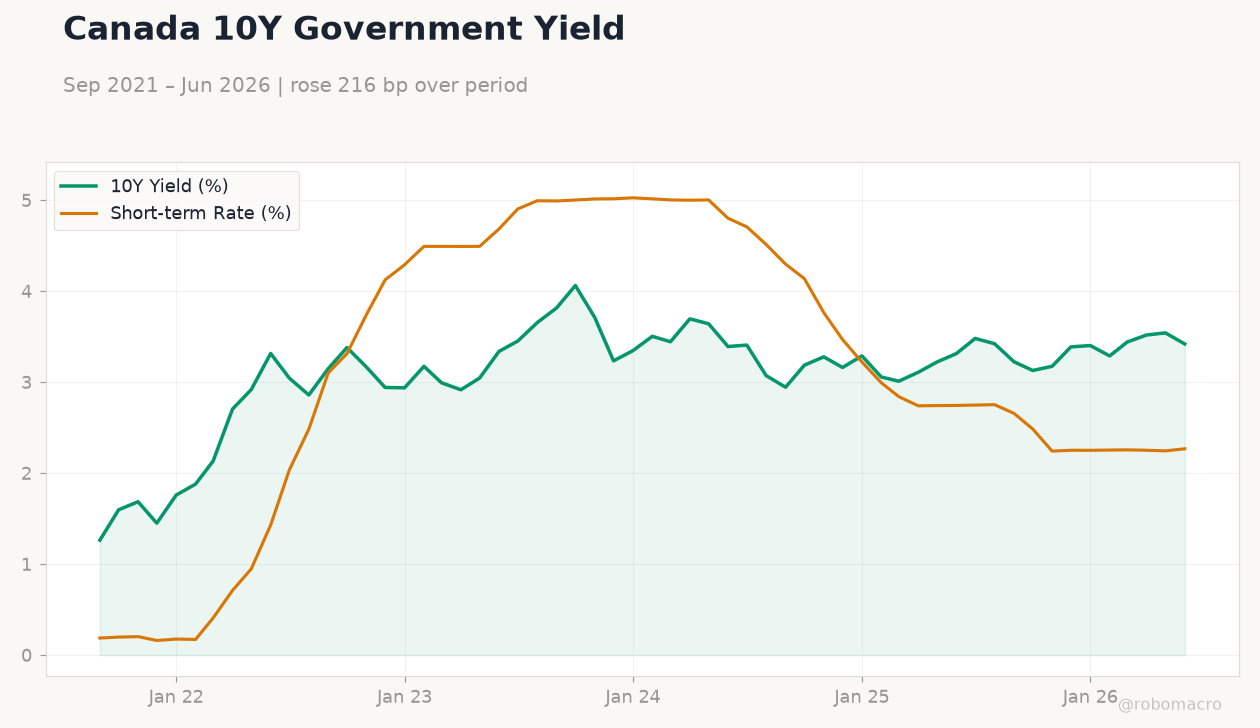
| Canada 10Y Govt Yield | 3.42% | -3.43% |
Prior Economic Events
| Data | Prior | Cons | Actual |
|---|---|---|---|
| No events available | |||
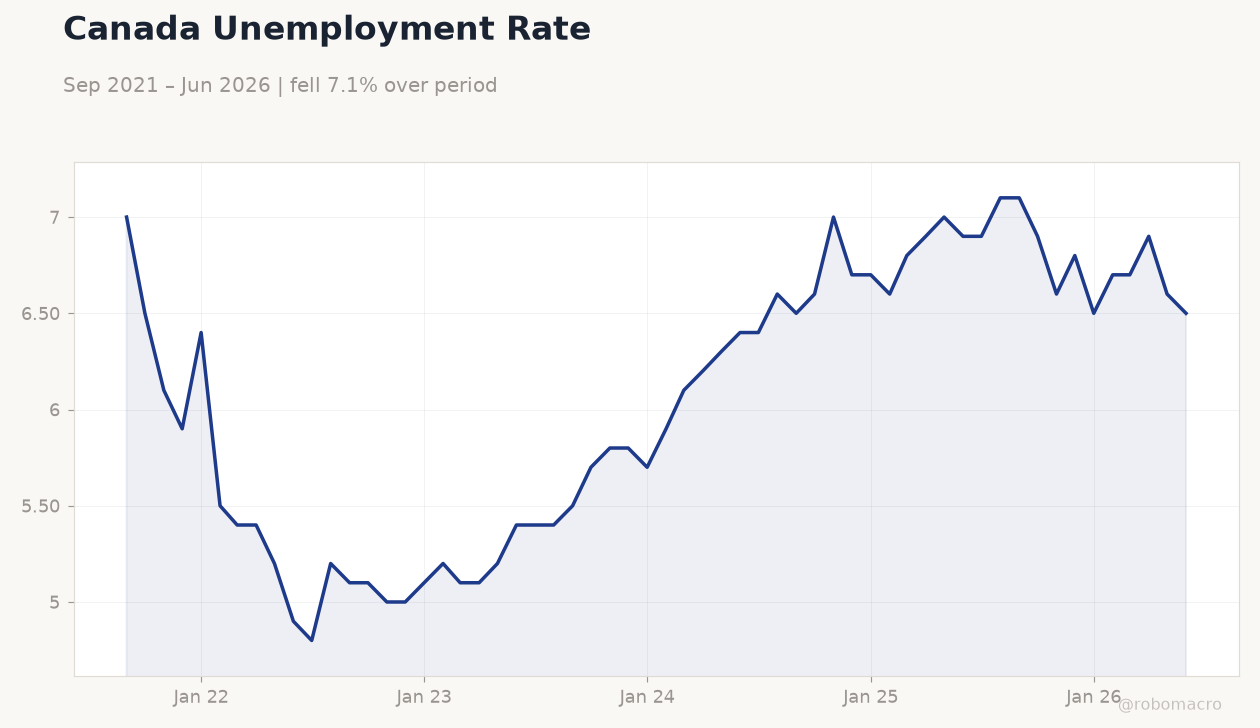 Canada Unemployment Rate | Type: macro_line | Unemployment Rate (%): 6.5 (2026-06-01) | Range: 4.8–7.1 | Trend(6pt): 7,5,5.7,6.8,6.6,6.5
Today's Economic Events
| Data | Prior | Cons | Time |
|---|---|---|---|
| Trade Balance | 4,240m | 3,000m | 04:30 |
| S&P Global Manufacturing PMI Index | - | 50.20 | 05:30 |
| Friday (2026-08-07) | |||
| Unemployment Rate | 6.50 | 6.50 | 04:30 |
| Employment Change | 18,200 | 15,000 | 04:30 |
| Full-Time Employment Change | 600 | - | 04:30 |
| Labor Force Participation | 65 | - | 04:30 |
| Part-Time Employment Change | 17,500 | - | 04:30 |
| Ivey PMI Seasonally Adjusted | 56.20 | 55.50 | 06:00 |
- Trade Balance and Manufacturing PMI due today with markets focused on export resilience
- S&P/TSX rises 1.37% while WTI Crude drops 5.85% on Hormuz reopening hopes
- Canada 10Y yield falls 3.43% to 3.42% as BoC policy rate holds at 2.27%
Yesterday's Recap
Canadian equity markets posted solid gains with the S&P/TSX closing at 35,707.83, up 1.37 percent, supported by strength in materials and financials. Energy names lagged as WTI Crude settled at 75.64 dollars per barrel, down 5.85 percent, and Brent Crude fell 5.59 percent to 79.09 dollars. The Canadian dollar was little changed against the US dollar at 1.40 while EUR/CAD rose 0.26 percent to 1.62.
Government bond yields showed divergence, with the 2-year yield edging up 1 basis point to 2.27 percent and the 10-year yield declining 3.43 percent to 3.42 percent. Natural gas prices dropped 4.24 percent to 2.66 dollars amid shifting weather forecasts. Gold advanced 2.75 percent to 4,144.60 dollars per ounce, providing a partial offset to energy weakness.
Bitcoin gained 0.72 percent to 63,916.66 dollars with limited spillover to broader risk assets.
The Day Ahead
Attention centers on the June Trade Balance release at 4:30 ET, where the surplus is expected to narrow to 3.0 billion dollars from 4.24 billion previously. The S&P Global Manufacturing PMI follows at 5:30 ET with consensus at 50.2, offering an early read on July factory conditions. Markets will assess whether export momentum can offset softening domestic demand signals.
Friday’s labour force report, featuring the unemployment rate and employment change, will provide the next high-impact labour market update. No Bank of Canada speakers are scheduled, leaving data and global oil dynamics to drive price action in CAD crosses and front-end yields.
Other Economic Notes
Canada’s energy sector faces pressure from the sharp drop in crude prices linked to potential Strait of Hormuz reopening, which could weigh on near-term fiscal revenues. Recent data showing Canadians spent 3.3 billion dollars less on US travel in 2025 highlights shifting consumption patterns that may support domestic tourism and services. Housing affordability concerns persist following earlier weak starts prints, keeping attention on mortgage rate sensitivity to any further BoC easing.
<i>↓ p.2</i>