Canada Macro Daily(Beta Mode)
Labor Data Looms as Trade Surplus Expands
Market Snapshot
| Asset | Level | Change |
|---|---|---|
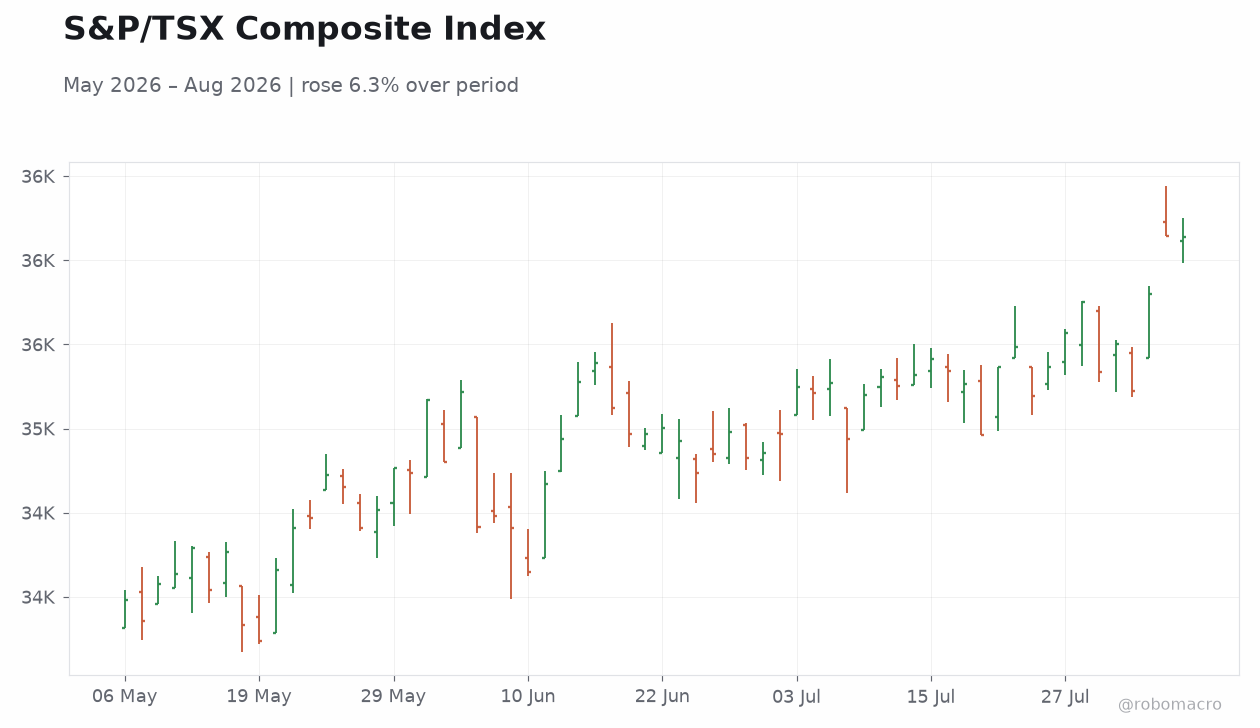
| S&P/TSX | 36,136.30 | -0.03% |
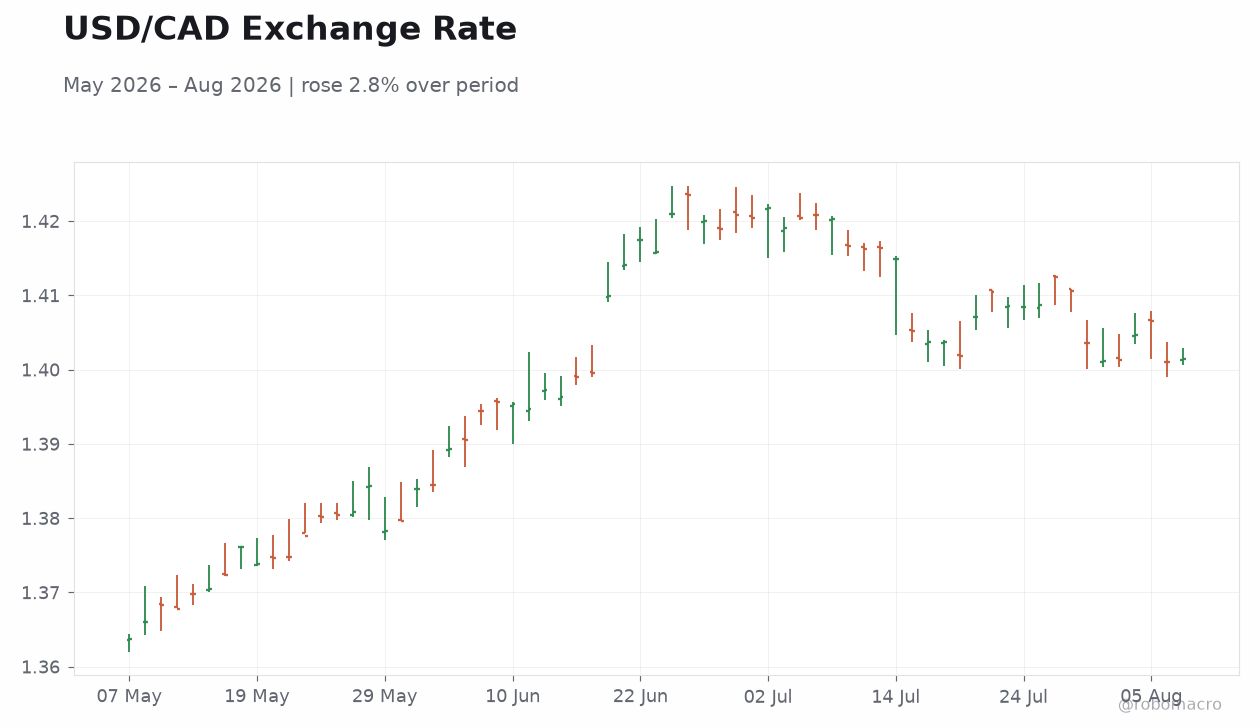
| USD/CAD | 1.40 | +0.04% |
| EUR/CAD | 1.62 | -0.19% |
| WTI Crude | 76.76 | -0.69% |
| Natural Gas | 2.64 | -0.08% |
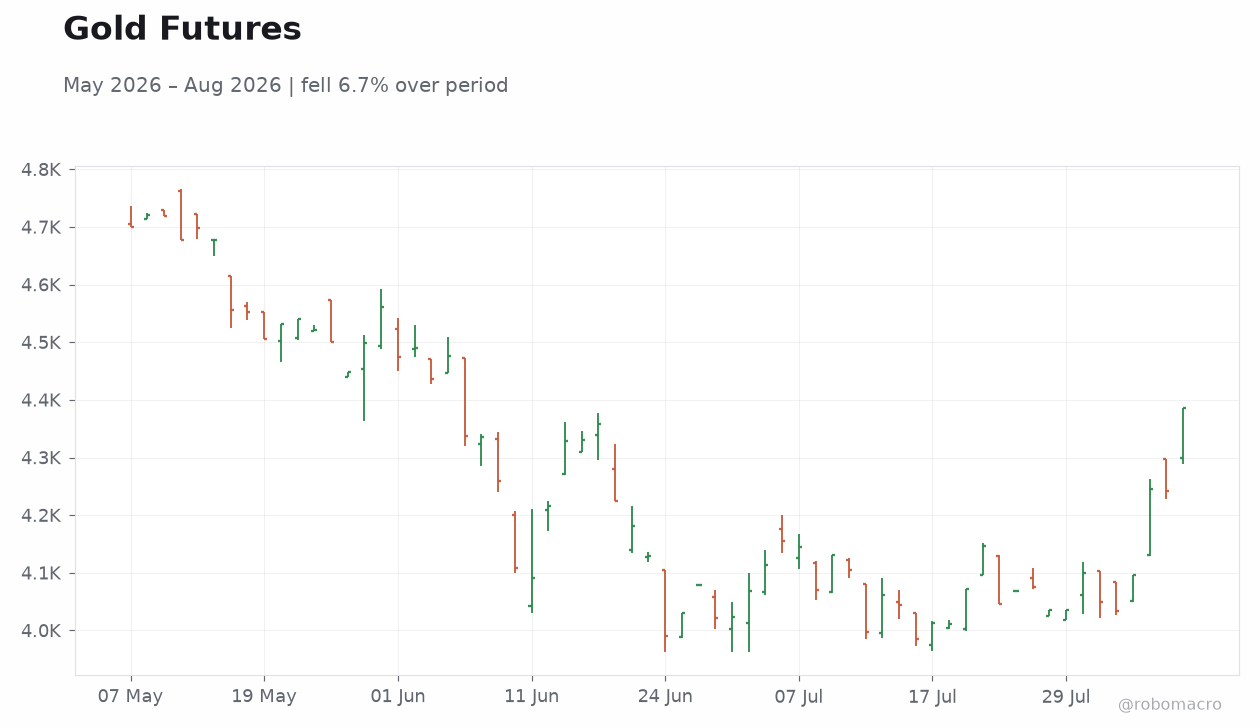
| Gold | 4,384.70 | +3.36% |
| Brent Crude | 81.83 | -0.80% |
| Bitcoin | 65,030.68 | +1.20% |
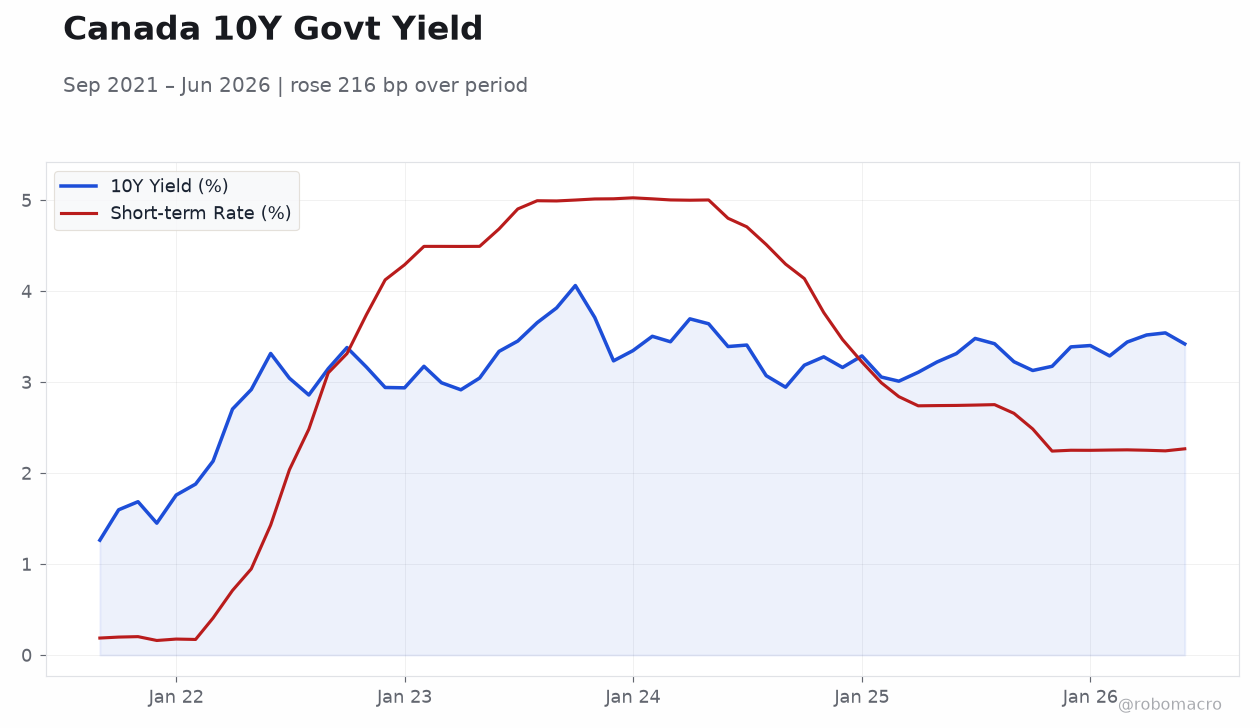
| Canada 2Y Govt Yield | 2.27% | +1.00% |
| Canada 10Y Govt Yield | 3.42% | -3.43% |
Prior Economic Events
| Data | Prior | Cons | Actual |
|---|---|---|---|
| Trade Balance | 3,700m | 3,000m | 3,860m |
| S&P Global Manufacturing PMI Index | 53 | 50.20 | 53.50 |
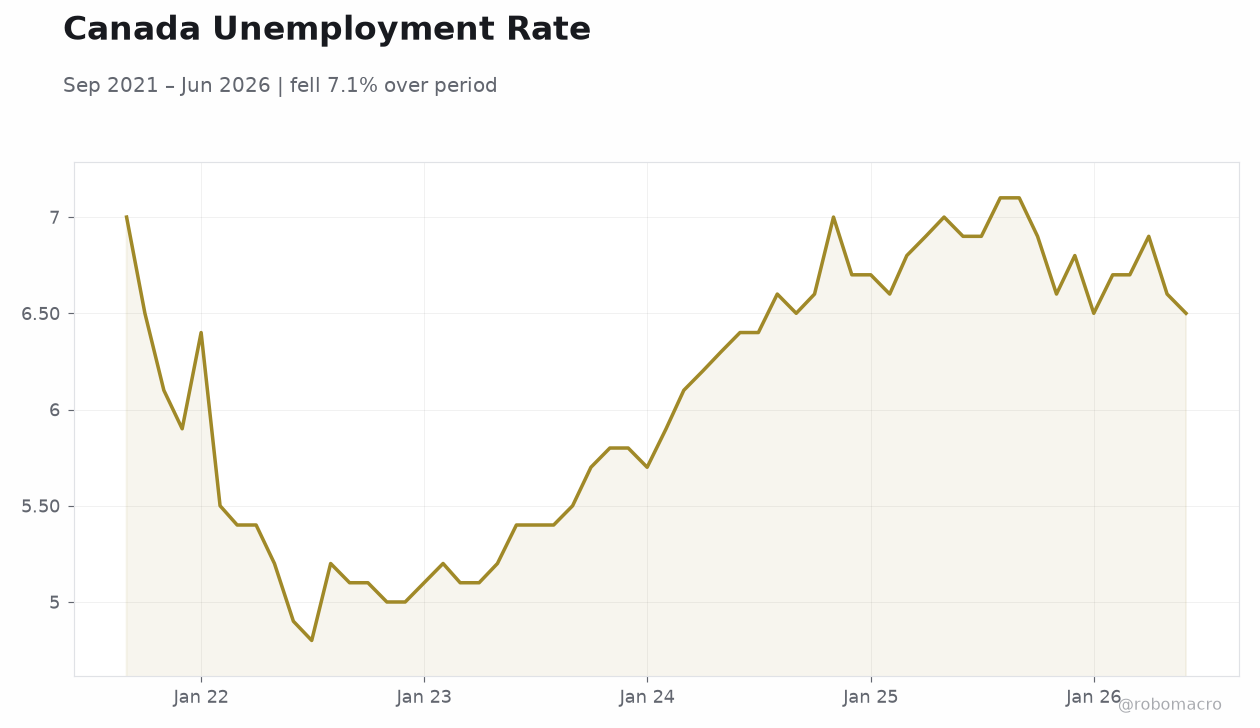 Canada Unemployment Rate | Type: macro_line | Unemployment Rate (%): 6.5 (2026-06-01) | Range: 4.8–7.1 | Trend(6pt): 7,5,5.7,6.8,6.6,6.5
Today's Economic Events
| Data | Prior | Cons | Time |
|---|---|---|---|
| Unemployment Rate | 6.50 | 6.50 | 04:30 |
| Employment Change | 18,200 | 15,000 | 04:30 |
| Full-Time Employment Change | 600 | - | 04:30 |
| Labor Force Participation | 65 | - | 04:30 |
| Part-Time Employment Change | 17,500 | - | 04:30 |
| Ivey PMI Seasonally Adjusted | 56.20 | 55.50 | 06:00 |
- Trade balance surplus widened to C$3.86 billion in June, exceeding consensus
- S&P Global manufacturing PMI rose to 53.5, signaling continued expansion
- TSX held steady while 10-year yields fell 3.43% amid gold rally
Yesterday's Recap
Canada posted a larger-than-expected trade surplus of C$3.86 billion in June, driven by stronger exports that outpaced the C$3 billion consensus. The S&P Global manufacturing PMI climbed to 53.5 from 53.0, comfortably above the 50.2 forecast and confirming resilient factory activity. Equity markets showed little reaction, with the S&P/TSX closing at 36,136.30, down just 0.03%.
The Canadian dollar remained nearly unchanged against the USD at 1.40 while EUR/CAD eased 0.19%. Government bond yields diverged, with the 2-year rising 1 basis point to 2.27% and the 10-year dropping 3.43% to 3.42%. Energy prices softened, WTI crude falling 0.69% to 76.76 and Brent declining 0.80% to 81.83.
Gold surged 3.36% to 4,384.70, providing support to resource-linked equities.
The Day Ahead
Markets will focus on the July labor report due at 4:30 ET, with the unemployment rate expected to hold at 6.5% and employment change forecast at 15,000. Full-time and part-time employment figures, along with labor-force participation, will offer further detail on hiring trends. The Ivey PMI seasonally adjusted reading at 6:00 ET is projected to ease to 55.5 from 56.2, testing whether service-sector momentum is moderating.
Traders will also monitor any revisions to prior months that could alter the Bank of Canada’s assessment of slack. Energy and currency markets are likely to react to the headline employment print given its influence on rate expectations.
Other Economic Notes
With the policy rate at 2.25% and CPI at 2.80% year-over-year through June, the Bank of Canada retains limited room to ease further without risking reacceleration in prices. The recent widening in the trade surplus and firm manufacturing PMI suggest underlying demand remains supportive of growth. However, softening global oil prices and mixed signals from U.S.
data could weigh on export revenues and CAD strength in coming months. Bond-market pricing continues to reflect expectations of steady policy through year-end, with the 10-year yield compression indicating caution among fixed-income investors.