Canada Macro Daily(Beta Mode)
TSX Climbs as CAD Strengthens on Energy Gains
Market Snapshot
| Asset | Level | Change |
|---|---|---|
| S&P/TSX | 36,381.20 | +0.68% |
| USD/CAD | 1.39 | -0.55% |
| EUR/CAD | 1.61 | -0.29% |
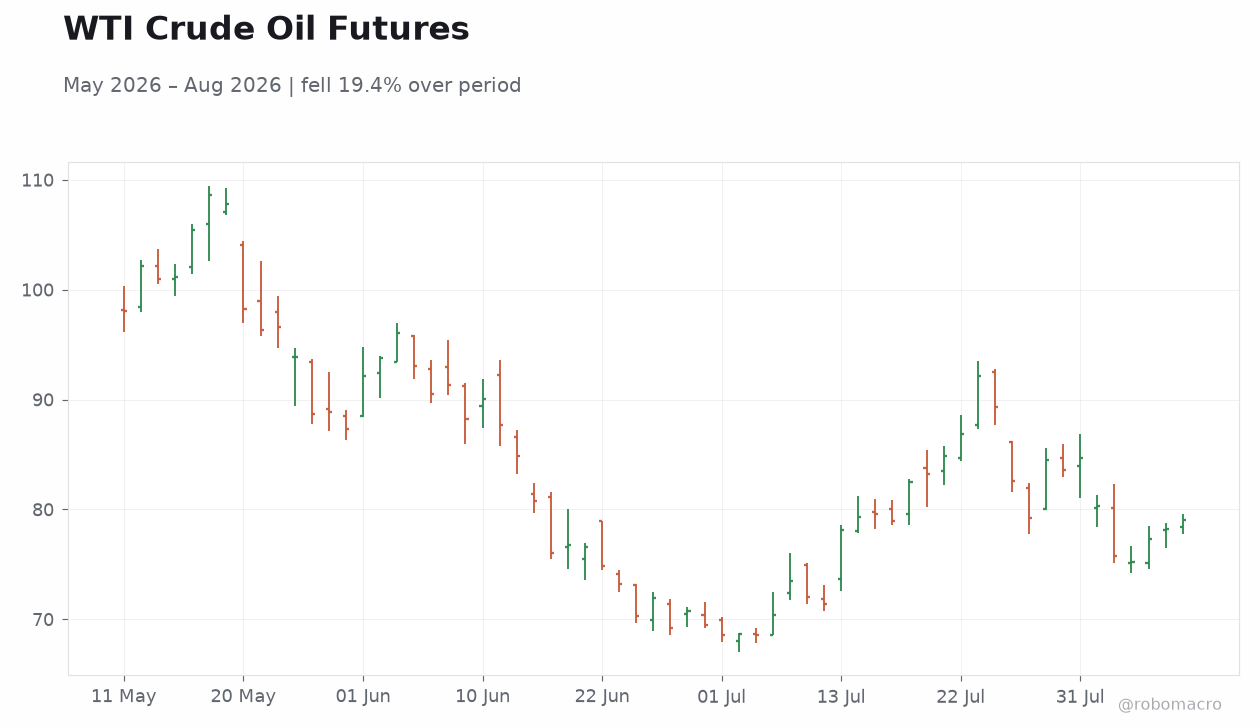
| WTI Crude | 79.08 | +1.15% |
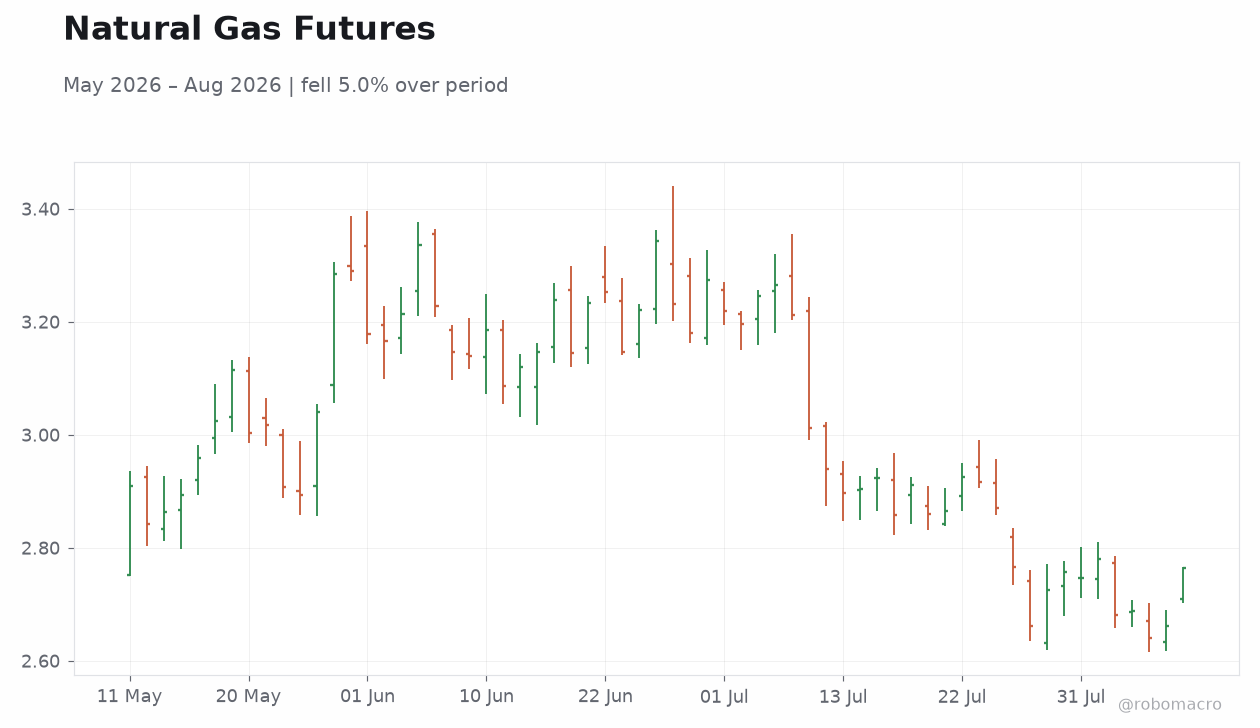
| Natural Gas | 2.76 | +3.76% |
| Gold | 4,394.10 | +1.23% |
| Brent Crude | 84.48 | +1.11% |
| Bitcoin | 65,013.99 | +0.26% |
| Canada 2Y Govt Yield | 2.27% | +1.00% |
| Canada 10Y Govt Yield | 3.42% | -3.43% |
Prior Economic Events
| Data | Prior | Cons | Actual |
|---|---|---|---|
| No events available | |||
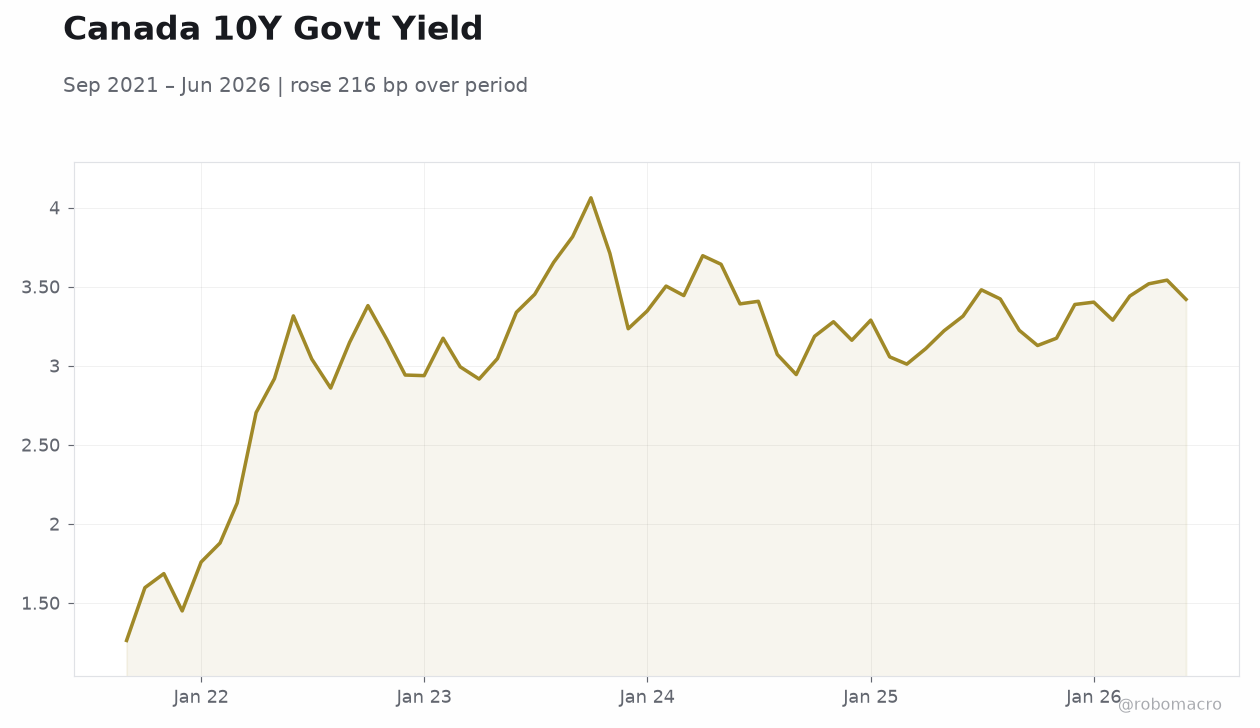 Canada 10Y Govt Yield | Type: macro_line | Yield %: 3.42 (2026-06-01) | Range: 1.263–4.062 | Trend(6pt): 1.263,3.166,3.346,3.01,3.542,3.42
Today's Economic Events
| Data | Prior | Cons | Time |
|---|---|---|---|
| No events available | |||
- TSX rose 0.68% to 36,381.20 while USD/CAD fell 0.55% to 1.39.
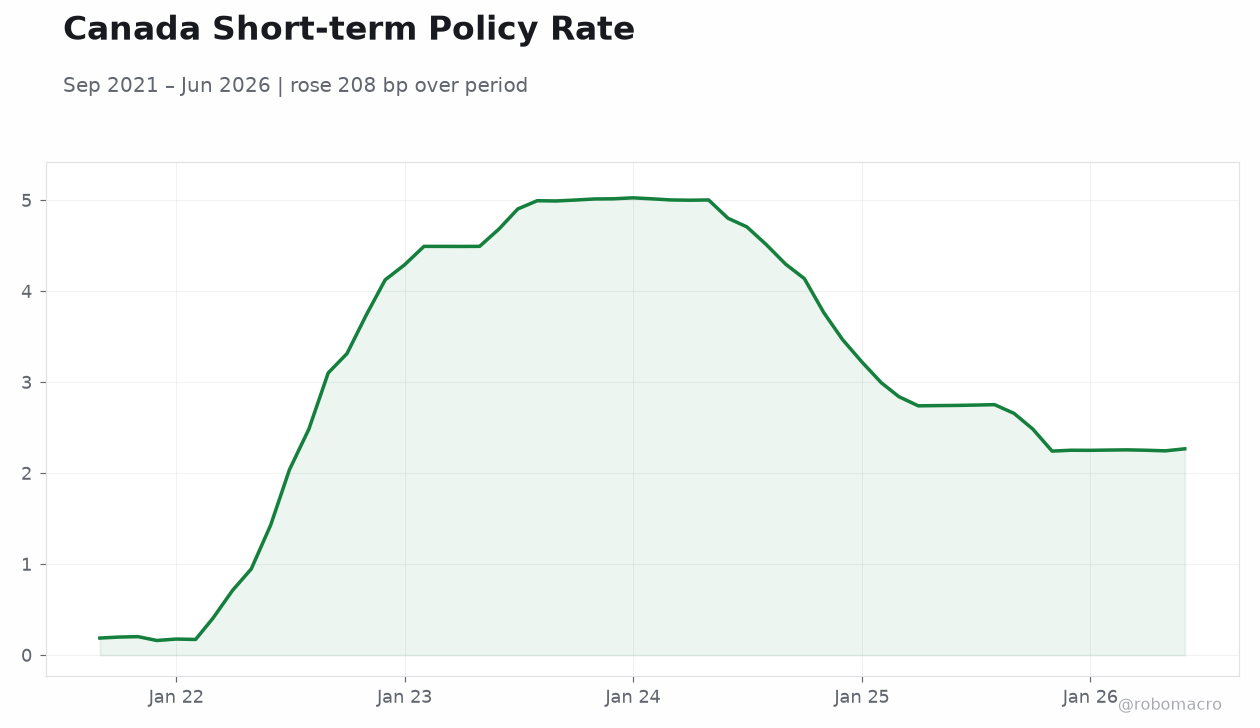
- Canada 10Y yield declined 3.43% to 3.42% as 2Y yield edged up 1.00% to 2.27%.
- WTI crude advanced 1.15% to $79.08 amid regional wildfire disruptions.
Yesterday's Recap
Equity markets posted solid gains as the S&P/TSX climbed 0.68 percent to close at 36,381.20, supported by higher energy prices. The Canadian dollar strengthened notably, with USD/CAD dropping 0.55 percent to 1.39 and EUR/CAD easing 0.29 percent to 1.61. Government bond yields showed mixed moves, as the 2-year yield rose 1 basis point to 2.27 percent while the 10-year yield fell 12 basis points to 3.42 percent.
Natural gas surged 3.76 percent to $2.76 and gold advanced 1.23 percent to $4,394.10, reflecting commodity resilience. British Columbia declared a state of emergency after the Bald Range wildfire expanded rapidly, displacing 20,000 residents and claiming one life across more than 53 square miles. No major economic data releases occurred, leaving market participants focused on commodity flows and regional supply risks.
Energy equities contributed to the TSX advance as Brent crude also gained 1.11 percent to $84.48. Murphy Oil reported adjusted net income of $225.8 million for the second quarter, nearly six times the prior-year level, while Petrus Resources and PyroGenesis highlighted revenue growth in upstream and industrial sectors.
The Day Ahead
Markets face a quiet calendar with no scheduled Canadian data releases or Bank of Canada events. Attention will remain on wildfire containment efforts in British Columbia and any potential supply disruptions to natural gas and timber output. Traders will monitor global oil inventory figures and USD/CAD technical levels near 1.39 for further direction.
Corporate earnings from energy and materials names may provide incremental color on second-quarter results already released by firms such as Petrus Resources and Interfor. Overnight moves in U.S. yields and Asian currency defenses could influence Canadian fixed-income flows.
Overall positioning appears light ahead of the mid-week period.
Other Economic Notes
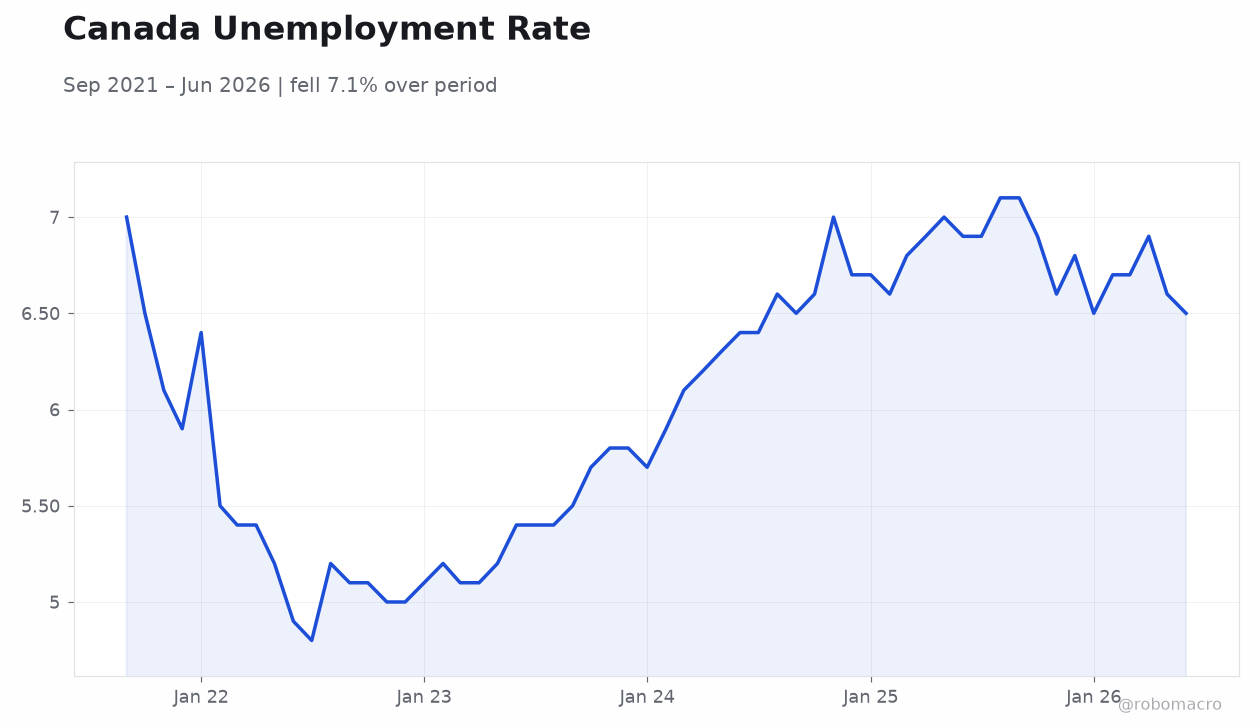
Canada’s headline CPI stood at 2.80 percent year-over-year through June, keeping inflation near the Bank of Canada’s target midpoint. Energy sector momentum persists, with WTI and natural gas both higher on the session and supporting export revenues. Provincial authorities continue to address labor shortages in affected wildfire zones, where evacuations have shifted some activity into informal channels.
<i>↓ p.2</i>