Canada Macro Daily(Beta Mode)
TSX Holds Steady as Loonie Gains on Yield Shifts
Market Snapshot
| Asset | Level | Change |
|---|---|---|
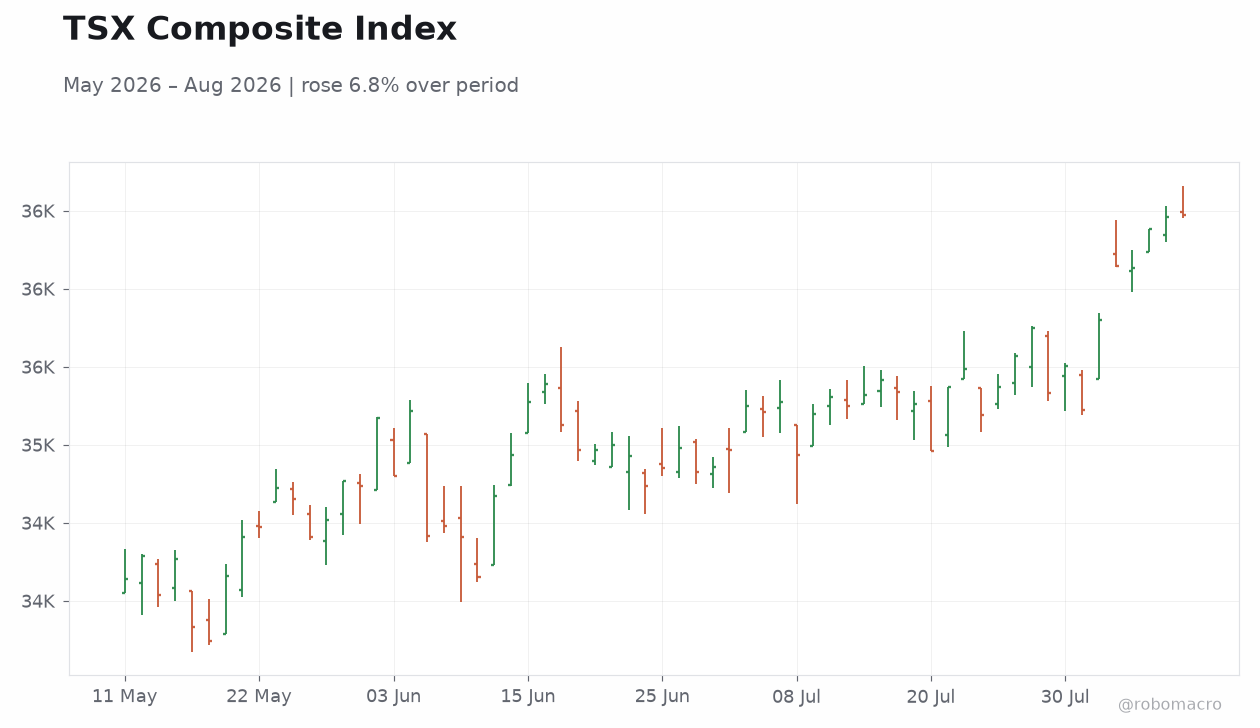
| S&P/TSX | 36,475.90 | +0.05% |
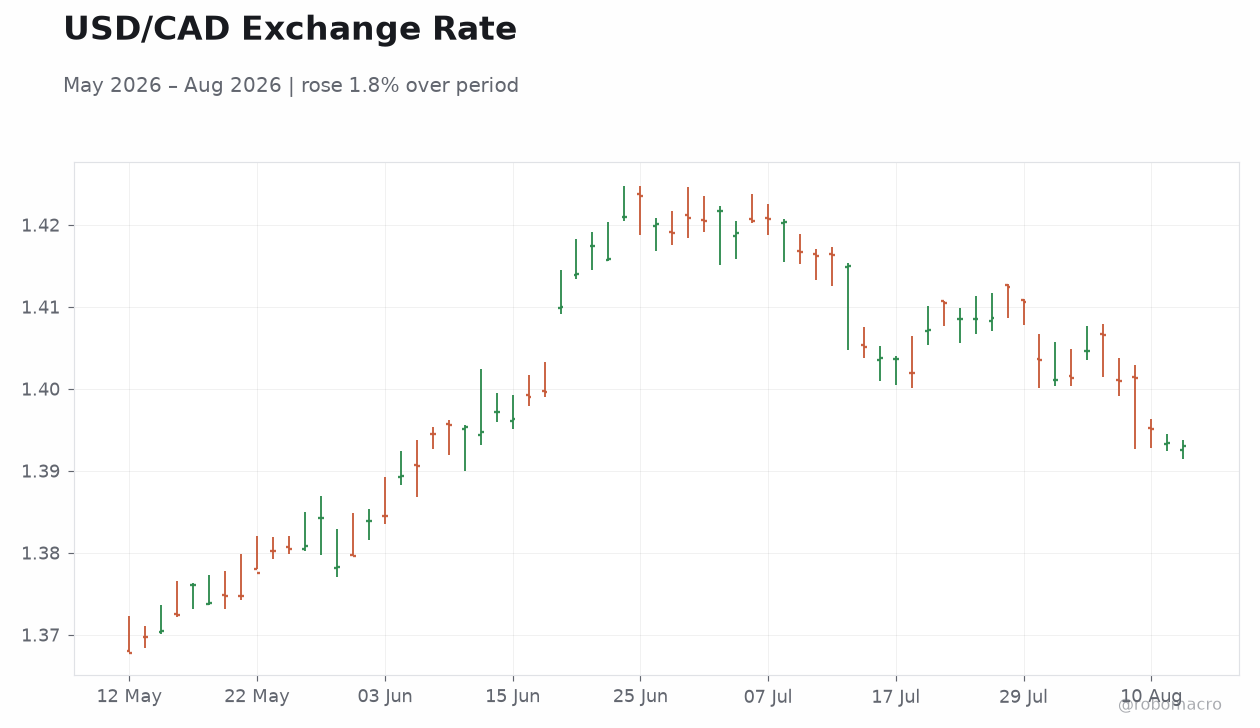
| USD/CAD | 1.39 | -0.12% |
| EUR/CAD | 1.61 | -0.07% |
| WTI Crude | 83.37 | +0.20% |
| Natural Gas | 2.79 | +0.90% |
| Gold | 4,475.50 | +2.11% |
| Brent Crude | 88.94 | +0.03% |
| Bitcoin | 64,154.98 | +0.95% |
| Canada 2Y Govt Yield | 2.27% | +1.00% |
| Canada 10Y Govt Yield | 3.42% | -3.43% |
Prior Economic Events
| Data | Prior | Cons | Actual |
|---|---|---|---|
| No events available | |||
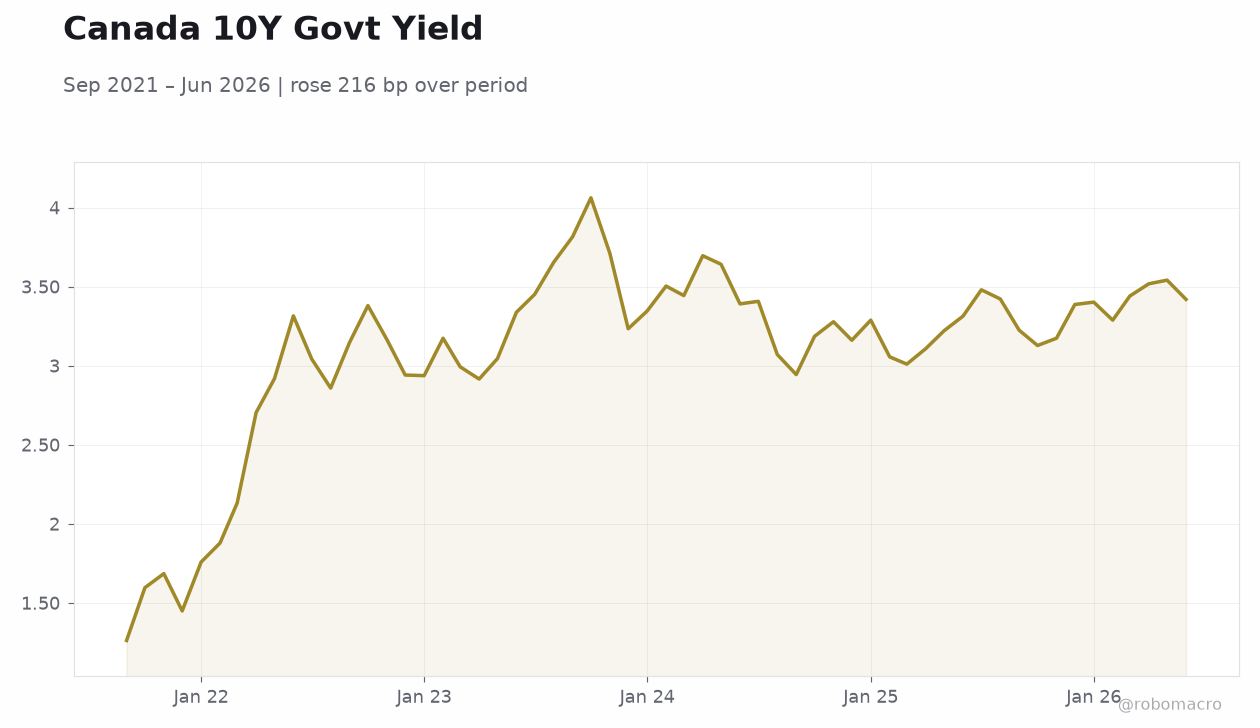 Canada 10Y Govt Yield | Type: macro_line | Yield %: 3.42 (2026-06-01) | Range: 1.263–4.062 | Trend(6pt): 1.263,3.166,3.346,3.01,3.542,3.42
Today's Economic Events
| Data | Prior | Cons | Time |
|---|---|---|---|
| No events available | |||
- S&P/TSX edges up 0.05% amid mixed energy and yield moves
- USD/CAD falls 0.12% to 1.39 as Canadian yields shift
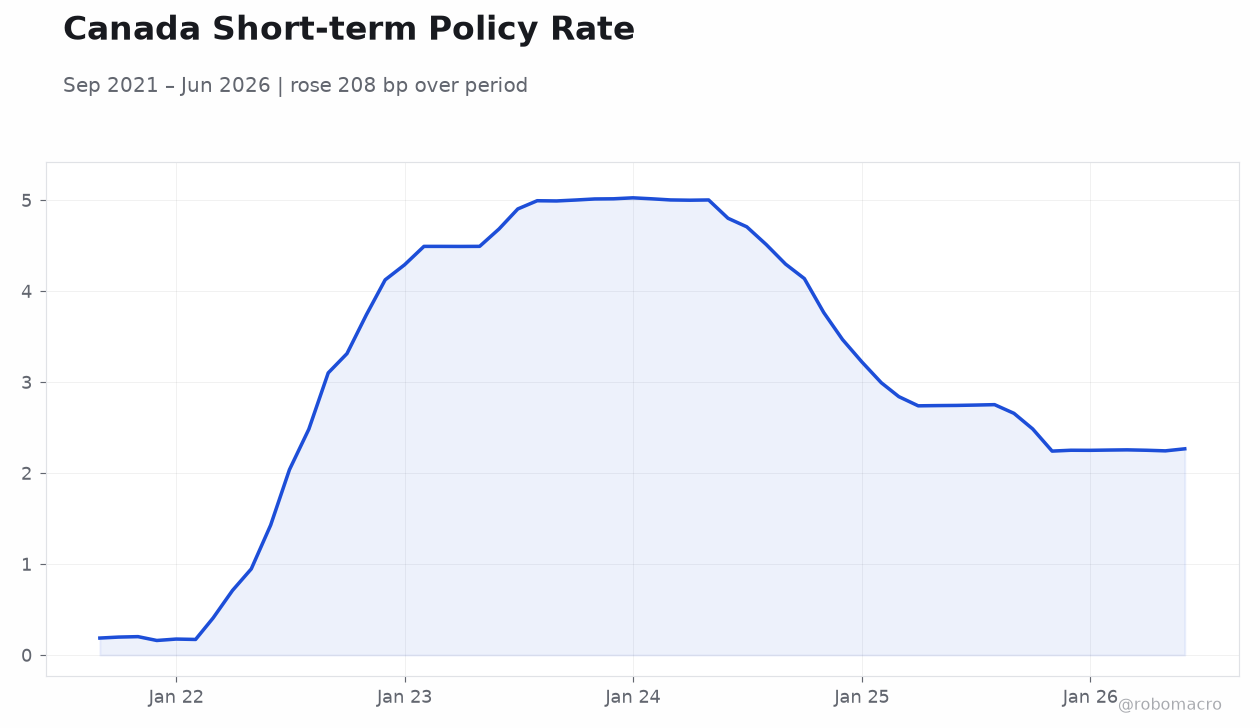
- Gold surges 2.11% while BoC policy rate sits at 2.25%
Yesterday's Recap
Canadian equity markets closed nearly flat with the S&P/TSX at 36,475.90, up just 0.05%. The Canadian dollar strengthened as USD/CAD declined 0.12% to 1.39 and EUR/CAD eased 0.07% to 1.61. Government bond yields showed divergence, with the 2-year rising 1.00% to 2.27% while the 10-year fell 3.43% to 3.42%.
Energy prices posted modest gains, WTI Crude rising 0.20% to 83.37 and natural gas climbing 0.90% to 2.79. Gold advanced sharply 2.11% to 4,475.50, reflecting safe-haven demand. Bitcoin gained 0.95% to 64,154.98.
With no major data releases, price action reflected positioning ahead of global developments and steady commodity support for Canadian assets.
The Day Ahead
Traders will monitor overnight moves in oil and natural gas given Canada's export exposure. USD/CAD and government yields remain focal points for directional cues. Equity flows may respond to any shifts in global risk sentiment.
Energy commodity volatility could influence TSX sector performance. Market participants await any Bank of Canada commentary that might clarify the path around the current 2.25% policy rate.
Other Economic Notes
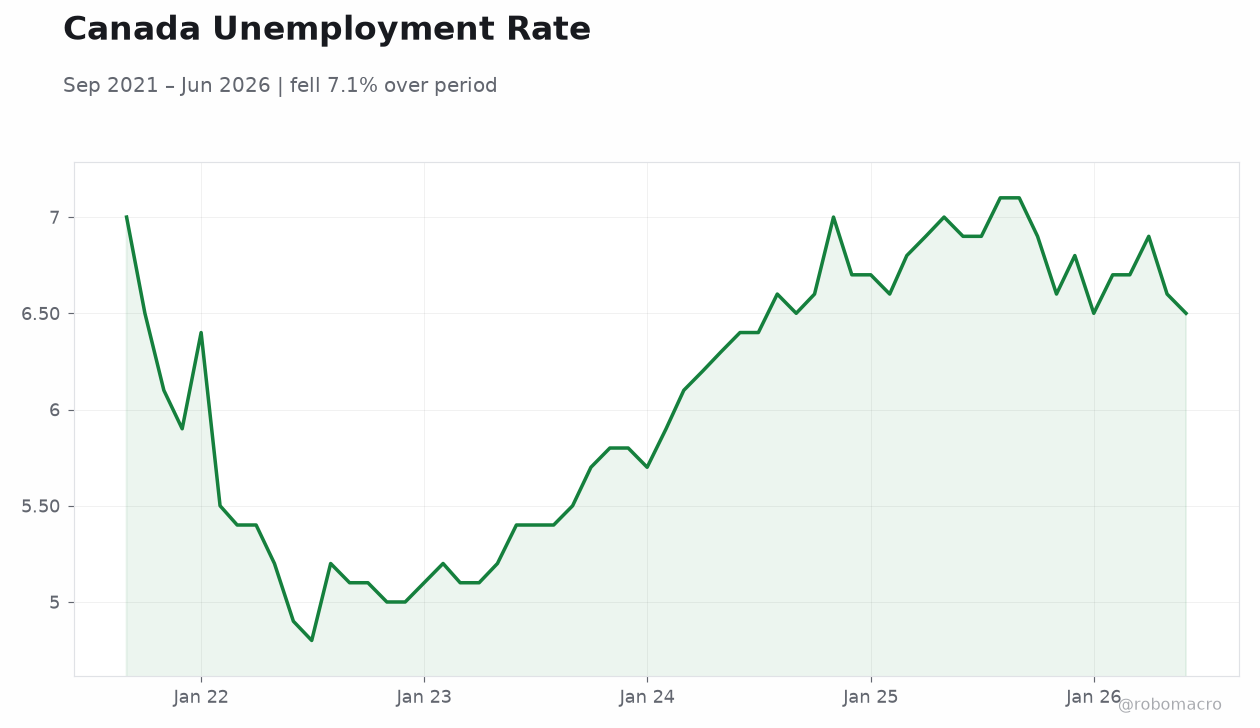
The June CPI reading of 2.80% continues to anchor expectations for gradual policy adjustment. Stable energy prices support the Canadian terms of trade and fiscal revenues. Yield curve movements highlight investor focus on near-term versus longer-term rate paths.
Broader commodity strength, including gold, provides a buffer for Canadian export-oriented sectors amid global uncertainty.
Global Macro News
Oil prices rose after ship attacks and stalled US-Iran talks, tightening supply concerns that directly affect Canadian producers. The IEA noted intensifying demand destruction from high fuel prices and Hormuz disruptions, pressuring global consumption forecasts. Mexico's inflation slowdown and Banxico's cautious stance offer a regional parallel for Canadian policy calibration.
Philippine central bank comments on keeping rate hikes on the table despite weak growth underscore divergent emerging-market approaches. <i>↓ p.2</i>