Canada Macro Daily(Beta Mode)
TSX Climbs as Yields Steepen, Oil Falls
Market Snapshot
| Asset | Level | Change |
|---|---|---|
| S&P/TSX | 36,662.10 | +0.51% |
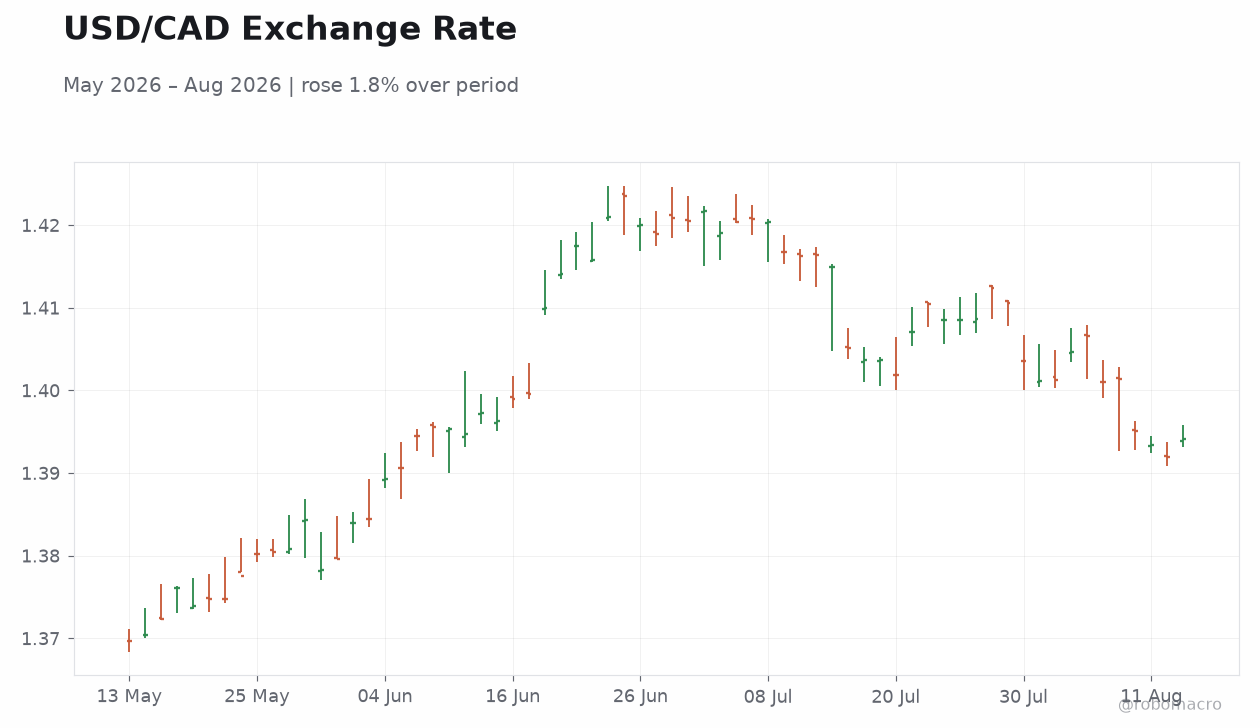
| USD/CAD | 1.39 | +0.15% |
| EUR/CAD | 1.61 | +0.07% |
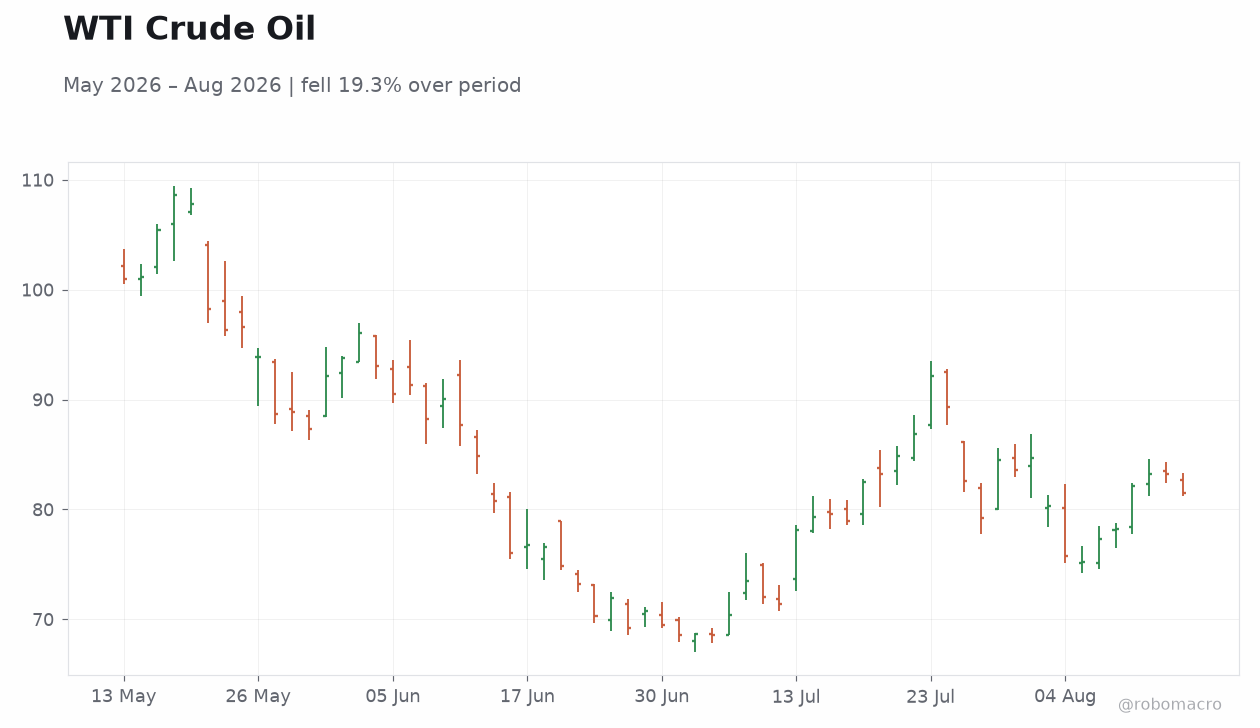
| WTI Crude | 81.59 | -2.02% |
| Natural Gas | 2.77 | -1.28% |
| Gold | 4,446.20 | +0.85% |
| Brent Crude | 87.37 | -1.81% |
| Bitcoin | 63,392.05 | -0.02% |
| Canada 2Y Govt Yield | 2.27% | +1.00% |
| Canada 10Y Govt Yield | 3.42% | -3.43% |
Prior Economic Events
| Data | Prior | Cons | Actual |
|---|---|---|---|
| No events available | |||
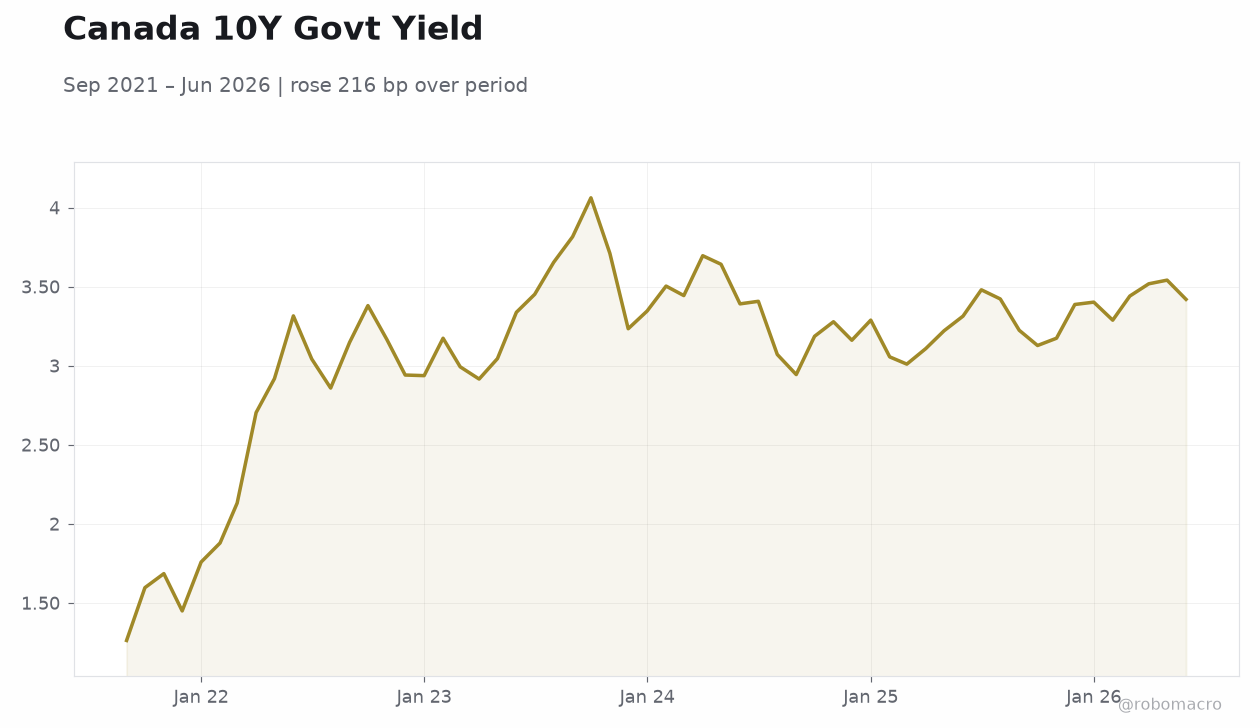 Canada 10Y Govt Yield | Type: macro_line | Yield %: 3.42 (2026-06-01) | Range: 1.263–4.062 | Trend(6pt): 1.263,3.166,3.346,3.01,3.542,3.42
Today's Economic Events
| Data | Prior | Cons | Time |
|---|---|---|---|
| No events available | |||
- S&P/TSX rose 0.51% to 36,662.10 while Canada 10Y yields fell 3.43% to 3.42%.
- USD/CAD edged up 0.15% to 1.39 as WTI crude fell 2.02% to 81.59.
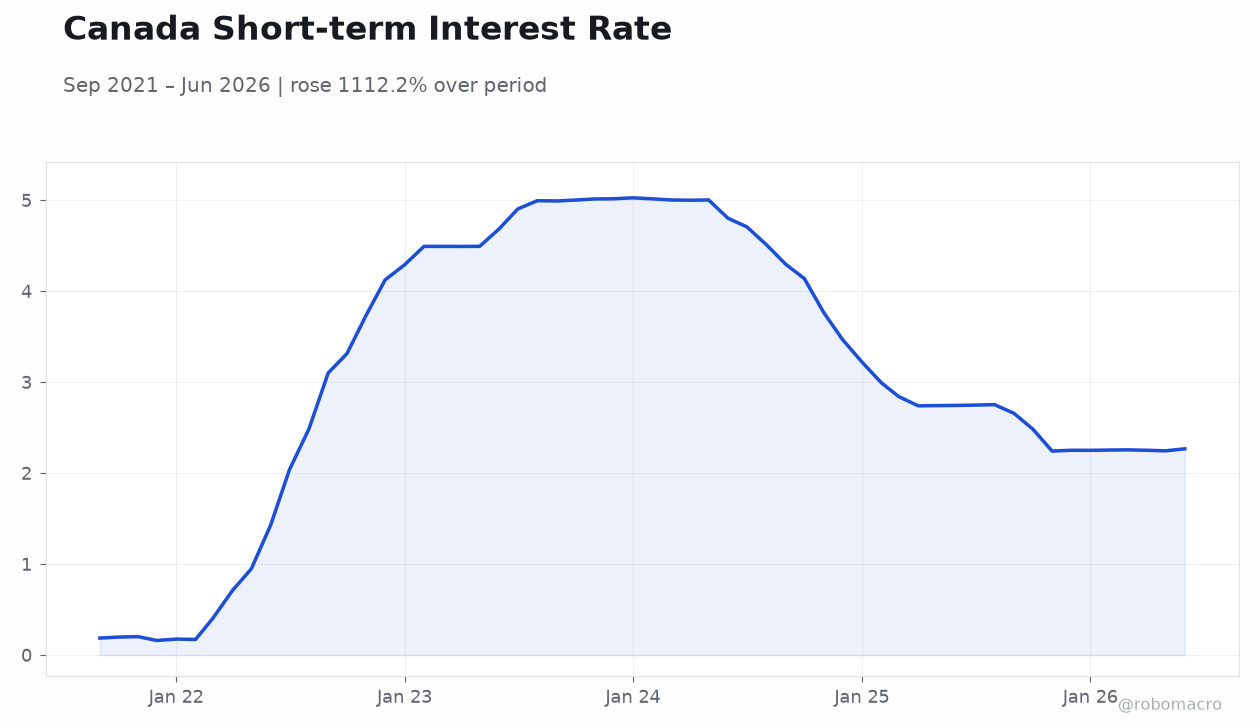
- BoC policy rate holds at 2.25% with CPI at 2.80% year-over-year.
Yesterday's Recap
Canadian markets posted modest gains amid thin data flow and mixed commodity moves. The S&P/TSX advanced 0.51% to close at 36,662.10, supported by strength in gold which rose 0.85% to 4,446.20. Government bond yields diverged sharply, with the 2Y yield rising 1.00% to 2.27% while the 10Y yield dropped 3.43% to 3.42%, steepening the curve.
USD/CAD ticked higher by 0.15% to 1.39, reflecting modest CAD softening against the dollar. Energy prices weighed on sentiment as WTI crude declined 2.02% to 81.59 and Brent fell 1.81% to 87.37. Natural gas slipped 1.28% to 2.77.
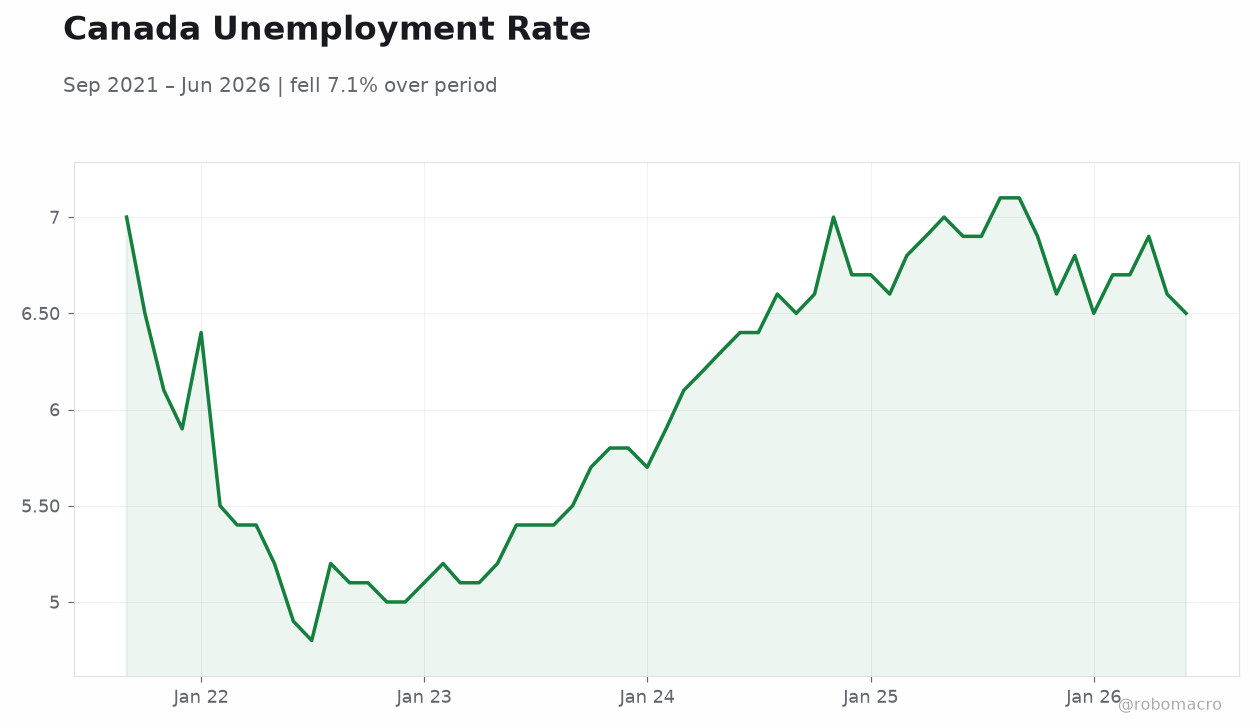
No major Canadian economic releases occurred, leaving market participants to focus on global risk sentiment and domestic credit concerns highlighted in recent commentary. Elevated household debt-service ratios at recession-triggering levels continue to signal consumer vulnerability despite steady headline indicators.
The Day Ahead
Markets face another quiet session with no scheduled Canadian data releases or Bank of Canada events. Attention will likely center on U.S. inflation prints and their potential spillover to CAD crosses and yields.
Energy traders will monitor Middle East developments for any supply signals that could lift crude prices from recent lows. Equity investors may watch for follow-through in TSX sectors tied to commodities after yesterday’s mixed performance. Broader sentiment could shift if global shipping bottlenecks or emerging-market equity rallies influence risk appetite.
The absence of domestic catalysts keeps focus on external drivers and BoC policy steady at 2.25%. Persistent credit pressures may further constrain household spending even as inflation holds at 2.80%.
Other Economic Notes
Canadian household debt-service ratios remain elevated at levels that previously preceded recessions, raising concerns about consumer resilience despite headline growth. Recent analysis points to persistent credit pressures that could limit spending even as inflation sits at 2.80%. Gold’s strong advance to 4,446.20 underscores safe-haven demand amid geopolitical uncertainty.
Energy sector weakness, with WTI at 81.59, may pressure fiscal revenues in oil-producing provinces. <i>↓ p.2</i>