Canada Macro Daily(Beta Mode)
CAD Slides on Tariff Retaliation
Market Snapshot
| Asset | Level | Change |
|---|---|---|
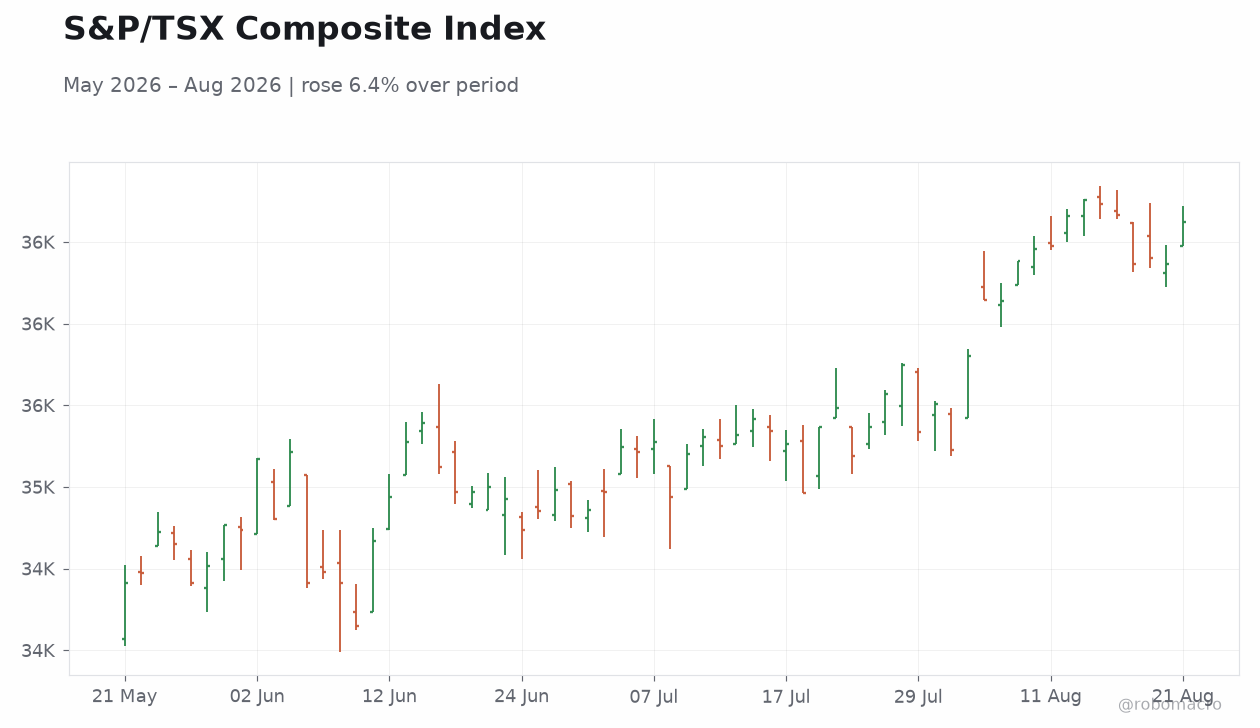
| S&P/TSX | 36,620.20 | +0.70% |
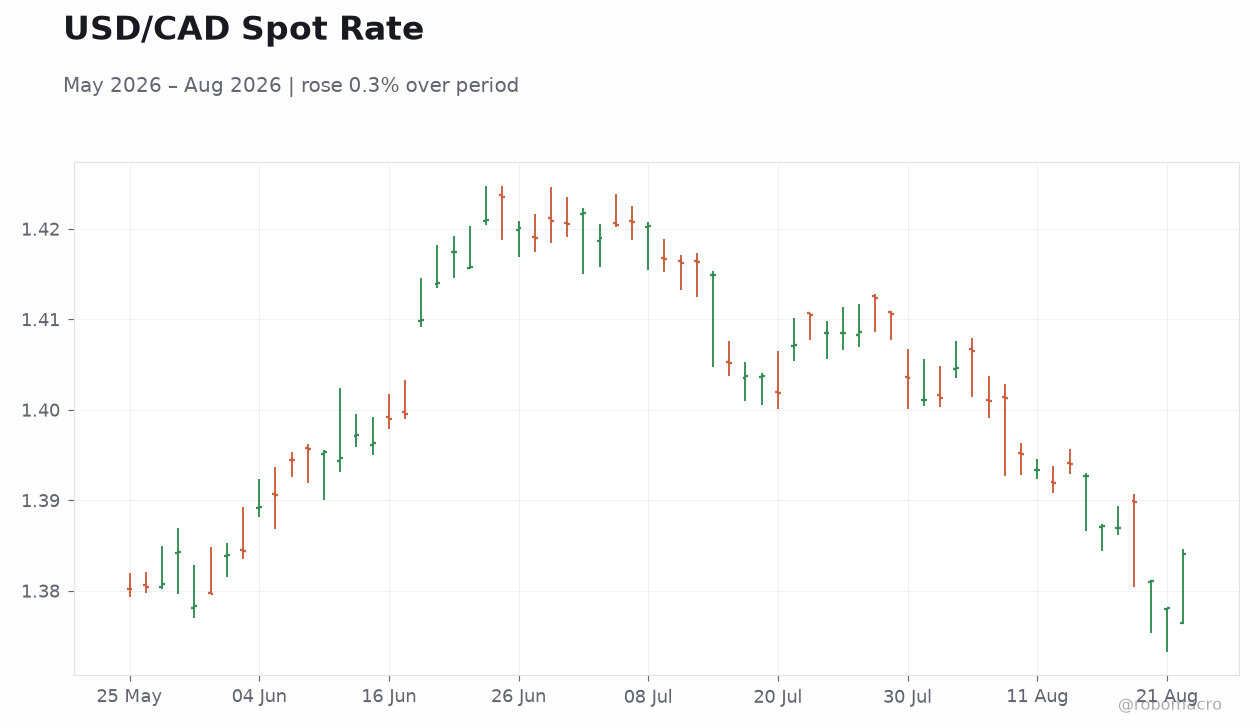
| USD/CAD | 1.38 | +0.43% |
| EUR/CAD | 1.61 | -0.10% |
| WTI Crude | 85.53 | -1.76% |
| Natural Gas | 2.86 | +3.07% |
| Gold | 4,703.20 | +1.71% |
| Brent Crude | 93.20 | -1.26% |
| Bitcoin | 78,320.12 | +0.73% |
| Canada 2Y Govt Yield | 2.27% | +1.00% |
| Canada 10Y Govt Yield | 3.42% | -3.43% |
Prior Economic Events
| Data | Prior | Cons | Actual |
|---|---|---|---|
| No events available | |||
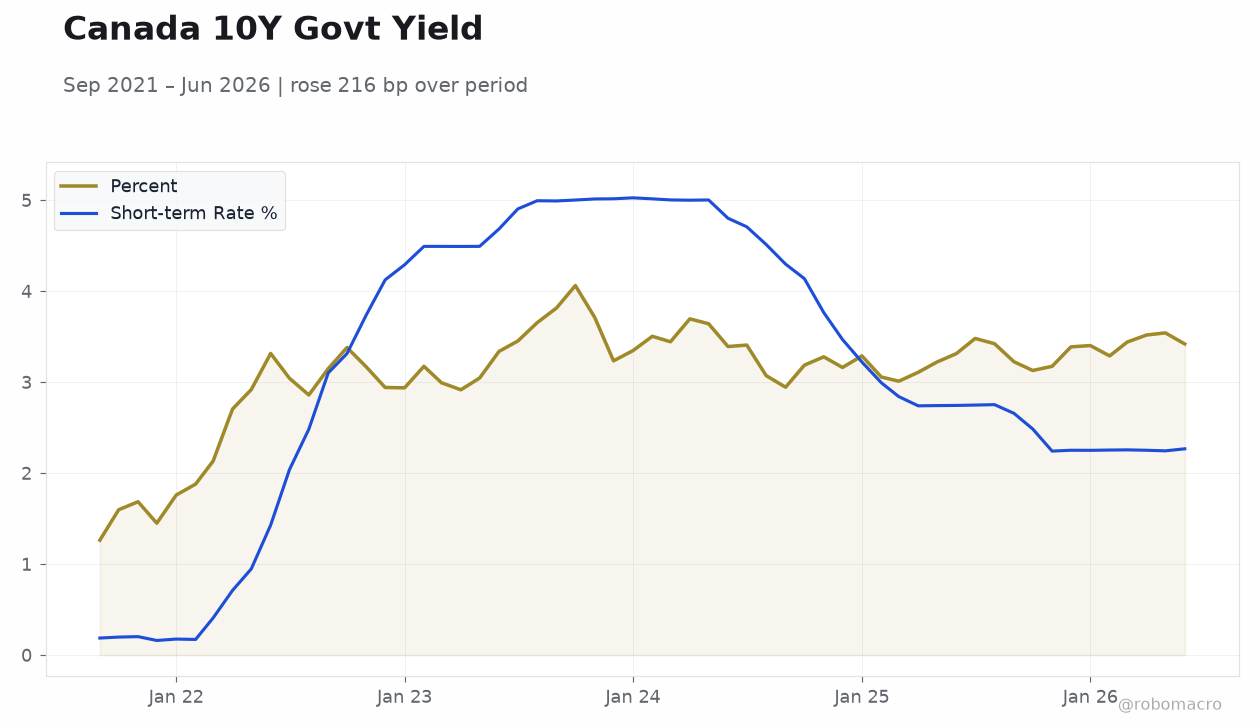 Canada 10Y Govt Yield | Type: macro_line | Percent: 3.42 (2026-06-01) | Range: 1.263–4.062 | Trend(6pt): 1.263,3.166,3.346,3.01,3.542,3.42 | Short-term Rate %: 2.267 (2026-06-01) | Range: 0.1604–5.026 | Trend(6pt): 0.187,3.741,5.026,2.841,2.245,2.267
Today's Economic Events
| Data | Prior | Cons | Time |
|---|---|---|---|
| Thursday (2026-08-27) | |||
| Current Account Balance | -7,200m | 5,600m | 08:30 |
| Friday (2026-08-28) | |||
| GDP Growth Annualized | -0.10 | - | 08:30 |
| GDP Growth Quarter-over-Quarter | 0 | - | 08:30 |
| GDP Month-over-Month | 0.30 | 0.20 | 08:30 |
| GDP Month-over-Month Preliminary | - | - | 08:30 |
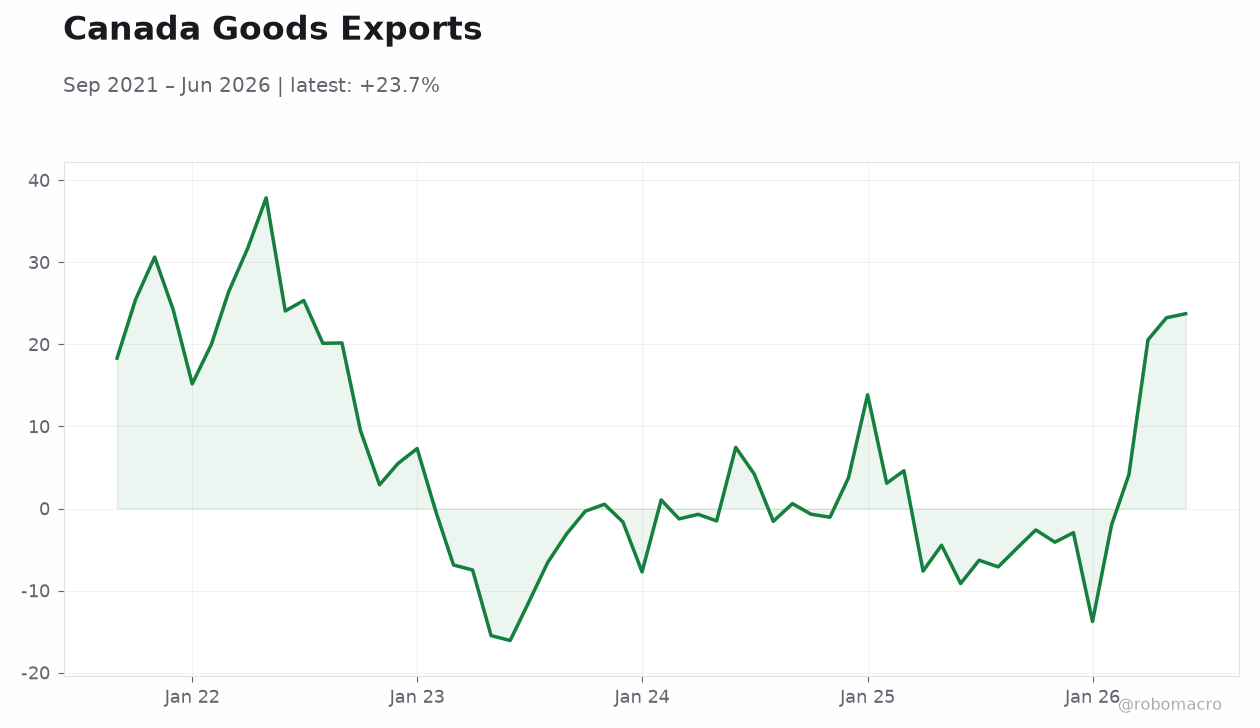
- US-Canada tariff retaliation drives CAD lower and raises growth risks
- TSX advances 0.70% while 10-year yields fall 3.43% on safe-haven flows
- BoC holds policy rate at 2.25% amid 3.03% CPI and private-credit concerns
Yesterday's Recap
Markets digested the collapse of US-Canada trade talks and reciprocal tariffs. The S&P/TSX rose 0.70% to 36,620.20 as investors rotated into domestic equities despite the external shock. USD/CAD climbed 0.43% to 1.38, marking the loonie’s weakest session in two months, while EUR/CAD eased 0.10%.
Canada’s 10-year yield dropped 3.43% to 3.42% as duration demand increased; the 2-year yield edged up 1.00% to 2.27%. WTI crude fell 1.76% to 85.53 amid retaliation fears, though natural gas gained 3.07%. Gold advanced 1.71% to 4,703.20 on hedging flows.
No Canadian data prints occurred on August 23, leaving tariff headlines as the dominant driver. Former Bank of Canada Governor Mark Carney described the US measures as an “attack,” while Ottawa imposed 50% retaliatory duties after Labor Day talks broke down.
The Day Ahead
Attention turns to the August 27 Current Account Balance, expected to swing to a C$5.6 billion surplus. August 28 brings the critical GDP report, including annualized, quarter-over-quarter, and month-over-month readings that will update growth momentum after July’s soft patch. Markets will also monitor any follow-up statements from Ottawa on the new 50% retaliatory tariffs announced after Labor Day.
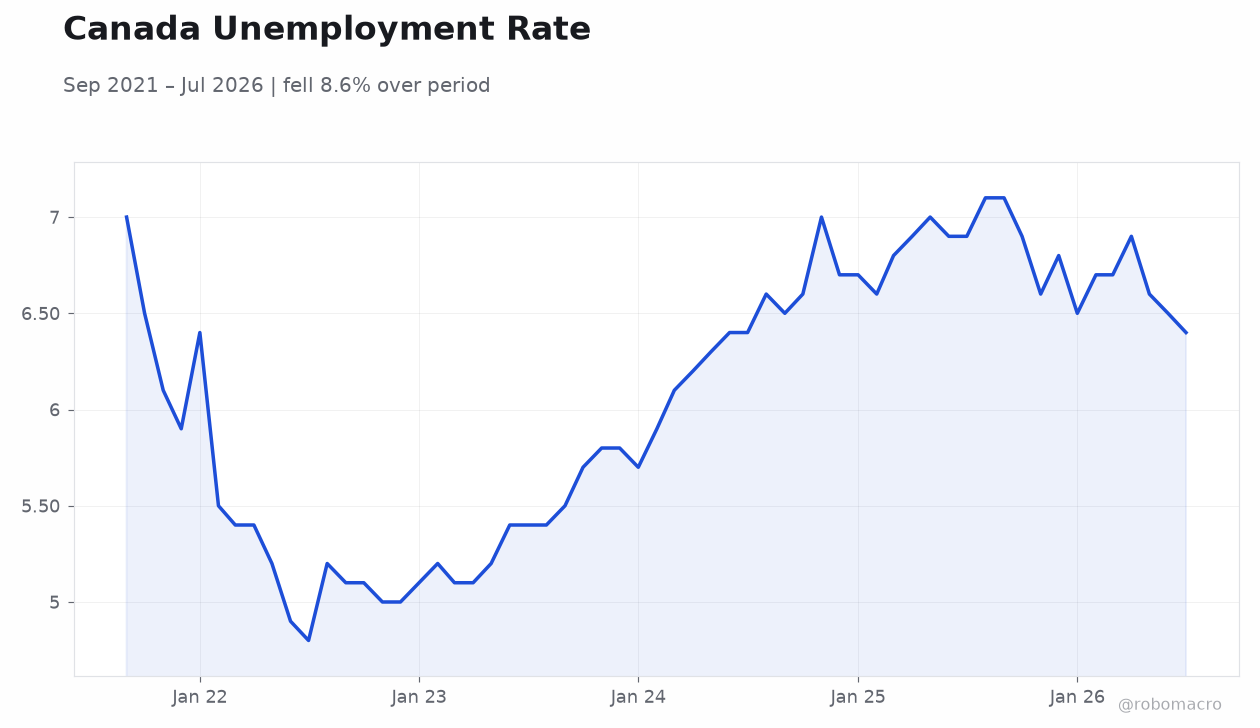
No Bank of Canada speakers are scheduled. The combination of trade-policy uncertainty and fresh GDP data is likely to keep CAD volatility elevated through week-end. Retail sales data are unlikely to alter the rate path given the committee’s focus on tariff effects.
Other Economic Notes
Private-credit expansion continues to draw Bank of Canada scrutiny because of rising leverage in non-bank channels and potential liquidity mismatches. Existing-home sales posted a modest July increase yet prices stayed flat, underscoring persistent affordability constraints. Alberta energy producers reported stronger Q2 cash flows that support provincial revenues even as broader tariff risks cloud the outlook.
Ottawa’s parallel consultations on steel and aluminum duties add another layer of bilateral friction without immediate market impact. Swap markets price limited cuts through year-end, reflecting the committee’s cautious stance amid balanced risks.