Canada Macro Daily(Beta Mode)
CPI Holds at 3% as Oil Surge Lifts BoC Risks
Market Snapshot
| Asset | Level | Change |
|---|---|---|
| S&P/TSX | 35,529.01 | -0.49% |
| USD/CAD | 1.39 | +0.35% |
| EUR/CAD | 1.61 | -0.09% |
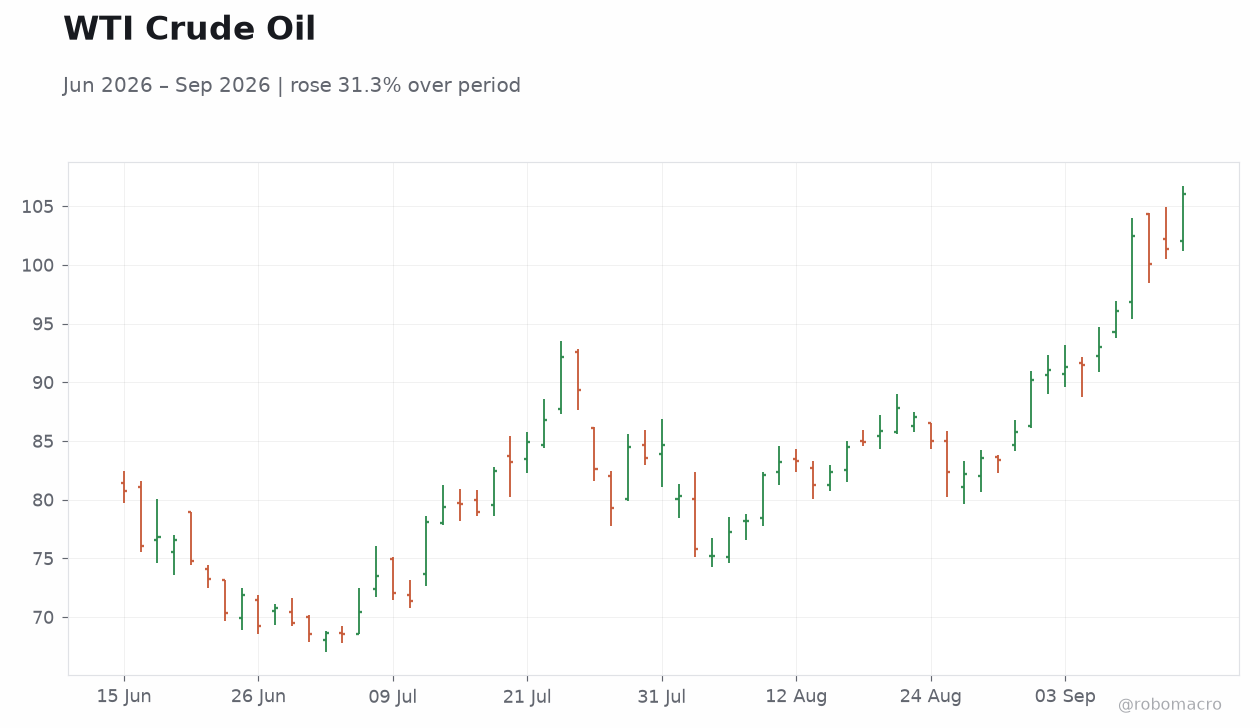
| WTI Crude | 106.09 | +4.64% |
| Natural Gas | 2.93 | +1.10% |
| Gold | 4,343.50 | -0.19% |
| Brent Crude | 108.96 | +3.10% |
| Bitcoin | 75,003.12 | -4.04% |
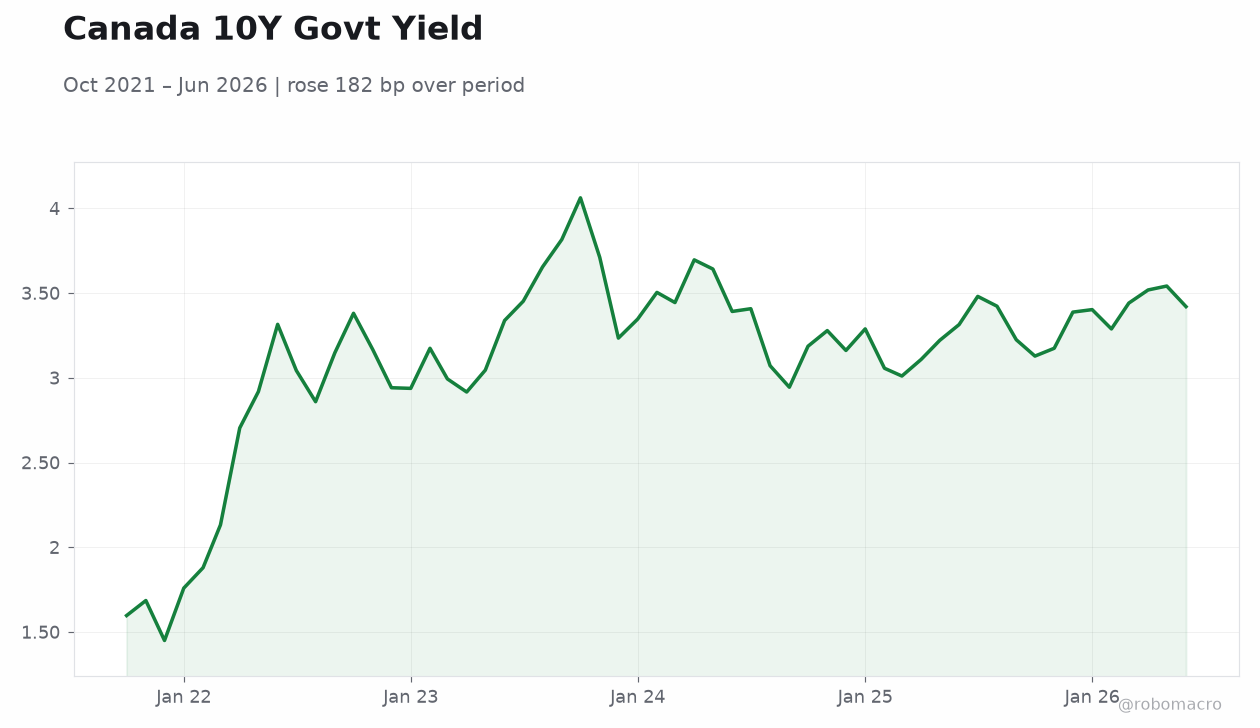
| Canada 2Y Govt Yield | 3.37% | +2 bp |
| Canada 10Y Govt Yield | 3.94% | -1 bp |
Prior Economic Events
| Data | Prior | Cons | Actual |
|---|---|---|---|
| Inflation Rate Year-over-Year | 3 | 3 | 3 |
| Core Inflation Rate Year-over-Year | 2.30 | - | 2.40 |
| Inflation Rate Month-over-Month | 0.50 | 0 | -0.10 |
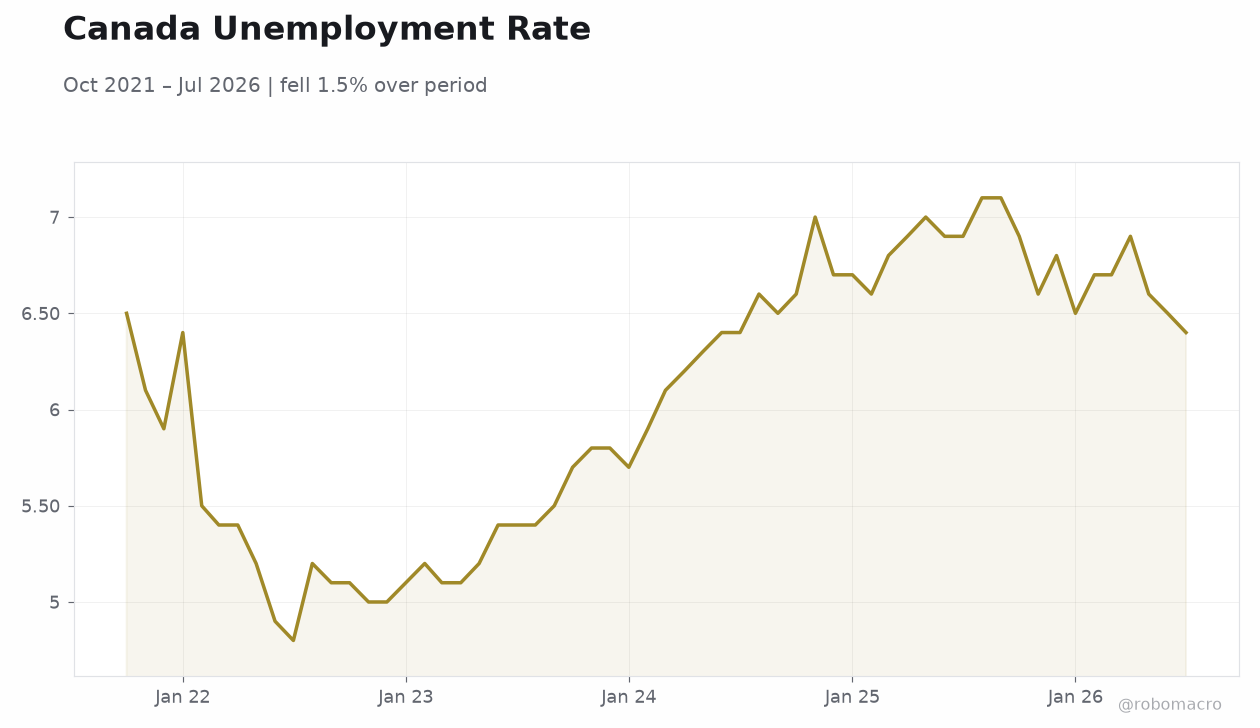 Canada Unemployment Rate | Type: macro_line | Rate %: 6.4 (2026-07-01) | Range: 4.8–7.1 | Trend(6pt): 6.5,5,5.9,6.9,6.5,6.4
Today's Economic Events
| Data | Prior | Cons | Time |
|---|---|---|---|
| Wednesday (2026-09-16) | |||
| Housing Starts Level | 229,100 | 237,500 | 04:15 |
- August CPI held at 3.0% year-over-year, matching consensus and prior print, with core rising to 2.4%.
- Oil prices jumped sharply, lifting WTI 4.64% and supporting CAD while raising BoC tightening risks.
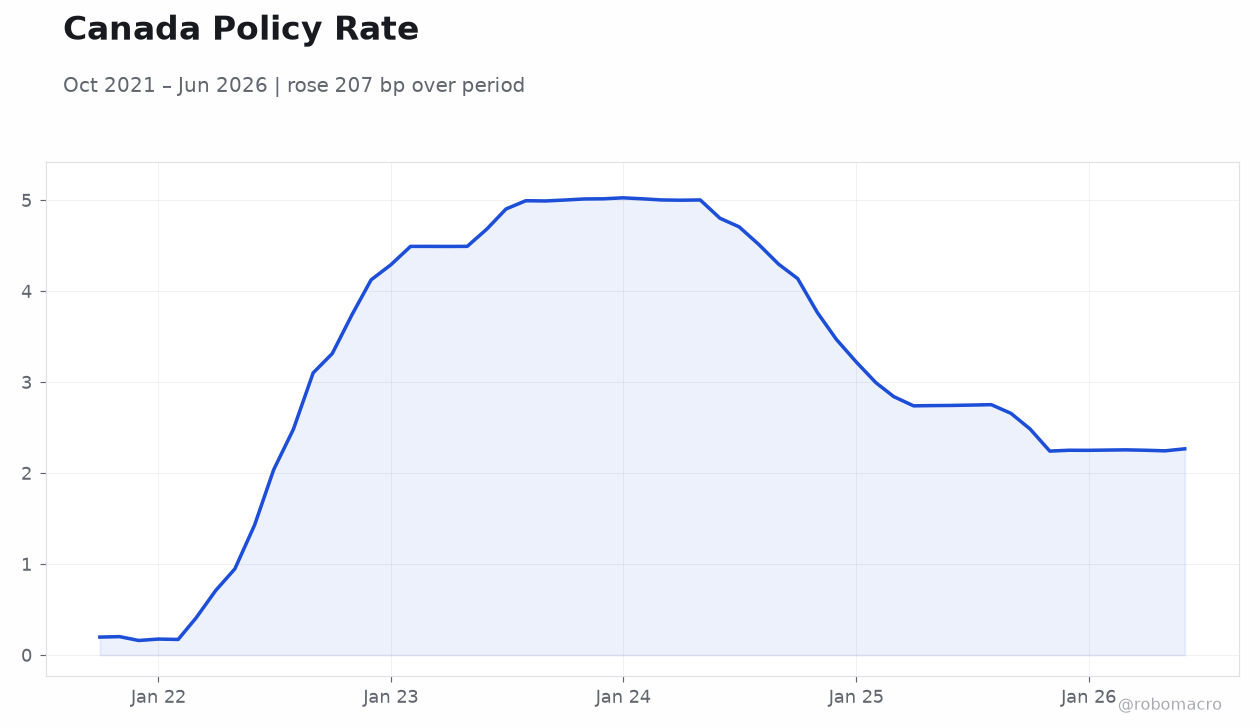
- TSX fell 0.49% as 2-year yields rose 2 bp to 3.37%, pricing higher odds of a December rate hike.
Yesterday's Recap
Statistics Canada reported August inflation at 3.0% year-over-year, unchanged from July and in line with consensus, while core inflation increased to 2.4% from 2.3%. The month-over-month rate printed -0.1%, below the flat consensus. The data confirmed contained yet elevated price pressures, with the oil surge identified as a clear upside risk for subsequent prints.
WTI crude rose 4.64% to 106.09 and Brent gained 3.10% to 108.96, driving USD/CAD 0.35% higher to 1.39. The S&P/TSX Composite declined 0.49% to 35,529.01. Canada 2-year yields rose 2 bp to 3.37% while the 10-year eased 1 bp to 3.94%.
Markets interpreted the combination of sticky inflation and stronger energy prices as increasing the likelihood of Bank of Canada tightening before year-end.
The Day Ahead
Housing Starts for September are scheduled for release on September 16 at 4:15 ET, with consensus at 237,500 units versus the prior 229,100. The print will provide the latest read on residential construction momentum and broader consumer resilience. No other high-impact Canadian data releases are listed for the session.
Market participants will also monitor any follow-through commentary on inflation risks from energy prices. The release timing aligns with ongoing focus on whether housing data can offset the recent oil-driven inflation concerns.
Other Economic Notes
Coverage highlighted that inflation remains at 3% despite softer energy components in the latest print, leaving the Bank of Canada with limited room to ignore the oil surge. Mark Carney continued efforts to attract global investment to Canada while managing tensions from the US trade dispute. Mortgage-rate implications received renewed attention given the steady CPI outcome and firmer oil trajectory.
Economists noted building upside risks to future inflation prints from energy prices, shifting market pricing toward a possible December policy adjustment. No Bank of Canada speeches occurred on the day.