Canada Macro Daily(Beta Mode)
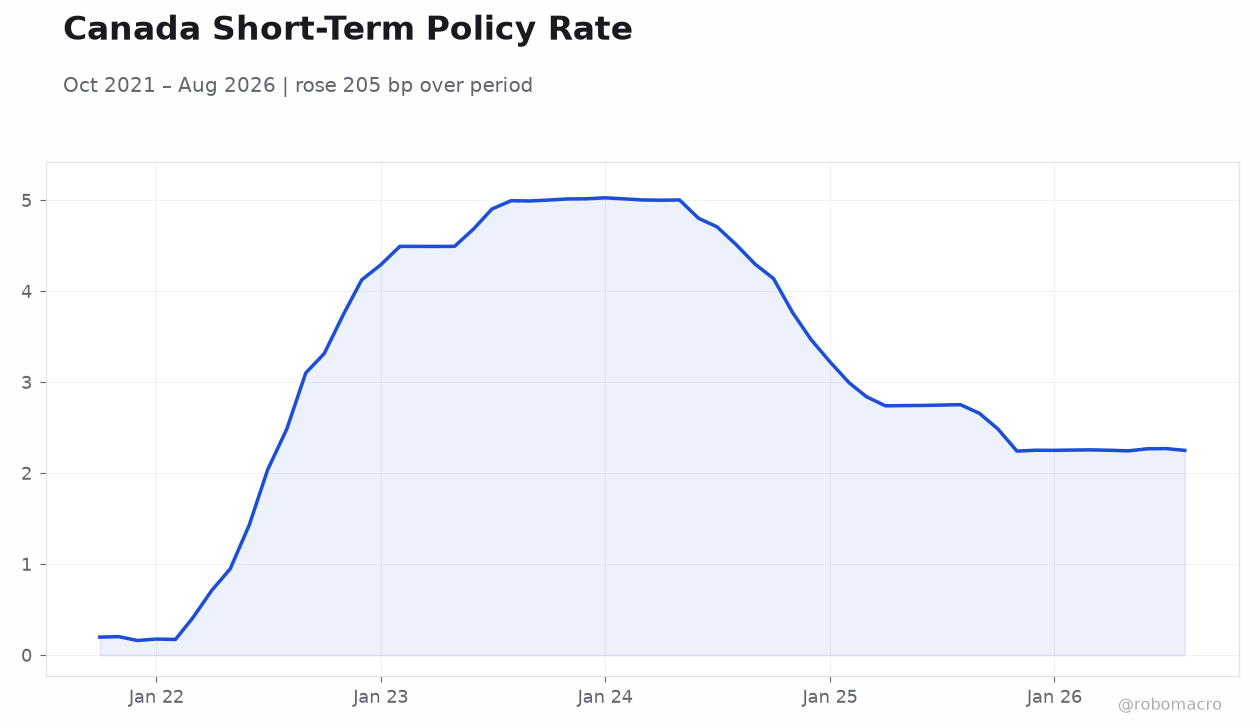
BoC Hike Odds Rise Amid Trade Tensions
Market Snapshot
| Asset | Level | Change |
|---|---|---|
| S&P/TSX | 35,806.70 | -0.19% |
| USD/CAD | 1.40 | +0.08% |
| EUR/CAD | 1.61 | +0.22% |
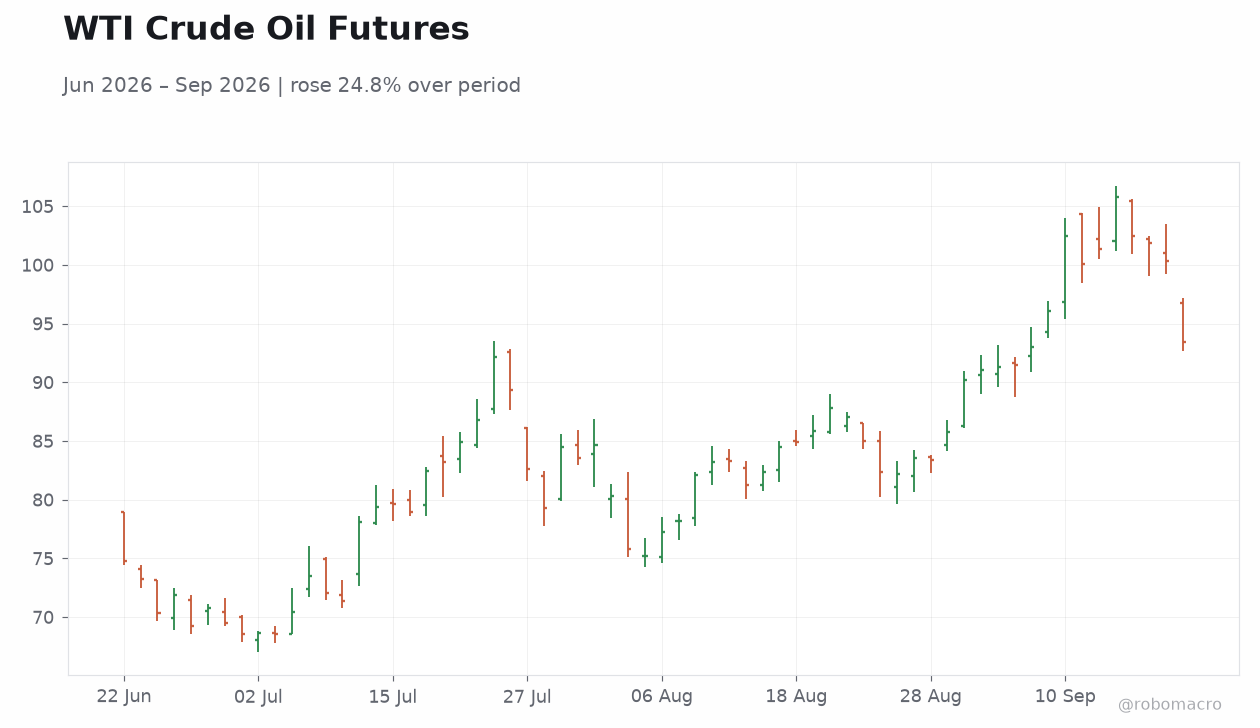
| WTI Crude | 93.38 | -6.90% |
| Natural Gas | 2.85 | -1.99% |
| Gold | 4,392.90 | -0.72% |
| Brent Crude | 97.07 | -6.55% |
| Bitcoin | 85,260.87 | +5.08% |
| Canada 2Y Govt Yield | 3.27% | -8 bp |
| Canada 10Y Govt Yield | 3.83% | -9 bp |
Prior Economic Events
| Data | Prior | Cons | Actual |
|---|---|---|---|
| No events available | |||
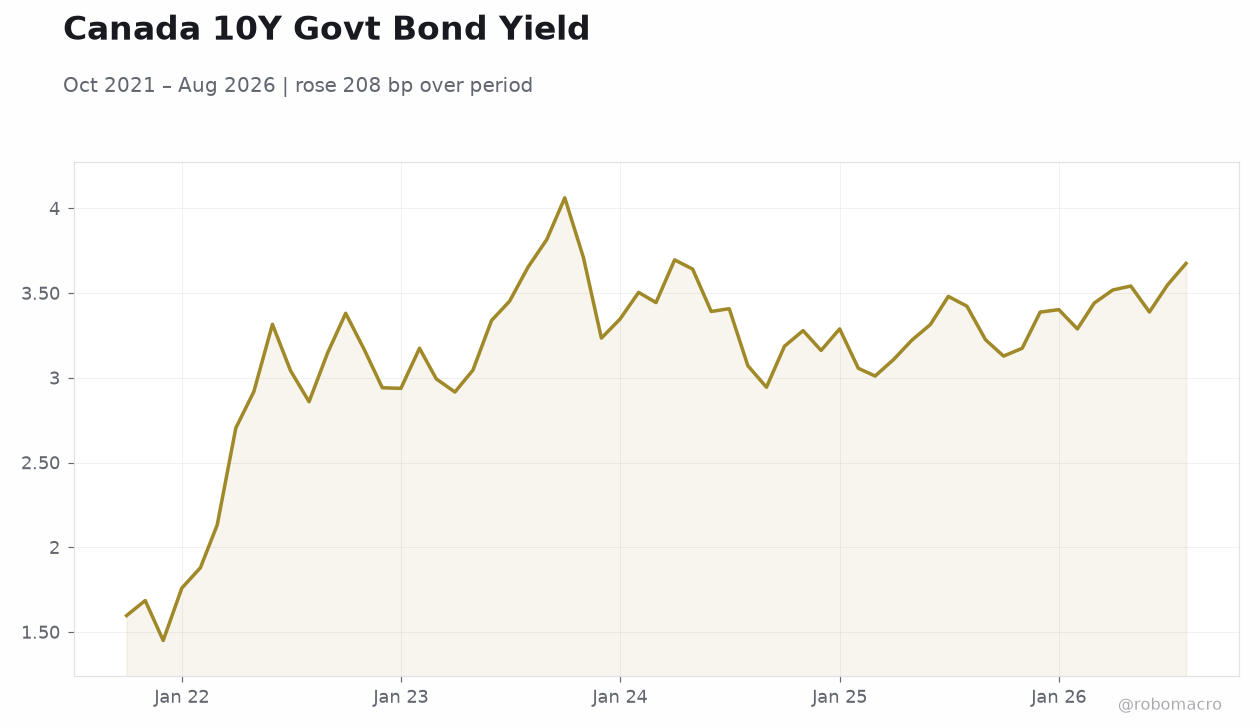 Canada 10Y Govt Bond Yield | Type: macro_line | Yield %: 3.675 (2026-08-01) | Range: 1.45–4.062 | Trend(6pt): 1.597,2.942,3.504,3.109,3.388,3.675
Today's Economic Events
| Data | Prior | Cons | Time |
|---|---|---|---|
| Thursday (2026-09-24) | |||
| Retail Sales Month-over-Month Final | 0.60 | -0.80 | 04:30 |
| Retail Sales Month-over-Month Preliminary | - | - | 04:30 |
| Retail Sales excluding Autos Month-over-Month | 0.50 | -0.50 | 04:30 |
- Retail Sales prints Thursday carry medium impact with consensus pointing to contraction.
- Canada 2-year and 10-year yields fell 8 bp and 9 bp respectively on Friday.
- WTI Crude dropped 6.90% while USD/CAD edged 0.08% higher.
Yesterday's Recap
Canadian markets closed the week with the S&P/TSX Composite declining 0.19% to 35,806.70. Government bond yields eased across the curve, with the 2-year yield falling 8 bp to 3.27% and the 10-year yield declining 9 bp to 3.83%. Energy prices led the downside, as WTI Crude fell 6.90% to 93.38 and Brent Crude dropped 6.55% to 97.07.
The Canadian dollar posted modest gains, with USD/CAD rising 0.08% to 1.40 and EUR/CAD advancing 0.22% to 1.61. No economic data releases occurred on September 20. Canada’s counter-tariffs on selected U.S.
goods took effect, adding to ongoing bilateral trade friction. Market participants absorbed reports that the odds of a Bank of Canada rate increase this year have increased. Ottawa’s summer spending increase was partly offset by stronger GDP growth and higher oil revenues, limiting the net fiscal impact.
Broader Canadian equity performance reflected weakness in energy and materials sectors amid the sharp decline in crude prices.
The Day Ahead
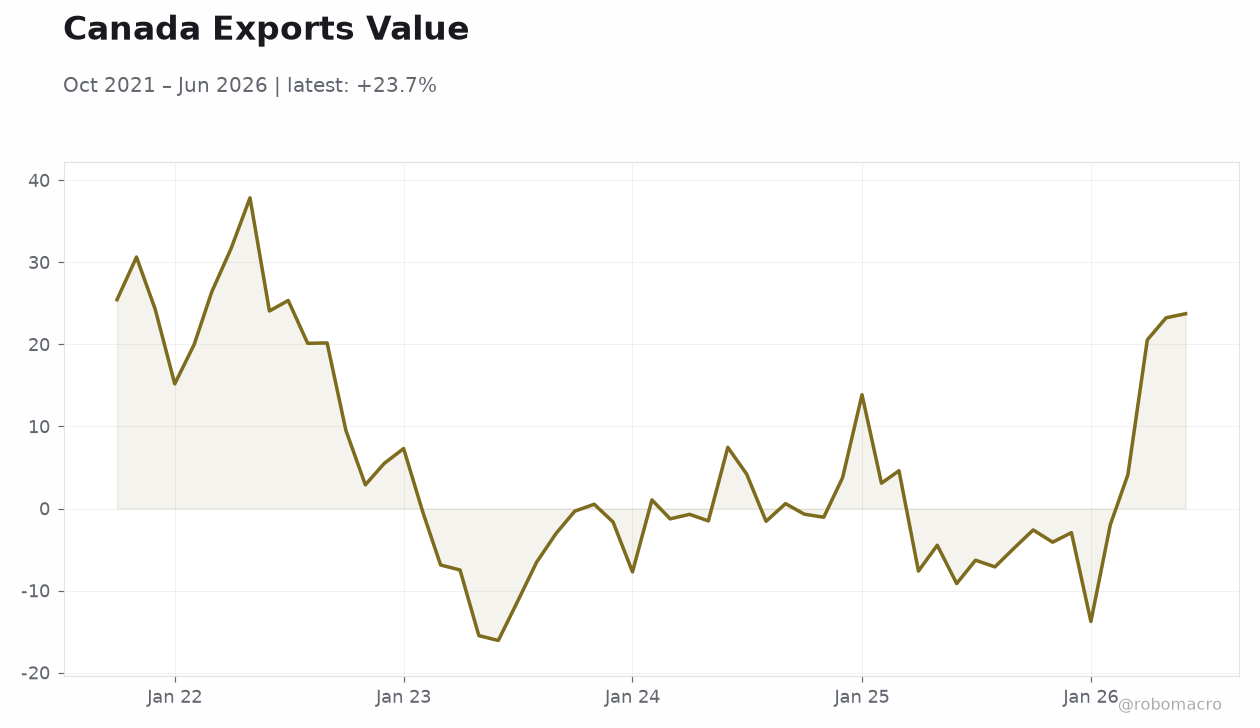
No Canadian data releases are scheduled for September 21 or 22. Attention turns to Thursday’s Retail Sales figures, which include the final month-over-month print, the preliminary release, and the ex-autos component. Consensus forecasts show a -0.8% decline for the headline and a -0.5% drop for the ex-autos series.
These prints will provide the first material Canadian economic update of the week and may influence near-term rate expectations. Market participants will also monitor any further developments in U.S.-Canada trade measures. Energy price movements remain relevant given Canada’s exposure to oil and natural gas revenues.
Other Economic Notes
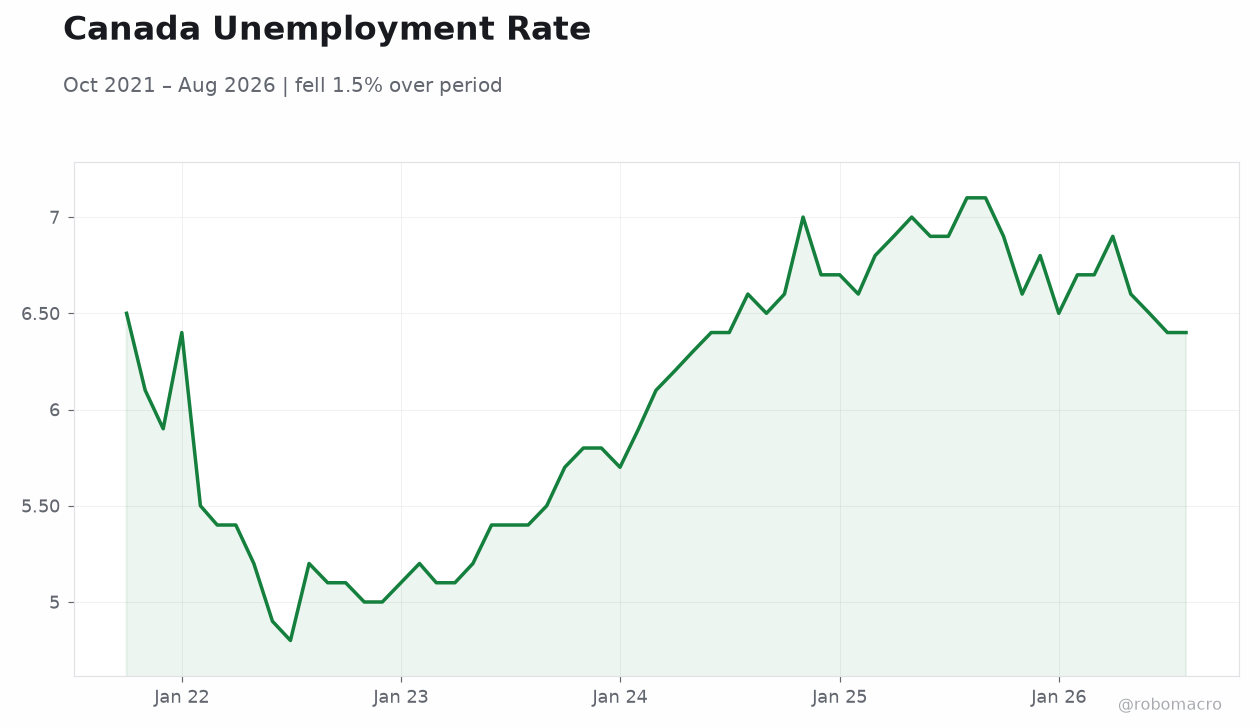
Inflation remains at 3.00% year-over-year as of August, keeping real yields under scrutiny. Domestic banks reported solid third-quarter results, though attention has shifted toward the implications of potential policy tightening. The Canadian dollar continues to trade near recent lows against the U.S.
dollar, reflecting the interest-rate differential and trade-policy uncertainty. Lower government bond yields on Friday suggest some caution among fixed-income investors even as hike expectations rose.