Canada Macro Daily(Beta Mode)
Macklem Warns Tariffs Could Halve Growth
Market Snapshot
| Asset | Level | Change |
|---|---|---|
| S&P/TSX | 36,009.40 | +0.57% |
| USD/CAD | 1.40 | +0.03% |
| EUR/CAD | 1.61 | +0.23% |
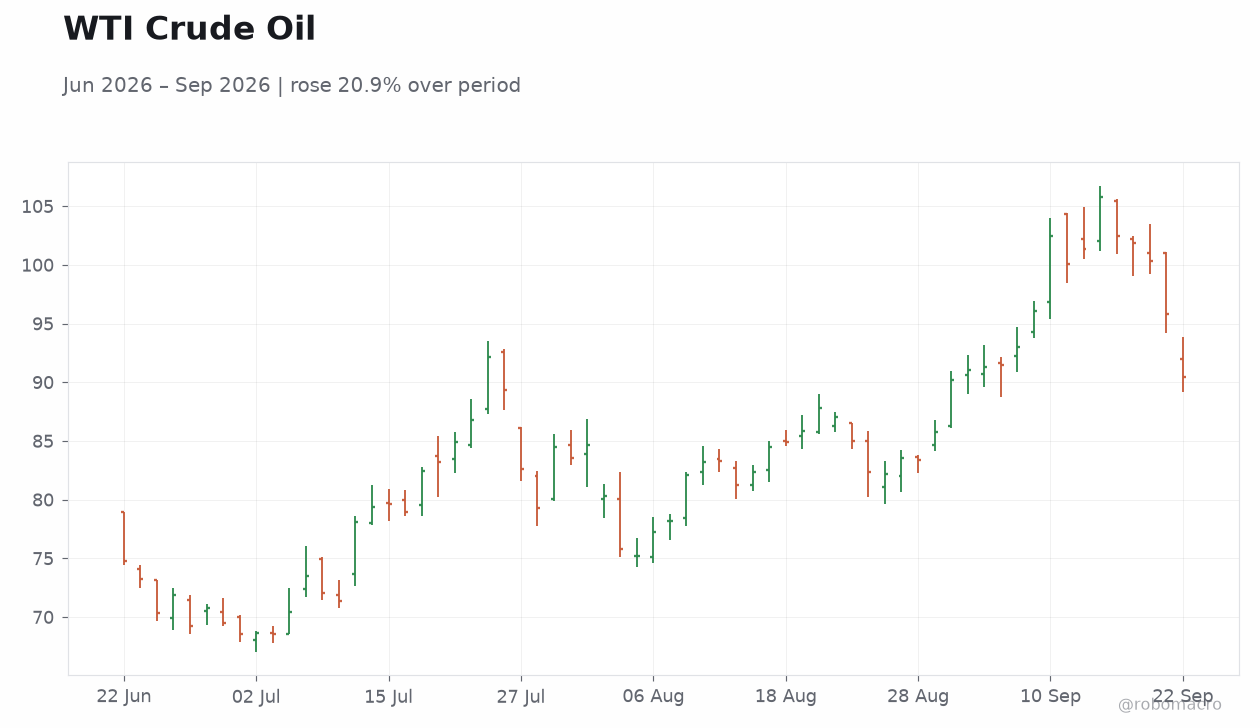
| WTI Crude | 90.48 | -5.53% |
| Natural Gas | 3.02 | +6.38% |
| Gold | 4,375.80 | -0.18% |
| Brent Crude | 98.82 | -1.51% |
| Bitcoin | 86,094.12 | -0.59% |
| Canada 2Y Govt Yield | 3.32% | +5 bp |
| Canada 10Y Govt Yield | 3.83% | -9 bp |
Prior Economic Events
| Data | Prior | Cons | Actual |
|---|---|---|---|
| No events available | |||
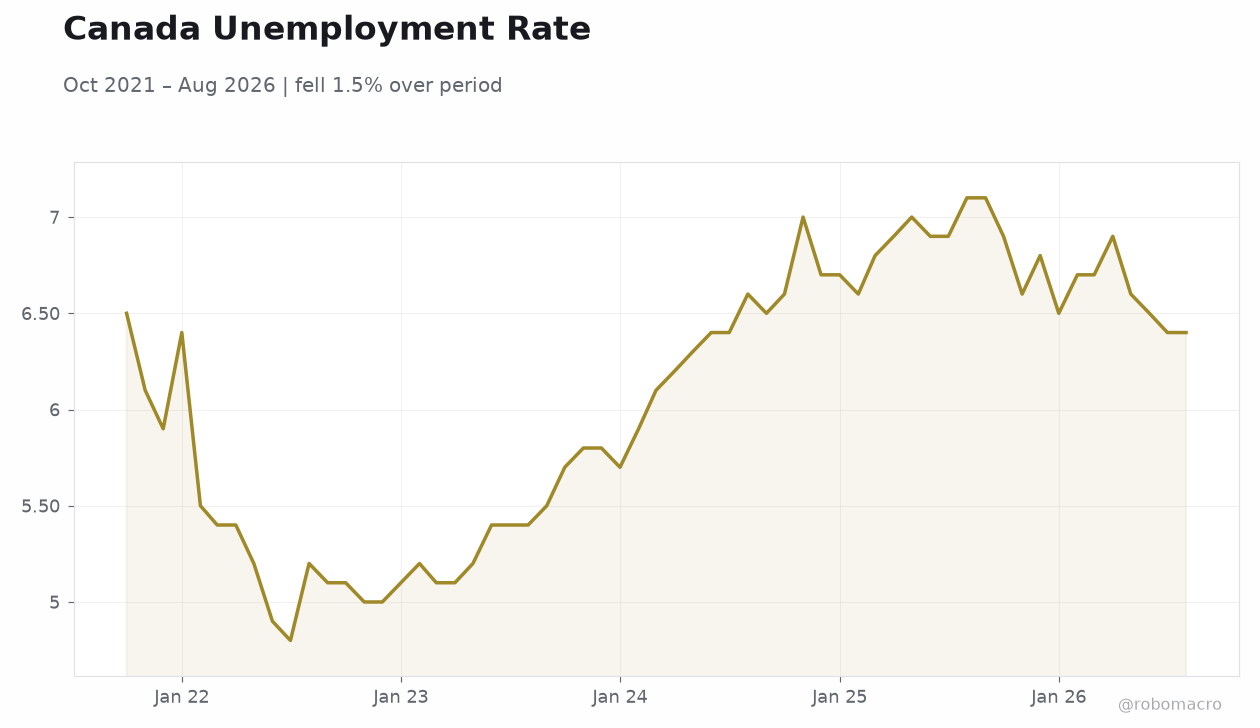 Canada Unemployment Rate | Type: macro_line | Unemployment %: 6.4 (2026-08-01) | Range: 4.8–7.1 | Trend(6pt): 6.5,5,5.9,6.9,6.5,6.4
Today's Economic Events
| Data | Prior | Cons | Time |
|---|---|---|---|
| Thursday (2026-09-24) | |||
| Retail Sales Month-over-Month Final | 0.60 | -0.80 | 04:30 |
| Retail Sales Month-over-Month Preliminary | - | - | 04:30 |
| Retail Sales excluding Autos Month-over-Month | 0.50 | -0.50 | 04:30 |
- Governor Macklem flags sharp downside risks to Canadian growth from U.S. tariffs while noting Atlantic provinces face lower exposure.
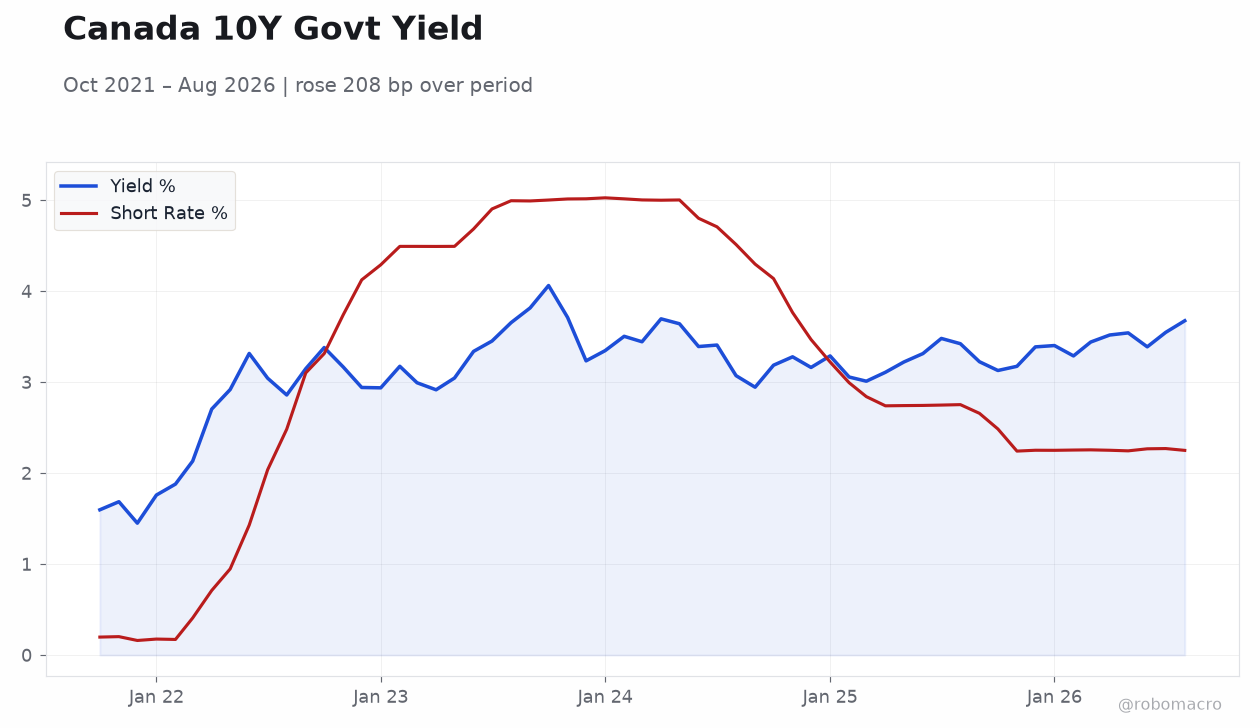
- TSX rises 0.57% to 36,009.40 as 2-year yields climb 5 bp to 3.32% and 10-year yields fall 9 bp to 3.83%.
- Retail sales figures due Thursday expected to contract, providing first consumer-spending read since tariff concerns intensified.
Yesterday's Recap
No Canadian economic data were released on September 21. Governor Tiff Macklem spoke in Halifax and stated that Atlantic Canada is less exposed to U.S. tariffs than other regions.
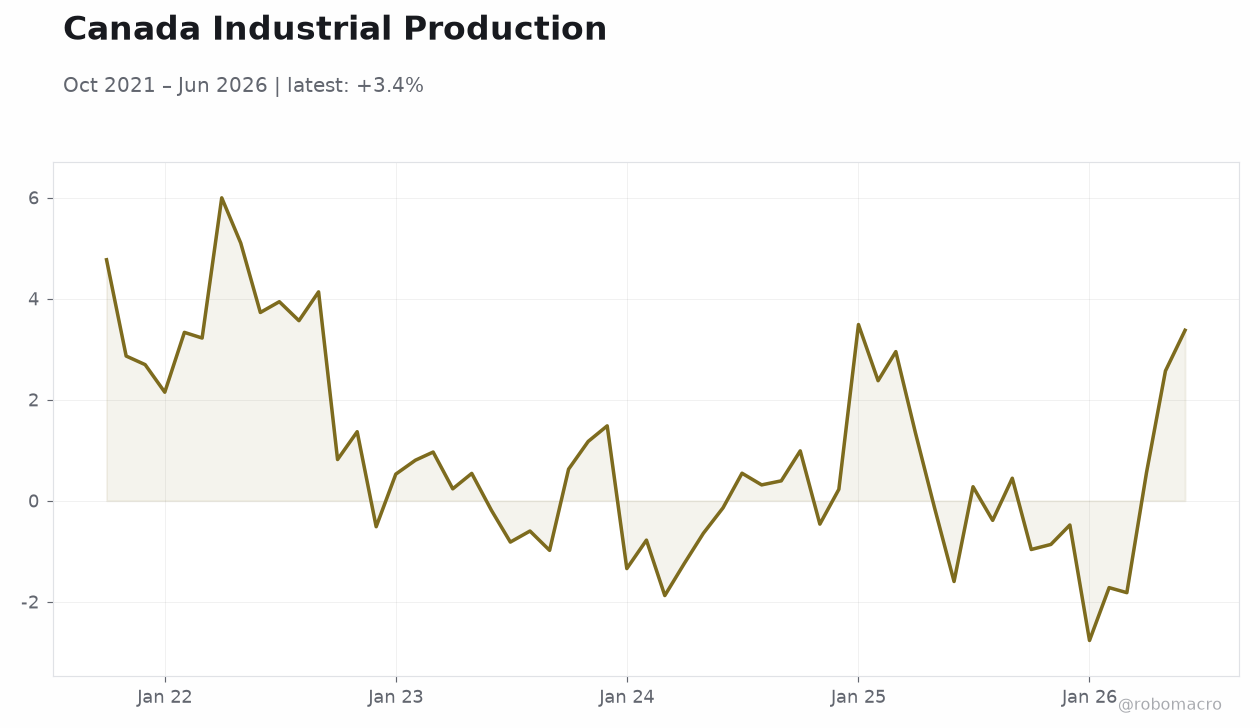
He warned that tariffs could halve Canadian growth and slash fourth-quarter GDP. Macklem also flagged growth risks after tariff talks with the United States broke down. A Bank of Canada note emphasized that supply shocks complicate inflation control.
The S&P/TSX Composite advanced 0.57% to 36,009.40 while WTI crude fell 5.53% to 90.48. USD/CAD edged 0.03% higher to 1.40 and the Canada 2-year yield rose 5 bp to 3.32% as the 10-year yield eased 9 bp to 3.83%. Natural gas rose 6.38% to 3.02 and Brent crude declined 1.51% to 98.82.
Gold eased 0.18% to 4,375.80 and Bitcoin fell 0.59% to 86,094.12. EUR/CAD gained 0.23% to 1.61.
The Day Ahead
No Canadian data releases are scheduled for September 22 or 23. Retail Sales MoM Final are due at 4:30 ET on September 24 with a consensus of -0.8% against a prior reading of 0.6%. The preliminary Retail Sales MoM print and Retail Sales ex-Autos MoM (consensus -0.5%, prior 0.5%) will also be published at the same time.
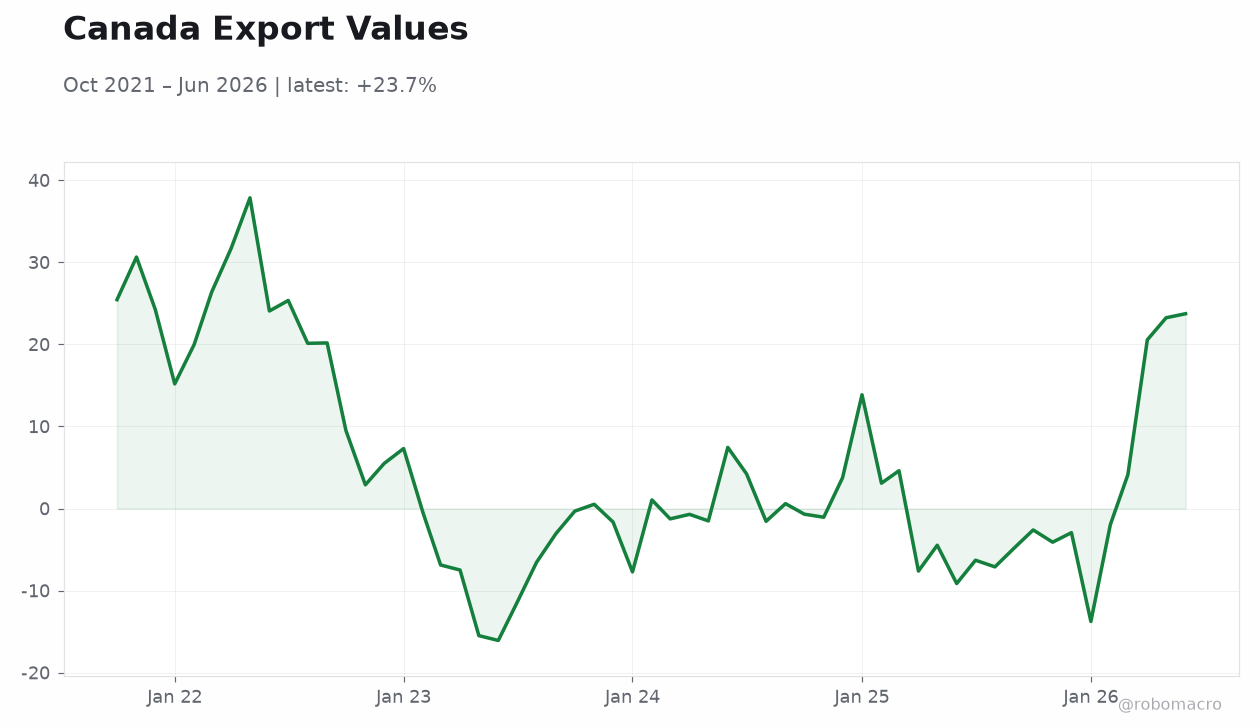
These figures will offer the first clear signal on consumer spending after recent tariff warnings. Markets will watch whether the data alter expectations around the Bank of Canada’s next policy move. Energy prices and CAD crosses will remain sensitive to any further U.S.-Canada trade developments.
Other Economic Notes
Canada’s trade talks with India are making substantial progress, with officials targeting a deal in the coming months. Trade with Europe has expanded 80% since 2017, yet the United States remains Canada’s dominant export market. Investors continue to assess the Bank of Canada outlook amid ongoing tariff uncertainty and mixed signals on growth.
The policy rate stands at 2.25% and CPI YoY is at 3.00%. Domestic bond markets showed modest steepening as shorter-term yields rose while longer-term yields declined.