Canada Macro Daily(Beta Mode)
TSX Rises as CAD Weakens on Rate Gap
Market Snapshot
| Asset | Level | Change |
|---|---|---|
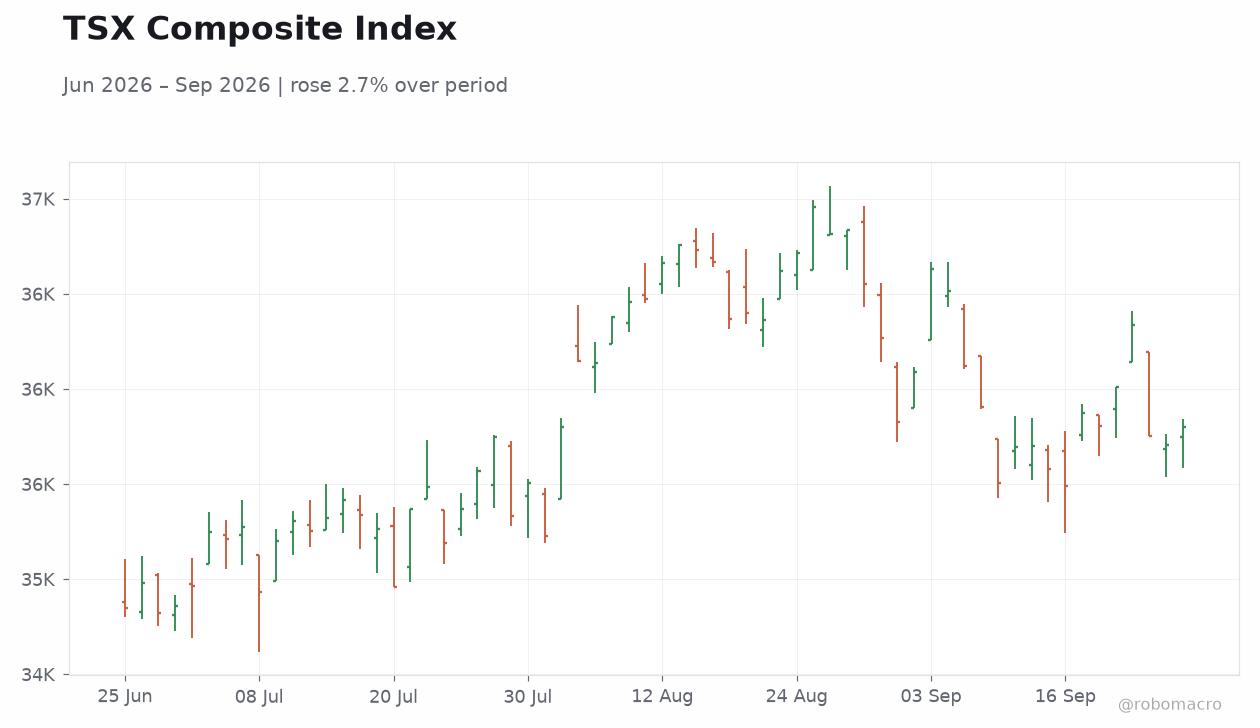
| S&P/TSX | 35,800.90 | +0.26% |
| USD/CAD | 1.42 | +0.15% |
| EUR/CAD | 1.61 | +0.24% |
| WTI Crude | 95.04 | +2.85% |
| Natural Gas | 3.13 | -2.00% |
| Gold | 4,201.10 | -2.78% |
| Brent Crude | 99.78 | -4.35% |
| Bitcoin | 83,342.32 | -1.32% |
| Canada 2Y Govt Yield | 3.39% | -1 bp |
| Canada 10Y Govt Yield | 3.97% | +1 bp |
Prior Economic Events
| Data | Prior | Cons | Actual |
|---|---|---|---|
| No events available | |||
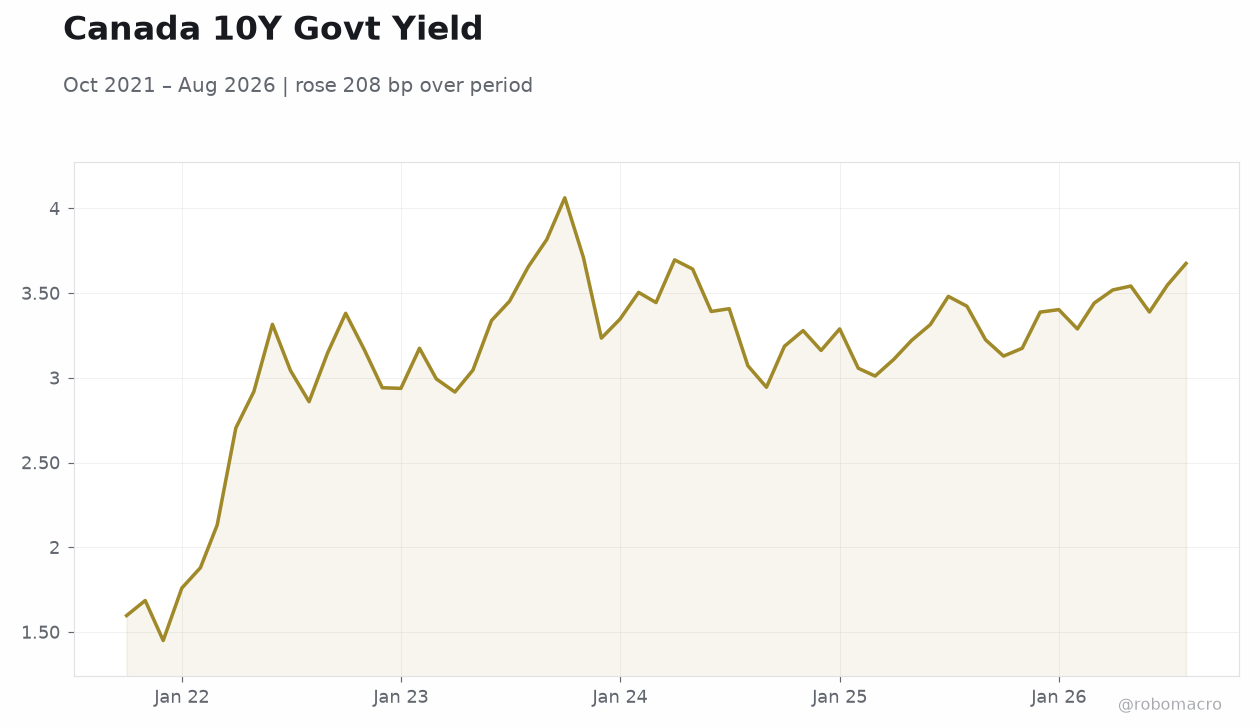 Canada 10Y Govt Yield | Type: macro_line | 10Y Yield (%): 3.675 (2026-08-01) | Range: 1.45–4.062 | Trend(6pt): 1.597,2.942,3.504,3.109,3.388,3.675
Today's Economic Events
| Data | Prior | Cons | Time |
|---|---|---|---|
| Tuesday (2026-09-29) | |||
| GDP Month-over-Month | 0.30 | 0 | 04:30 |
| GDP Month-over-Month Prel | - | - | 04:30 |
| Thursday (2026-10-01) | |||
| S&P Global Manufacturing PMI Index | 53 | - | 05:30 |
- S&P/TSX gained 0.26% amid higher WTI crude while USD/CAD rose 0.15% on widening US-Canada rate differentials.
- Economists surveyed by Bloomberg expect hotter Canadian inflation ahead despite August CPI at 3.00%.
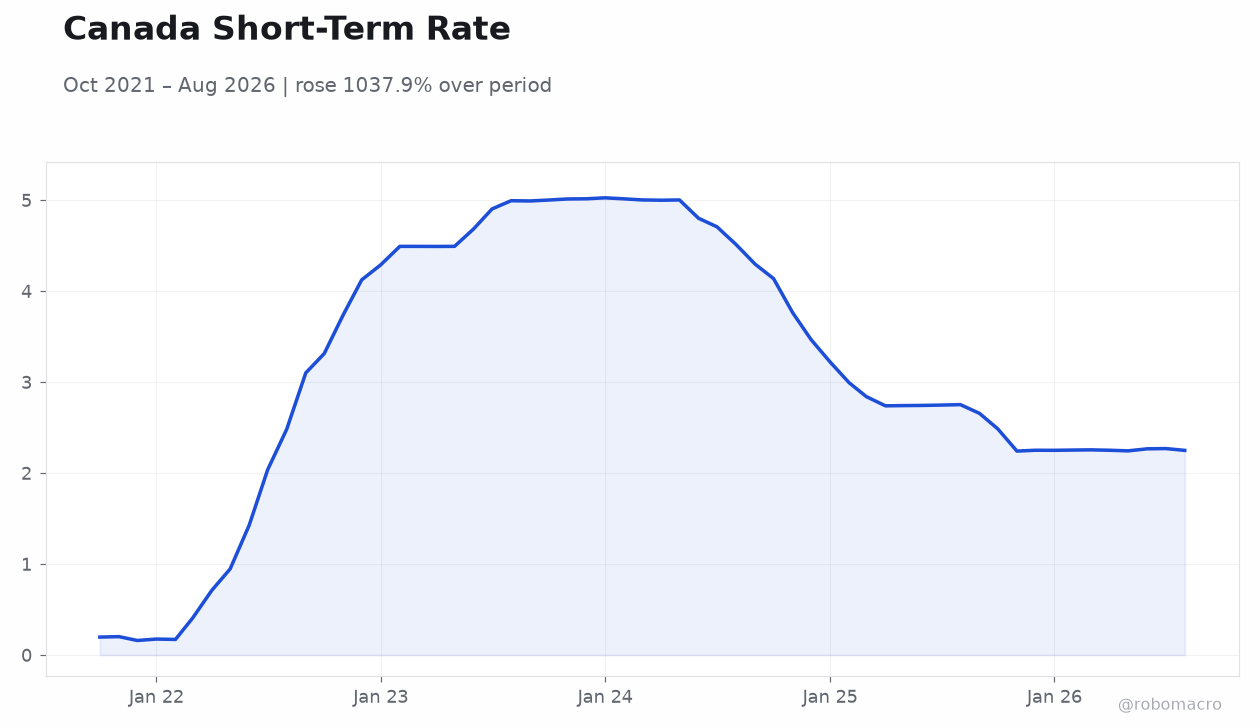
- Bank of Canada widely expected to hold the 2.25% policy rate this week as 2-year yields eased 1 bp to 3.39%.
Yesterday's Recap
Canadian markets closed higher on September 27 with the S&P/TSX Composite advancing 0.26% to 35,800.90. WTI crude climbed 2.85% to 95.04 while Brent crude fell 4.35% to 99.78. Natural gas declined 2.00% to 3.13 and gold dropped 2.78% to 4,201.10.
USD/CAD rose 0.15% to 1.42 and EUR/CAD increased 0.24% to 1.61, reflecting CAD underperformance against both currencies. The Canada 2-year government yield fell 1 bp to 3.39% while the 10-year yield rose 1 bp to 3.97%. No economic data releases occurred on the day.
Bloomberg survey results showed economists anticipate firmer inflation readings ahead, consistent with recent gasoline-driven softness that left August CPI at 3.00%. CIBC noted tariffs and elevated yields are trimming growth forecasts.
The Day Ahead
Two medium-impact Canadian releases are scheduled for September 29 at 04:30 ET. GDP month-over-month is expected at 0.0% versus the prior 0.3% print, with a preliminary reading also due. The September 29 outcome will provide the first growth signal since the last policy meeting and could shift front-end yield pricing.
On October 1 the S&P Global Manufacturing PMI is due, following the prior 53.0 reading. Markets will monitor whether the GDP print alters expectations for the Bank of Canada’s October decision. CAD crosses and 2-year yields are likely to react most directly to any surprise in the growth data.
Other Economic Notes
CIBC highlighted slowing Canadian growth as tariffs and elevated yields weigh on domestic demand. Recent inflation data at 3.00% combined with survey expectations for hotter readings have kept markets focused on the persistence of price pressures. National Bank of Canada shares outperformed the broader index on Friday amid dividend analysis and steady sector sentiment.
Energy price divergence, with WTI rising while Brent declined, underscores Canada-specific crude dynamics tied to North American supply. The combination of steady policy expectations and external rate differentials continues to pressure CAD.