Canada Macro Daily(Beta Mode)
Trade Surplus Widens as PMI Slips
Market Snapshot
| Asset | Level | Change |
|---|---|---|
| S&P/TSX | 35,009.88 | -0.09% |
| USD/CAD | 1.42 | +0.10% |
| EUR/CAD | 1.60 | -0.03% |
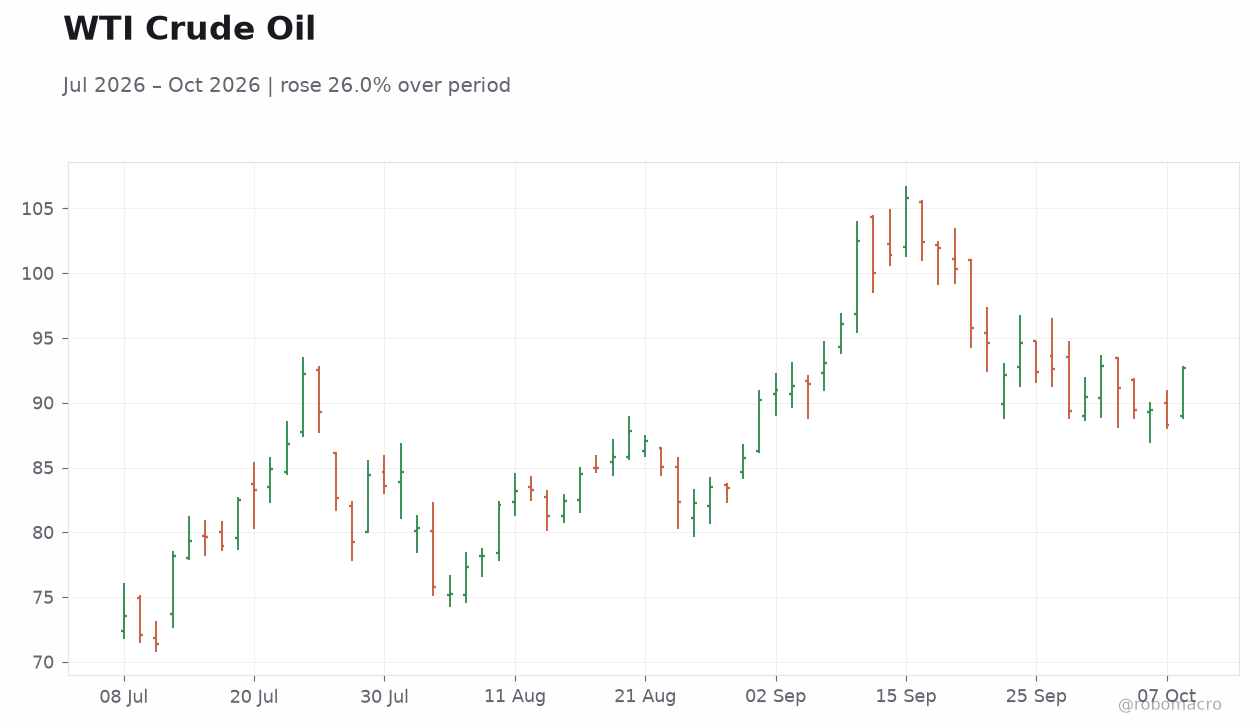
| WTI Crude | 92.71 | +5.02% |
| Natural Gas | 3.18 | -0.69% |
| Gold | 4,149.30 | +0.21% |
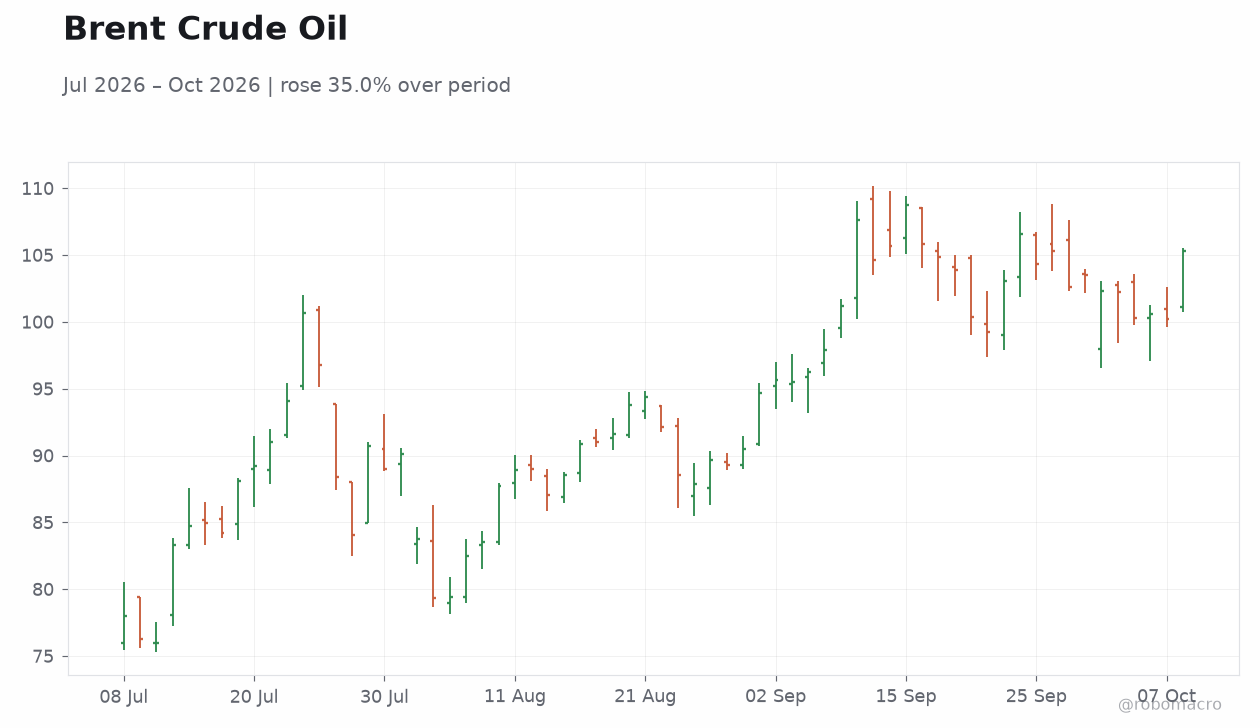
| Brent Crude | 105.40 | +5.19% |
| Bitcoin | 82,370.79 | -1.09% |
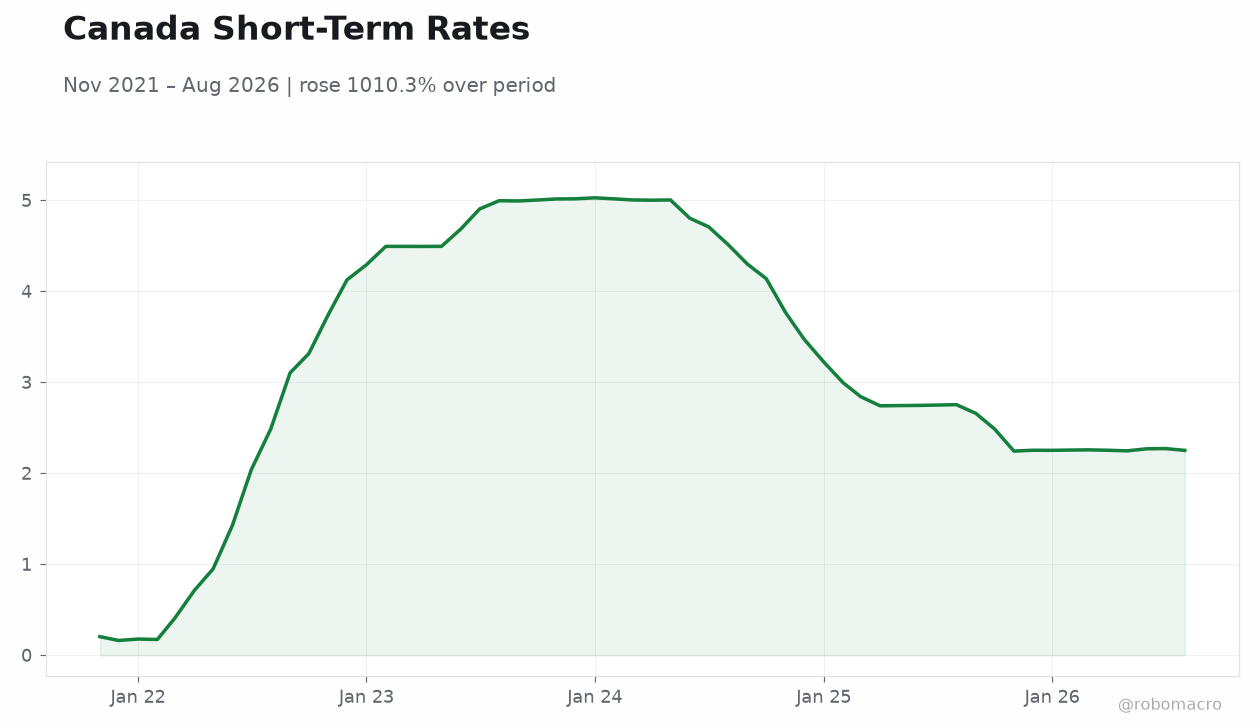
| Canada 2Y Govt Yield | 3.23% | 0 bp |
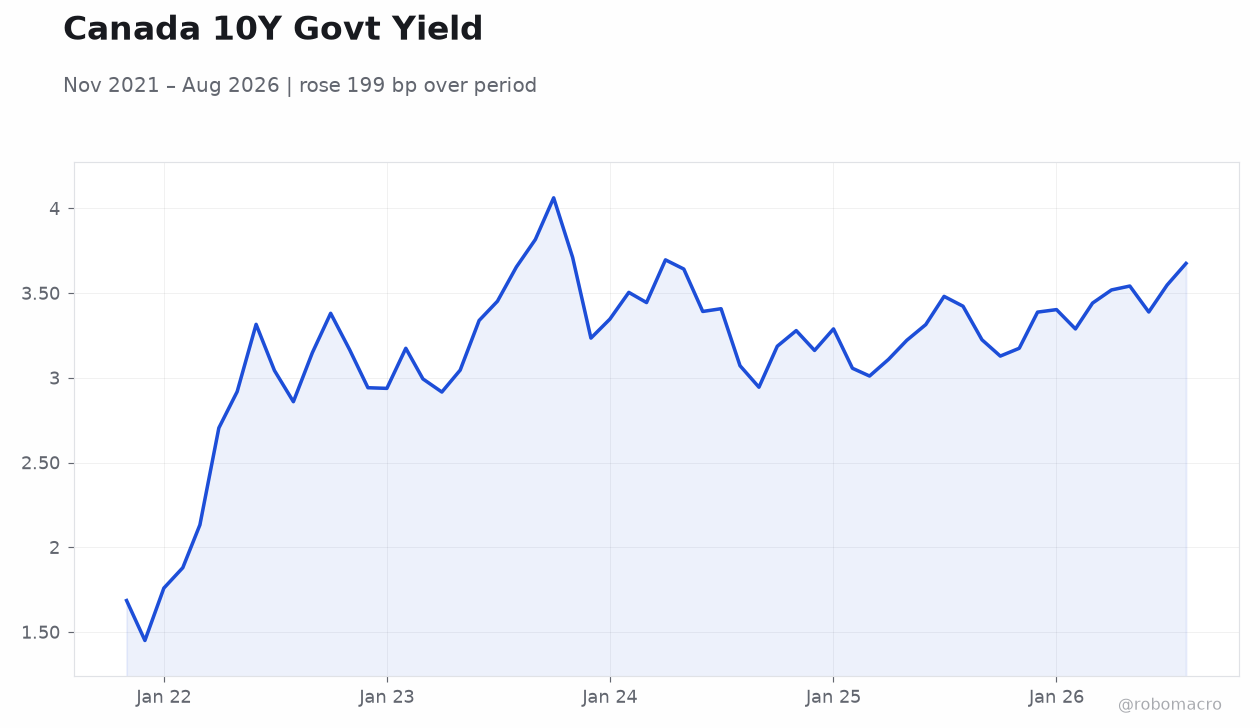
| Canada 10Y Govt Yield | 3.94% | +2 bp |
Prior Economic Events
| Data | Prior | Cons | Actual |
|---|---|---|---|
| Trade Balance | 790m | 1,700m | 4,200m |
| Ivey PMI Seasonally Adjusted | 64.30 | 65.20 | 58.20 |
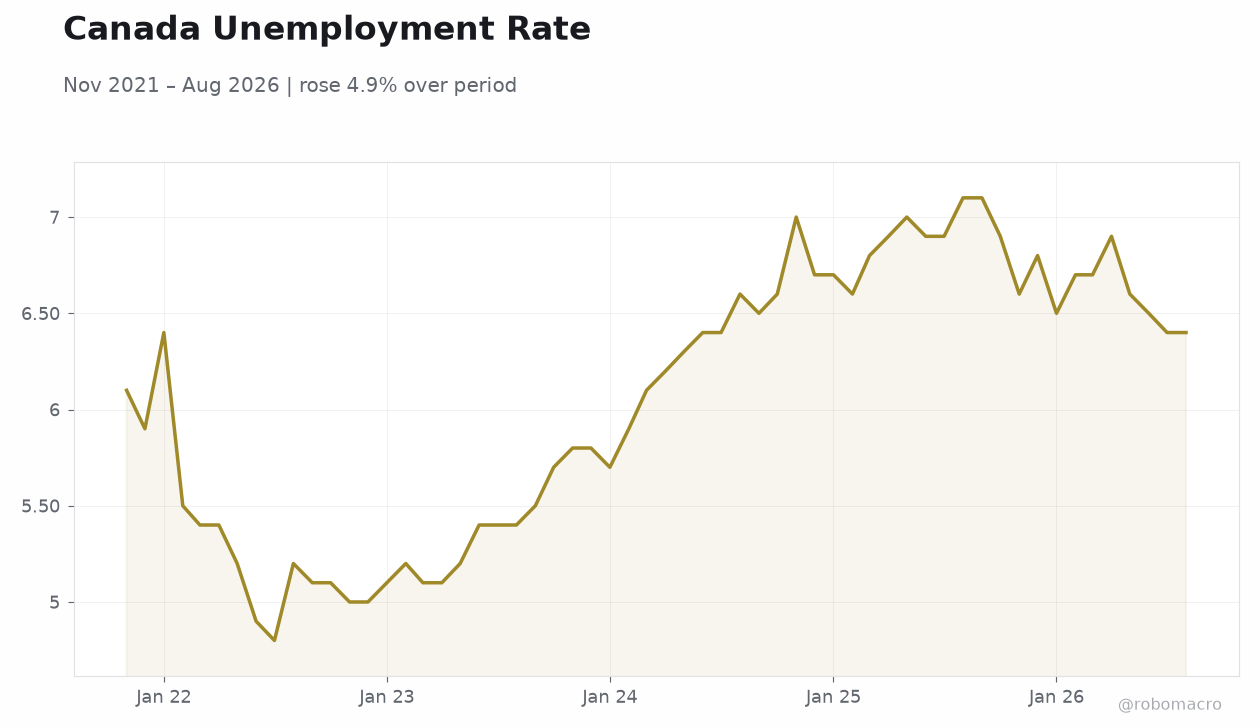 Canada Unemployment Rate | Type: macro_line | Unemployment Rate (%): 6.4 (2026-08-01) | Range: 4.8–7.1 | Trend(5pt): 6.1,5.1,6.1,7,6.4
Today's Economic Events
| Data | Prior | Cons | Time |
|---|---|---|---|
| Friday (2026-10-09) | |||
| Headline Unemployment Rate | 6.40 | 6.50 | 08:30 |
| Employment Change | -41,700 | 7,000 | 08:30 |
| Full-Time Employment Change | -35,900 | - | 08:30 |
| Labor Force Participation | 65 | - | 08:30 |
| Part-Time Employment Change | -5,800 | - | 08:30 |
- Canada August trade surplus reached C$4.2 billion, beating forecasts.
- Ivey PMI dropped sharply to 58.2, missing consensus of 65.2.
- TSX closed near flat while WTI crude jumped 5% on supply risks.
Yesterday's Recap
Canada’s August trade balance printed a C$4.2 billion surplus, well above the C$1.7 billion consensus, driven by stronger energy exports ahead of new U.S. tariffs. The Ivey PMI Seasonally Adjusted index fell to 58.2 from 64.3, undershooting expectations and signaling a sharper slowdown in private-sector activity than anticipated.
The S&P/TSX ended 0.09% lower at 35,009.88 as investors digested the mixed data. USD/CAD rose 0.10% to 1.42 while the 10-year Canada yield climbed 2 bp to 3.94%. WTI crude surged 5.02% to 92.71 and Brent rose 5.19% to 105.40 amid Middle East supply concerns.
Natural gas eased 0.69% and gold added 0.21%. The 2-year yield held steady at 3.23%. Broader market moves reflected tariff uncertainty and energy-price volatility, with the Canadian dollar showing modest resilience against the greenback despite softer PMI.
The Day Ahead
Markets will focus on Friday’s labor-force survey, which includes the headline unemployment rate, employment change, and participation metrics. Consensus expects unemployment to rise to 6.5% from 6.4% and employment to add 7,000 jobs after last month’s 41,700 decline. Full-time and part-time employment changes plus labor-force participation will also be released at 8:30 ET.
Any material downside surprise in hiring could reinforce expectations for further Bank of Canada easing. Energy prices and tariff-related headlines will continue to influence CAD crosses and TSX sector rotation, with attention on how weaker jobs data might interact with ongoing U.S. tariff implementation.
Other Economic Notes
New U.S. tariffs on Canadian goods are set to take effect, raising downside risks to export-oriented sectors and prompting fresh scrutiny of domestic growth. Officials have noted that the policy rate remains too blunt an instrument to address housing affordability, shifting emphasis toward supply-side reforms.
Digital-economy metrics released this week highlight productivity gains from AI adoption, yet labor-market softening could limit wage-driven inflation pressures. Broader fiscal support measures are being weighed against elevated government debt levels, while the BoC’s 2.25% policy rate and 3.00% CPI print frame the backdrop for any policy adjustments.