Canada Macro Daily(Beta Mode)
Loonie Steadies as Yields Grind Higher
Market Snapshot
| Asset | Level | Change |
|---|---|---|
| S&P/TSX | 35,584.50 | -1.11% |
| USD/CAD | 1.42 | -0.18% |
| EUR/CAD | 1.59 | -0.05% |
| WTI Crude | 93.92 | -1.23% |
| Natural Gas | 3.25 | +1.59% |
| Gold | 4,178.20 | +1.71% |
| Brent Crude | 104.57 | -1.40% |
| Bitcoin | 81,066.19 | -0.61% |
| Canada 2Y Govt Yield | 3.19% | +1 bp |
| Canada 10Y Govt Yield | 3.87% | +1 bp |
Prior Economic Events
| Data | Prior | Cons | Actual |
|---|---|---|---|
| BoC Gov Macklem Speech | - | - | - |
| BoC Rogers Speech | - | - | - |
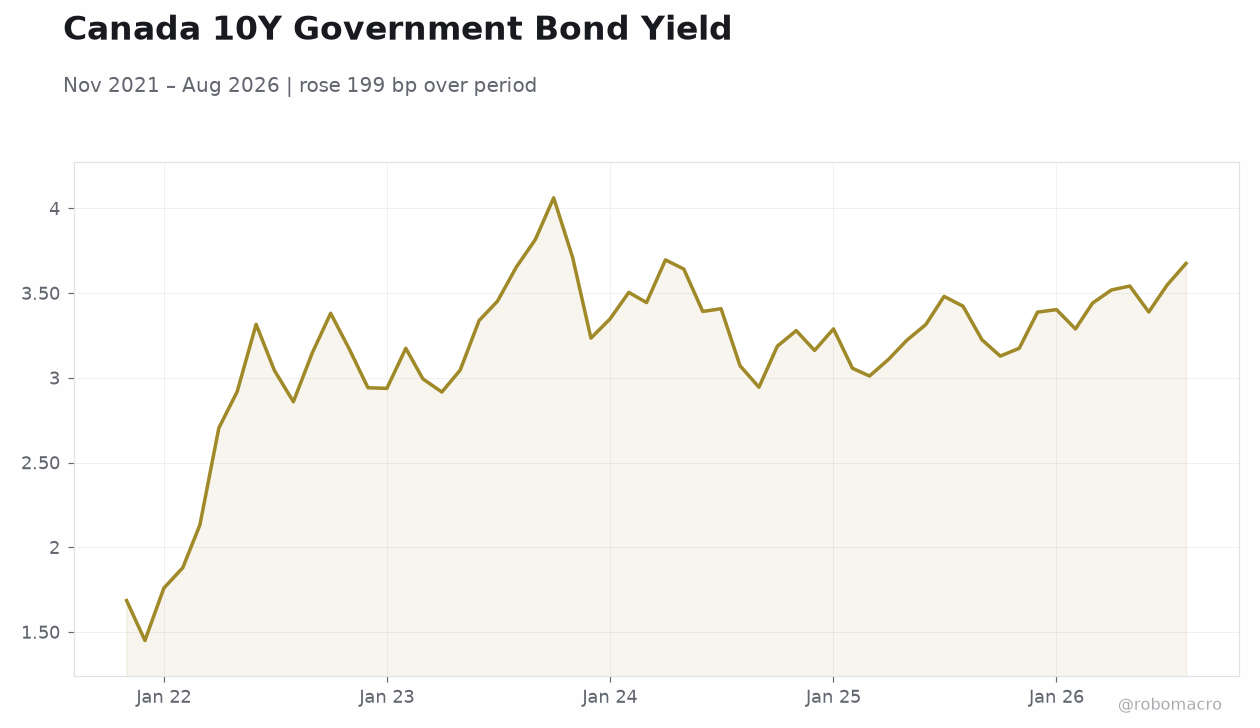 Canada 10Y Government Bond Yield | Type: macro_line | Long-Term Govt Yield (%): 3.675 (2026-08-01) | Range: 1.45–4.062 | Trend(6pt): 1.686,2.938,3.444,3.221,3.547,3.675
Today's Economic Events
| Data | Prior | Cons | Time |
|---|---|---|---|
| Friday (2026-10-16) | |||
| BoC Gov Macklem Speech | - | - | 00:15 |
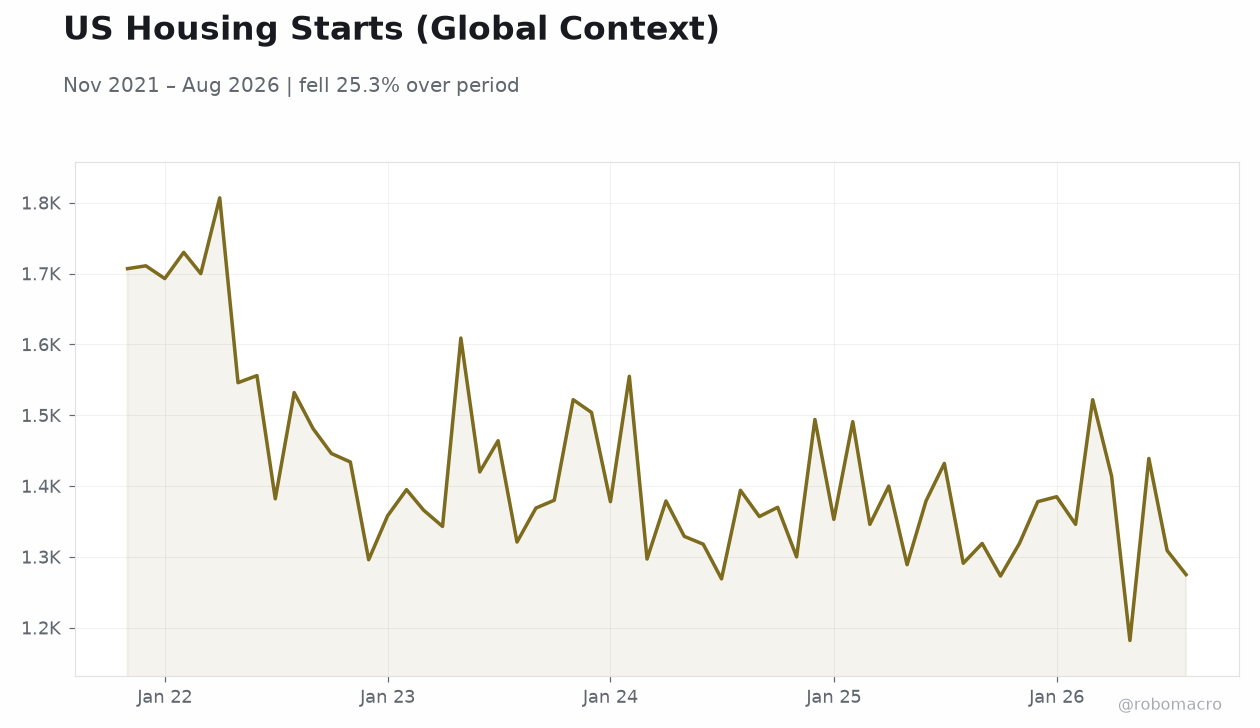
| Housing Starts Level | 229,000 | 232,500 | 08:15 |
- Canada 2Y and 10Y yields each edged up 1 bp to 3.19% and 3.87%, tracking firmer U.S. rate expectations after hot CPI prints south of the border.
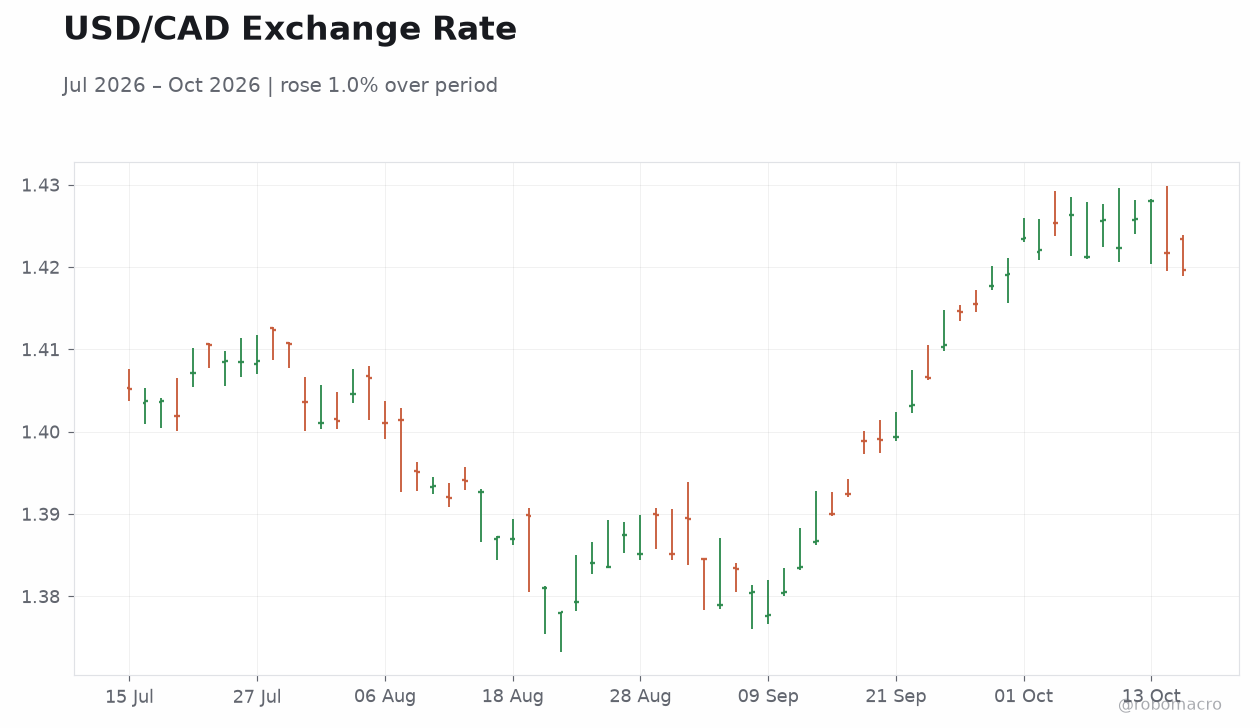
- USD/CAD slipped 0.18% to 1.42, with the loonie recovering from an 18-month low as the greenback's post-CPI surge cooled.
- Attention turns to Governor Macklem's speech at 00:15 ET Friday and September Housing Starts, consensus 232.5K vs prior 229K.
Yesterday's Recap
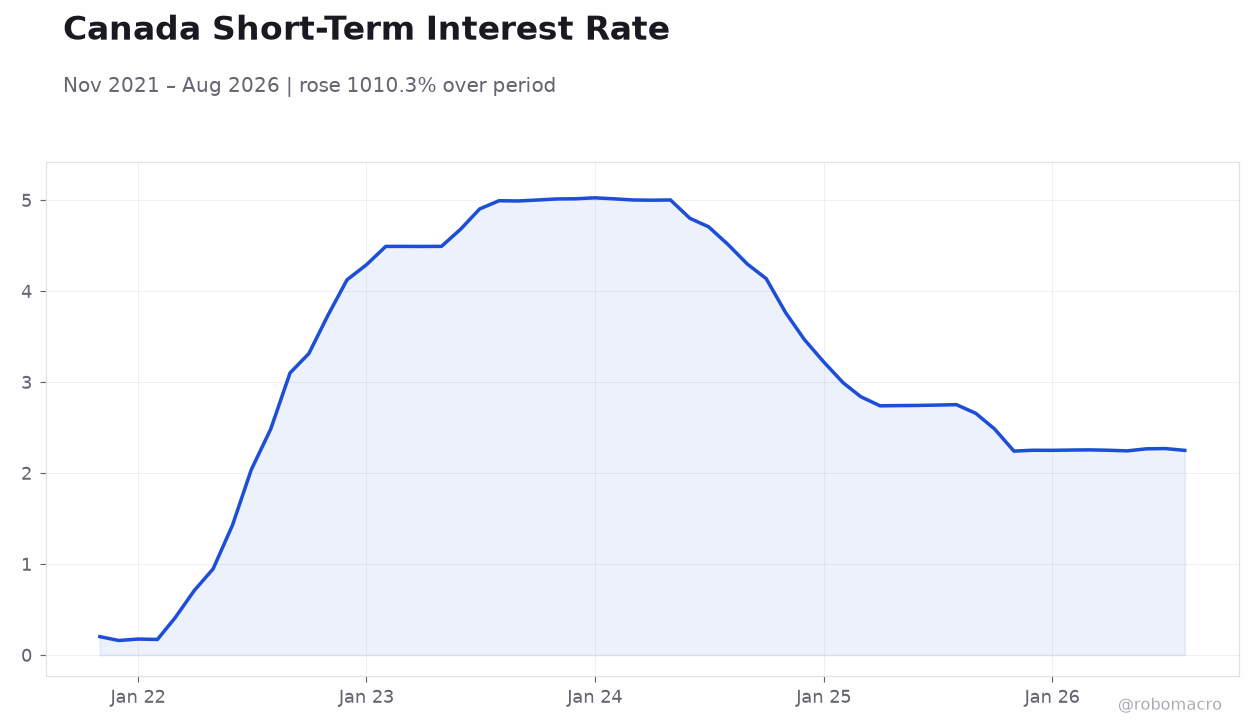
Canadian fixed income ground higher in thin conditions, with the 2-year yield adding 1 bp to 3.19% and the 10-year finishing at 3.87%, also up 1 bp, as traders positioned for a prolonged BoC pause. The move mirrored U.S. Treasury dynamics, where hotter-than-expected inflation data revived debate over the pace of future policy easing and pressured rate-sensitive assets globally.
Equities lagged: the S&P/TSX Composite fell 1.11% to 35,584.50, with financials and energy names weighing as investors rotated toward defensives. Commodity action was mixed — WTI crude dropped 1.23% to $93.92 and Brent lost 1.40% to $104.57, a headwind for the energy-heavy index, while natural gas bucked the trend, rallying 1.59% to 3.25. Gold shone, climbing 1.71% to $4,178.20, and Bitcoin eased 0.61% to 81,066.
On FX, USD/CAD retreated 0.18% to 1.42 after the loonie earlier touched an 18-month low amid the dollar's CPI-driven rally; EUR/CAD was little changed at 1.59. On the calendar, Governor Macklem spoke overnight and Senior Deputy Governor Rogers followed in the morning, both high-impact events without published takeaways in the data feed.
The Day Ahead
Friday's docket is headlined by Governor Macklem's speech at 00:15 ET, a high-impact event where markets will parse any elaboration on the Bank's revised growth outlook given lower immigration targets. The key domestic print is Housing Starts at 08:15 ET, with consensus looking for 232.5K against the prior 229K — a modest rebound that would suggest residential construction is stabilizing after a soft stretch. A downside surprise would reinforce the narrative of cooling shelter demand and softer construction employment, while an upside beat could support the view that the housing correction is finding a floor.
With no BoC decision this week, the speeches and housing data will do the heavy lifting for rate expectations into the October 28 decision window. Watch the 2s10s spread for steepening signals and how the loonie behaves around Macklem's remarks.
Other Economic Notes
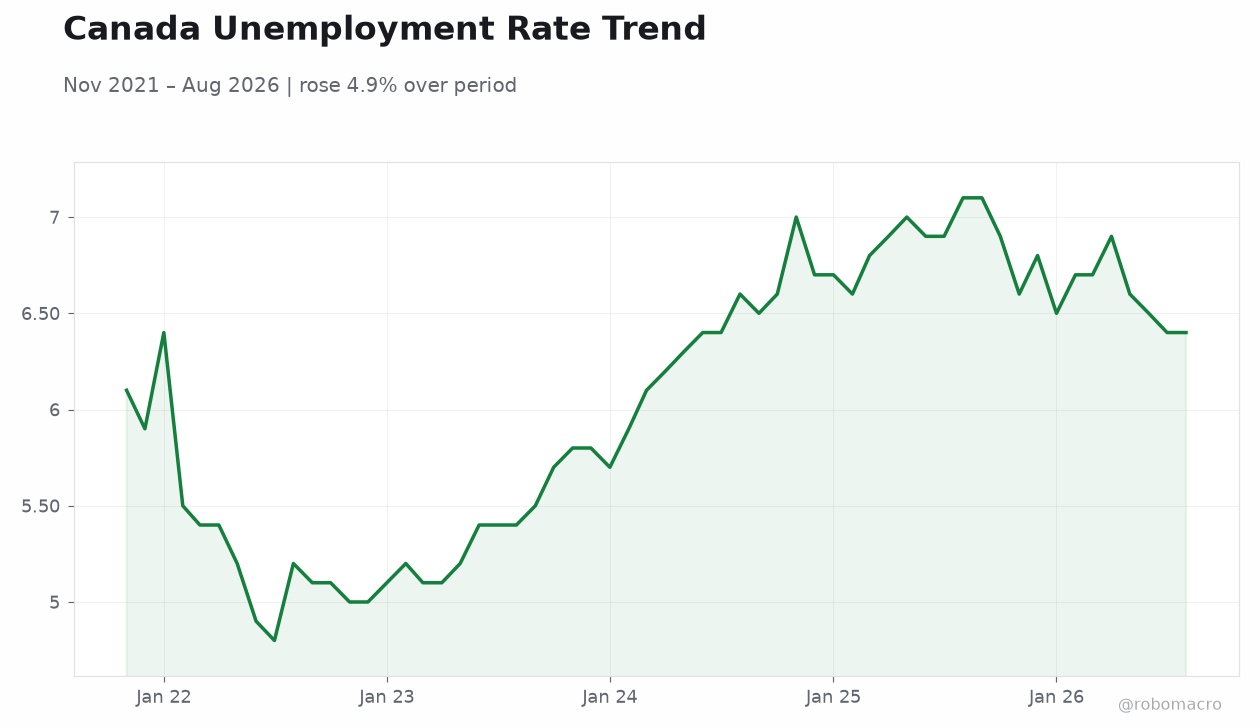
The structural story dominating Canadian macro remains the federal government's reduced immigration targets, which the Bank of Canada has flagged as a durable downgrade to potential GDP growth — a supply-side constraint with implications for housing, labor markets, and fiscal revenues. ↓ p.2