Canada Macro Daily(Beta Mode)
Manufacturing PMI Contracts as BoC Signals More Tightening
Market Snapshot
| Asset | Level | Change |
|---|---|---|
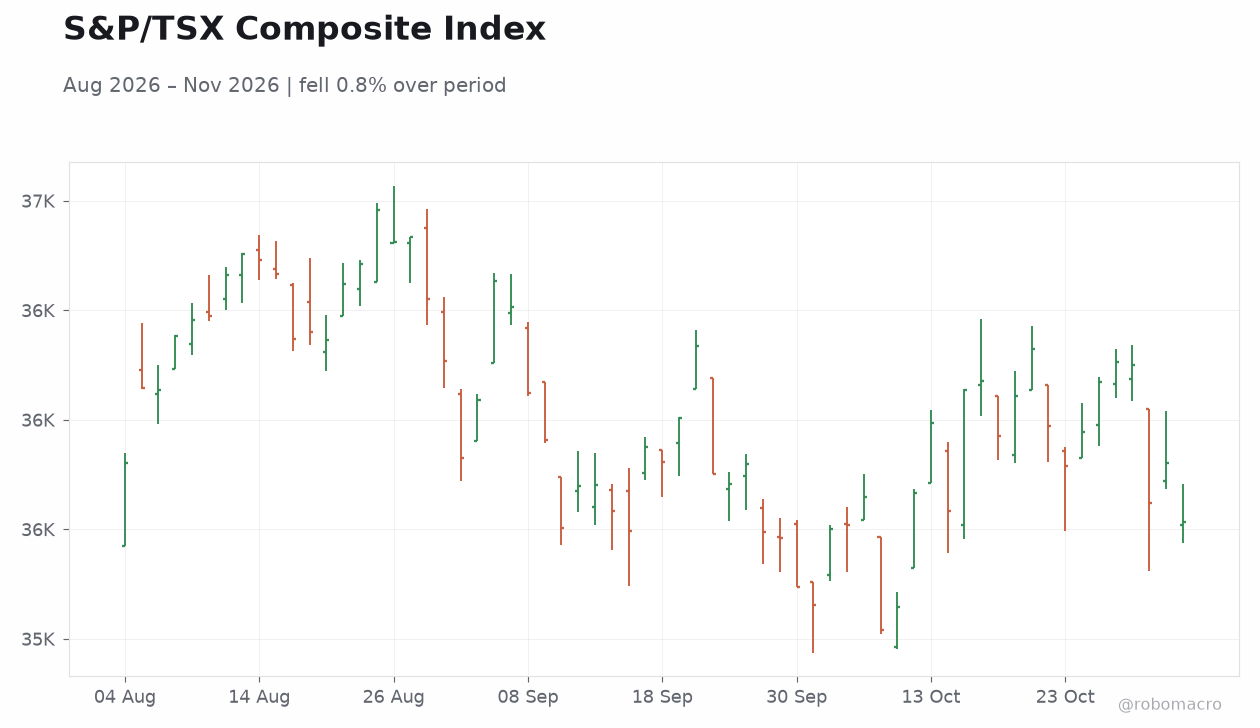
| S&P/TSX | 35,532.30 | -0.75% |
| USD/CAD | 1.40 | -0.19% |
| EUR/CAD | 1.57 | +0.37% |
| WTI Crude | 95.18 | -0.95% |
| Natural Gas | 2.90 | +0.07% |
| Gold | 4,053.00 | +2.86% |
| Brent Crude | 102.29 | -1.26% |
| Bitcoin | 78,535.65 | +1.54% |
| Canada 2Y Govt Yield | 3.26% | -2 bp |
| Canada 10Y Govt Yield | 3.74% | -4 bp |
Prior Economic Events
| Data | Prior | Cons | Actual |
|---|---|---|---|
| S&P Global Manufacturing PMI Index | 51.50 | - | 49.60 |
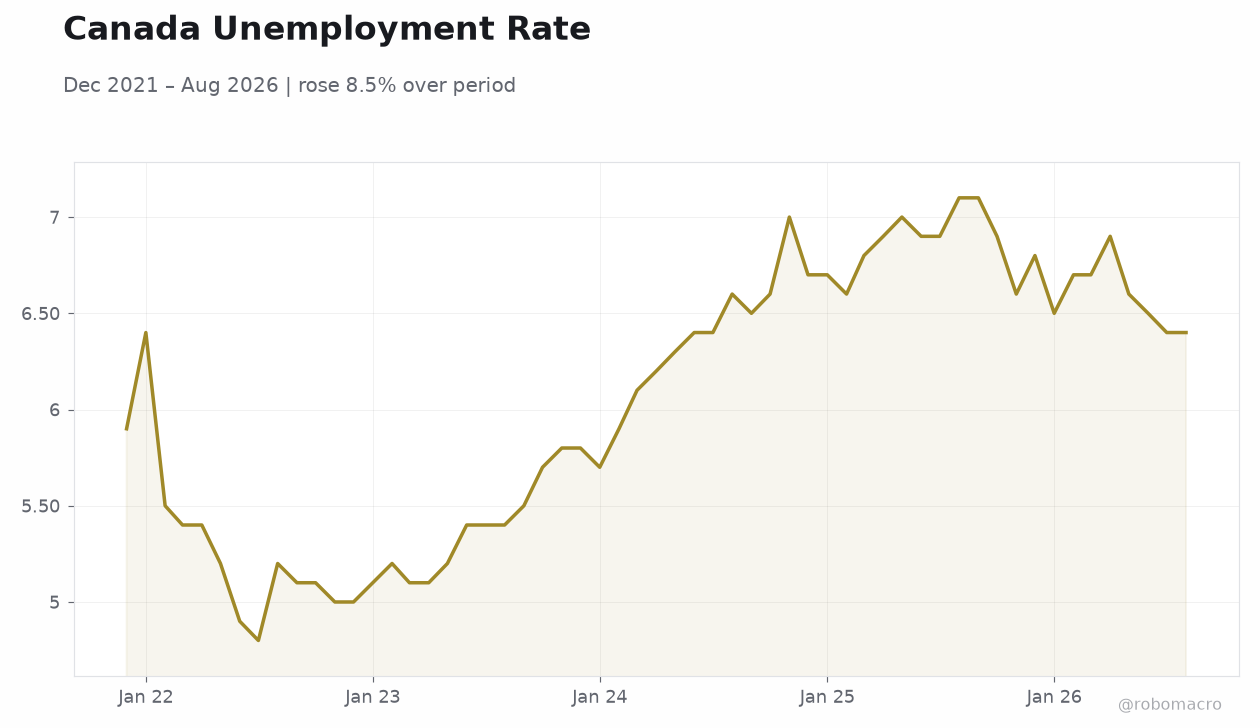 Canada Unemployment Rate | Type: macro_line | Unemployment Rate (%): 6.4 (2026-08-01) | Range: 4.8–7.1 | Trend(5pt): 5.9,5.2,6.2,6.9,6.4
Today's Economic Events
| Data | Prior | Cons | Time |
|---|---|---|---|
| Trade Balance | 4,200m | 4,100m | 08:30 |
| Friday (2026-11-06) | |||
| Headline Unemployment Rate | 6.50 | 6.50 | 08:30 |
| Employment Change | -68,300 | 13,600 | 08:30 |
| Full-Time Employment Change | -35,400 | - | 08:30 |
| Labor Force Participation | 64.80 | - | 08:30 |
| Part-Time Employment Change | -32,900 | - | 08:30 |
| Ivey PMI Seasonally Adjusted | 58.20 | 58 | 10:00 |
- S&P Global Manufacturing PMI fell to 49.6 in November from 51.5, slipping into contraction territory and underscoring broadening weakness in Canadian industry.
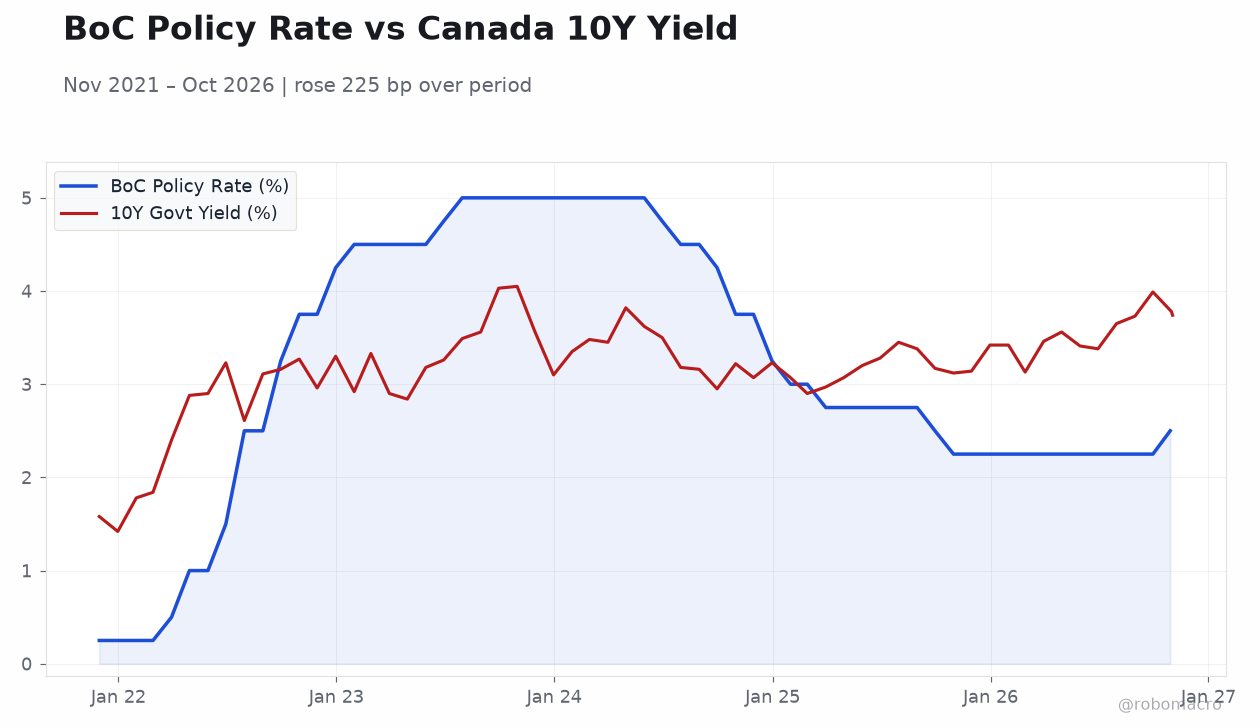
- Bank of Canada Governor Macklem told MPs fiscal and monetary policy are not at odds, while pledging to "proceed carefully" on further rate increases amid a worsening inflation outlook.
- Canada 2Y and 10Y yields eased 2 bp and 4 bp respectively to 3.26% and 3.74%, even as the BoC retains a hawkish tilt; USD/CAD edged lower to 1.40.
Yesterday's Recap
The S&P Global Manufacturing PMI printed at 49.6 for November, down sharply from 51.5 the prior month and below the 50 no-change threshold, marking a return to contraction for Canadian manufacturing. The soft print reinforced concerns that elevated interest rates and soft global demand are weighing on goods-producing sectors. Market reaction was muted but risk-off: the S&P/TSX shed 0.75% to 35,532.30, with energy names likely leading declines as WTI fell 0.95% to $95.18 and Brent dropped 1.26% to $102.29.
Rates moved lower, with the Canada 2Y yield easing 2 bp to 3.26% and the 10Y down 4 bp to 3.74%, suggesting markets are pricing a slower tightening path despite hawkish BoC rhetoric. USD/CAD slipped 0.19% to 1.40, while EUR/CAD rose 0.37% to 1.57. Gold surged 2.86% to $4,053, reflecting safe-haven demand amid geopolitical risk.
The Day Ahead
Canada's Trade Balance for September is due at 08:30 ET, with consensus expecting a surplus of C$4.1 billion versus the prior C$4.2 billion. The print will be scrutinized for signs of export weakness amid soft manufacturing activity and lower crude prices. Attention then shifts to Friday's (Nov 6) labour force survey, where the unemployment rate is expected to hold at 6.5% and employment change is forecast at +13,600 following a steep -68,300 decline last month.
Full-time and part-time employment details, along with the participation rate (prior 64.8%), will be key for assessing labour market resilience. The Ivey PMI for October is also due Friday at 10:00 ET, with consensus at 58.0 versus 58.2 prior.
Other Economic Notes
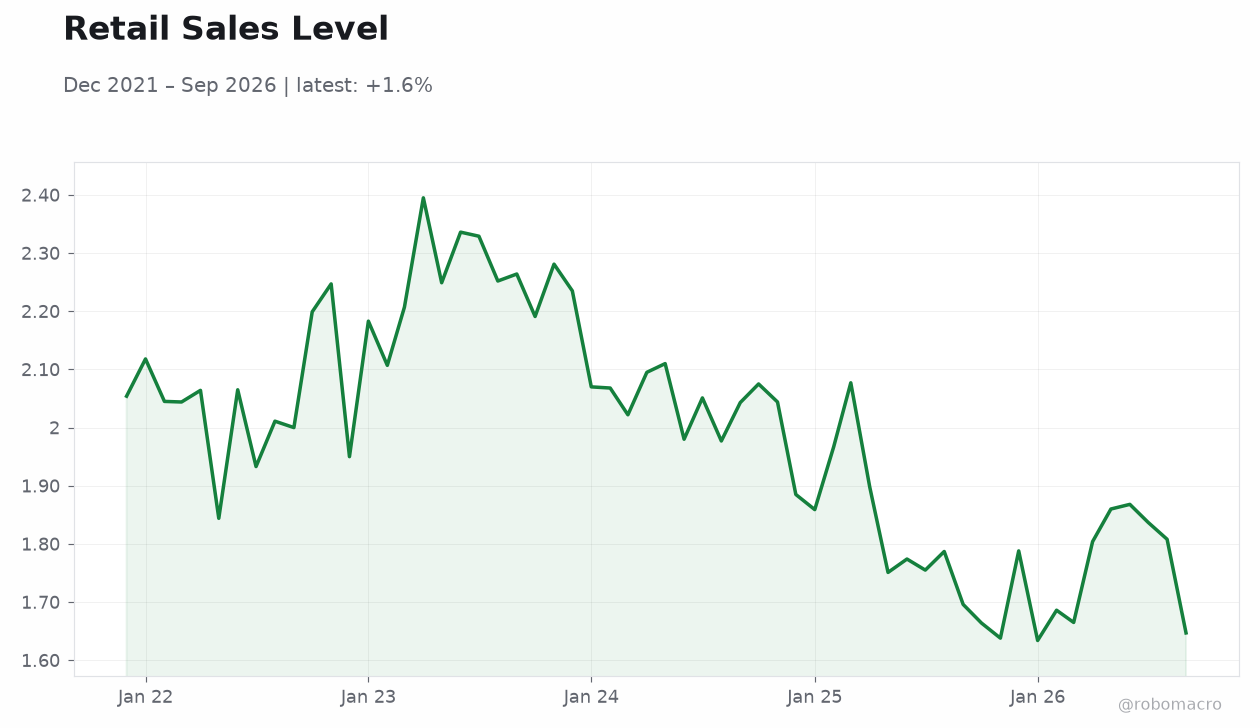
The contraction in manufacturing PMI adds to a growing list of soft indicators, including the prior month's steep employment decline, suggesting the Canadian economy is losing momentum into year-end. Economists have flagged "some pretty serious headwinds" for Canada's GDP, with elevated rates, soft global demand, and energy price volatility weighing on growth. The simultaneous presence of weak activity data and above-target inflation (CPI at 3.09% YoY as of September) raises stagflation concerns.
↓ p.2