Canada Macro Daily(Beta Mode)
Jobs Shock Tests BoC Patience
Market Snapshot
| Asset | Level | Change |
|---|---|---|
| S&P/TSX | 35,789.10 | +0.52% |
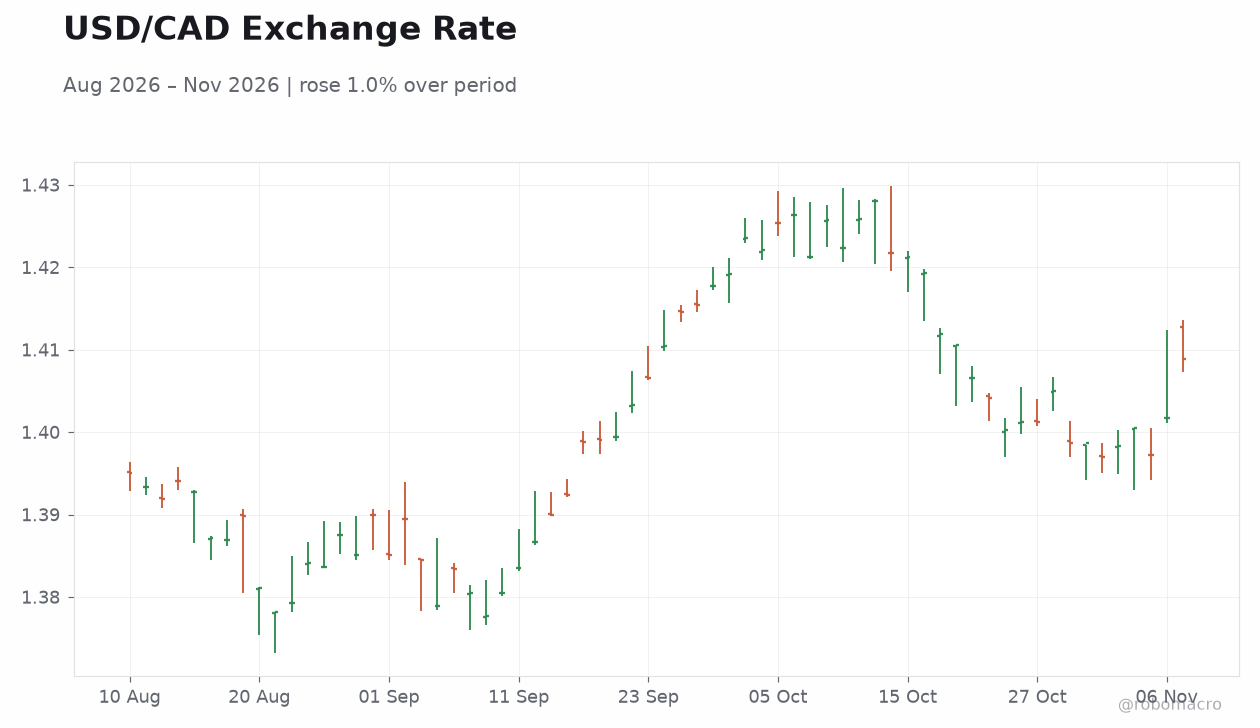
| USD/CAD | 1.41 | +0.51% |
| EUR/CAD | 1.57 | +0.27% |
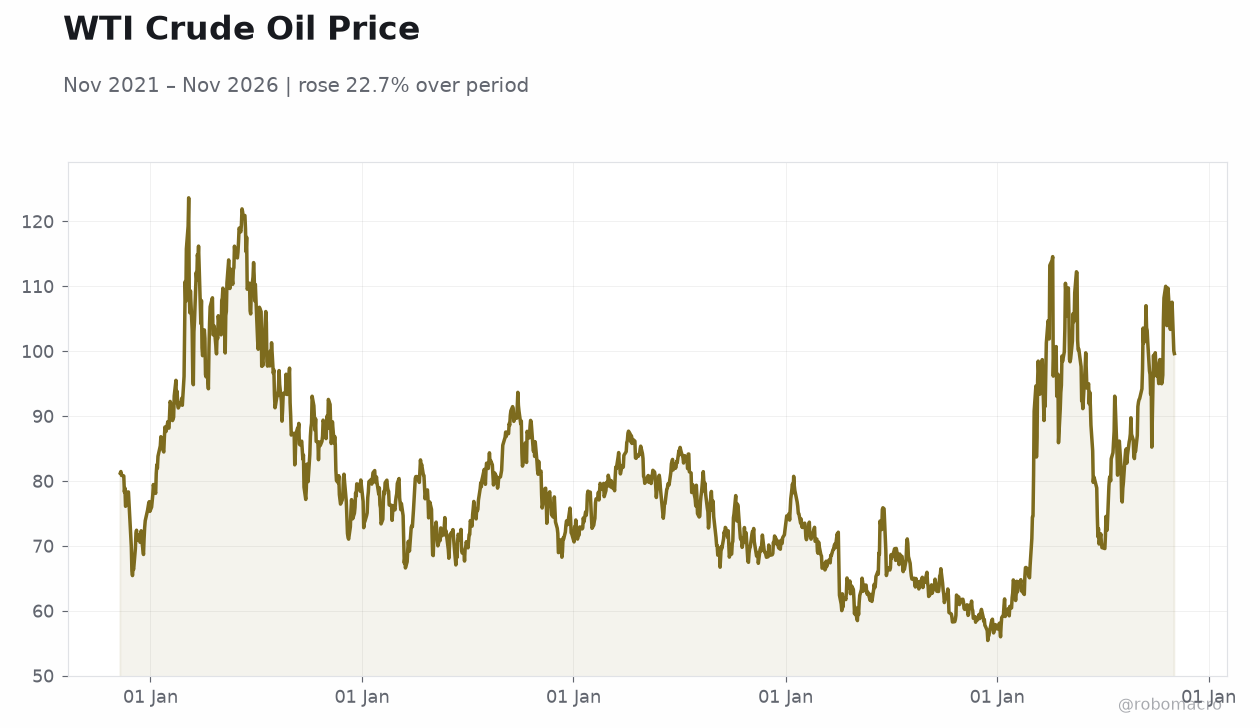
| WTI Crude | 88.36 | -2.72% |
| Natural Gas | 3.01 | +0.33% |
| Gold | 4,111.70 | +0.90% |
| Brent Crude | 95.29 | -3.08% |
| Bitcoin | 74,629.01 | +0.06% |
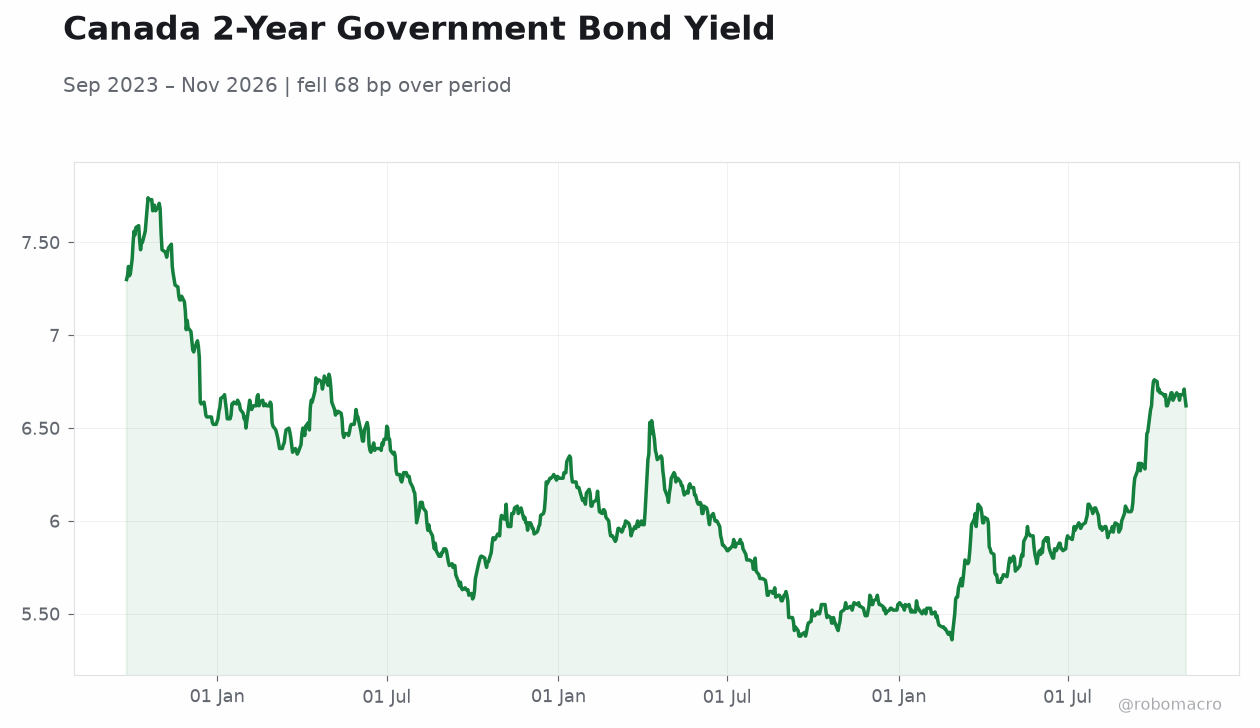
| Canada 2Y Govt Yield | 3.17% | -5 bp |
| Canada 10Y Govt Yield | 3.67% | -3 bp |
Prior Economic Events
| Data | Prior | Cons | Actual |
|---|---|---|---|
| No events available | |||
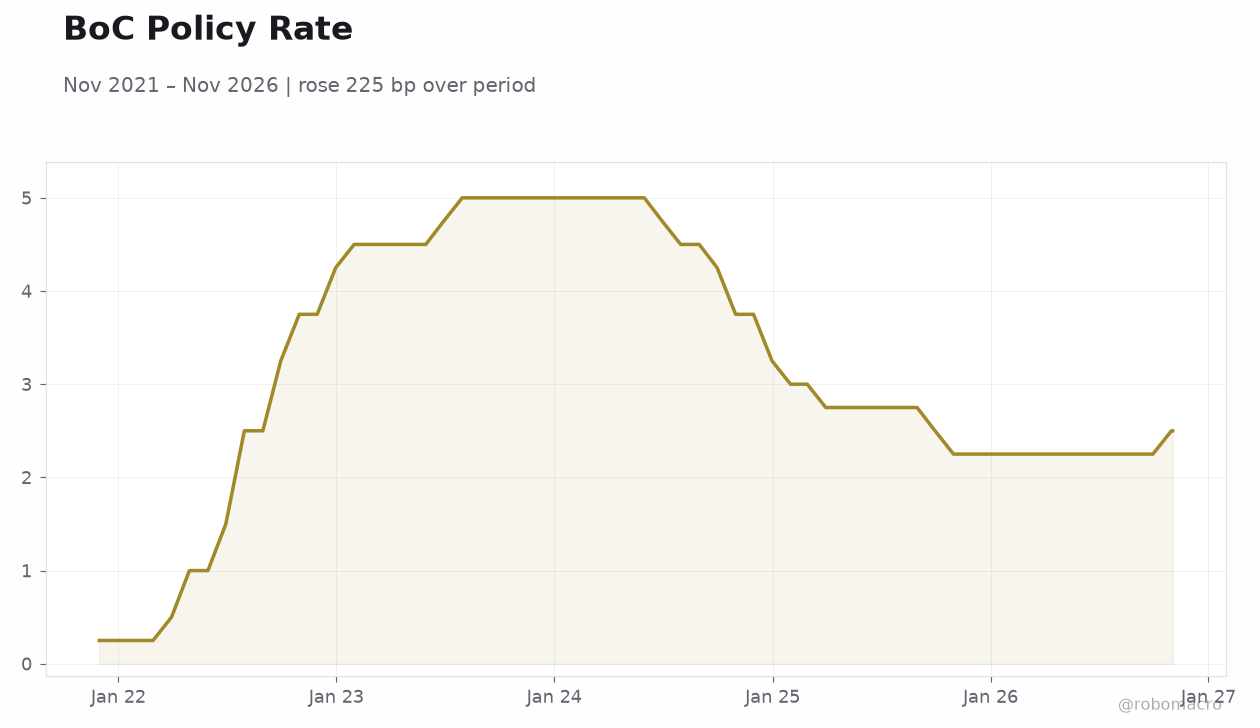 BoC Policy Rate | Type: macro_line | Policy Rate (%): 2.5 (2026-11-02) | Range: 0.25–5 | Trend(5pt): 0.25,4.5,5,2.75,2.5
Today's Economic Events
| Data | Prior | Cons | Time |
|---|---|---|---|
| No events available | |||
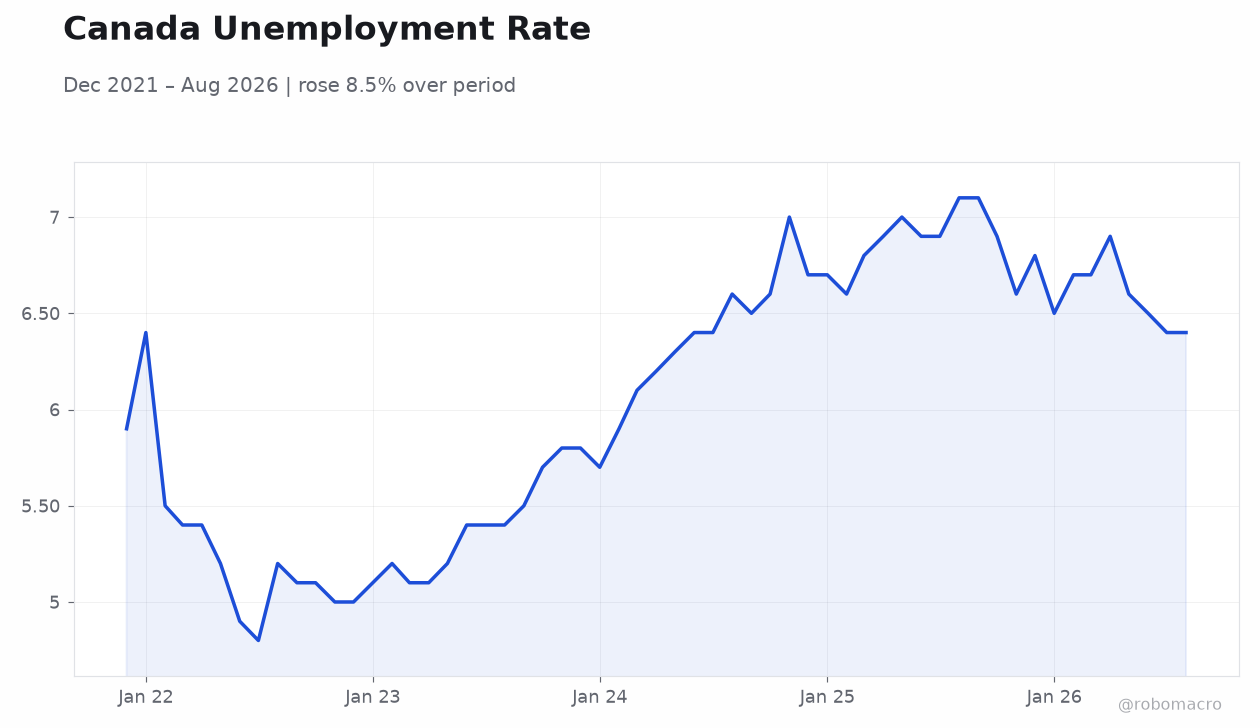
- Canada lost 4,700 jobs in October, lifting unemployment to 6.7% and reviving debate over the Bank of Canada's next move.
- CAD slid to a near three-week low versus the dollar, with USD/CAD at 1.41 (+0.51%).
- GoC yields fell across the curve (2Y 3.17%, -5 bp; 10Y 3.67%, -3 bp) as markets priced a softer policy path, while WTI dropped 2.72% to $88.36.
Yesterday's Recap
Canada's October labour report dominated the session, showing a surprise loss of 4,700 jobs and an unemployment rate jump to 6.7%, a print that caught markets leaning the other way and immediately reframed the policy outlook. The Canadian dollar bore the brunt of the shock, tumbling to a nearly three-week low as USD/CAD pushed to 1.41 (+0.51%). Rates markets responded in kind, with the 2-year GoC yield easing 5 bp to 3.17% and the 10-year down 3 bp to 3.67%, a curve move consistent with traders pulling forward easing expectations.
Equities were resilient despite the weak data, with the S&P/TSX adding 0.52% to 35,789.10, helped by strength in gold (+0.90% to $4,111.70) and a softer dollar backdrop. Energy was the clear drag, as WTI fell 2.72% to $88.36 and Brent dropped 3.08% to $95.29 on demand-growth concerns. Natural gas was essentially flat at $3.01 (+0.33%), while Bitcoin held near $74,629.
The Day Ahead
The Canadian calendar is empty for November 9, leaving markets to digest the jobs shock and position ahead of the next data cycle. With no domestic prints to steer direction, attention shifts to CAD crosses and GoC curve dynamics as traders recalibrate the odds of a December move at the Bank of Canada's 2026-12-09 decision. Energy desks will watch crude for spillover into the TSX energy complex after yesterday's sharp selloff.
Flows in the 2-year sector should remain the cleanest read on policy expectations given the absence of fresh catalysts. Expect rangebound trading in USD/CAD unless broader risk sentiment forces a break.
Other Economic Notes
The October employment contraction lands alongside an inflation backdrop that remains above target, with CPI at 3.09% year-over-year as of September 30, complicating the case for near-term easing. The combination of rising unemployment and sticky inflation creates an uncomfortable stagflation-adjacent mix for policymakers. Trade uncertainty with the United States continues to weigh on the growth outlook, with tariff risk flagged as a major 2027 headwind.
The federal budget unveiled by Carney aims to bolster the economy against those external pressures, though its demand-side support may cut against disinflation. ↓ p.2