Canada Macro Daily(Beta Mode)
Jobs Shock Tests BoC Hike Path
Market Snapshot
| Asset | Level | Change |
|---|---|---|
| S&P/TSX | 36,446.30 | +1.84% |
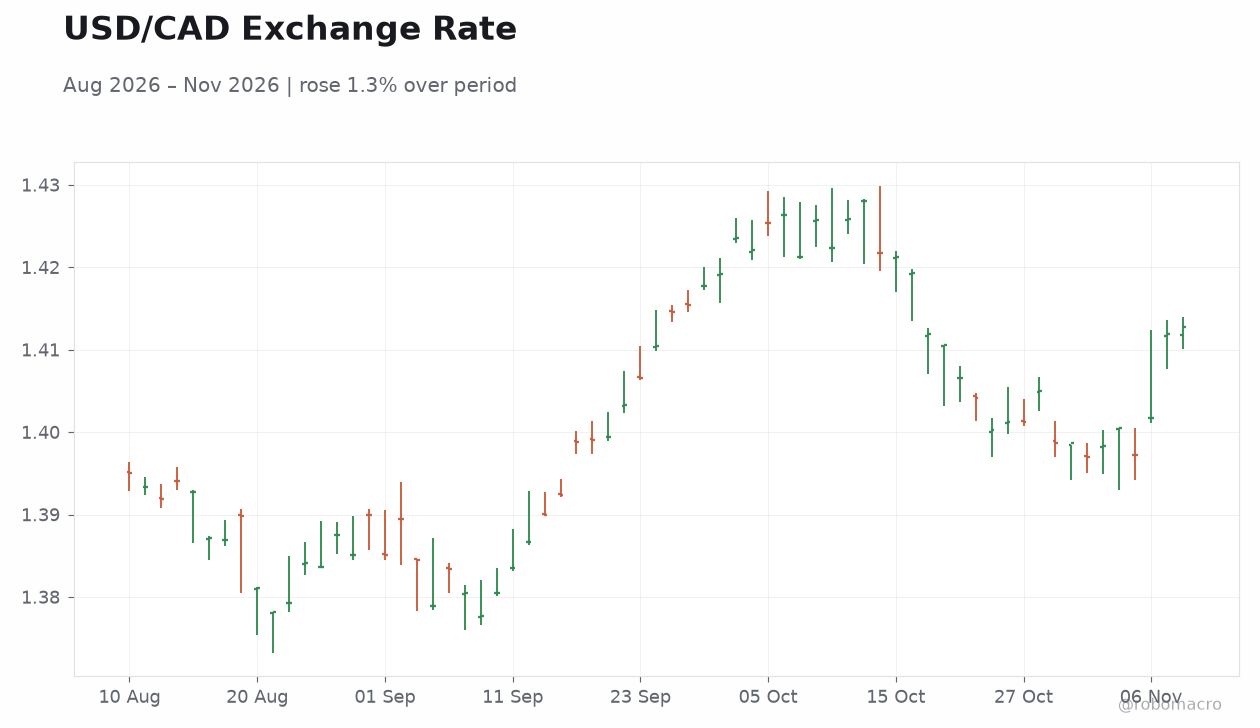
| USD/CAD | 1.41 | +0.06% |
| EUR/CAD | 1.58 | +0.70% |
| WTI Crude | 85.40 | -1.67% |
| Natural Gas | 3.27 | +1.71% |
| Gold | 4,081.10 | -0.81% |
| Brent Crude | 90.67 | -2.05% |
| Bitcoin | 74,247.98 | -1.30% |
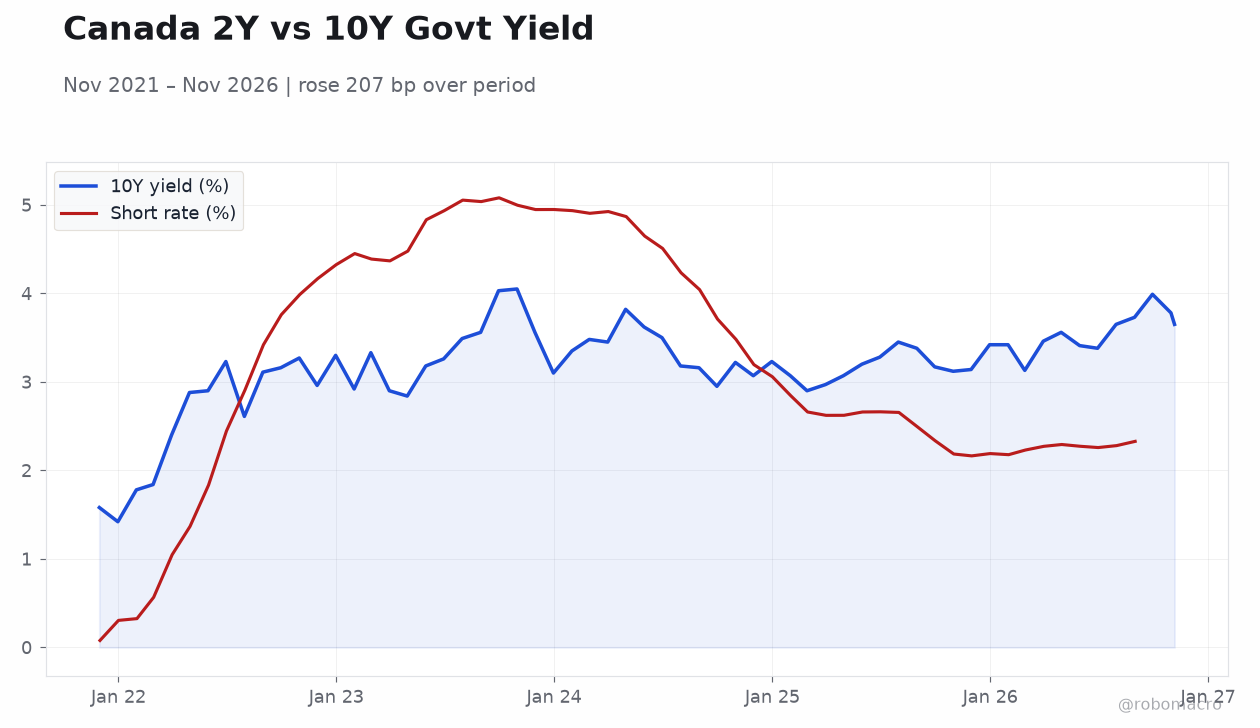
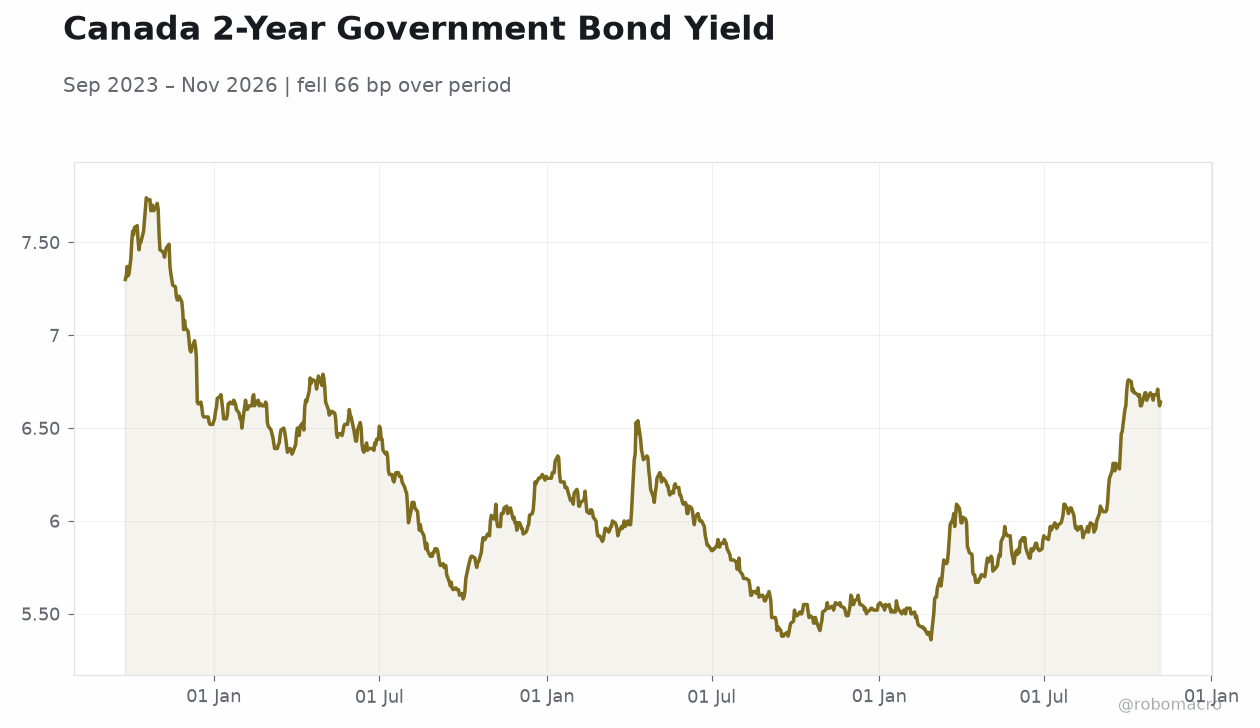
| Canada 2Y Govt Yield | 3.12% | -5 bp |
| Canada 10Y Govt Yield | 3.65% | -2 bp |
Prior Economic Events
| Data | Prior | Cons | Actual |
|---|---|---|---|
| No events available | |||
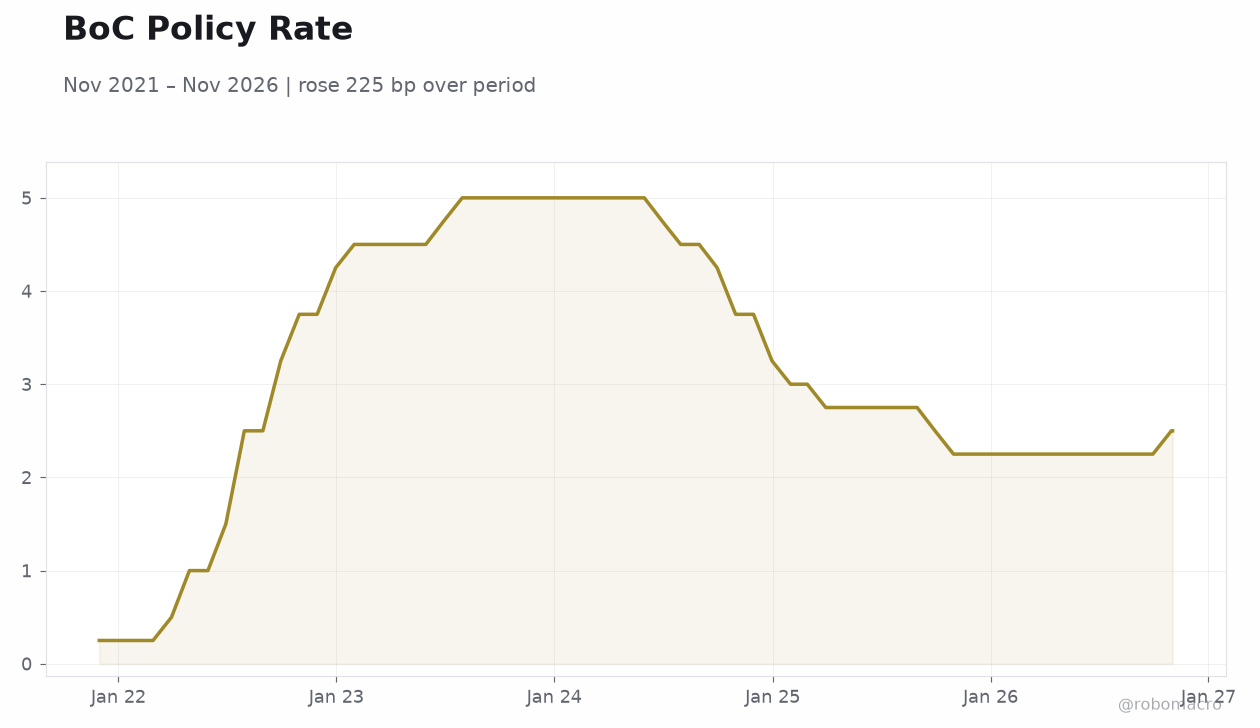 BoC Policy Rate | Type: macro_line | Policy rate (%): 2.5 (2026-11-02) | Range: 0.25–5 | Trend(5pt): 0.25,4.5,5,2.75,2.5
Today's Economic Events
| Data | Prior | Cons | Time |
|---|---|---|---|
| No events available | |||
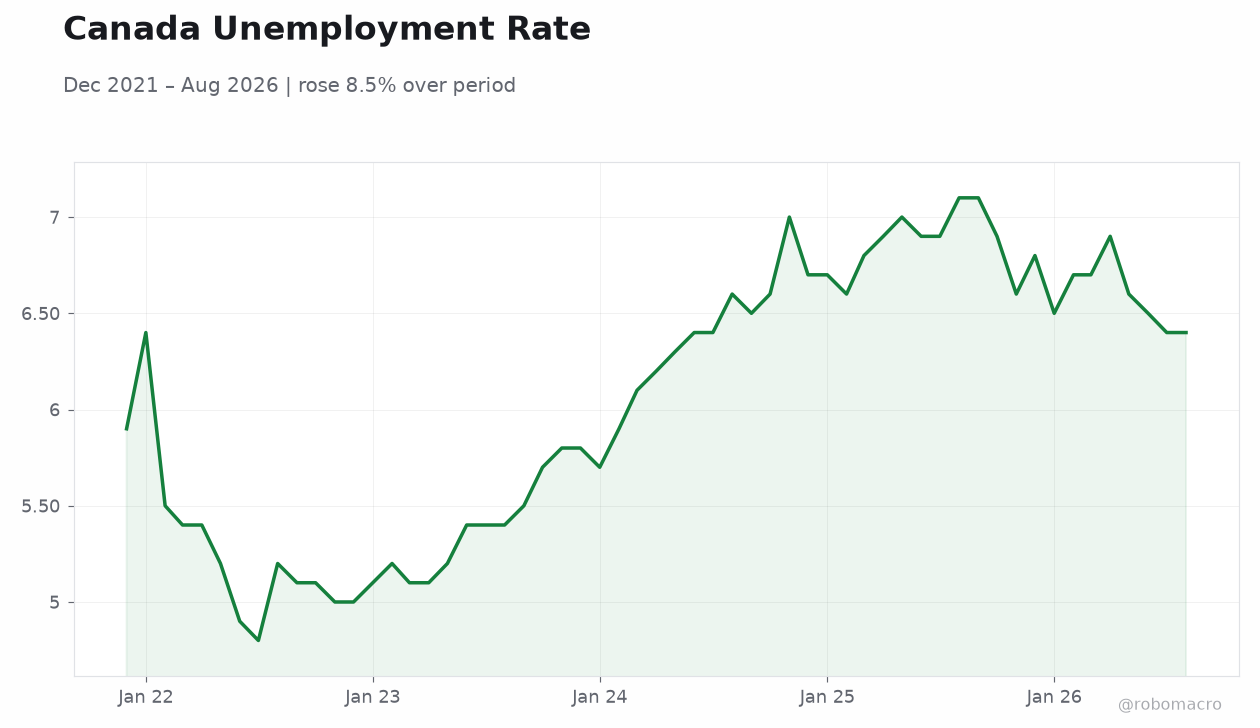
- Canada's October employment report surprised to the downside, putting the Bank of Canada's recent hike and its December guidance under renewed scrutiny.
- Front-end Government of Canada yields fell, with the 2-year down 5 bp to 3.12%, as markets scaled back bets on further tightening.
- The TSX rallied 1.84% to 36,446 while WTI slid 1.67% to $85.40 and the loonie held near 1.41 against the dollar.
Yesterday's Recap
Canadian markets opened the week with a risk-on tone despite a soft domestic labour backdrop. The S&P/TSX climbed 1.84% to 36,446.30, led by rate-sensitive sectors as traders pared expectations for additional Bank of Canada tightening. The Government of Canada curve steepened modestly, with the 2-year yield easing 5 bp to 3.12% and the 10-year down 2 bp to 3.65%, consistent with headlines noting the bond market is scaling back hike bets.
The Canadian dollar gained modestly against a retreating U.S. dollar even as weak jobs data capped the recovery, leaving USD/CAD at 1.41. Energy was the drag: WTI fell 1.67% to $85.40 and Brent dropped 2.05% to $90.67 on reports that the Iran conflict could wind down, while natural gas bucked the trend with a 1.71% gain to $3.27.
Gold slipped 0.81% to $4,081.10 and Bitcoin lost 1.30% to $74,248.
The Day Ahead
The Canadian calendar is light for November 10, with no tier-one domestic releases scheduled, leaving markets to digest the October jobs shock and its implications for the Bank of Canada's December 9 decision. Attention turns to secondary price data and any Bank of Canada communications, including the recently published third-quarter Market Participants Survey, which will be parsed for inflation and rate-path expectations. With no fresh prints to anchor direction, Government of Canada bond trading will likely track U.S.
rates and oil headlines. The loonie remains vulnerable to swings in crude as diplomatic signals on the Iran conflict evolve. Traders will also watch for any federal budget follow-through, given the 2026 budget's productivity-focused spending plans.
Other Economic Notes
The October jobs shock has revived debate over whether the Bank of Canada's October 28 hike was premature, with business leaders now citing tighter monetary policy among the top risks to the economy. Inflation remains above target, with CPI at 3.09% year-over-year as of September, partly reflecting a gasoline price rebound that pushed headline inflation to 3%. The 2026 federal budget's emphasis on productivity spending is a medium-term supply-side story, but near-term demand conditions are softening.
↓ p.2