Canada Macro Daily(Beta Mode)
BoC Hike Bias Builds as Inflation Hits 3%
Market Snapshot
| Asset | Level | Change |
|---|---|---|
| S&P/TSX | 36,411.70 | +0.67% |
| USD/CAD | 1.42 | +0.43% |
| EUR/CAD | 1.58 | -0.29% |
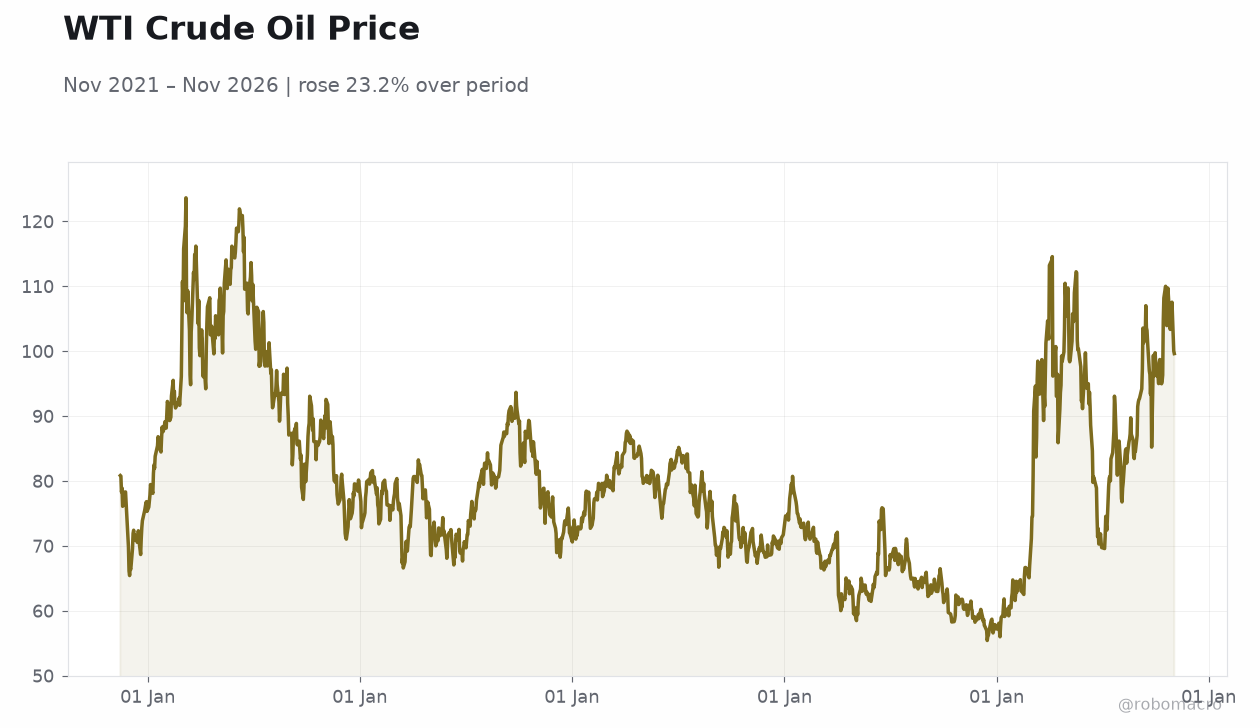
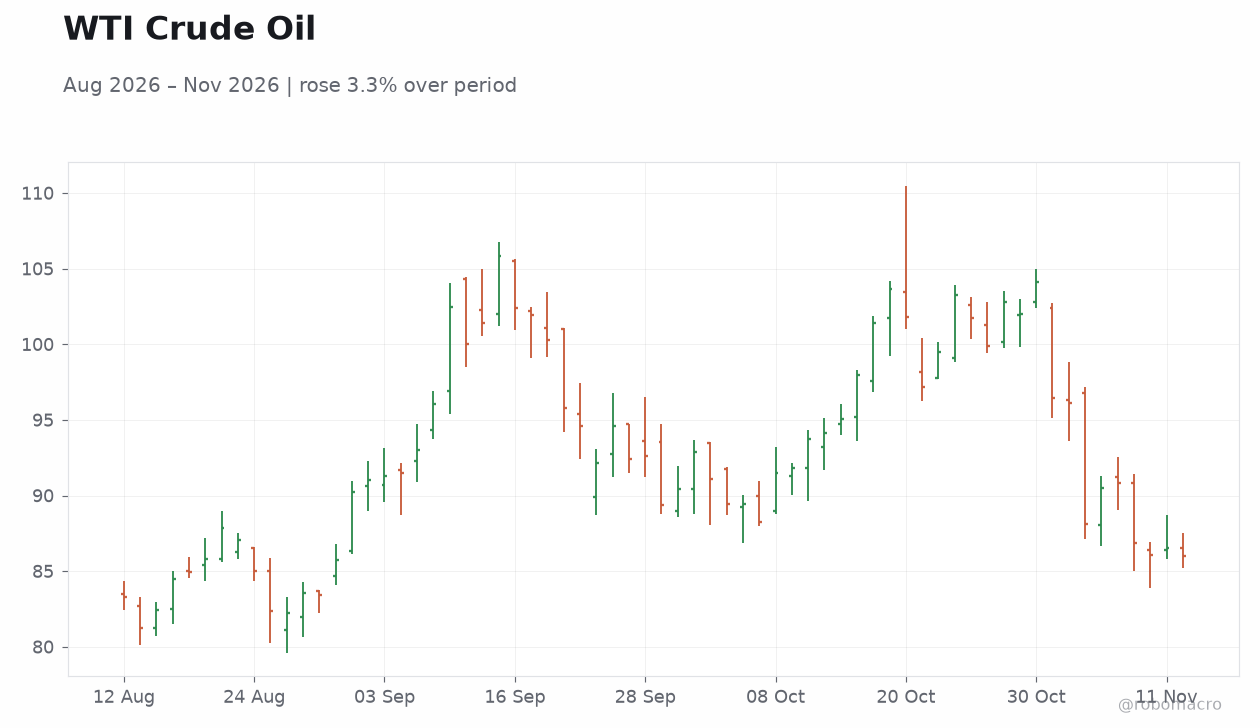
| WTI Crude | 86.11 | -0.49% |
| Natural Gas | 3.28 | +1.90% |
| Gold | 3,952.80 | -1.19% |
| Brent Crude | 92.44 | -0.34% |
| Bitcoin | 72,984.74 | -1.32% |
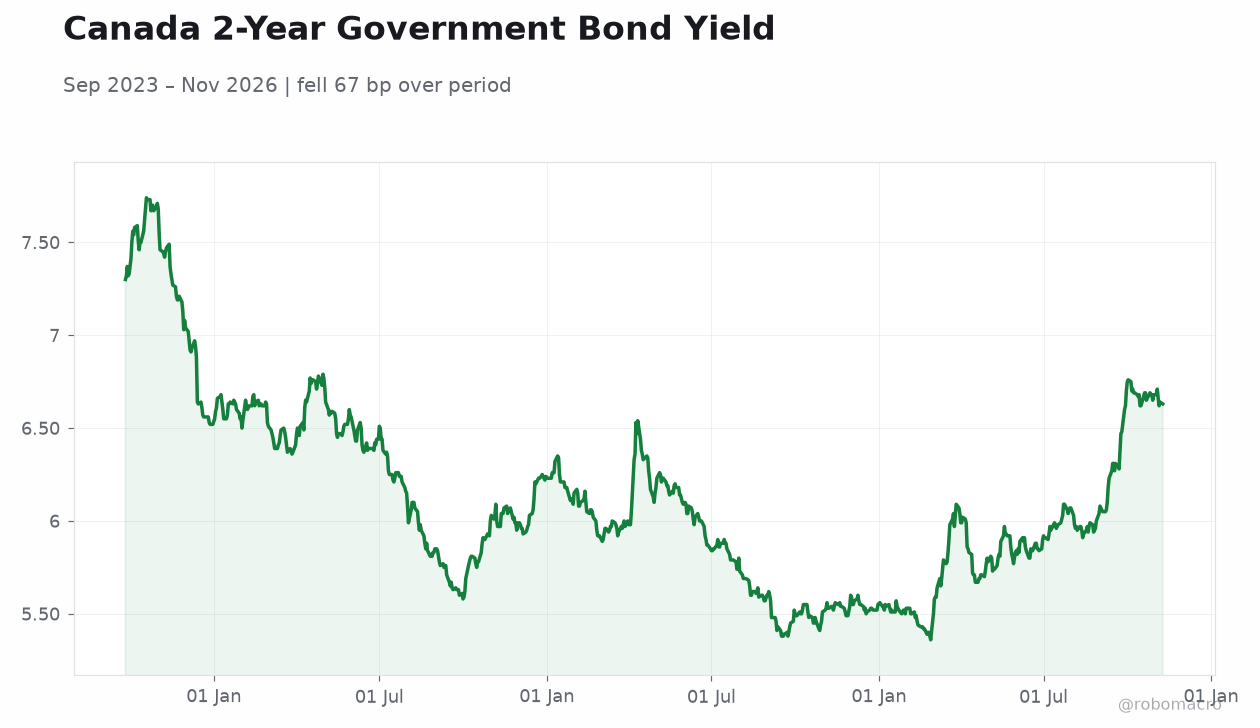
| Canada 2Y Govt Yield | 3.13% | +1 bp |
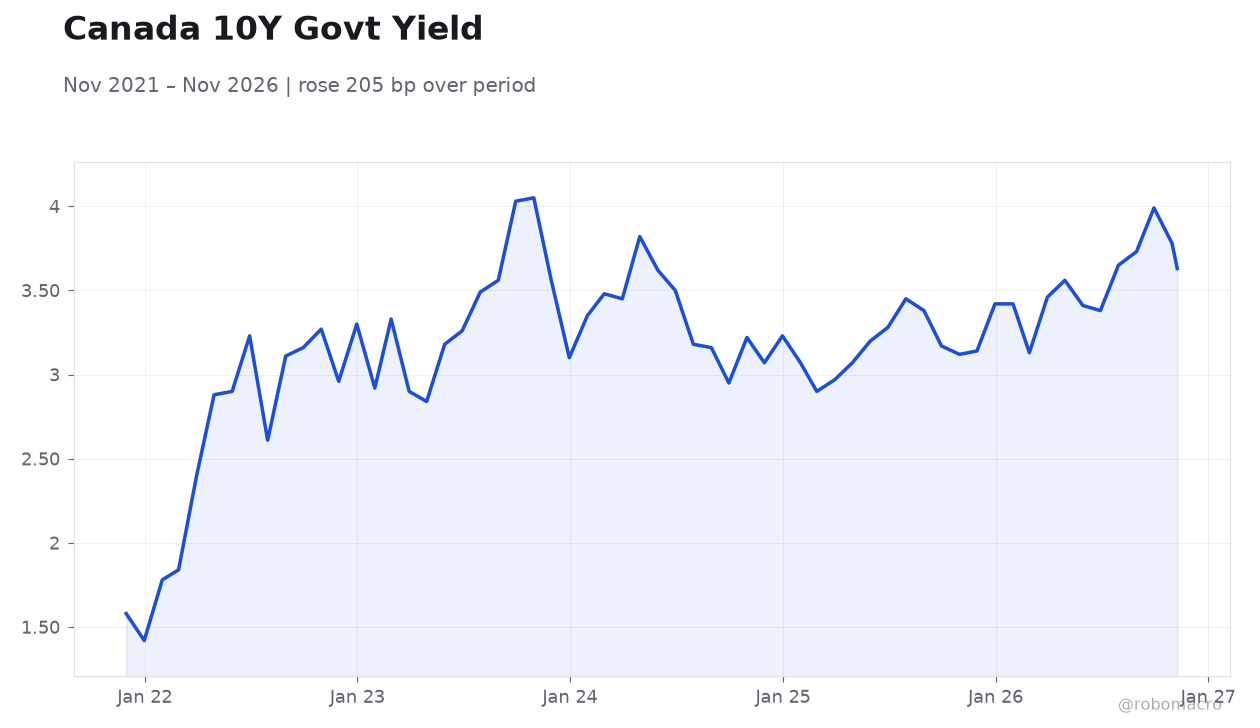
| Canada 10Y Govt Yield | 3.63% | -2 bp |
Prior Economic Events
| Data | Prior | Cons | Actual |
|---|---|---|---|
| No events available | |||
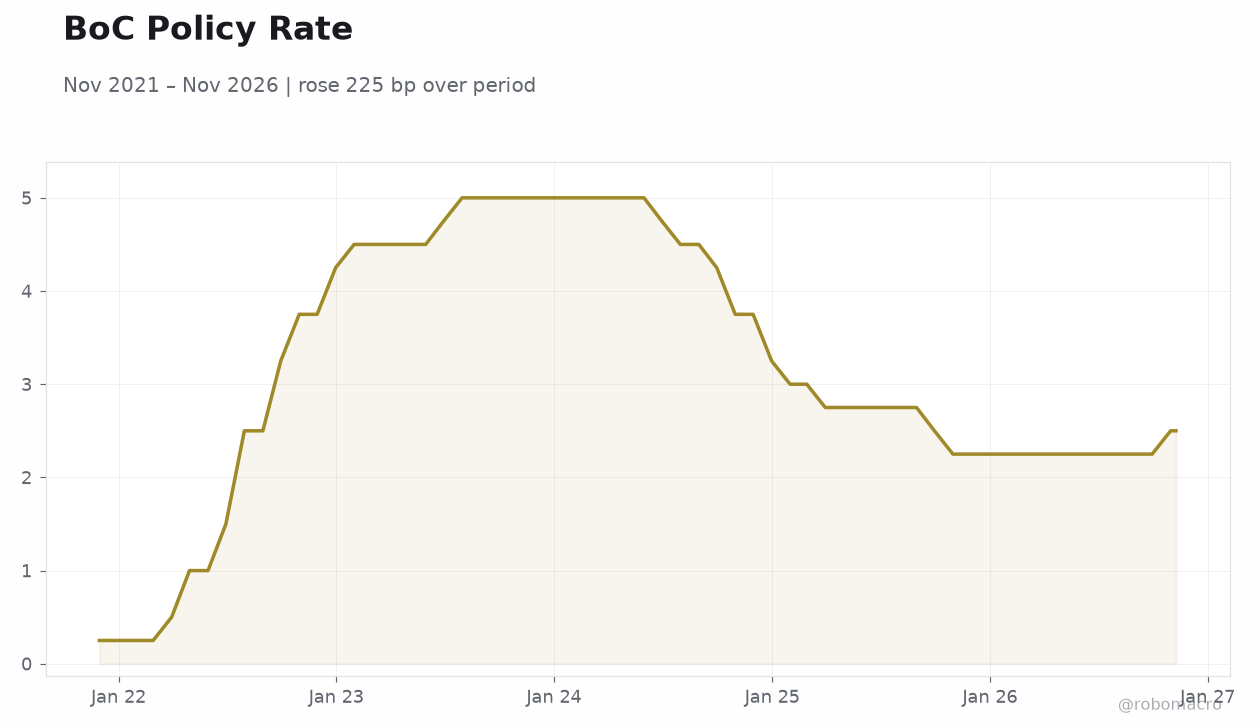 BoC Policy Rate | Type: macro_line | Policy Rate %: 2.5 (2026-11-09) | Range: 0.25–5 | Trend(5pt): 0.25,4.5,5,2.75,2.5
Today's Economic Events
| Data | Prior | Cons | Time |
|---|---|---|---|
| No events available | |||
- Bank of Canada signals further hikes may be necessary; UBS sees rates rising through 2028
- Canada CPI at 3.09% YoY as gasoline rebound pushes inflation to 3%
- CAD steady near 1.42; TSX up 0.67% as energy, tech and base metals recover
Yesterday's Recap
No scheduled Canadian data releases were published on November 11. The S&P/TSX Composite climbed 0.67% to 36,411.70, led by a recovery in energy, technology and base metals names. The Canadian dollar weakened 0.43% against the greenback to 1.42, pressured by hawkish Federal Reserve expectations that kept the US dollar firm.
EUR/CAD slipped 0.29% to 1.58. In rates, the Canada 2-year yield edged up 1 bp to 3.13% while the 10-year eased 2 bp to 3.63%, a modest steepening reversal that leaves the curve at roughly 50 bp. WTI crude fell 0.49% to $86.11 and Brent declined 0.34% to $92.44, while natural gas rose 1.90% to $3.28.
Gold dropped 1.19% to $3,952.80 and Bitcoin fell 1.32% to $72,984.74.
The Day Ahead
No major Canadian economic releases are scheduled for November 12, leaving markets to trade on positioning and cross-border rate dynamics. Attention stays on the Canadian dollar, which remains sensitive to US rate expectations and oil price swings. With the 10-year at 3.63% and the 2-year at 3.13%, traders will watch for any curve steepening tied to inflation risk premium.
Energy desks will monitor crude benchmarks after yesterday's soft session, given the TSX's heavy weighting to the sector. Absent domestic catalysts, flow will likely be driven by US data and global risk sentiment.
Other Economic Notes
The inflation backdrop is the dominant domestic theme, with CPI at 3.09% YoY as a gasoline price rebound pushed headline inflation to 3%. That print keeps the Bank of Canada's 2.50% policy rate in restrictive territory but well short of the inflation target, sustaining the hawkish tilt. David Rosenberg has argued Canada's reportedly bright fiscal picture is a mirage, a reminder that fiscal headroom may be narrower than headline numbers suggest.
Mortgage holders face renewed pressure as markets price the possibility of another hike. The loonie's steadiness near 1.42 despite a firm US dollar suggests some offsetting support from rate differentials.