Canada Macro Daily(Beta Mode)
BoC's Hike Haunts Yields as Inflation Stays Hot
Market Snapshot
| Asset | Level | Change |
|---|---|---|
| S&P/TSX | 36,137.20 | -0.75% |
| USD/CAD | 1.43 | +0.11% |
| EUR/CAD | 1.58 | -0.21% |
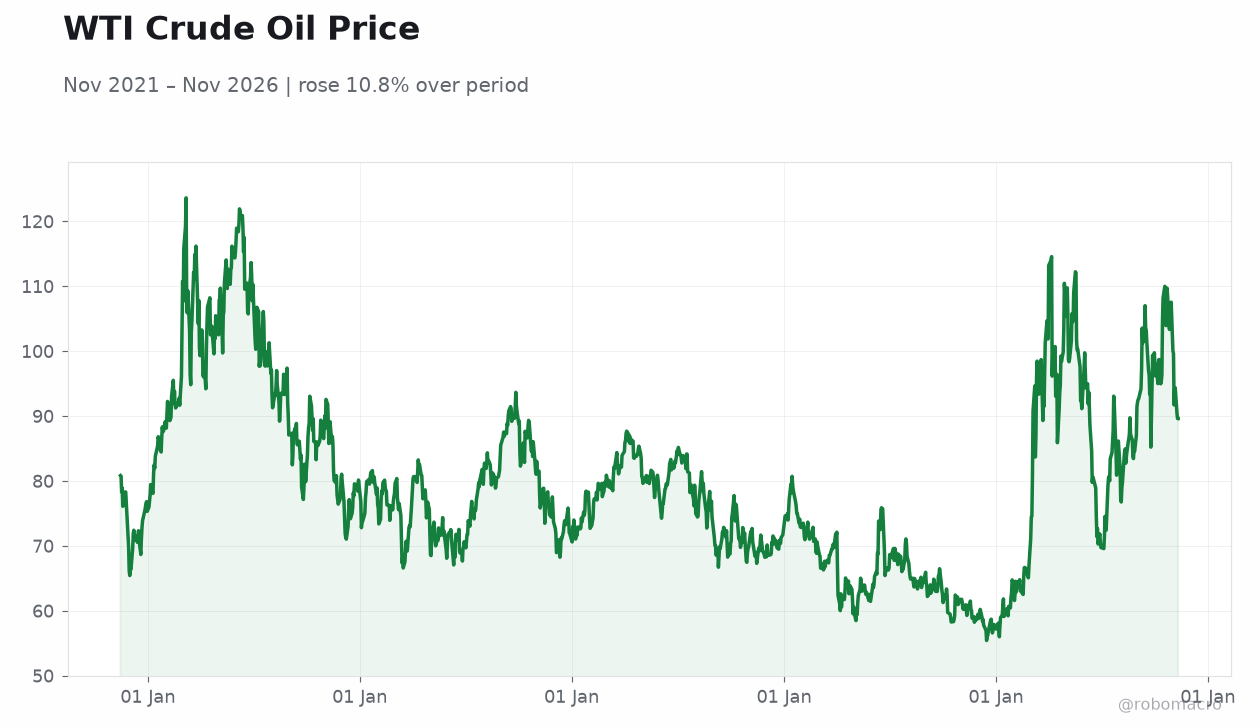
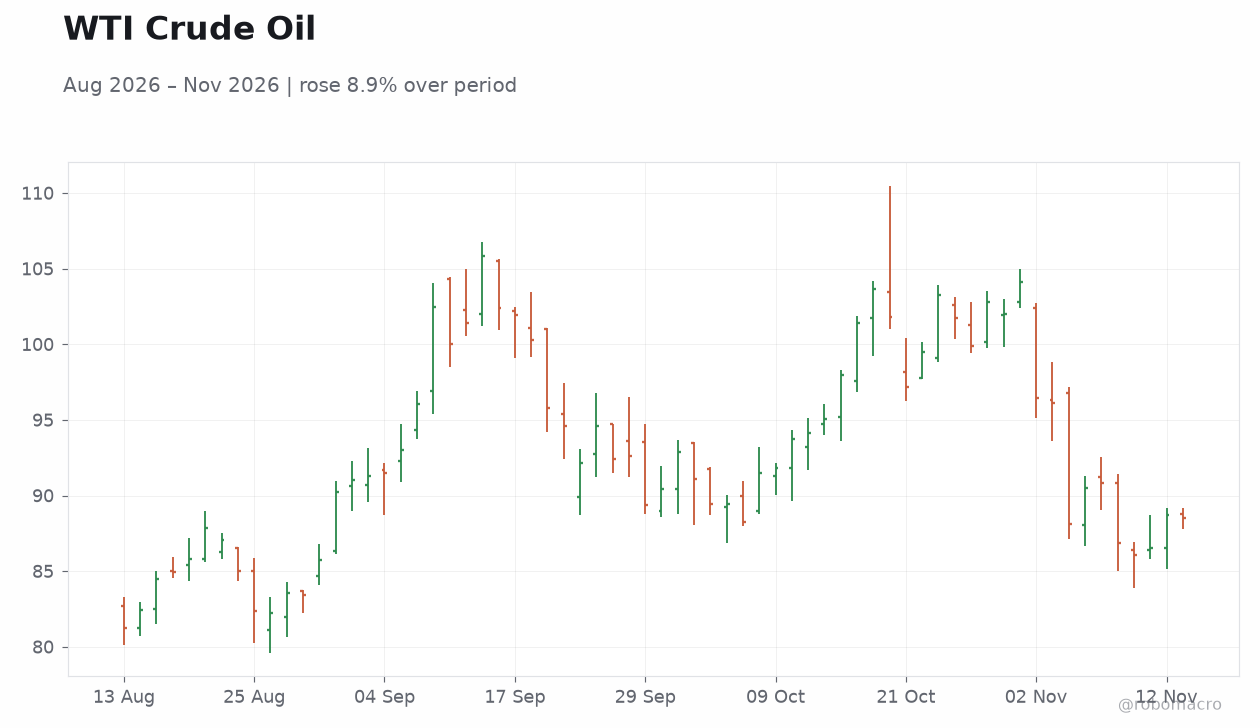
| WTI Crude | 88.52 | -0.25% |
| Natural Gas | 3.27 | -2.07% |
| Gold | 3,892.20 | +0.18% |
| Brent Crude | 96.05 | +0.24% |
| Bitcoin | 69,234.10 | -2.96% |
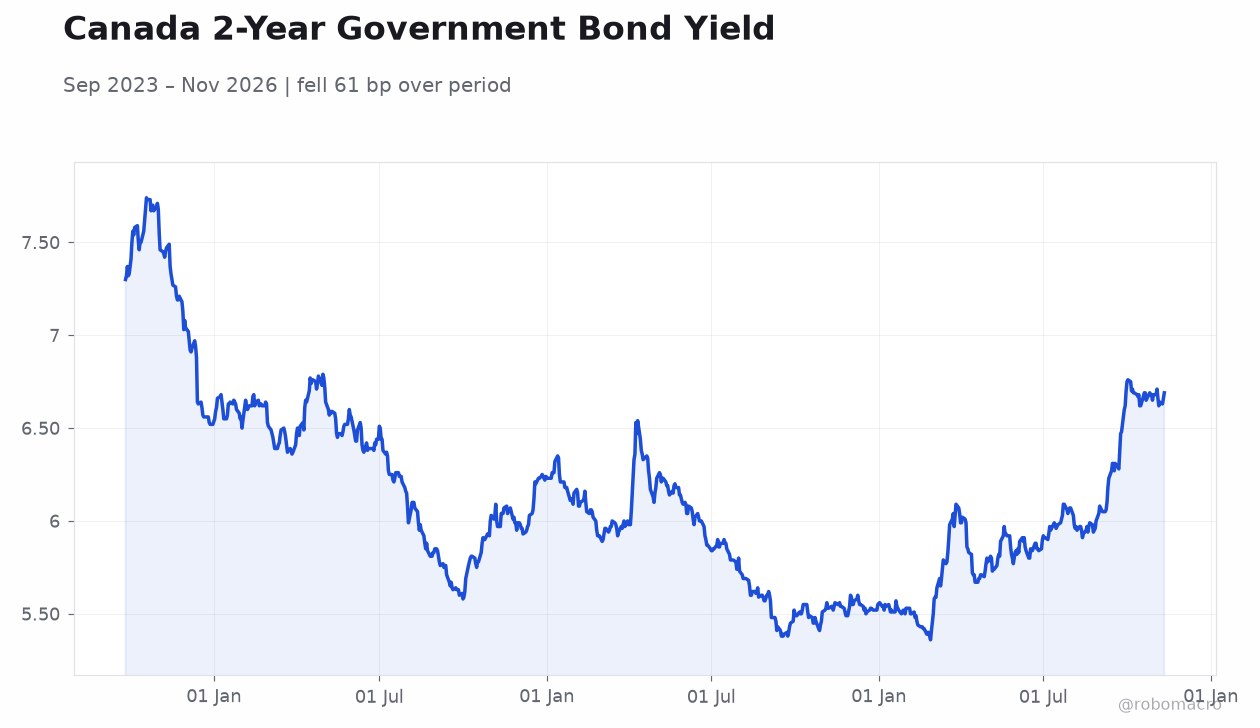
| Canada 2Y Govt Yield | 3.25% | +12 bp |
| Canada 10Y Govt Yield | 3.72% | +9 bp |
Prior Economic Events
| Data | Prior | Cons | Actual |
|---|---|---|---|
| No events available | |||
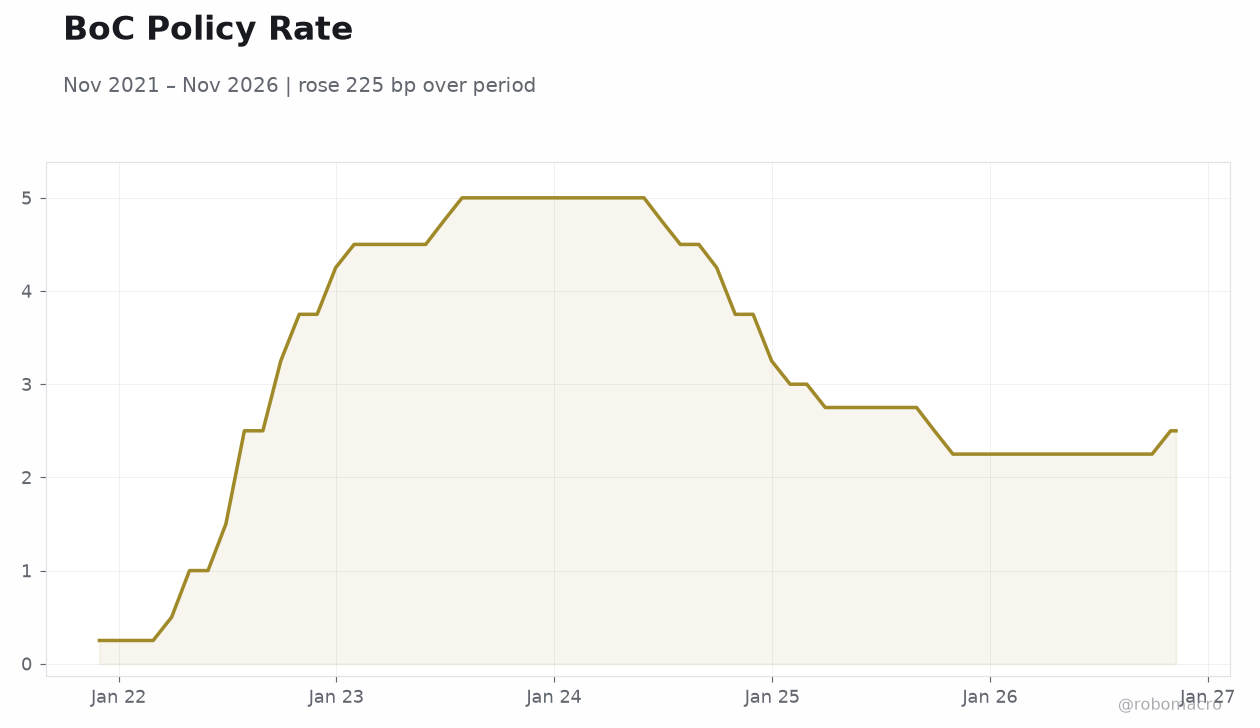 BoC Policy Rate | Type: macro_line | Policy Rate (%): 2.5 (2026-11-09) | Range: 0.25–5 | Trend(5pt): 0.25,4.5,5,2.75,2.5
Today's Economic Events
| Data | Prior | Cons | Time |
|---|---|---|---|
| No events available | |||
- Canada 2Y yield jumps 12 bp to 3.25%, 10Y up 9 bp to 3.72% as markets digest October's 25 bp hike to 2.50%
- USD/CAD firms to 1.43 (+0.11%) on broad dollar strength; TSX slides 0.75% to 36,137.20
- Gasoline-driven CPI rebound to 3.09% YoY keeps inflation above target; BoC minutes flag inflation-risk rationale for the hike
Yesterday's Recap
Canadian fixed income sold off sharply, with the 2-year Government of Canada yield climbing 12 bp to 3.25% and the 10-year rising 9 bp to 3.72% as of the November 10 close, extending the post-decision repricing. The S&P/TSX fell 0.75% to 36,137.20, with rate-sensitive sectors bearing the brunt of higher front-end yields. USD/CAD edged up 0.11% to 1.43, while EUR/CAD slipped 0.21% to 1.58, reflecting broad greenback strength rather than Canada-specific flows.
Energy was mixed: WTI eased 0.25% to $88.52 and natural gas dropped 2.07% to $3.27, though Brent gained 0.24% to $96.05. Gold was essentially flat at $3,892.20 (+0.18%), offering little hedge against the yield backup. Bitcoin's 2.96% decline to $69,234.10 underscored the broader risk-off tone across speculative assets.
The Day Ahead
The Canadian calendar is light for November 13, with no tier-one statistical releases scheduled, leaving markets to trade off the prior session's yield momentum and external drivers. Attention turns to the Bank of Canada's next fixed announcement date on December 9, which will be the first opportunity for Governing Council to respond to the inflation rebound. With the 2s10s curve steepening modestly, traders will watch whether the front end consolidates after its 12 bp surge or extends toward pricing a further hike.
Energy desks will monitor crude benchmarks after Brent's modest gain against WTI's decline, a spread dynamic relevant to Canadian heavy crude differentials. Absent domestic catalysts, CAD crosses will likely take direction from U.S. dollar momentum and Fed expectations.
Other Economic Notes
The inflation picture has deteriorated, with CPI at 3.09% YoY as of September 30 and gasoline prices driving the rebound, keeping headline inflation above the Bank's target band. Analysts flag the risk that inflation stays above 3% through 2027 as energy costs reshape the outlook, a scenario that would complicate any easing bias. Canada's second-quarter GDP rebound now sets up a sharp Q4 slowdown risk, a tension between softening activity and sticky prices that defines the policy dilemma.
Canada-US tariffs have emerged as the biggest near-term growth risk for 2027, adding a structural drag on export-sensitive sectors. ↓ p.2