Canada Macro Daily(Beta Mode)
CPI Risk Builds as Yields Climb
Market Snapshot
| Asset | Level | Change |
|---|---|---|
| S&P/TSX | 36,105.90 | -0.09% |
| USD/CAD | 1.43 | +0.18% |
| EUR/CAD | 1.57 | -0.23% |
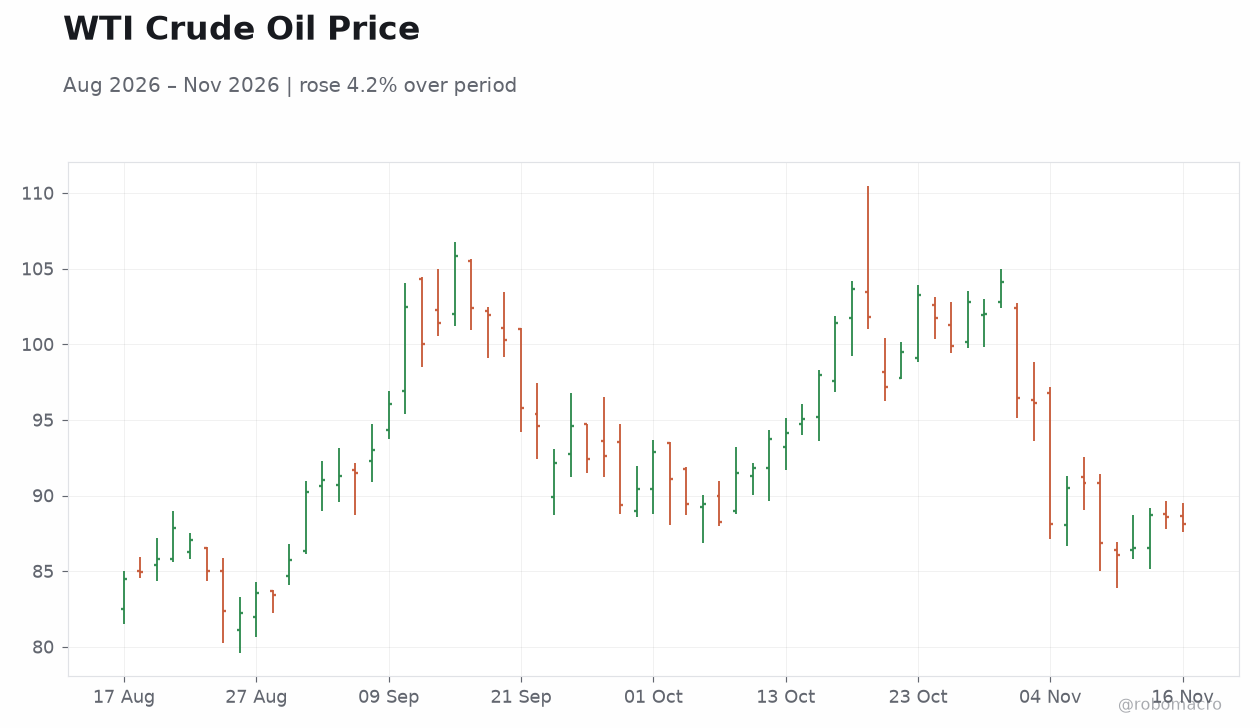
| WTI Crude | 88.14 | -0.47% |
| Natural Gas | 3.14 | -2.63% |
| Gold | 3,877.90 | -0.22% |
| Brent Crude | 95.16 | -0.71% |
| Bitcoin | 64,487.89 | -1.25% |
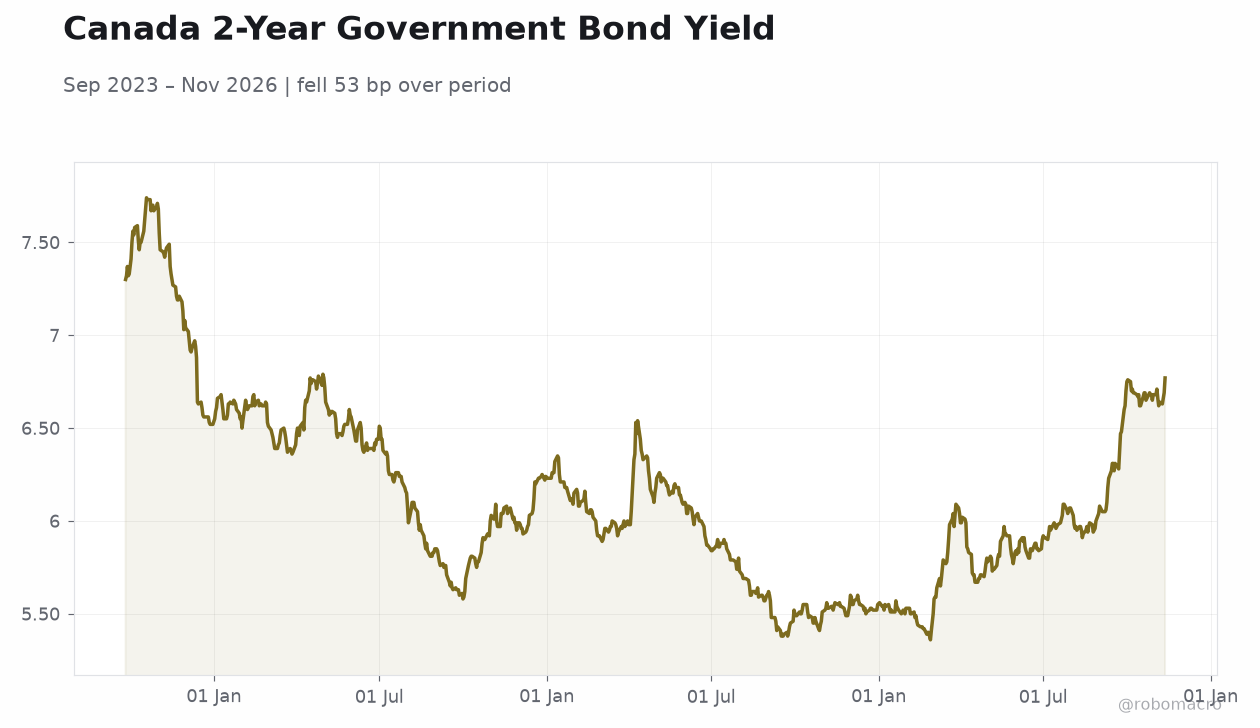
| Canada 2Y Govt Yield | 3.33% | +8 bp |
| Canada 10Y Govt Yield | 3.78% | +6 bp |
Prior Economic Events
| Data | Prior | Cons | Actual |
|---|---|---|---|
| No events available | |||
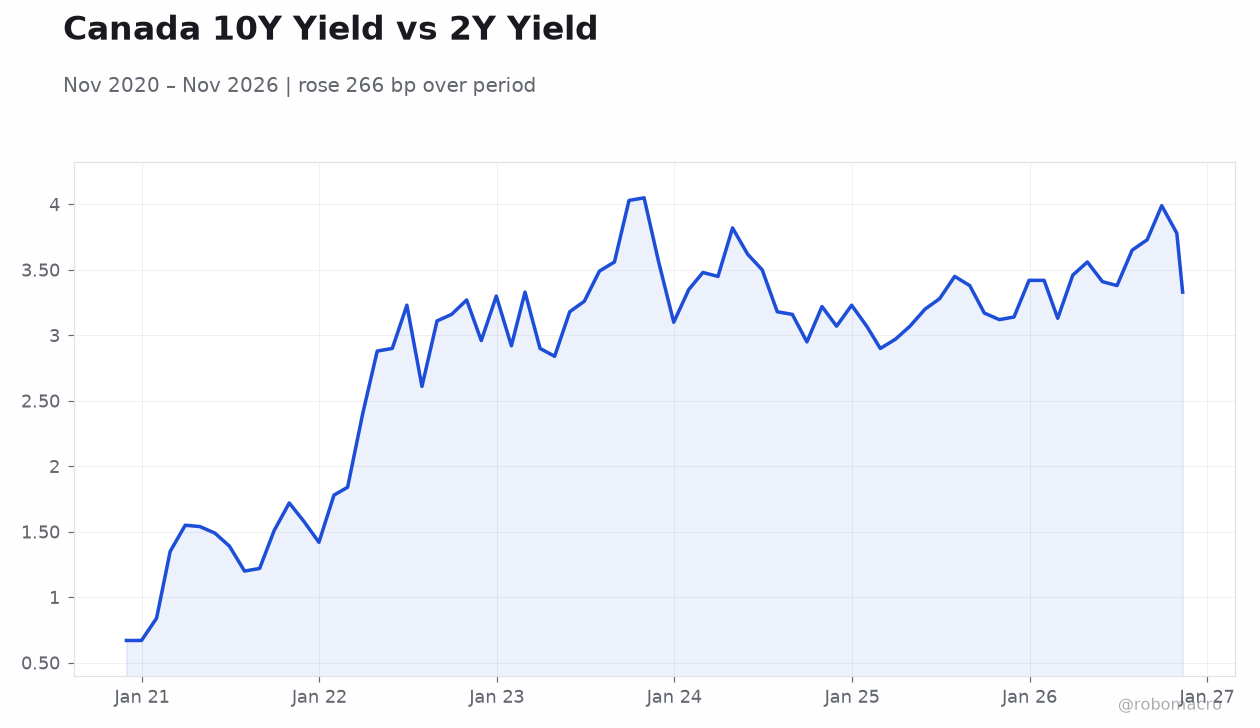 Canada 10Y Yield vs 2Y Yield | Type: macro_line | 10Y Yield (%): 3.78 (2026-11-12) | Range: 1.42–4.05 | Trend(5pt): 1.58,3.33,3.62,3.38,3.78 | 2Y Yield (%): 3.33 (2026-11-12) | Range: 1.42–4.05 | Trend(5pt): 1.58,3.33,3.62,3.38,3.78
Today's Economic Events
| Data | Prior | Cons | Time |
|---|---|---|---|
| Inflation Rate Year-over-Year | 3.10 | - | 08:30 |
| Core Inflation Rate Year-over-Year | 2.20 | - | 08:30 |
| Inflation Rate Month-over-Month | 0.10 | - | 08:30 |
| Tuesday (2026-11-17) | |||
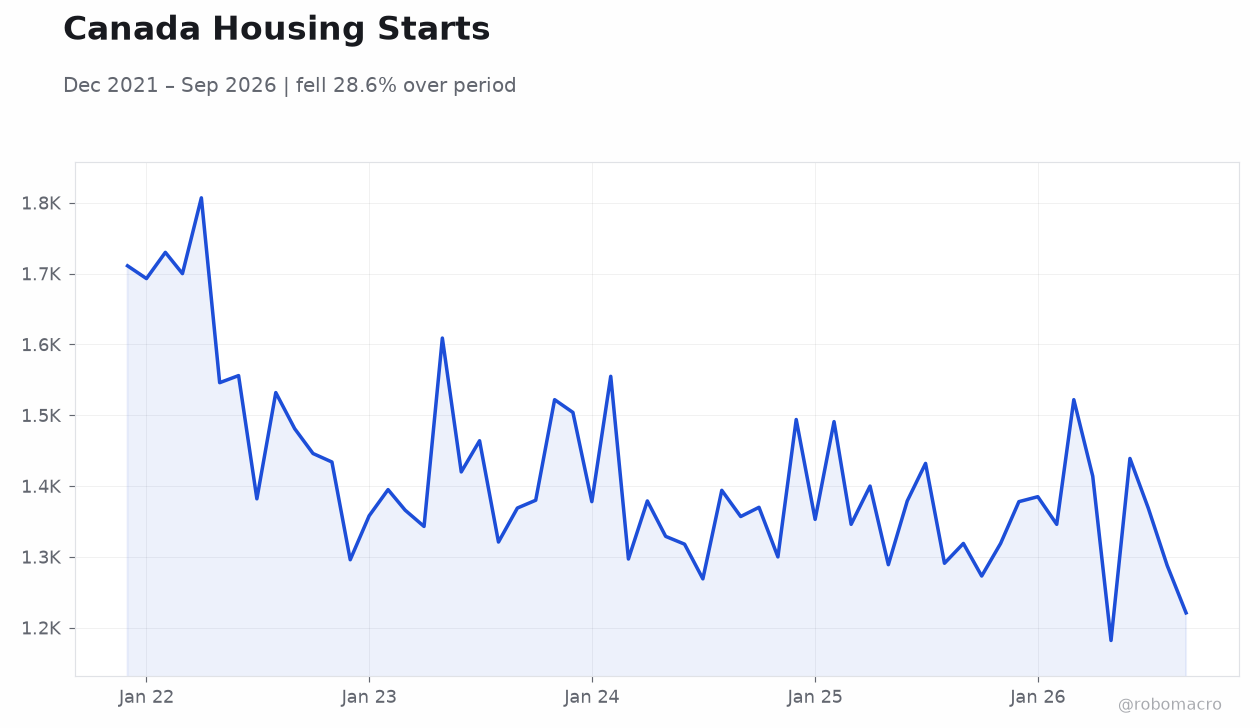
| Housing Starts Level | 250,000 | - | 08:15 |
| Wednesday (2026-11-18) | |||
| New Housing Price Index Month-over-Month | -0.20 | - | 08:30 |
| Friday (2026-11-20) | |||
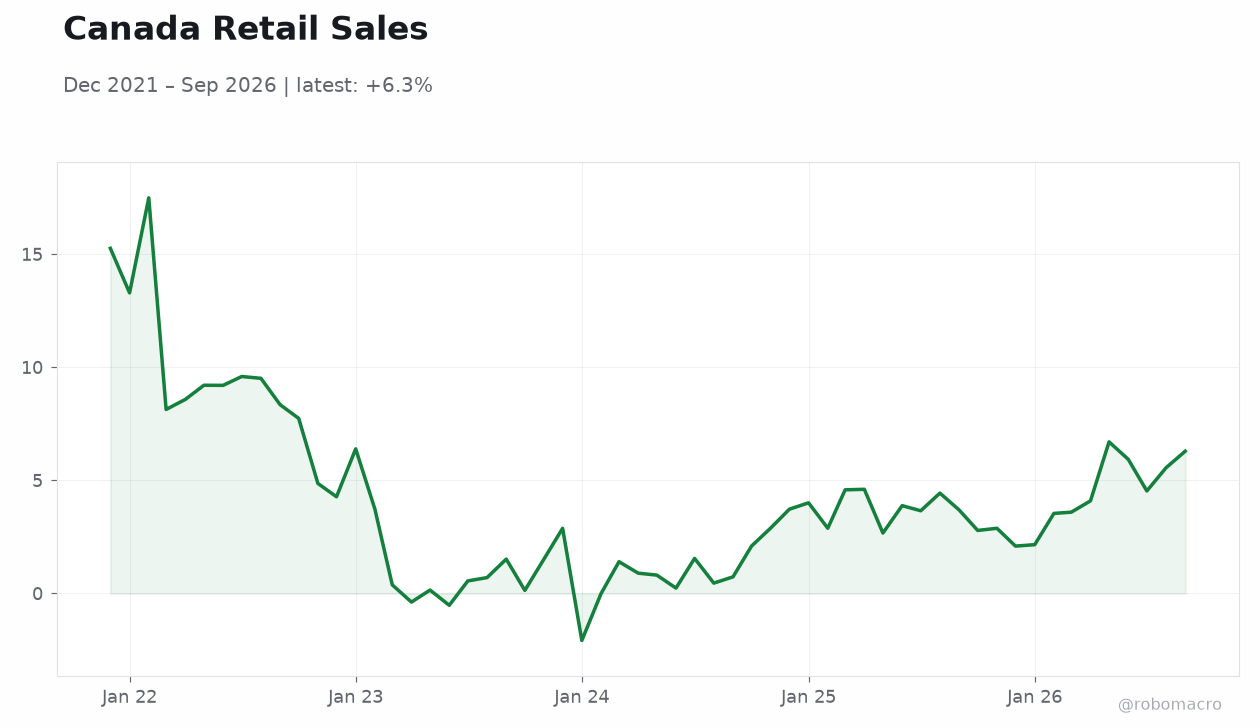
| Retail Sales Excluding Autos Month-over-Month | 1.20 | - | 08:30 |
| Retail Sales Month-over-Month Final | 1.20 | 0.70 | 08:30 |
- October CPI lands at 08:30 ET with the prior year-over-year print at 3.1% and core at 2.2%, a critical input ahead of the December 9 BoC decision
- Canadian 2-year yields jumped 8 bp to 3.33% and 10-year yields rose 6 bp to 3.78% as hot U.S. inflation revived rate concerns
- USD/CAD pushed to 1.43 (+0.18%) while WTI slipped to $88.14 and the TSX edged down 0.09%
Yesterday's Recap
Canadian markets closed defensively on November 15 with no domestic data releases on the calendar, leaving positioning ahead of today's October CPI as the dominant driver. The S&P/TSX slipped 0.09% to 36,105.90, with energy names pressured by softer crude. WTI fell 0.47% to $88.14 and Brent dropped 0.71% to $95.16, while natural gas tumbled 2.63% to $3.14.
The Canadian dollar weakened 0.18% against the greenback to 1.43, extending a weekly decline that traders attribute to punishing Canada-U.S. yield spreads. Government of Canada bonds sold off, with the 2-year yield climbing 8 bp to 3.33% and the 10-year rising 6 bp to 3.78% as of November 12 settlement, tracking a hot U.S.
inflation read that revived rate-hike concerns globally. Gold eased 0.22% to $3,877.90 and Bitcoin lost 1.25% to $64,487.89, reflecting a broadly risk-off tone into the CPI event.
The Day Ahead
All eyes are on Statistics Canada's October CPI release at 08:30 ET, with year-over-year inflation previously at 3.1%, core at 2.2%, and month-over-month at 0.1%. Consensus is not yet published, but gasoline base effects and shelter costs are the key swing factors after a rebound in pump prices pushed headline inflation to 3% in prior reporting. A hot print would reinforce the Bank of Canada's October 28 decision to hike 25 bp to 2.50% and sharpen expectations for the December 9 meeting.
Housing Starts for October follow Tuesday at 08:15 ET with the prior level at 250,000, then New Housing Price Index month-over-month on Wednesday at 08:30 ET after a prior -0.2%. Retail Sales close the week Friday at 08:30 ET, with the month-over-month final consensus at 0.7% versus a prior 1.2%.
Other Economic Notes
The Canadian dollar's historically tight link to crude has weakened, amplifying speculative bets against the loonie even as oil holds near $88. Mortgage holders remain sensitive to the October hike, with variable-rate borrowers watching whether the BoC signals a pause or further tightening at the December 9 decision. ↓ p.2