Canada Macro Daily(Beta Mode)
Inflation Cools, CAD Falls Below 70 Cents
Market Snapshot
| Asset | Level | Change |
|---|---|---|
| S&P/TSX | 35,315.30 | -1.14% |
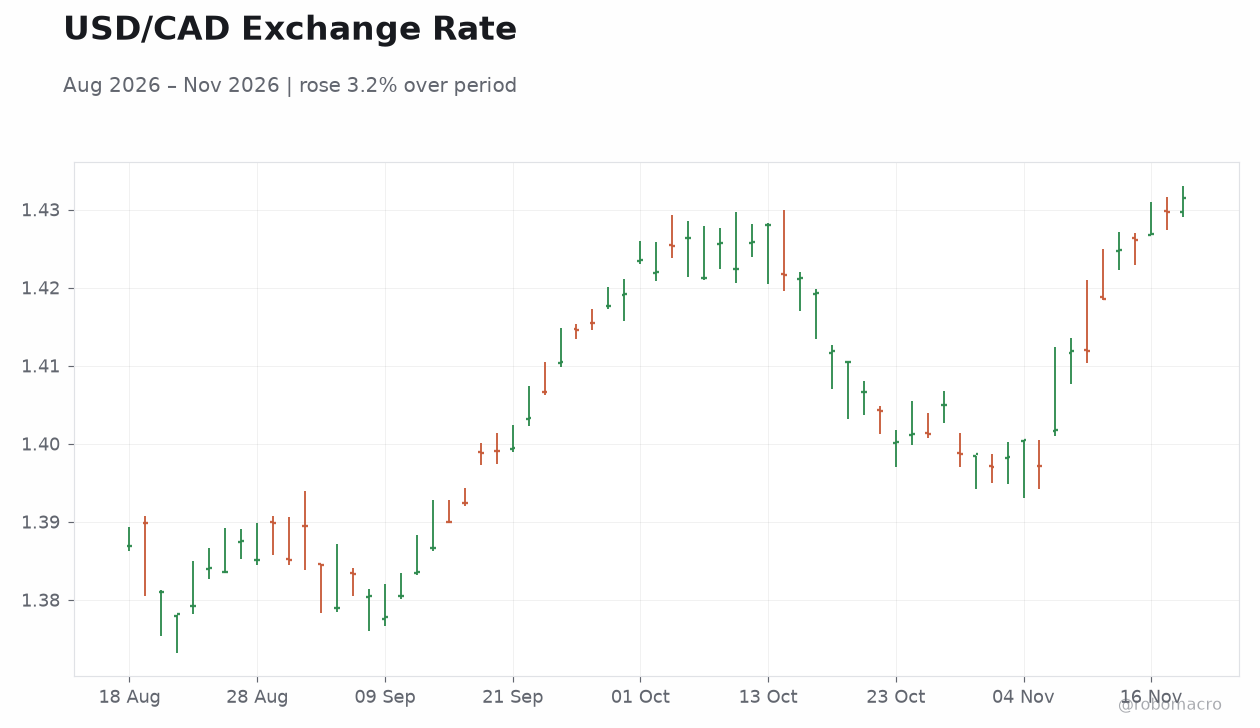
| USD/CAD | 1.43 | +0.09% |
| EUR/CAD | 1.57 | -0.13% |
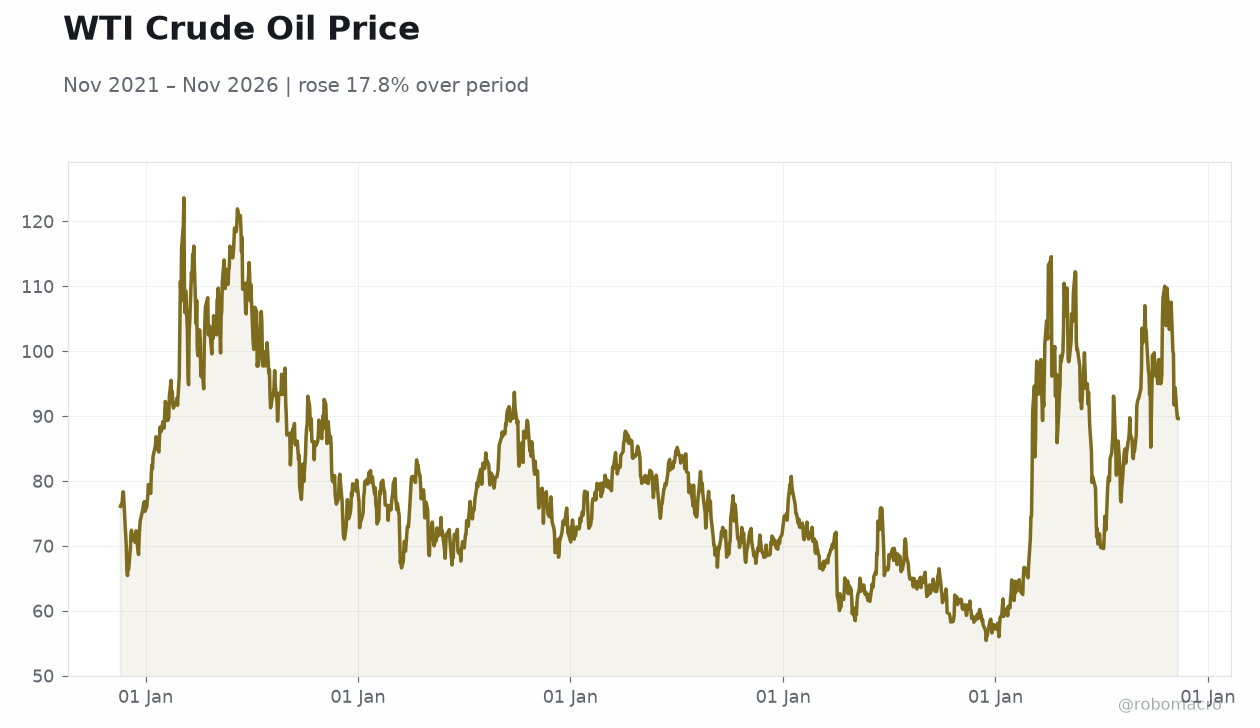
| WTI Crude | 83.43 | -3.00% |
| Natural Gas | 3.18 | -0.72% |
| Gold | 3,775.20 | -2.30% |
| Brent Crude | 89.52 | -3.89% |
| Bitcoin | 64,397.27 | -0.77% |
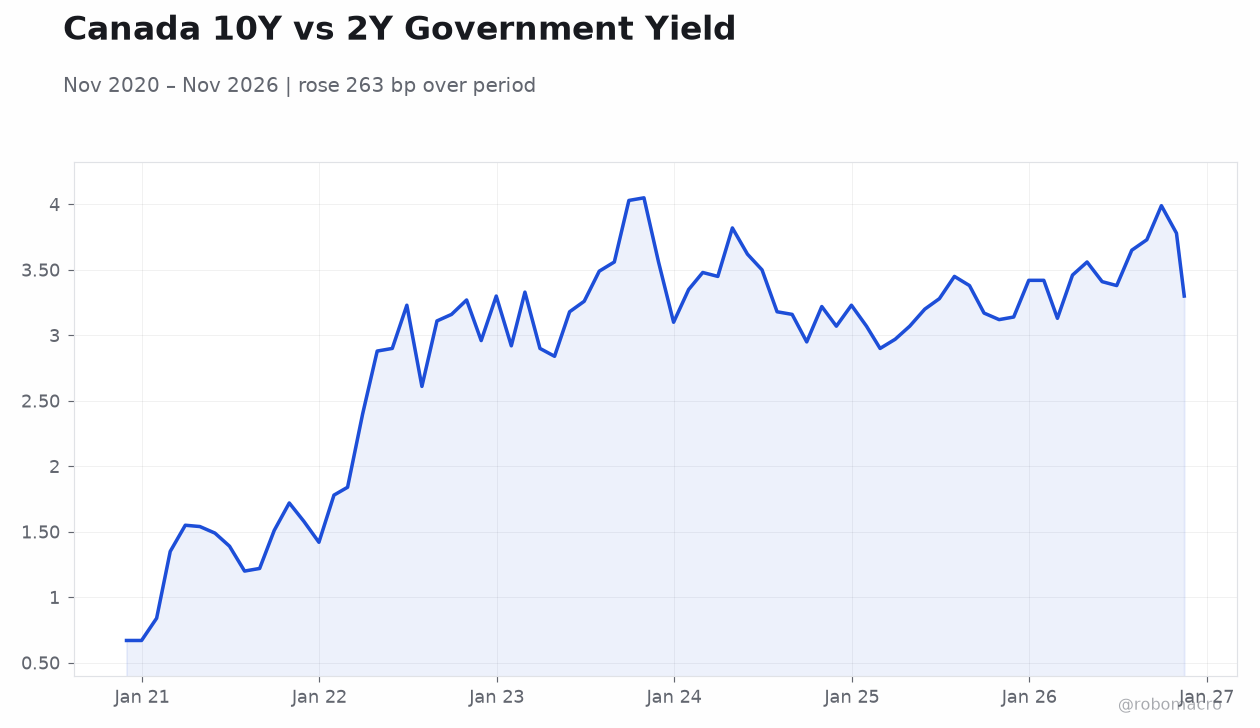
| Canada 2Y Govt Yield | 3.30% | -7 bp |
| Canada 10Y Govt Yield | 3.81% | -4 bp |
Prior Economic Events
| Data | Prior | Cons | Actual |
|---|---|---|---|
| Inflation Rate Year-over-Year | 3.10 | 3.20 | 3.10 |
| Core Inflation Rate Year-over-Year | 2.20 | - | 2 |
| Inflation Rate Month-over-Month | 0.10 | 0.40 | 0.20 |
| Housing Starts Level | 250,000 | 238,000 | 244,600 |
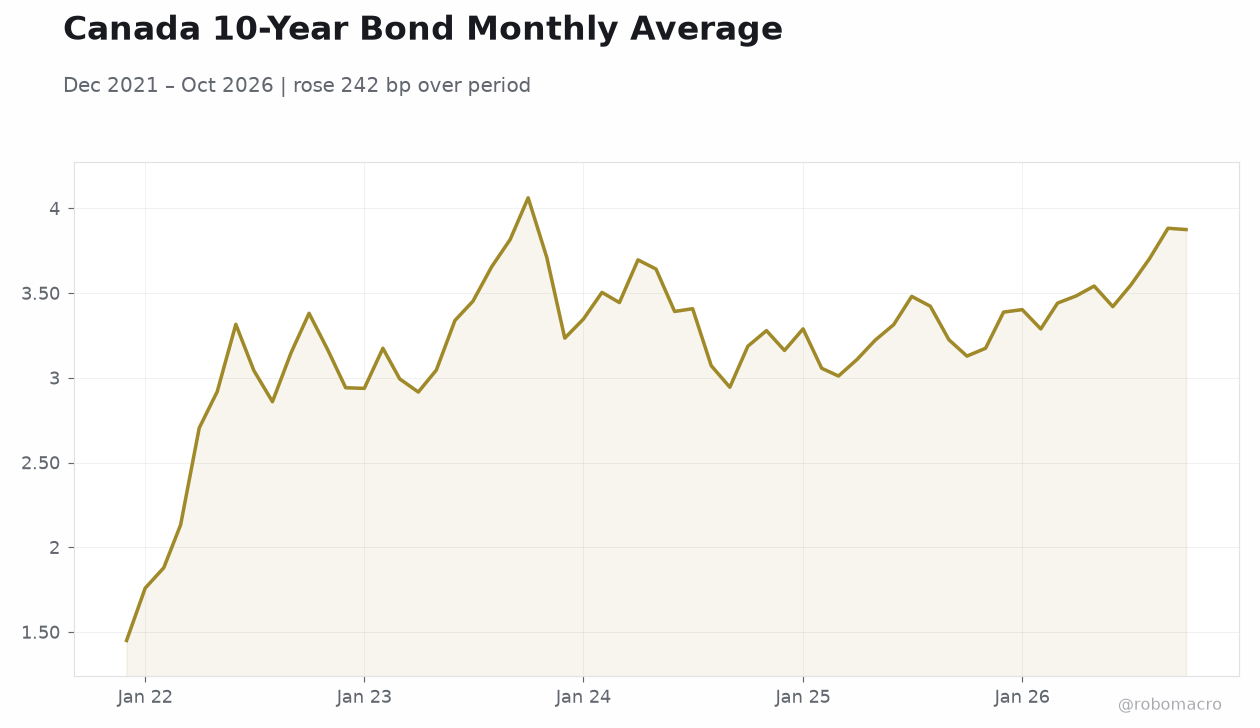 Canada 10-Year Bond Monthly Average | Type: macro_line | Canada 10-Year Bond Monthly Average: 3.875 (2026-10-01) | Range: 1.45–4.062 | Trend(6pt): 1.45,3.174,3.696,3.314,3.702,3.875
Today's Economic Events
| Data | Prior | Cons | Time |
|---|---|---|---|
| New Housing Price Index Month-over-Month | -0.20 | 0.10 | 08:30 |
| Friday (2026-11-20) | |||
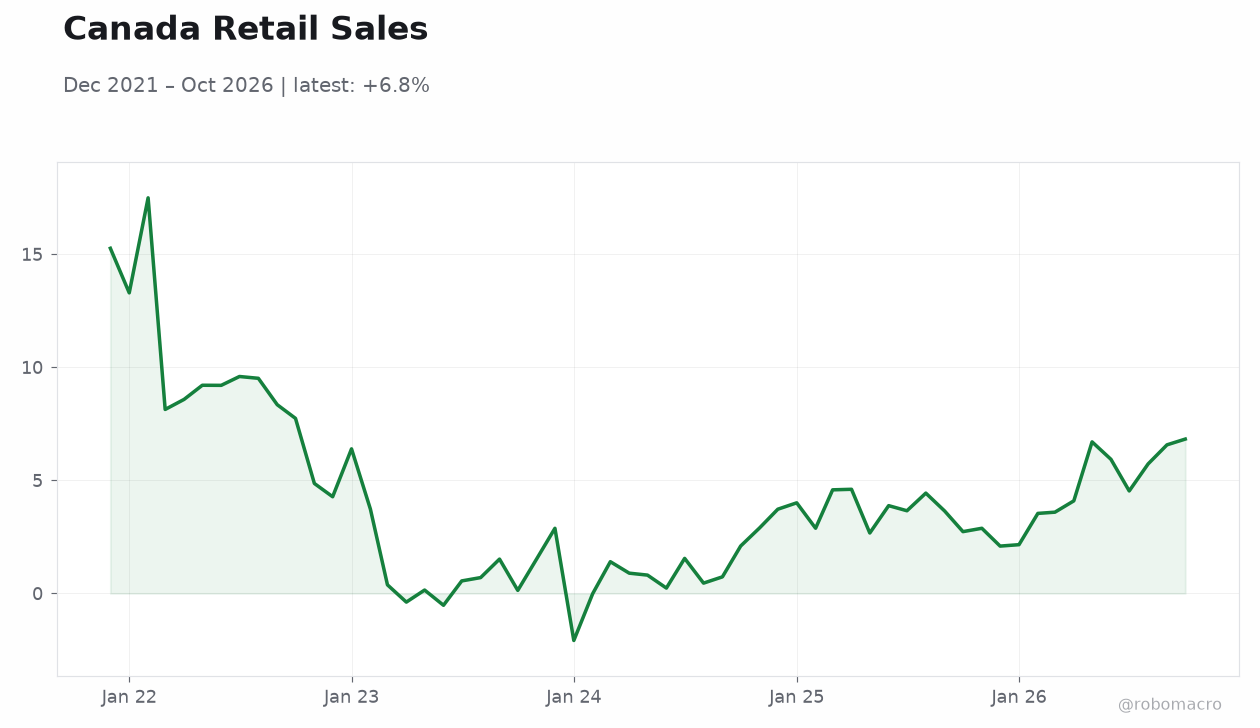
| Retail Sales Excluding Autos Month-over-Month | 1.20 | 0.70 | 08:30 |
| Retail Sales Month-over-Month Final | 1.20 | 0.70 | 08:30 |
| Retail Sales Month-over-Month Prel | - | - | 08:30 |
- October CPI held at 3.1% y/y versus 3.2% consensus, with core decelerating to 2.0% y/y and monthly prices up just 0.2%
- CAD slipped below 70 US cents as markets scale back December BoC hike odds; 2-year GoC yield fell 7 bp to 3.30%
- Housing starts at 244,600 beat consensus; Gravelle speaks in Edmonton today, retail sales land Friday
Yesterday's Recap
October CPI printed at 3.1% y/y, below the 3.2% consensus and unchanged from the prior reading, while core inflation decelerated to 2.0% y/y and the monthly index rose only 0.2% versus 0.4% expected. Housing starts came in at 244,600 for October, above the 238,000 consensus but below the prior 250,000 pace. Markets read the softer core as reducing the urgency for another hike, and the Canadian dollar fell below 70 US cents on shrinking expectations for a December Bank of Canada move.
The S&P/TSX dropped 1.14% to 35,315.30 as energy names sold off hard, with WTI down 3.00% to $83.43 and Brent off 3.89% to $89.52. Rates rallied on the disinflation print, with the 2-year GoC yield down 7 bp to 3.30% and the 10-year down 4 bp to 3.81%. Gold fell 2.30% to $3,775.20 and Bitcoin eased 0.77% to $64,397.27.
The Day Ahead
The New Housing Price Index for October is due at 08:30 ET, with consensus at +0.1% m/m following the prior -0.2% decline — a print in line would mark the first monthly gain since spring and bear on the shelter component of CPI. Deputy Governor Toni Gravelle speaks before the Edmonton Chamber of Commerce today, his first public remarks since the October decision, and markets will parse them for how the Bank is weighing the softer core against still-elevated headline inflation. Attention then shifts to Friday's retail sales release, where consensus looks for +0.7% m/m on both the headline and ex-autos measures following the prior +1.2% gain.
No other top-tier Canadian data is scheduled before the weekend.
Other Economic Notes
The October CPI detail is the key input for the December 9 decision, and the 2.0% core reading sits at the bottom of the Bank's 1-3% target band even as headline holds at 3.1% on energy-driven pressures. Housing remains a two-sided story: starts beat consensus at 244,600, but new home prices have been soft, and the C.D. Howe Institute's latest work argues the Bank should stay out of the affordability debate and keep its focus on the inflation target.
The Canada-India free trade negotiation is nearing completion, with a defence agreement likely signed during Modi's December visit to Ottawa — a modest positive for diversification away from US trade exposure. Macklem's announced departure in June adds a leadership transition overhang to the policy outlook.