Emerging Europe Macro Daily(Beta Mode)
NBP Holds Rates for Fourth Month
Market Snapshot
| Asset | Level | Change |
|---|---|---|
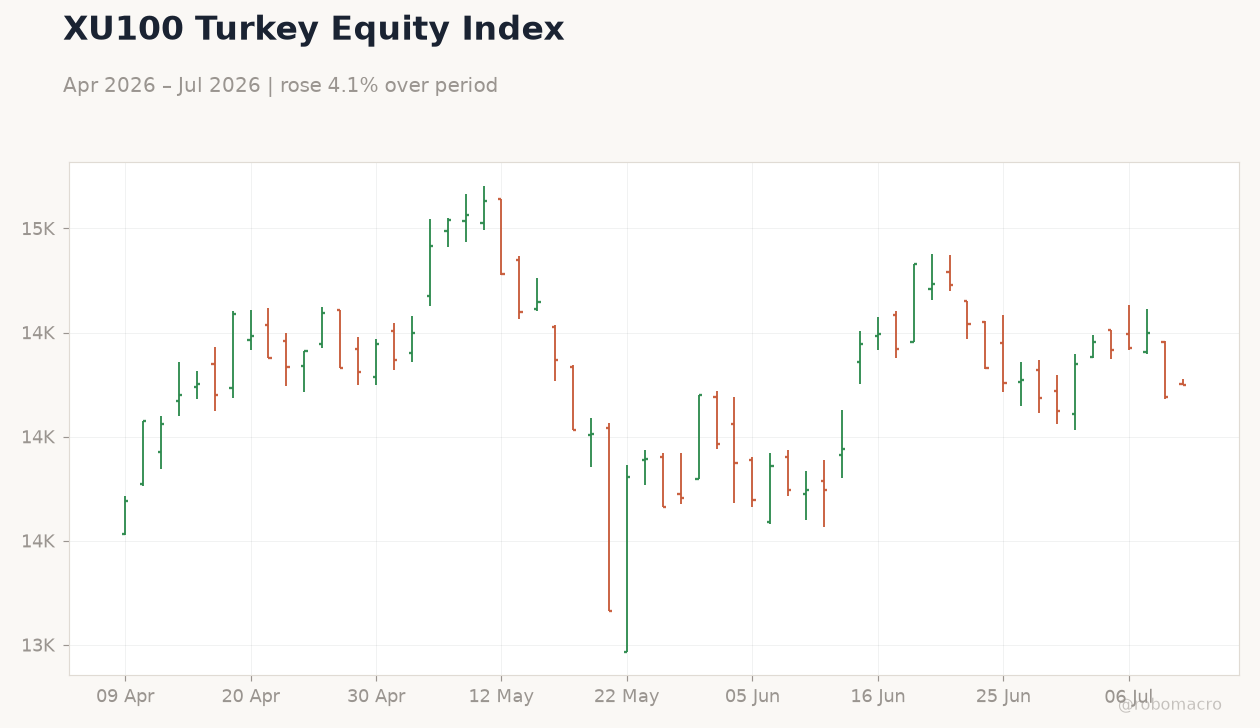
| BIST 100 | 14,266.17 | +0.54% |
| iShares Poland | 39.78 | +0.84% |
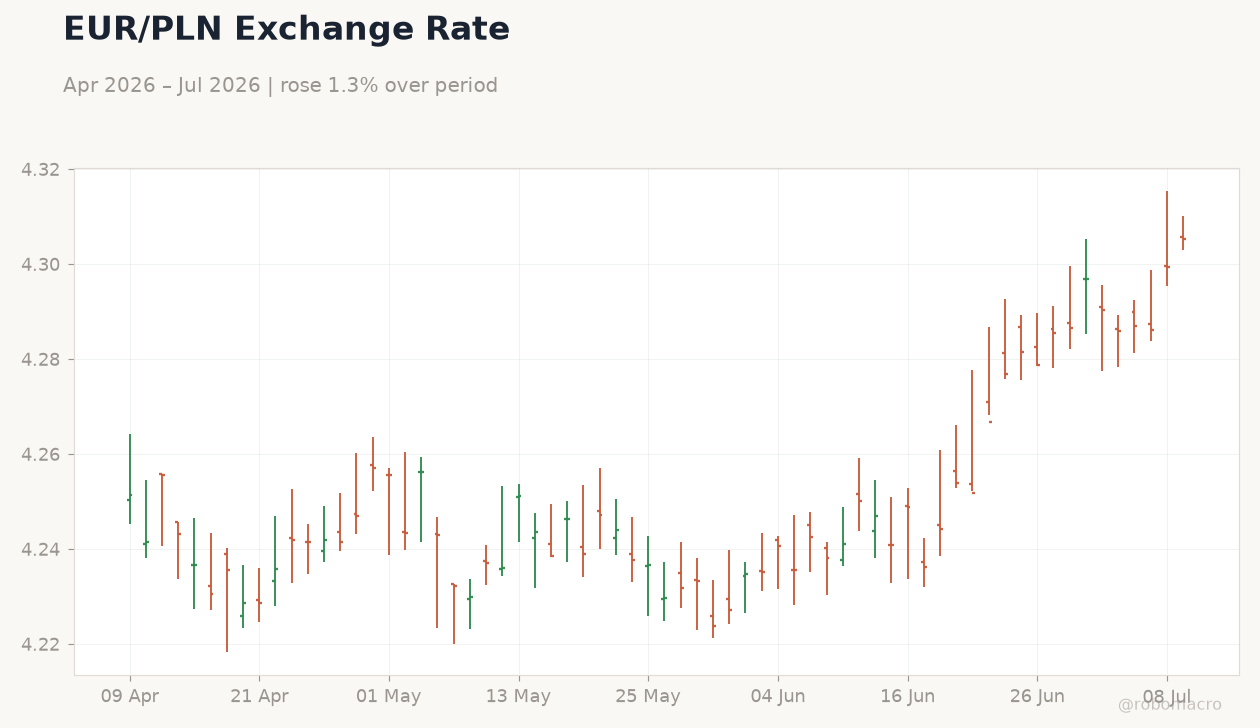
| EUR/PLN | 4.31 | +0.15% |
| EUR/HUF | 358.17 | +1.44% |
| EUR/CZK | 24.24 | +0.24% |
| USD/TRY | 46.87 | +0.04% |
| Brent Crude | 77.94 | -0.10% |
| Gold | 4,114.20 | +1.06% |
| Bitcoin | 62,921.25 | +1.07% |
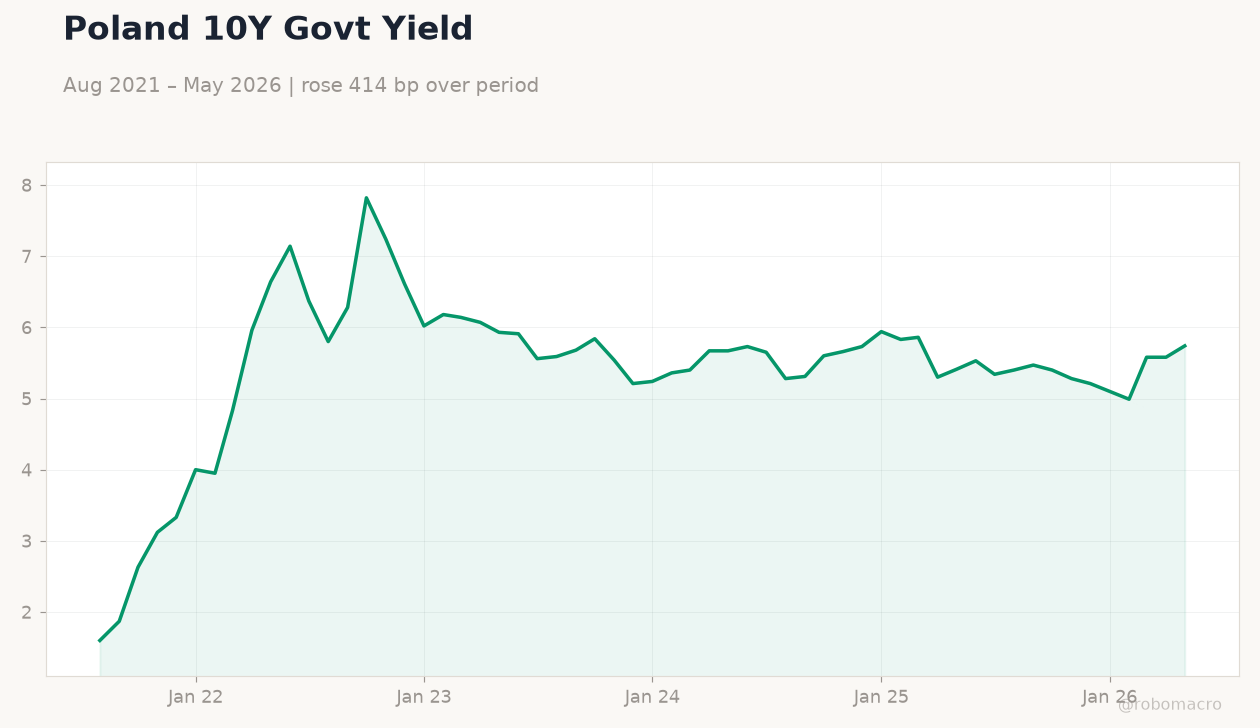
| Poland 10Y Govt Yield | 5.74% | +2.87% |
| Hungary 10Y Govt Yield | 5.65% | -9.89% |
Prior Economic Events
| Data | Prior | Cons | Actual |
|---|---|---|---|
| Central Bank Interest Rate Decision | 3.75 | 3.75 | 3.75 |
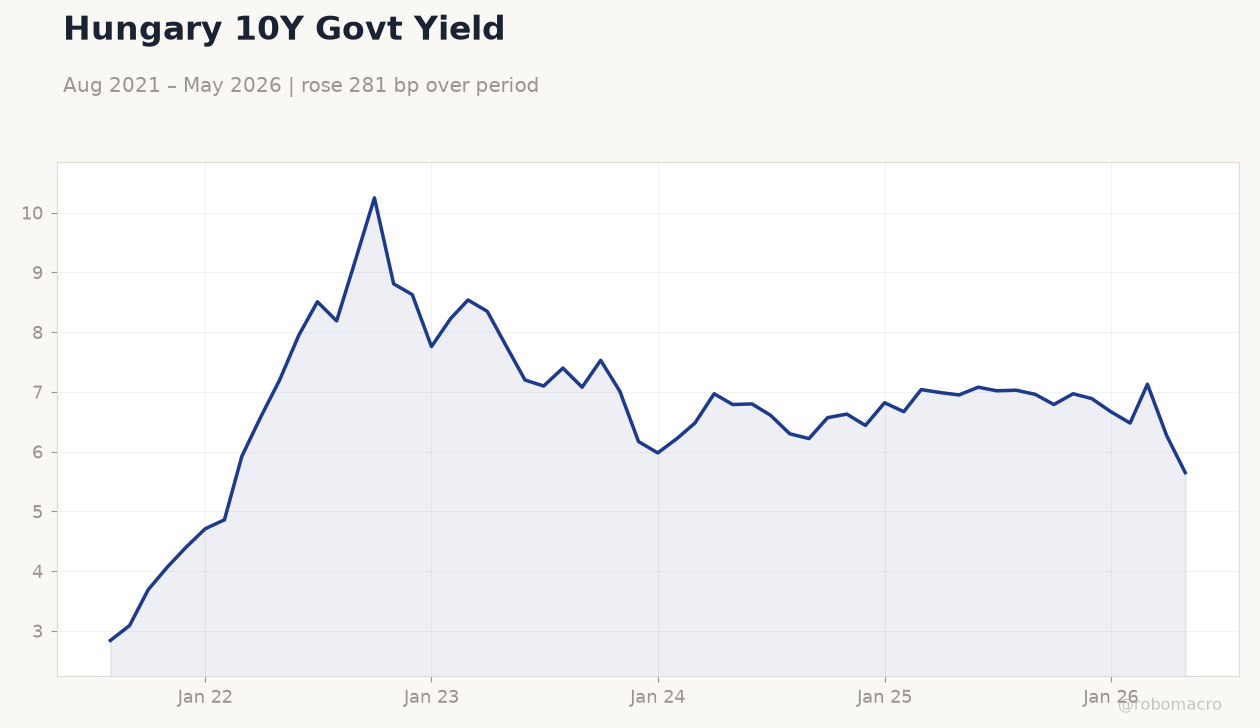 Hungary 10Y Govt Yield | Type: macro_line | Yield %: 5.65 (2026-05-01) | Range: 2.84–10.25 | Trend(6pt): 2.84,10.25,6.17,6.67,6.27,5.65
Today's Economic Events
| Data | Prior | Cons | Time |
|---|---|---|---|
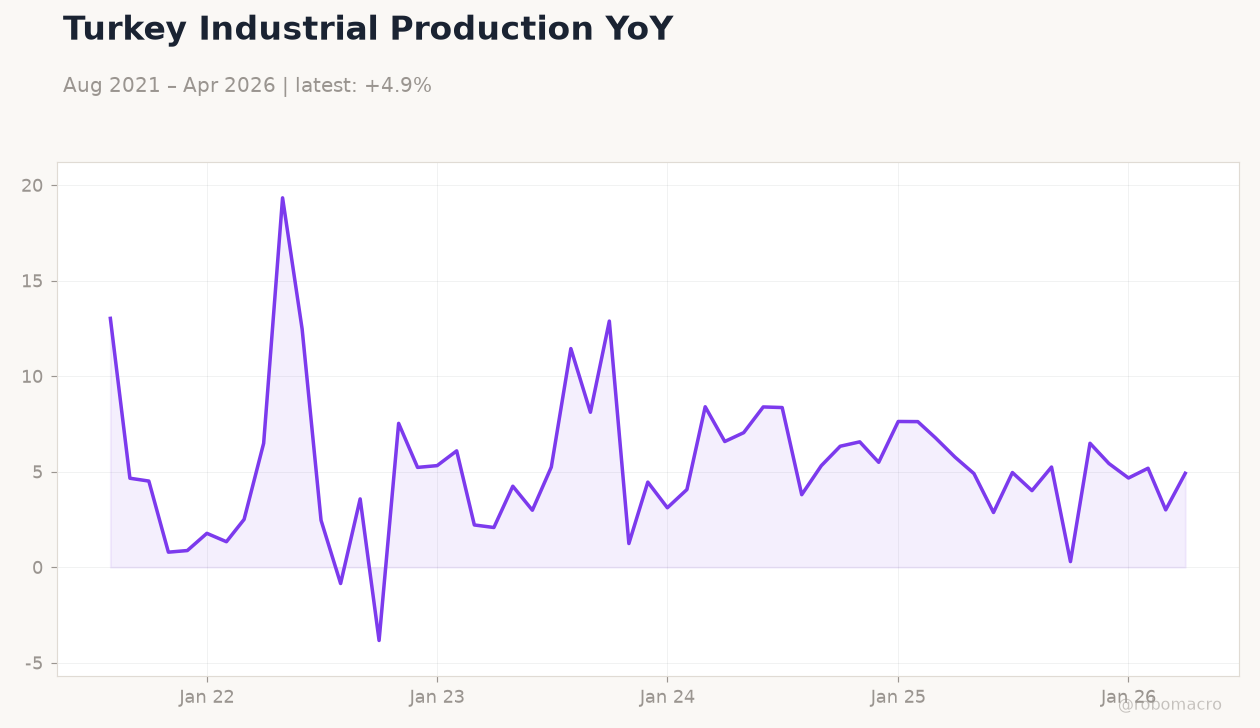
| Industrial Production Year-over-Year | 6 | - | 23:00 |
| Friday (2026-07-10) | |||
| Industrial Production Year-over-Year | 6 | - | 23:00 |
- NBP keeps policy rate at 3.75% for fourth consecutive month as Polish inflation risks recede.
- Regional equities advance with iShares Poland rising 0.84% while BIST 100 gains 0.54%.
- Hungary 10Y yields fall 9.89% to 5.65%.
Yesterday's Recap
Poland’s central bank held its benchmark rate at 3.75% for the fourth straight meeting, citing fading inflation pressures after the earlier surge linked to Middle East tensions. The decision aligned with consensus and left the committee focused on incoming data. Polish equities outperformed with the iShares Poland ETF climbing 0.84% while EUR/PLN edged 0.15% higher to 4.31.
Hungary’s 10Y government yield fell sharply by 9.89% to 5.65%. Turkish assets showed resilience with BIST 100 advancing 0.54% and USD/TRY rising just 0.04% to 46.87. Brent crude slipped 0.10% to $77.94 per barrel, offering modest relief to energy importers across the region.
Romania and Czech Republic saw limited moves with no major data releases.
The Day Ahead
Turkey will release June industrial production figures at 23:00 ET, with markets watching for signs of sustained manufacturing momentum after earlier strength. The print follows yesterday’s Polish rate decision and could influence CBRT expectations ahead of the next policy meeting. No other major Emerging Europe releases are scheduled for today.
Traders will also monitor any updates on EU Recovery and Resilience Facility disbursements to Poland. Regional FX and bond markets are expected to remain sensitive to global risk sentiment and energy prices.
Other Economic Notes
Poland continues to benefit from EU fund inflows after meeting additional rule-of-law milestones, supporting growth prospects. Energy import dependence remains a shared vulnerability for Poland, Hungary and Romania despite new LNG supply agreements. Broader CEE equity markets showed resilience amid mixed global signals.
Global Macro News
The ECB maintained its deposit rate at 2.25%, providing a stable external anchor for CNB and MNB policy considerations. Eurozone CPI stood at 2.80% year-over-year at end-June, keeping the central bank on a cautious path. Renewed tensions in the Strait of Hormuz lifted safe-haven demand for gold, which rose 1.06% to $4,114.20.
Bitcoin advanced 1.07% to $62,921.25, reflecting broader risk appetite that spilled into CEE equities. <i>↓ p.2</i>