Emerging Europe Macro Daily(Beta Mode)
Poland's Gold Buys Accelerate, Zloty Weakens
Market Snapshot
| Asset | Level | Change |
|---|---|---|
| BIST 100 | 14,092.00 | -1.60% |
| iShares Poland | 40.16 | -0.52% |
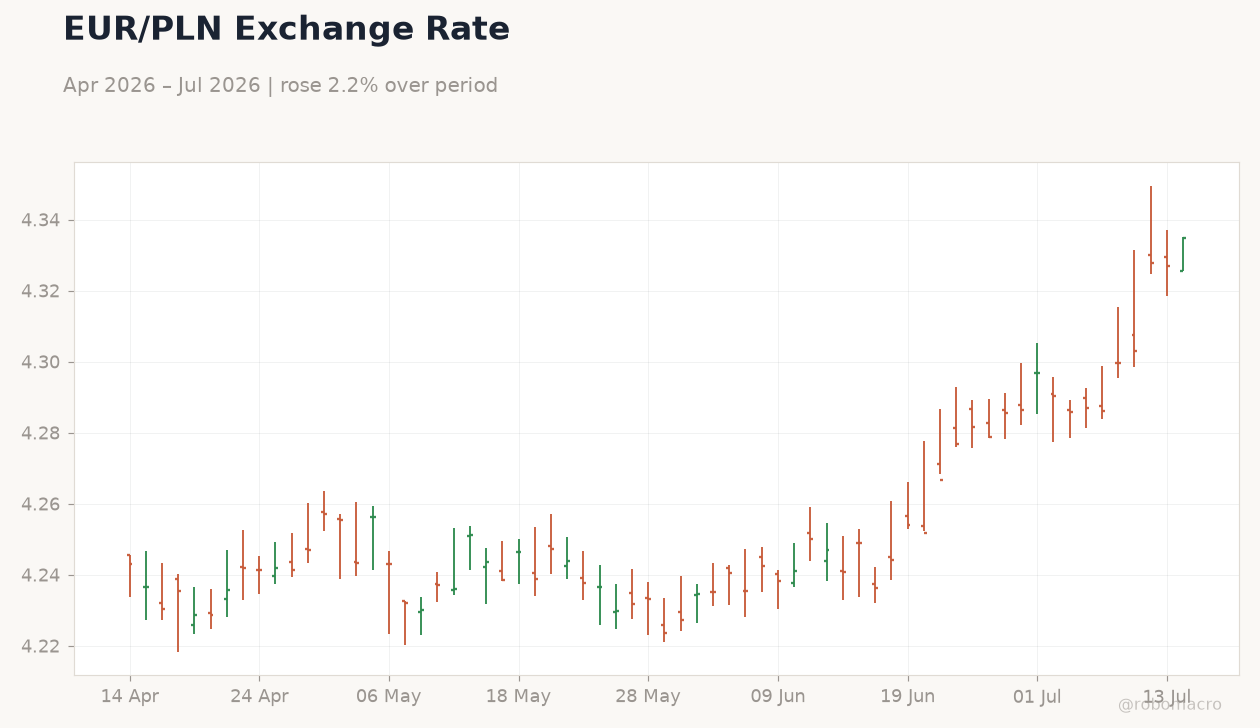
| EUR/PLN | 4.33 | +0.17% |
| EUR/HUF | 360.03 | +1.01% |
| EUR/CZK | 24.30 | +0.21% |
| USD/TRY | 47.03 | +0.10% |
| Brent Crude | 85.11 | +2.17% |
| Gold | 4,029.70 | +0.82% |
| Bitcoin | 62,585.19 | +0.56% |
| Poland 10Y Govt Yield | 5.74% | +2.87% |
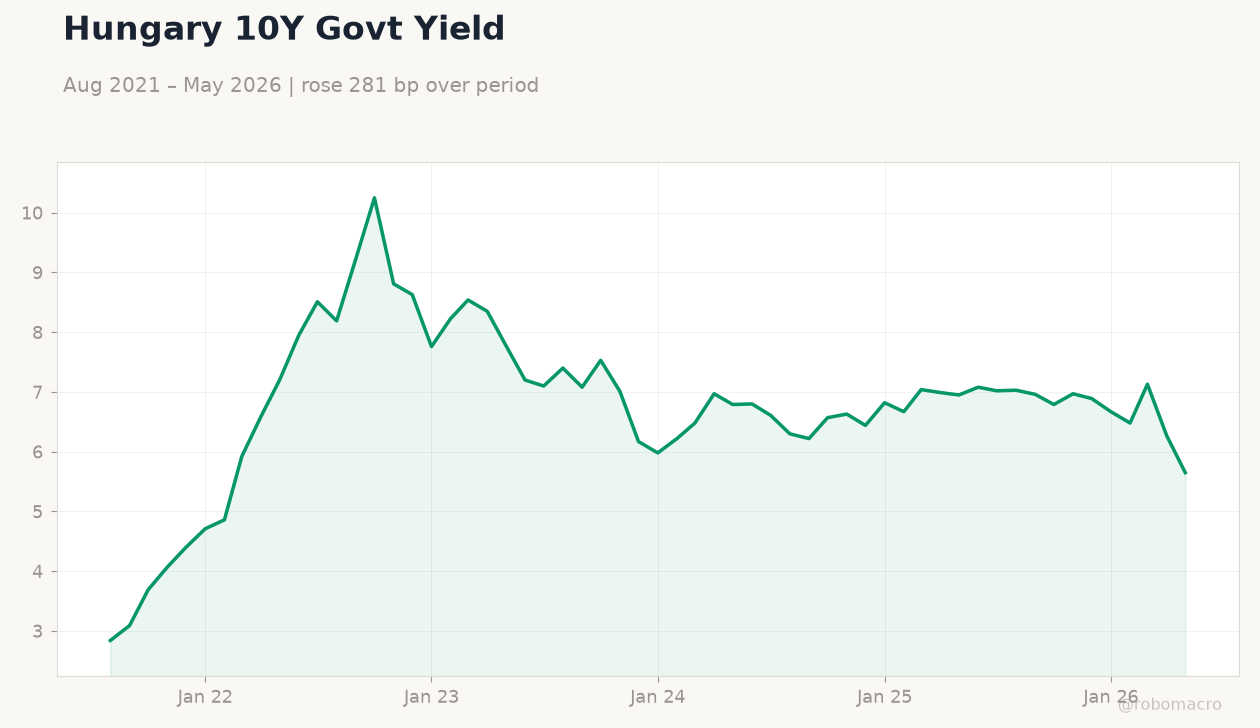
| Hungary 10Y Govt Yield | 5.65% | -9.89% |
Prior Economic Events
| Data | Prior | Cons | Actual |
|---|---|---|---|
| No events available | |||
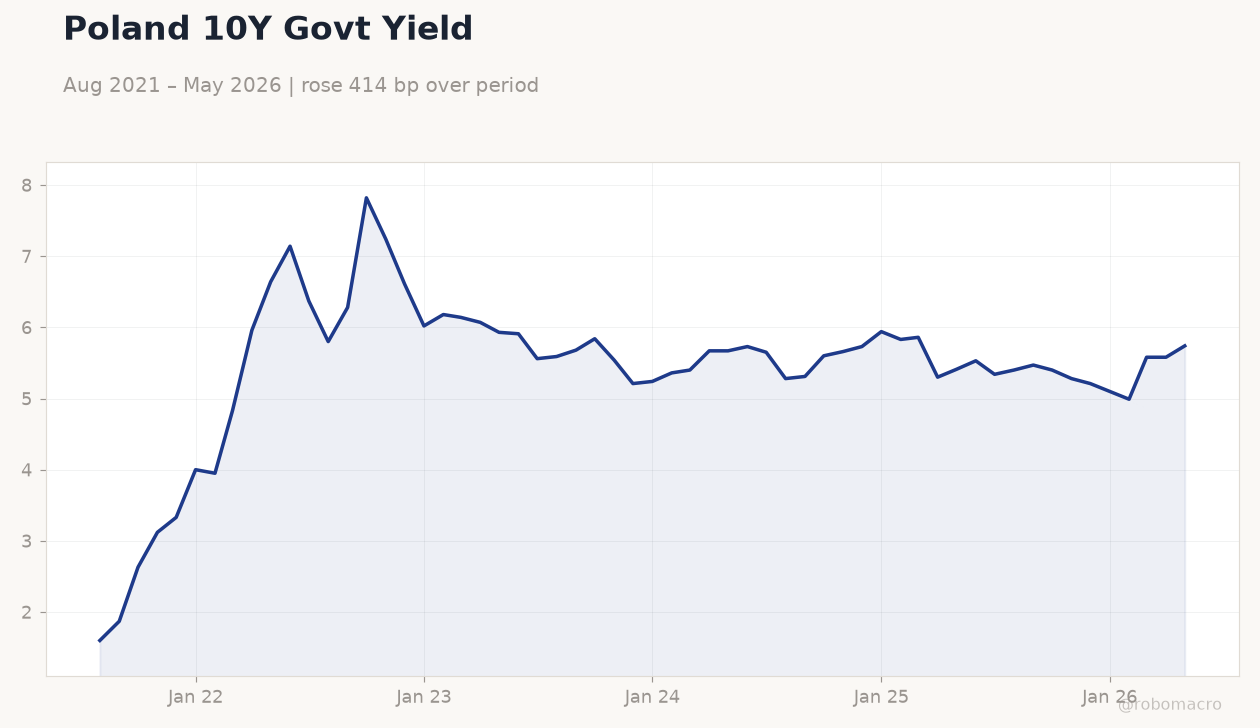 Poland 10Y Govt Yield | Type: macro_line | Yield %: 5.74 (2026-05-01) | Range: 1.6–7.82 | Trend(6pt): 1.6,7.82,5.21,5.83,5.58,5.74
Today's Economic Events
| Data | Prior | Cons | Time |
|---|---|---|---|
| No events available | |||
- Poland central bank gold purchases outpace global peers amid persistent zloty pressure from geopolitical tensions.
- Regional equities and currencies post modest losses with BIST 100 falling 1.60% and EUR/HUF rising 1.01%.
- Hungary parliament moves to remove president while Poland advances offshore wind and space sector projects.
Yesterday's Recap
Emerging Europe markets closed lower on thin volumes with limited economic data releases across the region. BIST 100 declined 1.60% to 14,092 while iShares Poland dropped 0.52% to 40.16. EUR/PLN edged up 0.17% to 4.33 and EUR/CZK rose 0.21% to 24.30, reflecting mild selling pressure on local currencies.
Poland’s central bank continued aggressive gold accumulation, buying through price dips at a faster pace than any other central bank globally. Hungary 10Y yields fell sharply 9.89% to 5.65% while Poland 10Y yields rose 2.87% to 5.74%. Poland also advanced plans for the largest container terminal in its history at Świnoujście and positioned offshore wind capacity to support AI data centers.
Zloty faced additional headwinds from dollar strength linked to Strait of Hormuz developments.
The Day Ahead
The calendar remains quiet with no scheduled data releases or central bank meetings across Poland, Czech Republic, Hungary, Romania or Turkey. Markets will likely focus on follow-through from Poland’s gold strategy and ongoing infrastructure projects. Hungary’s constitutional changes removing the president may generate political headlines but carry limited immediate market impact.
Regional FX will continue tracking euro-area developments and any shifts in global risk sentiment. Poland’s euro exchange rate hovered near 4.33 with limited volatility expected absent new catalysts.
Other Economic Notes
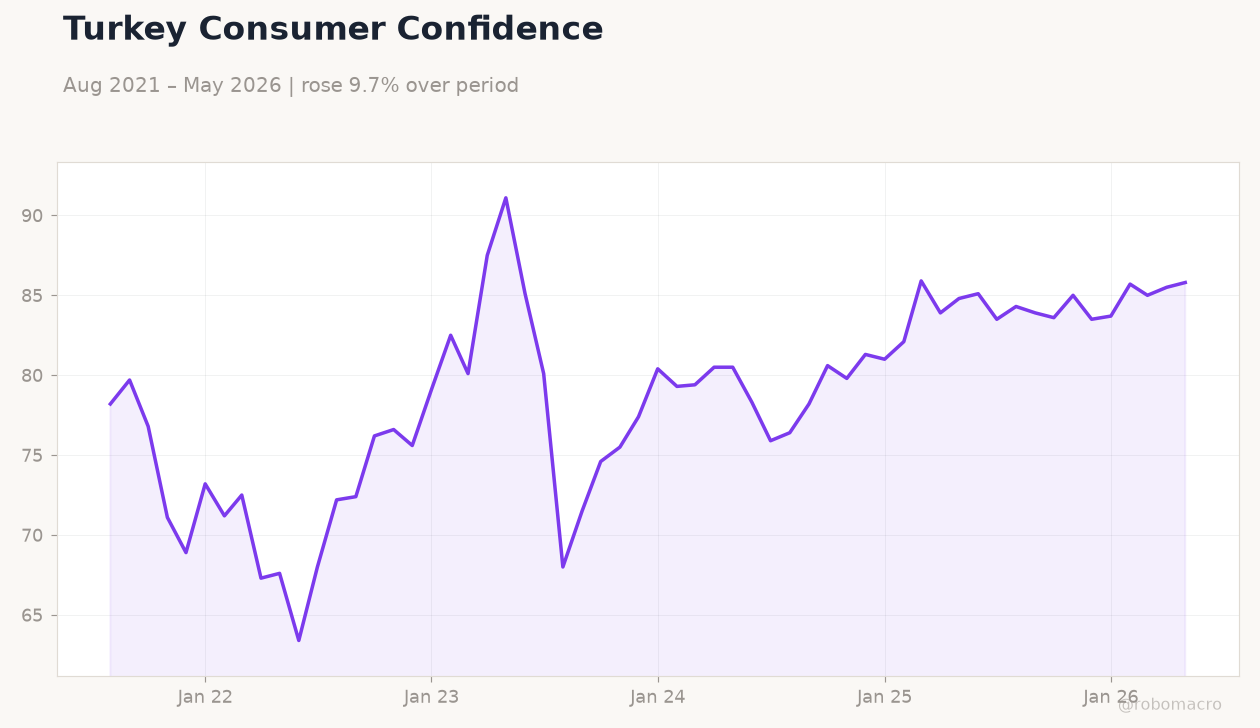
Poland’s avoidance of the middle-income trap stems from sustained investment in high-value sectors including space cooperation with the European Space Agency and maritime infrastructure. Energy import dependence remains a shared vulnerability for the four EU members in the region despite diversification efforts. Turkey continues to operate under distinct macro conditions with structurally higher inflation and different geopolitical alignments than its EU peers.
Broader EU fund flows and convergence criteria will stay in focus for Poland, Czech Republic, Hungary and Romania as they maintain close trade linkages with the euro area.