Emerging Europe Macro Daily(Beta Mode)
Poland CPI Hits Target, Zloty Pauses Climb
Market Snapshot
| Asset | Level | Change |
|---|---|---|
| BIST 100 | 14,080.00 | -0.09% |
| iShares Poland | 40.82 | +0.10% |
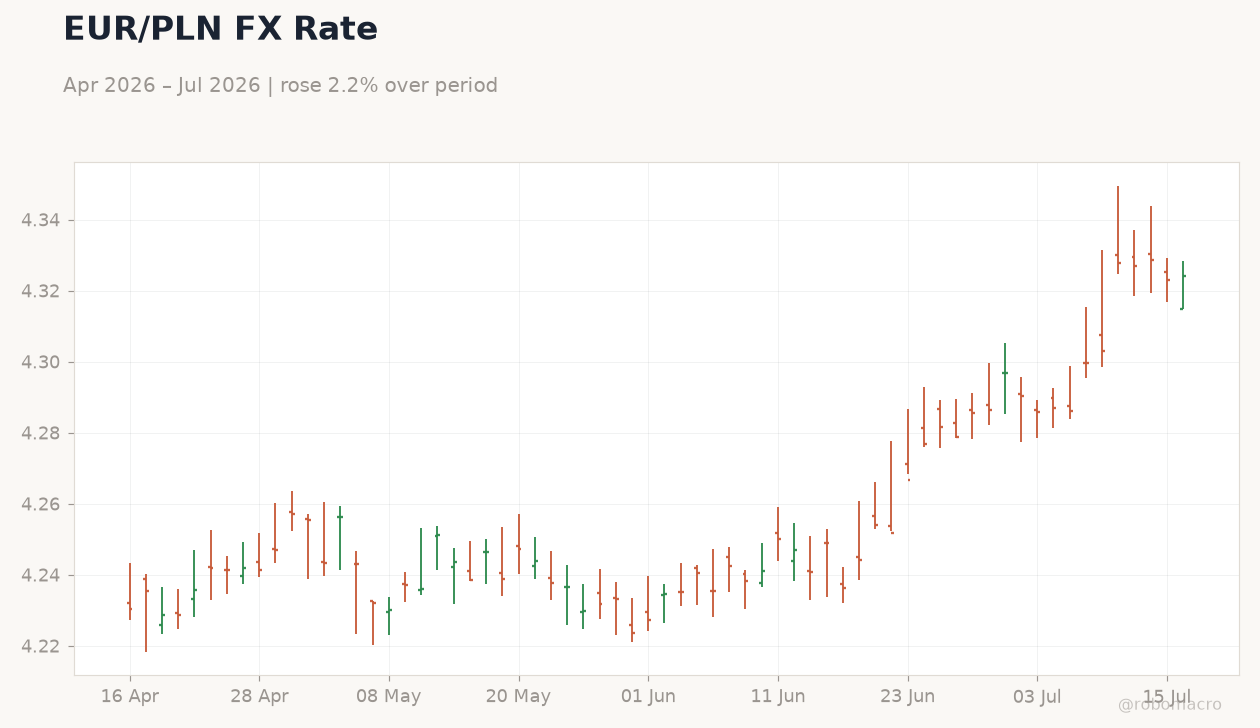
| EUR/PLN | 4.32 | -0.12% |
| EUR/HUF | 359.13 | +0.23% |
| EUR/CZK | 24.18 | -0.18% |
| USD/TRY | 47.04 | +0.03% |
| Brent Crude | 84.51 | -0.52% |
| Gold | 4,036.00 | -0.20% |
| Bitcoin | 64,644.99 | -0.48% |
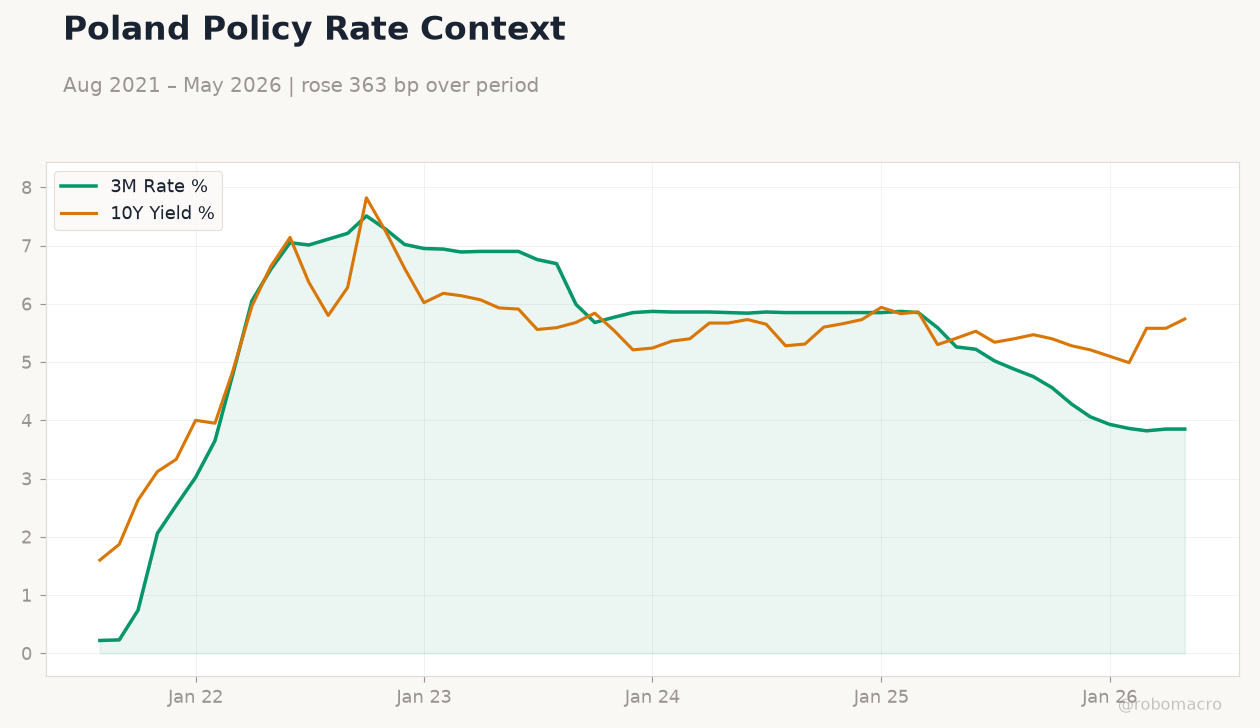
| Poland 10Y Govt Yield | 5.74% | +2.87% |
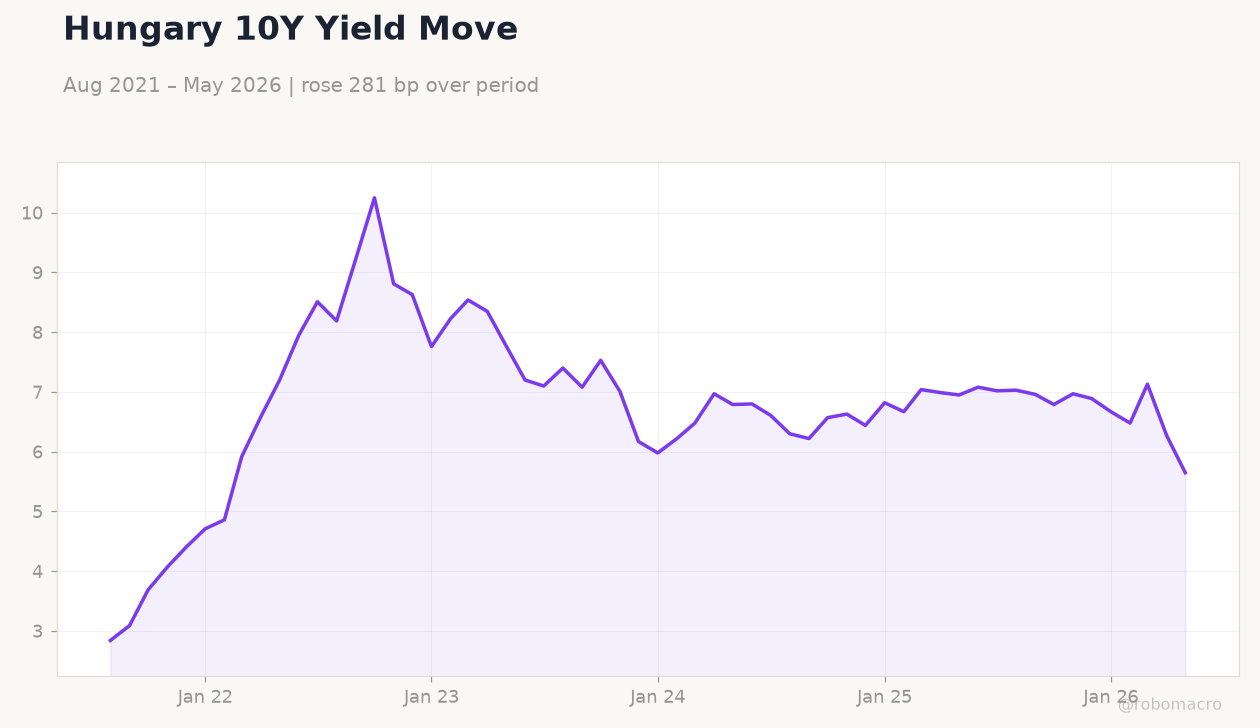
| Hungary 10Y Govt Yield | 5.65% | -9.89% |
Prior Economic Events
| Data | Prior | Cons | Actual |
|---|---|---|---|
| No events available | |||
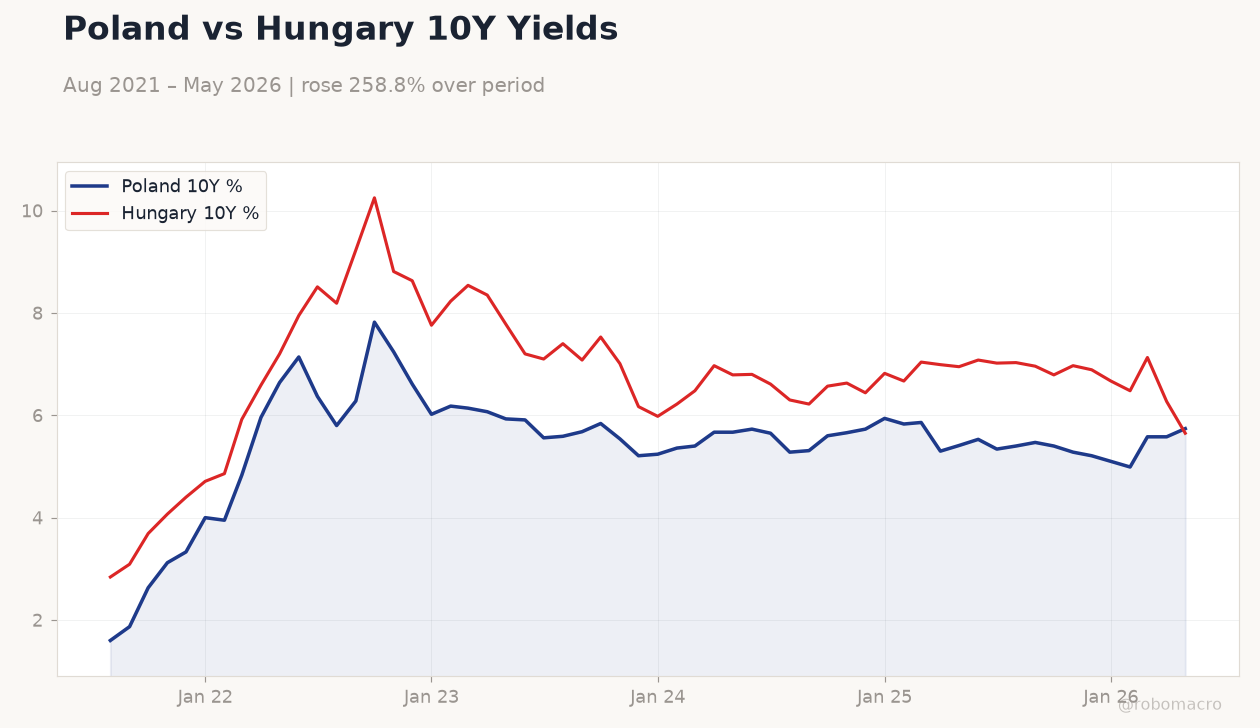 Poland vs Hungary 10Y Yields | Type: macro_line | Poland 10Y %: 5.74 (2026-05-01) | Range: 1.6–7.82 | Trend(6pt): 1.6,7.82,5.21,5.83,5.58,5.74 | Hungary 10Y %: 5.65 (2026-05-01) | Range: 2.84–10.25 | Trend(6pt): 2.84,10.25,6.17,6.67,6.27,5.65
Today's Economic Events
| Data | Prior | Cons | Time |
|---|---|---|---|
| No events available | |||
- Polish June CPI confirmed at NBP 2.5% target, supporting rate-hold stance amid stable EUR/PLN at 4.32.
- Hungarian 10Y yields fell 9.89% as BUX-linked assets held steady while regional FX showed modest EUR/HUF gains.
- BIST 100 edged down 0.09% with USD/TRY flat at 47.04, reflecting limited spillovers from global equity weakness.
Yesterday's Recap
Polish statistics office confirmed June CPI exactly at the NBP 2.5% target, removing one source of upside risk and reinforcing expectations that the central bank will keep rates unchanged. The zloty paused its recent climb, with EUR/PLN settling at 4.32 after a 0.12% decline as Middle East tensions eased. iShares Poland rose 0.10% while the Poland 10Y yield increased 2.87% to 5.74%, indicating mixed bond-market reaction to the inflation print.
In Hungary, the 10Y yield dropped sharply by 9.89% to 5.65%, supporting local fixed-income markets despite a modest 0.23% rise in EUR/HUF to 359.13. The Czech koruna strengthened slightly, with EUR/CZK falling 0.18% to 24.18. Turkish markets remained calm, BIST 100 declining just 0.09% and USD/TRY holding near 47.04.
Brent crude slipped 0.52% to 84.51, offering modest relief to energy-importing economies across the region. No economic releases occurred in any CEE market yesterday per the FinanceFlow calendar.
The Day Ahead
No major data releases are scheduled for Poland, Czech Republic, Hungary, Romania or Turkey, leaving markets to digest yesterday’s Polish inflation confirmation. Traders will monitor any ECB speakers for signals on the 2.25% deposit rate amid Eurozone CPI at 2.80%. Regional FX desks are likely to focus on EUR/PLN and EUR/HUF flows ahead of Friday’s global risk sentiment.
Equity investors may watch BIST 100 and Polish indices for continuation of the recent narrow ranges. Any comments from NBP or MNB officials could influence short-term rate expectations given their sensitivity to ECB moves. Eurozone unemployment at 6.20% provides additional context for ECB deliberations.
Other Economic Notes
Poland’s confirmed alignment with the NBP target improves the credibility of its inflation-targeting framework and supports convergence discussions with the euro area. Hungary’s sharp yield compression suggests investors are pricing in a more stable fiscal outlook despite ongoing political transitions. Energy-price moderation, visible in Brent’s decline, should ease import bills for all five economies given their shared exposure to external supply shocks.
Romania and the Czech Republic continue to benefit from EU fund inflows that offset weaker domestic demand. <i>↓ p.2</i>