Emerging Europe Macro Daily(Beta Mode)
CEE Yields Drop as Turkey Data Looms
Market Snapshot
| Asset | Level | Change |
|---|---|---|
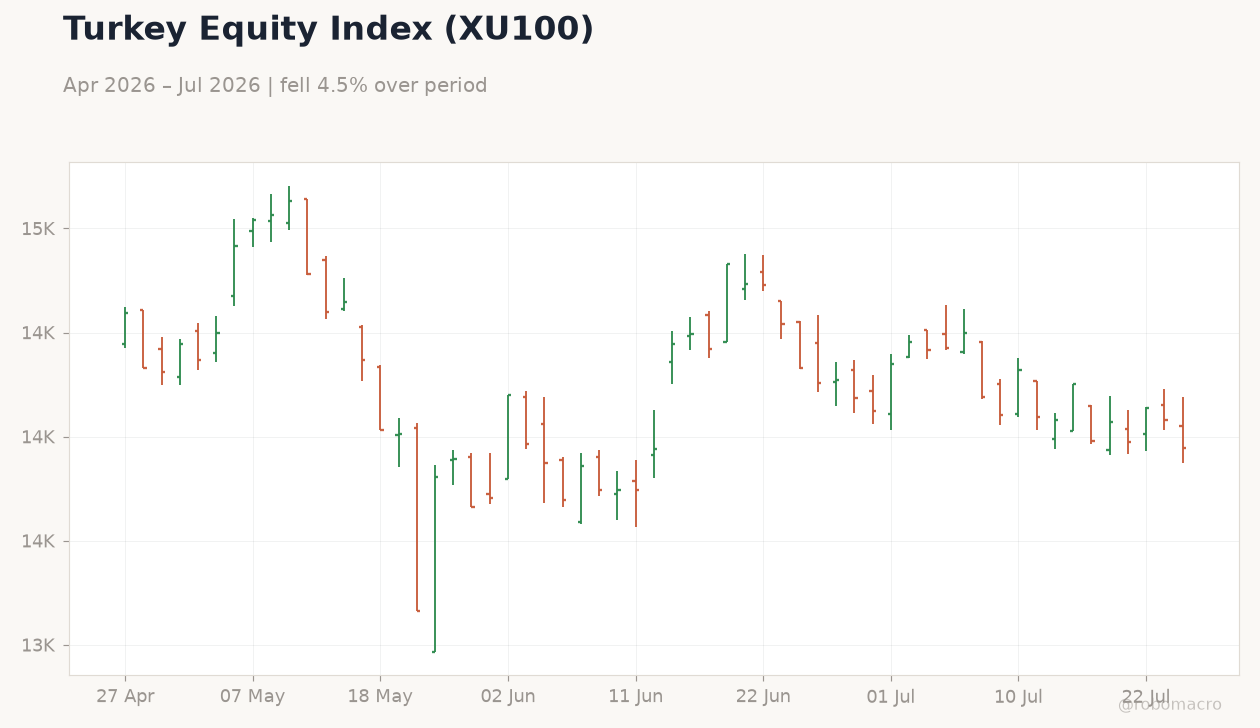
| BIST 100 | 13,943.90 | -0.95% |
| iShares Poland | 40.92 | +0.34% |
| EUR/PLN | 4.31 | -0.46% |
| EUR/HUF | 363.64 | +0.22% |
| EUR/CZK | 24.13 | -0.23% |
| USD/TRY | 47.32 | +0.22% |
| Brent Crude | 90.49 | -6.50% |
| Gold | 4,098.00 | +0.75% |
| Bitcoin | 65,364.30 | +0.04% |
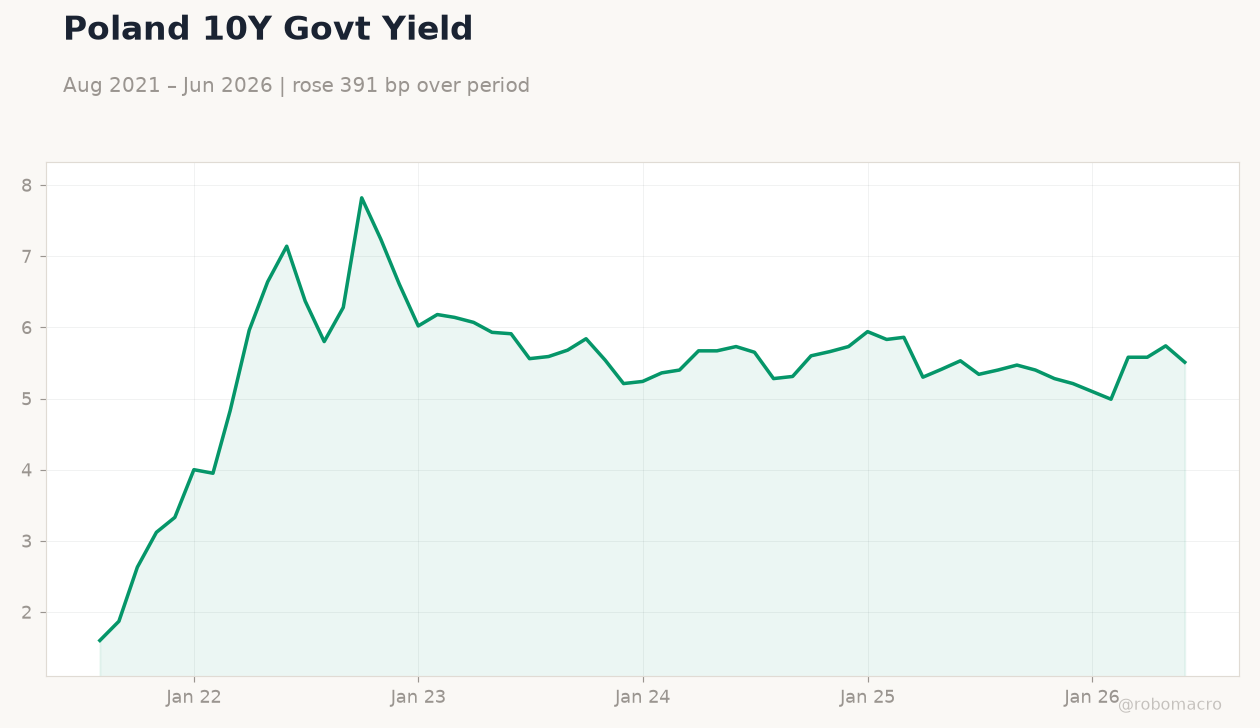
| Poland 10Y Govt Yield | 5.51% | -4.01% |
| Hungary 10Y Govt Yield | 5.26% | -6.90% |
Prior Economic Events
| Data | Prior | Cons | Actual |
|---|---|---|---|
| No events available | |||
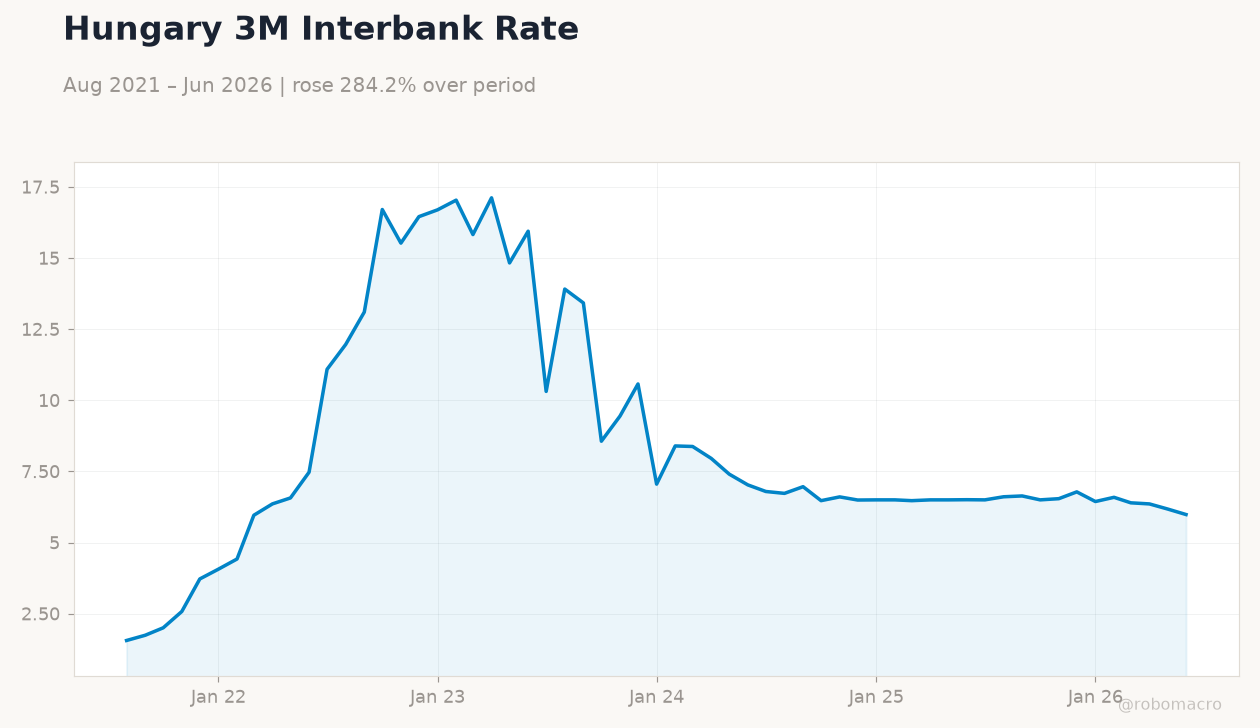
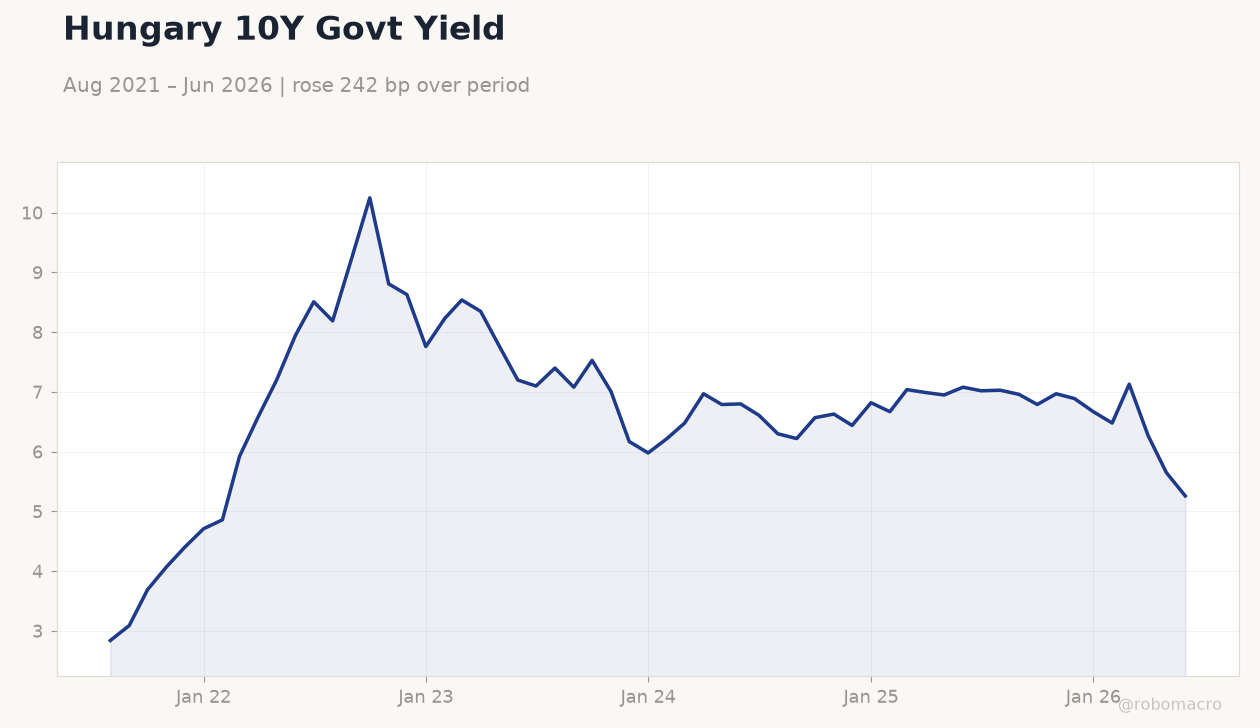 Hungary 10Y Govt Yield | Type: macro_line | Yield %: 5.26 (2026-06-01) | Range: 2.84–10.25 | Trend(6pt): 2.84,10.25,6.17,6.67,6.27,5.26
Today's Economic Events
| Data | Prior | Cons | Time |
|---|---|---|---|
| Headline Unemployment Rate | 8.20 | - | 23:00 |
| Balance of Trade Final | -5,610m | -10,400m | 23:00 |
| Inflation Rate Year-over-Year Preliminary | 2.50 | - | 23:30 |
- Polish and Hungarian 10Y yields fell sharply on thin trading with no major data releases.
- BIST 100 declined 0.95% while iShares Poland ETF gained 0.34% amid PLN strength.
- Focus shifts to Turkey unemployment and Poland preliminary CPI this week.
Yesterday's Recap
Emerging Europe markets saw limited volatility on 26 July with no scheduled data releases across Poland, Czech Republic, Hungary, Romania or Turkey. Poland 10Y government yields dropped 4.01% to 5.51% while Hungary 10Y yields fell 6.90% to 5.26%, reflecting modest duration buying in the absence of fresh inflation prints. EUR/PLN eased 0.46% to 4.31 as the zloty outperformed regional peers, whereas EUR/HUF rose 0.22% to 363.64 and EUR/CZK slipped 0.23% to 24.13.
BIST 100 declined 0.95% to 13,943.90 while the iShares Poland ETF advanced 0.34% to 40.92, supported by bank outperformance. USD/TRY edged 0.22% higher to 47.32, extending gradual lira pressure. Brent crude plunged 6.50% to 90.49, weighing on energy importers, while gold rose 0.75% to 4,098.00.
Bitcoin held steady near 65,364. Eurozone CPI remained at 2.80% y/y through June and the ECB deposit rate stayed at 2.25%, offering a stable external backdrop. Eurozone unemployment held at 6.20% in May, supporting external demand for Polish and Czech exports.
The Day Ahead
Attention turns to three medium-impact releases. Turkey will publish its headline unemployment rate at 23:00 ET on 29 July, following the prior 8.2% print. The final balance of trade figure for Turkey is due the next day at 23:00 ET, with consensus pointing to a wider deficit of USD 10.4 bn versus the prior USD 5.61 bn.
Poland releases its preliminary inflation rate year-over-year at 23:30 ET on 30 July; markets will watch for any deviation from the last 2.5% reading. No events are flagged for Czech Republic, Hungary or Romania. Traders will also monitor any follow-through from Hungary’s recent housing price data showing the first quarterly declines in three years.
Broader risk sentiment remains mixed after Brent’s sharp drop eased imported inflation pressures for net energy importers yet weighed on Hungarian and Romanian fiscal balances.
Other Economic Notes
Hungary’s first-quarter and second-quarter house-price statistics released by the MNB highlighted cooling momentum after earlier gains, with prices falling for the first time in three years. OTP Bank exhausted its full HUF 60 bn share-buyback authorisation approved by the central bank, returning capital to shareholders amid stable domestic liquidity. <i>↓ p.2</i>