Emerging Europe Macro Daily(Beta Mode)
BIST Slips, Polish Yields Fall on ECB Hold
Market Snapshot
| Asset | Level | Change |
|---|---|---|
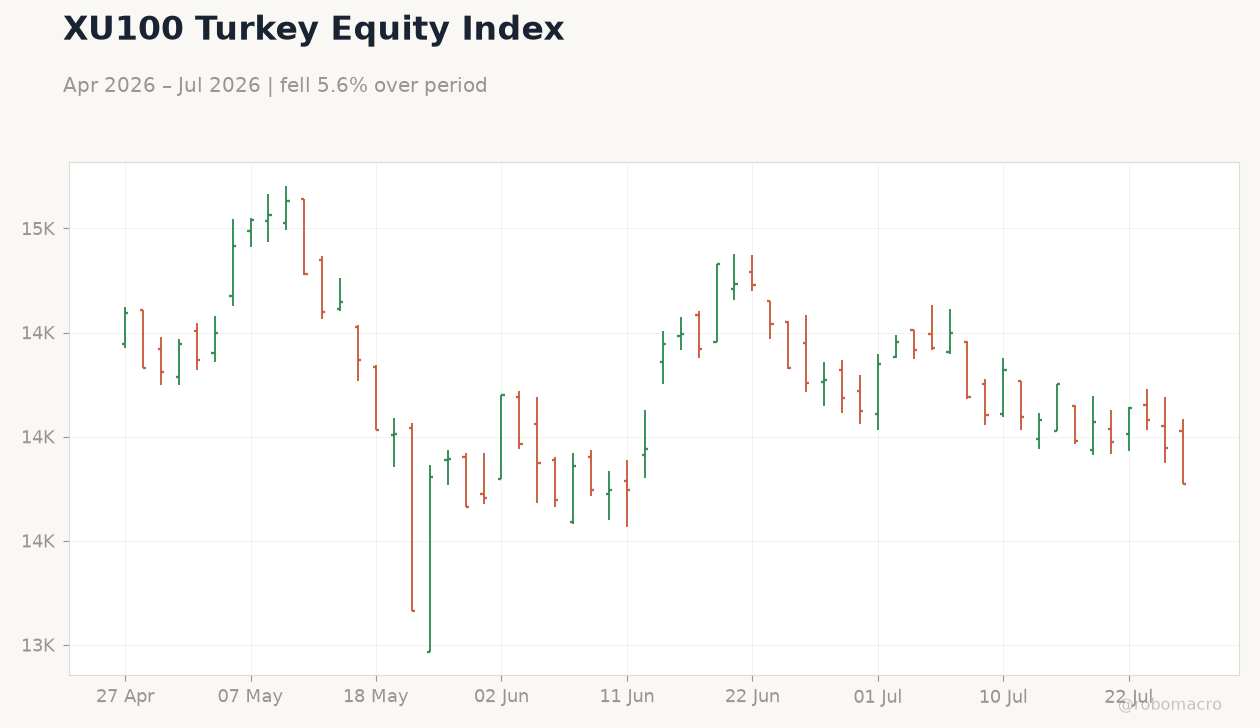
| BIST 100 | 13,774.80 | -1.21% |
| iShares Poland | 40.92 | +0.34% |
| EUR/PLN | 4.32 | +0.21% |
| EUR/HUF | 359.86 | +0.13% |
| EUR/CZK | 24.16 | +0.16% |
| USD/TRY | 47.36 | +0.02% |
| Brent Crude | 87.19 | -1.32% |
| Gold | 4,041.80 | -0.80% |
| Bitcoin | 63,389.43 | -2.99% |
| Poland 10Y Govt Yield | 5.51% | -4.01% |
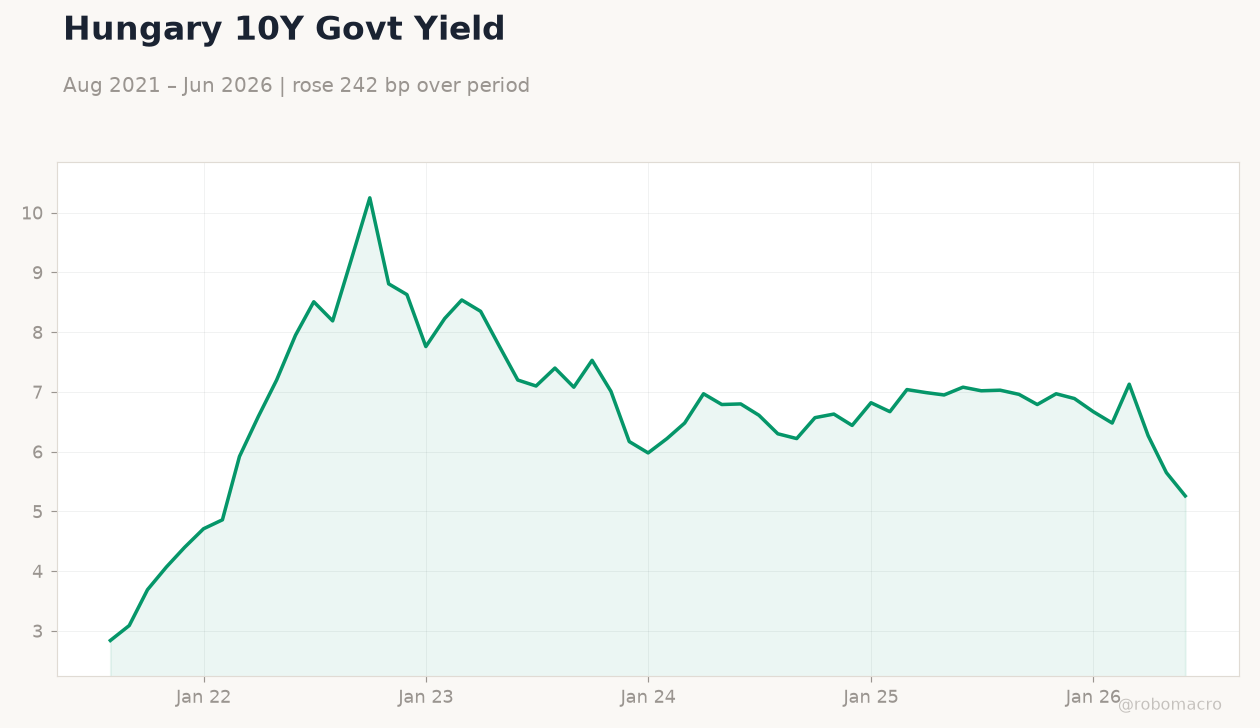
| Hungary 10Y Govt Yield | 5.26% | -6.90% |
Prior Economic Events
| Data | Prior | Cons | Actual |
|---|---|---|---|
| No events available | |||
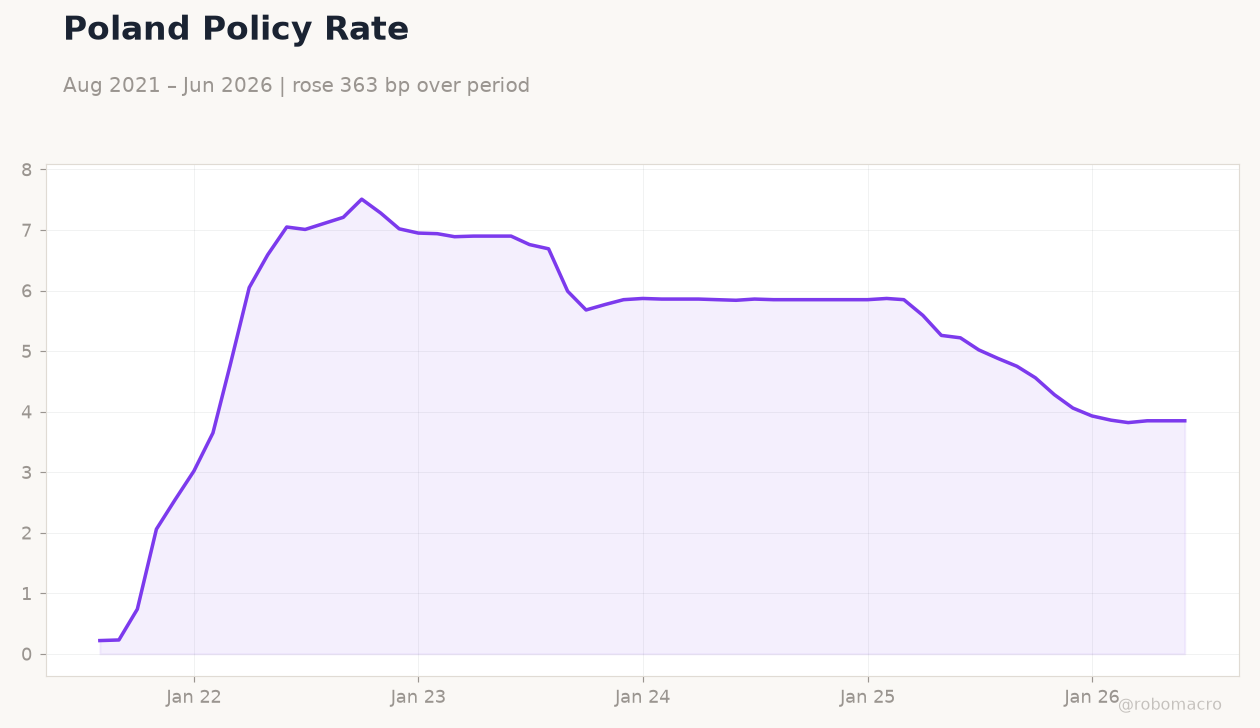
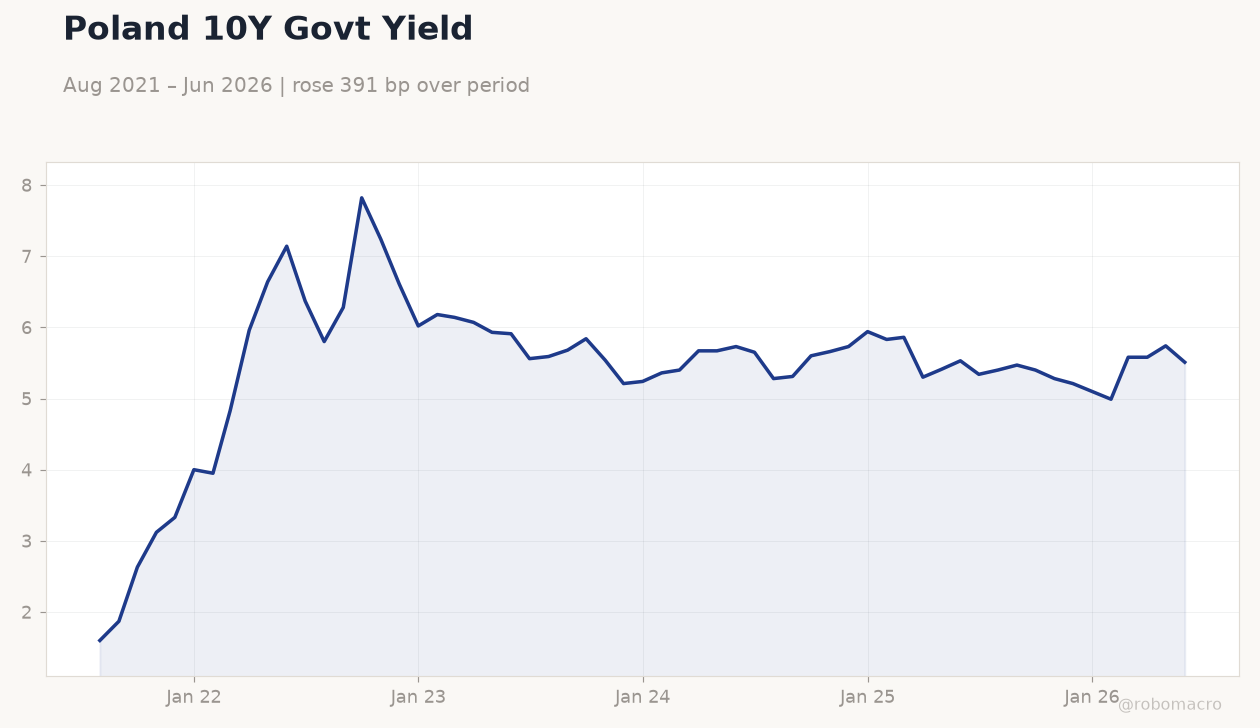 Poland 10Y Govt Yield | Type: macro_line | Yield %: 5.51 (2026-06-01) | Range: 1.6–7.82 | Trend(6pt): 1.6,7.82,5.21,5.83,5.58,5.51
Today's Economic Events
| Data | Prior | Cons | Time |
|---|---|---|---|
| Headline Unemployment Rate | 8.20 | - | 23:00 |
| Balance of Trade Final | -5,610m | -10,400m | 23:00 |
| Inflation Rate Year-over-Year Preliminary | 2.50 | - | 23:30 |
- Turkish assets underperformed as BIST 100 fell 1.21% amid stable USD/TRY at 47.36.
- Polish 10Y yields dropped 4.01% to 5.51% while iShares Poland gained 0.34%.
- Regional FX edged weaker versus euro, with EUR/PLN at 4.32 and EUR/HUF at 359.86.
Yesterday's Recap
Equity and fixed-income markets in Emerging Europe showed divergent moves on July 27 with no major data releases across the region. The BIST 100 declined 1.21% to 13,774.80 while USD/TRY held steady at 47.36, reflecting limited immediate pressure on the lira. In Poland, the iShares Poland ETF rose 0.34% to 40.92 and the 10Y government yield fell sharply 4.01% to 5.51%, consistent with broader European bond strength.
Hungarian 10Y yields also declined 6.90% to 5.26%. EUR/PLN rose 0.21% to 4.32, EUR/HUF gained 0.13% to 359.86 and EUR/CZK added 0.16% to 24.16. Brent crude fell 1.32% to 87.19, easing some energy-import costs for the five economies.
Political headlines on Poland’s extradition request for its former justice minister had negligible market impact. Gold slipped 0.80% to 4,041.80 and Bitcoin fell 2.99% to 63,389.43, pointing to cautious global risk sentiment that weighed on higher-beta assets.
The Day Ahead
Turkey will release its headline unemployment rate at 23:00 ET on July 29, following the prior 8.2% print, with markets watching for any shift in labor-market slack. The final balance-of-trade figure for Turkey is also due the same evening, with consensus pointing to a widening deficit of $10.4 billion. Poland’s preliminary inflation rate year-over-year is scheduled for 23:30 ET on July 30 and will provide the first read on July price pressures after the June 2.5% outcome.
No releases are listed for the Czech Republic, Hungary or Romania. Traders will monitor any follow-through from the ECB’s steady 2.25% deposit rate into regional policy expectations. The absence of scheduled events tomorrow keeps focus on these Turkish and Polish prints and any secondary effects from Brent’s decline.
Other Economic Notes
Poland remains the largest CEE economy and continues to benefit from EU fund inflows tied to rule-of-law milestones under the current pro-EU government. Energy-import dependence on non-Russian sources has improved across Poland, Hungary and the Czech Republic, though Romania still faces residual exposure. Turkey’s structurally higher inflation keeps its macro trajectory distinct from the EU-member peers despite shared trade linkages with the euro area.
<i>↓ p.2</i>