Emerging Europe Macro Daily(Beta Mode)
CEE Bonds Rally as Yields Plunge Sharply
Market Snapshot
| Asset | Level | Change |
|---|---|---|
| BIST 100 | 13,640.34 | -0.35% |
| iShares Poland | 41.02 | -0.12% |
| EUR/PLN | 4.33 | +0.18% |
| EUR/HUF | 361.07 | +0.59% |
| EUR/CZK | 24.19 | +0.18% |
| USD/TRY | 47.39 | +0.08% |
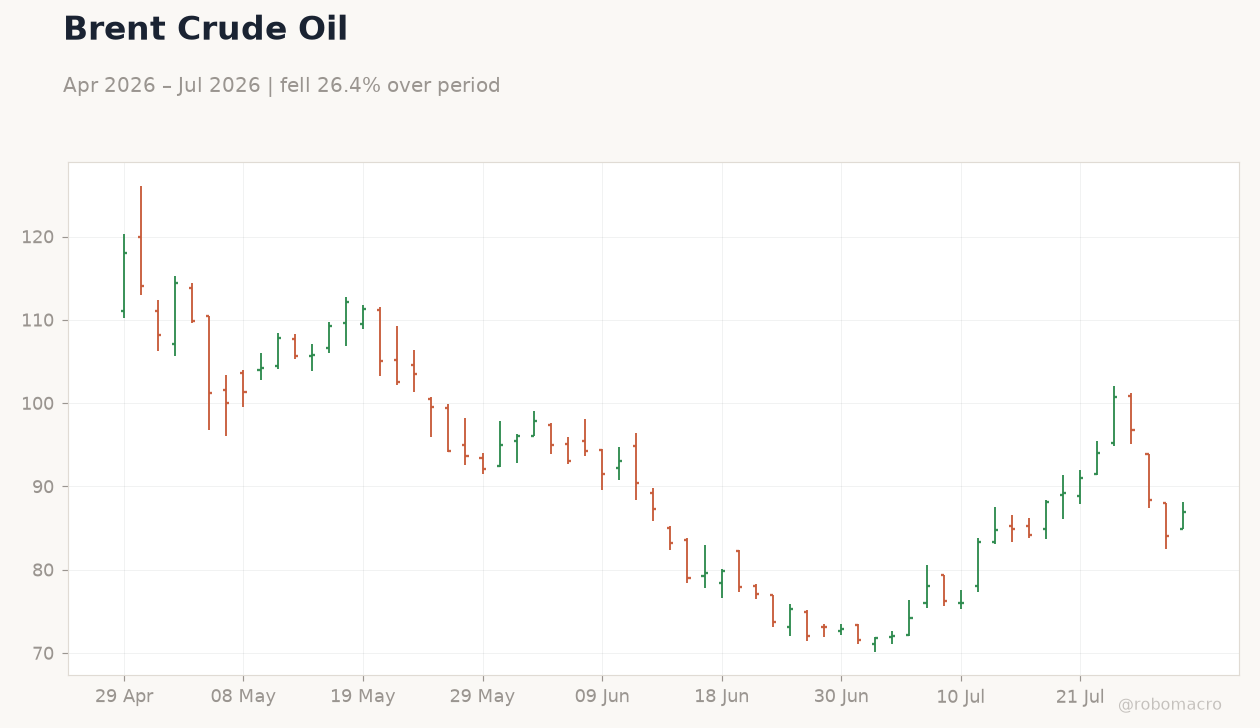
| Brent Crude | 86.88 | +3.32% |
| Gold | 4,103.60 | +1.67% |
| Bitcoin | 64,458.04 | +0.92% |
| Poland 10Y Govt Yield | 5.51% | -4.01% |
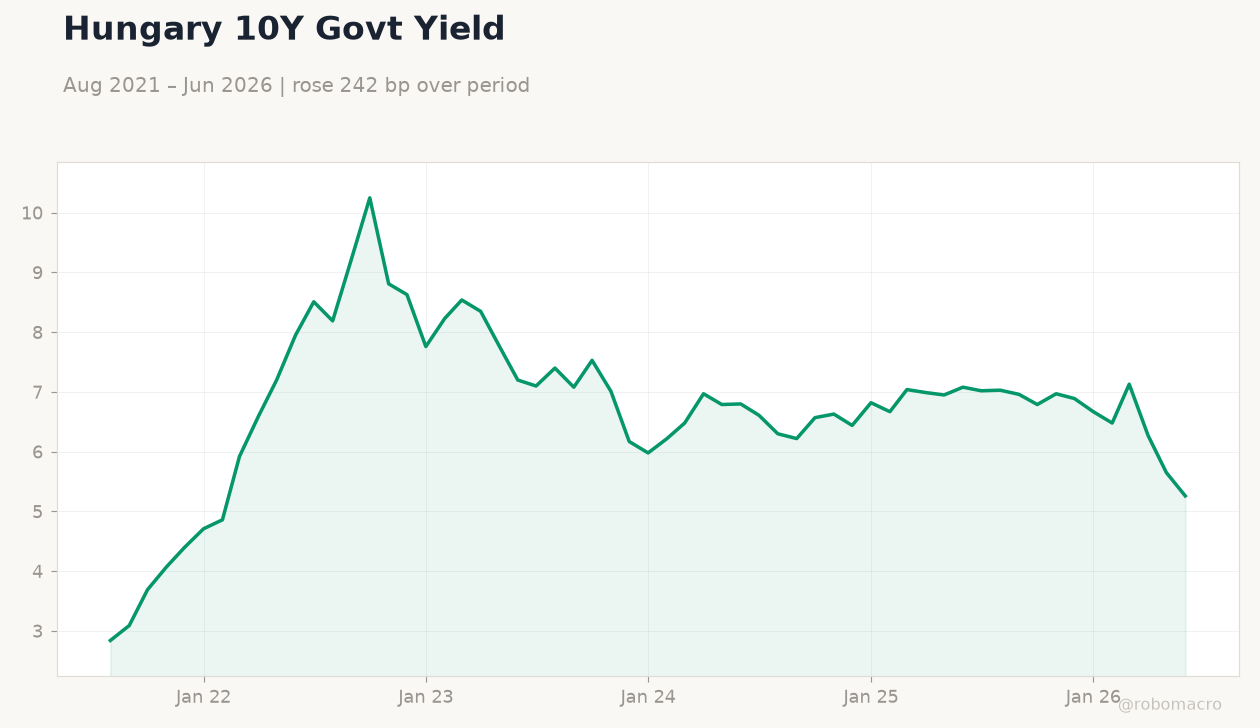
| Hungary 10Y Govt Yield | 5.26% | -6.90% |
Prior Economic Events
| Data | Prior | Cons | Actual |
|---|---|---|---|
| No events available | |||
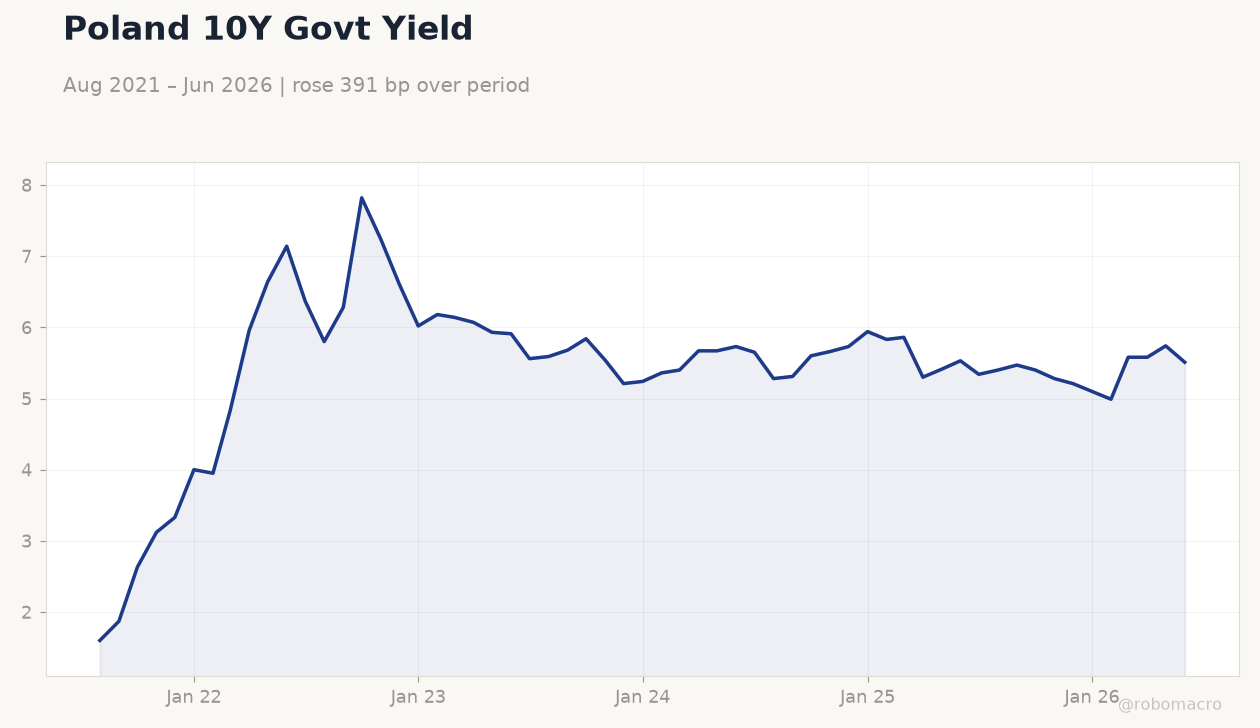 Poland 10Y Govt Yield | Type: macro_line | Yield %: 5.51 (2026-06-01) | Range: 1.6–7.82 | Trend(6pt): 1.6,7.82,5.21,5.83,5.58,5.51
Today's Economic Events
| Data | Prior | Cons | Time |
|---|---|---|---|
| Headline Unemployment Rate | 8.20 | - | 23:00 |
| Balance of Trade Final | -5,610m | -10,400m | 23:00 |
| Inflation Rate Year-over-Year Preliminary | 2.50 | 3 | 23:30 |
- Hungarian and Polish 10-year yields fell 6.9% and 4.0% respectively amid thin trading.
- BIST 100 declined 0.35% while EUR/HUF rose 0.59% on regional FX weakness.
- Poland’s preliminary July inflation print due tomorrow after quiet data calendar yesterday.
Yesterday's Recap
Emerging Europe markets saw limited movement with no major data releases across Poland, Czech Republic, Hungary, Romania or Turkey. Hungarian 10-year government yields dropped 6.90% to 5.26% while Polish 10-year yields fell 4.01% to 5.51%, reflecting modest bond buying. The BIST 100 index closed down 0.35% at 13,640.34 and the iShares Poland ETF slipped 0.12%.
EUR/HUF climbed 0.59% to 361.07 and EUR/PLN rose 0.18% to 4.33, leaving both forint and zloty weaker against the euro. USD/TRY edged 0.08% higher to 47.39. Brent crude gained 3.32% to $86.88, adding pressure on energy-importing economies in the region.
Gold rose 1.67% to 4,103.60 while Bitcoin gained 0.92%, underscoring mixed risk sentiment.
The Day Ahead
Turkey releases its headline unemployment rate at 23:00 ET tonight, followed by the final balance of trade print at the same time tomorrow. Markets will watch for any deviation from the prior 8.2% unemployment reading and the consensus trade deficit of $10.4 billion. Poland publishes its preliminary July inflation rate year-over-year at 23:30 ET tomorrow, with consensus pointing to a rise from 2.5% to 3.0%.
The print will inform NBP policy expectations ahead of the next rate decision. No scheduled releases appear for the Czech Republic, Hungary or Romania in the immediate window.
Other Economic Notes
Persistent global inflation remains a key risk for Emerging Europe according to the latest Reuters economist poll. Energy price volatility, evidenced by today’s Brent surge, continues to threaten current-account balances in Poland, Hungary and the Czech Republic. EU fund inflows tied to recovery programs provide some offset for the four EU members but leave Turkey exposed to different external financing dynamics.
Regional equity markets showed resilience despite the broader risk-off tone in global assets. The Eurozone unemployment rate stood at 6.20% as of May while CPI reached 2.80% in June, setting a benchmark for regional convergence.