Emerging Europe Macro Daily(Beta Mode)
Romania Holds Rate, Turkey IP Weakens
Market Snapshot
| Asset | Level | Change |
|---|---|---|
| BIST 100 | 14,110.10 | +2.96% |
| iShares Poland | 44.60 | +0.47% |
| EUR/PLN | 4.31 | +0.18% |
| EUR/HUF | 364.29 | -0.01% |
| EUR/CZK | 24.23 | -0.06% |
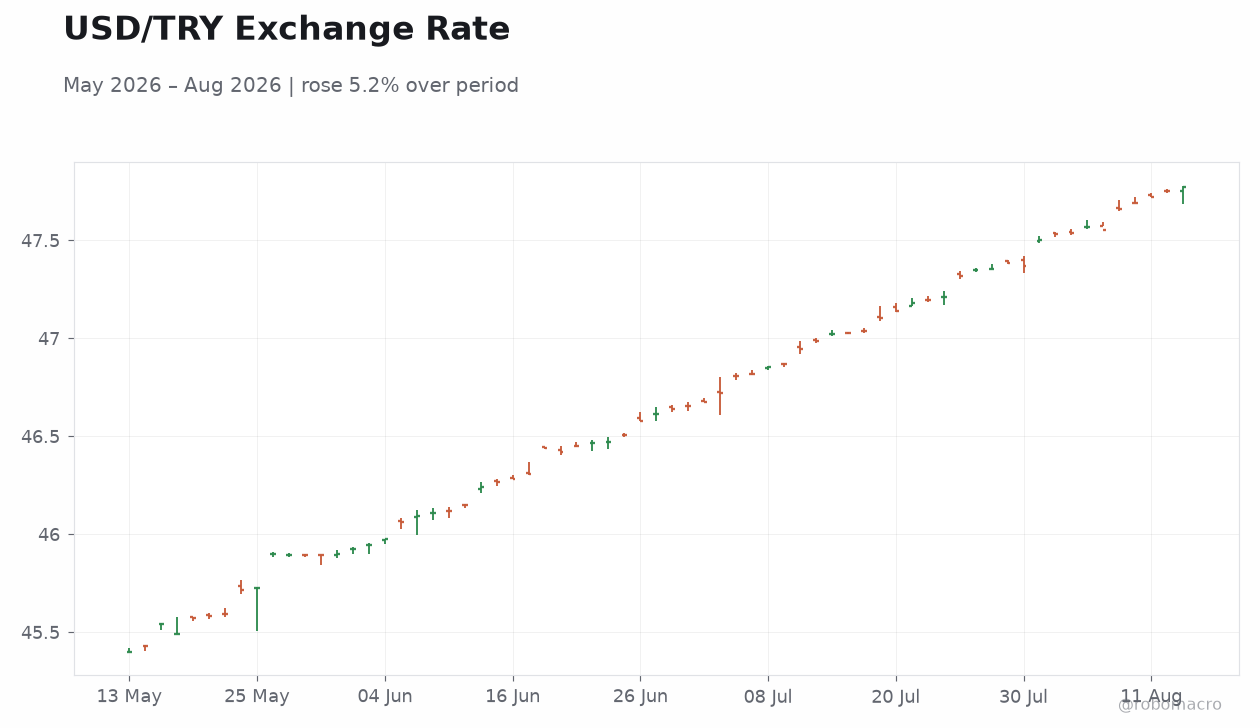
| USD/TRY | 47.77 | +0.04% |
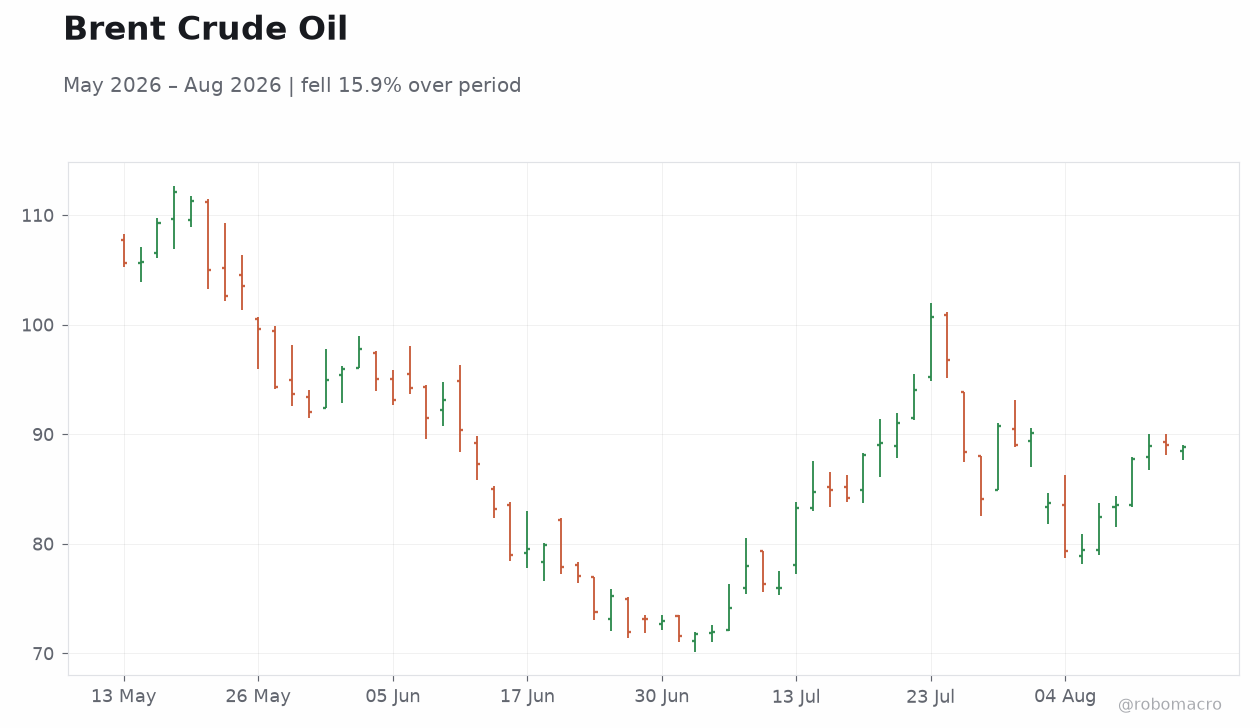
| Brent Crude | 88.79 | -0.21% |
| Gold | 4,435.00 | +0.59% |
| Bitcoin | 63,768.61 | +0.34% |
| Poland 10Y Govt Yield | 5.51% | -4.01% |
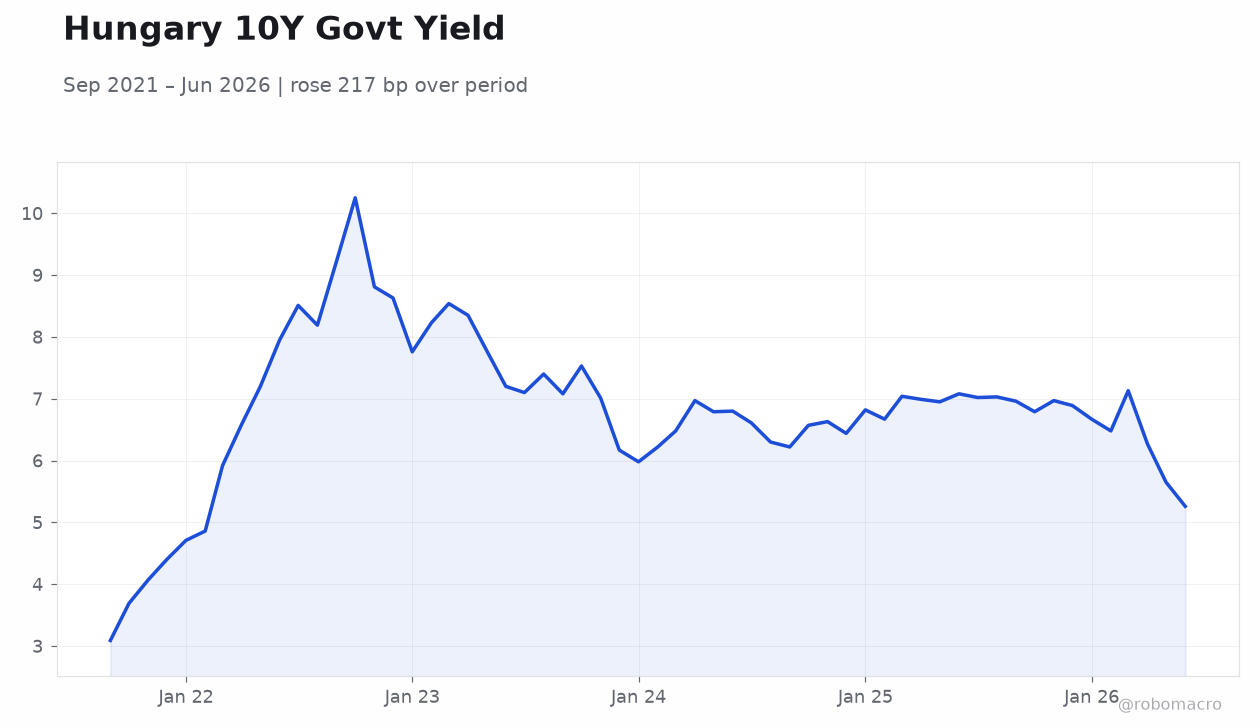
| Hungary 10Y Govt Yield | 5.26% | -6.90% |
Prior Economic Events
| Data | Prior | Cons | Actual |
|---|---|---|---|
| Industrial Production Year-over-Year | -0.10 | - | -1.40 |
| Central Bank Interest Rate Decision | 6.50 | 6.50 | 6.50 |
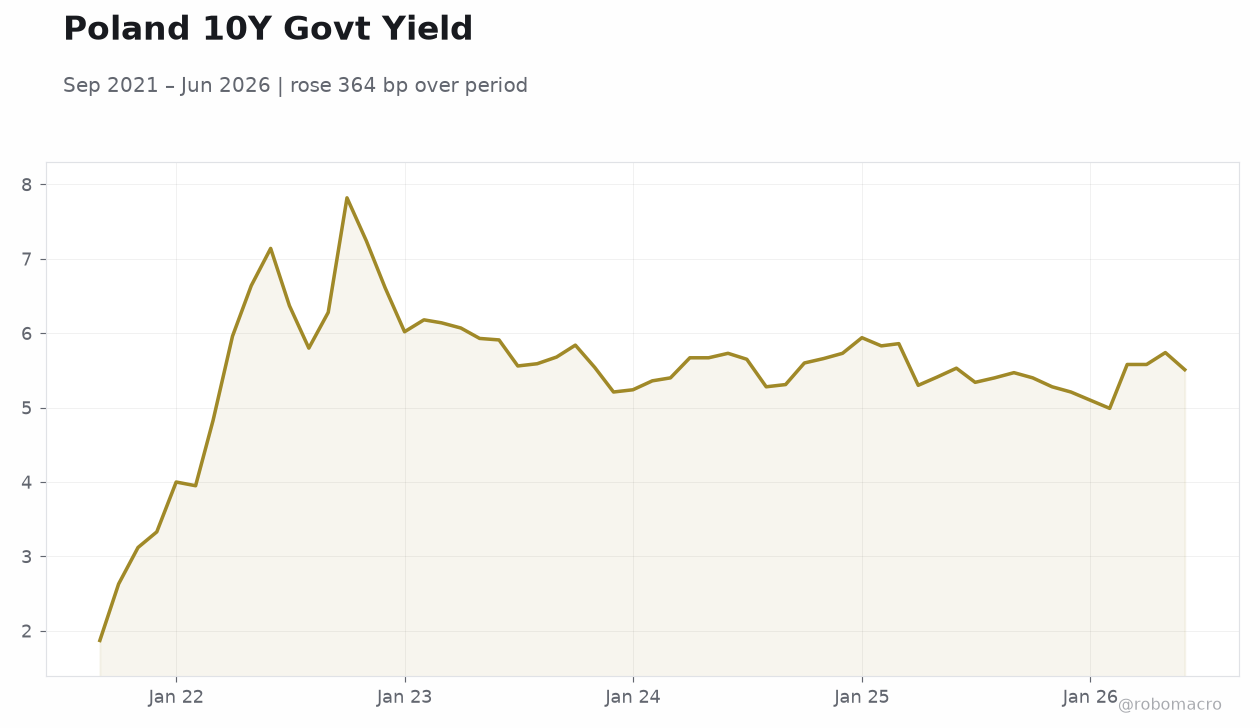 Poland 10Y Govt Yield | Type: macro_line | Yield %: 5.51 (2026-06-01) | Range: 1.87–7.82 | Trend(6pt): 1.87,7.24,5.24,5.86,5.74,5.51
Today's Economic Events
| Data | Prior | Cons | Time |
|---|---|---|---|
| GDP Growth Quarter-over-Quarter Preliminary | 0.60 | - | 23:30 |
| GDP Growth Year-over-Year Preliminary | 3.50 | - | 23:30 |
- Romania's central bank held its policy rate at 6.5% as expected, while Turkey's industrial production fell 1.4% y/y.
- BIST 100 rose 2.96% and Polish 10-year yields dropped 4.01% amid regional equity gains and lower borrowing costs.
- Poland releases preliminary GDP figures today; no major events scheduled for Hungary, Czech Republic or Turkey.
Yesterday's Recap
Romania's central bank kept its key interest rate unchanged at 6.5%, matching consensus and leaving the policy stance on hold. Turkey reported industrial production contracting 1.4% year-over-year, a sharper decline than the prior -0.1% reading and highlighting ongoing weakness in manufacturing. Equity markets responded positively, with the BIST 100 climbing 2.96% to 14,110.10 while the iShares Poland ETF added 0.47%.
Polish 10-year government yields fell 4.01% to 5.51%, and Hungarian 10-year yields dropped 6.90% to 5.26%, reflecting improved sentiment toward regional debt. Currency moves were modest, with EUR/PLN rising 0.18% to 4.31 and USD/TRY edging 0.04% higher to 47.77. Brent crude slipped 0.21% to 88.79 while gold advanced 0.59% to 4,435.00.
Bitcoin rose 0.34% to 63,768.61. No significant data emerged from Poland, Hungary or the Czech Republic. EUR/HUF eased 0.01% to 364.29 and EUR/CZK fell 0.06% to 24.23.
The Day Ahead
Poland will release preliminary GDP growth figures for the second quarter, covering both quarter-over-quarter and year-over-year readings, with markets watching for signs of sustained expansion. The data arrive after yesterday's Turkish industrial production miss and Romania's rate hold, keeping focus on the largest CEE economy. No events are scheduled for the Czech Republic, Hungary or Turkey tomorrow.
Traders will monitor any follow-through from the European Commission's confirmation of further EU recovery funds for Poland. Regional FX and bond markets are expected to react to the Polish prints given their weight in CEE benchmarks. EUR/PLN at 4.31 and Polish 10-year yields at 5.51% provide the immediate reference levels for any post-release moves.
Other Economic Notes
Poland continues to benefit from EU Recovery and Resilience Facility disbursements after completing judicial milestones, supporting fiscal space and investment. Hungary's access to similar funds remains restricted pending rule-of-law compliance, limiting near-term fiscal support. Romania's euro-adoption timeline targets 2029, with BNR officials signaling potential ERM-II entry in 2027 provided fiscal metrics stay contained.
<i>↓ p.2</i>