Emerging Europe Macro Daily(Beta Mode)
Polish Equities Advance as CEE Yields Ease
Market Snapshot
| Asset | Level | Change |
|---|---|---|
| BIST 100 | 14,172.30 | +0.28% |
| iShares Poland | 44.45 | +1.11% |
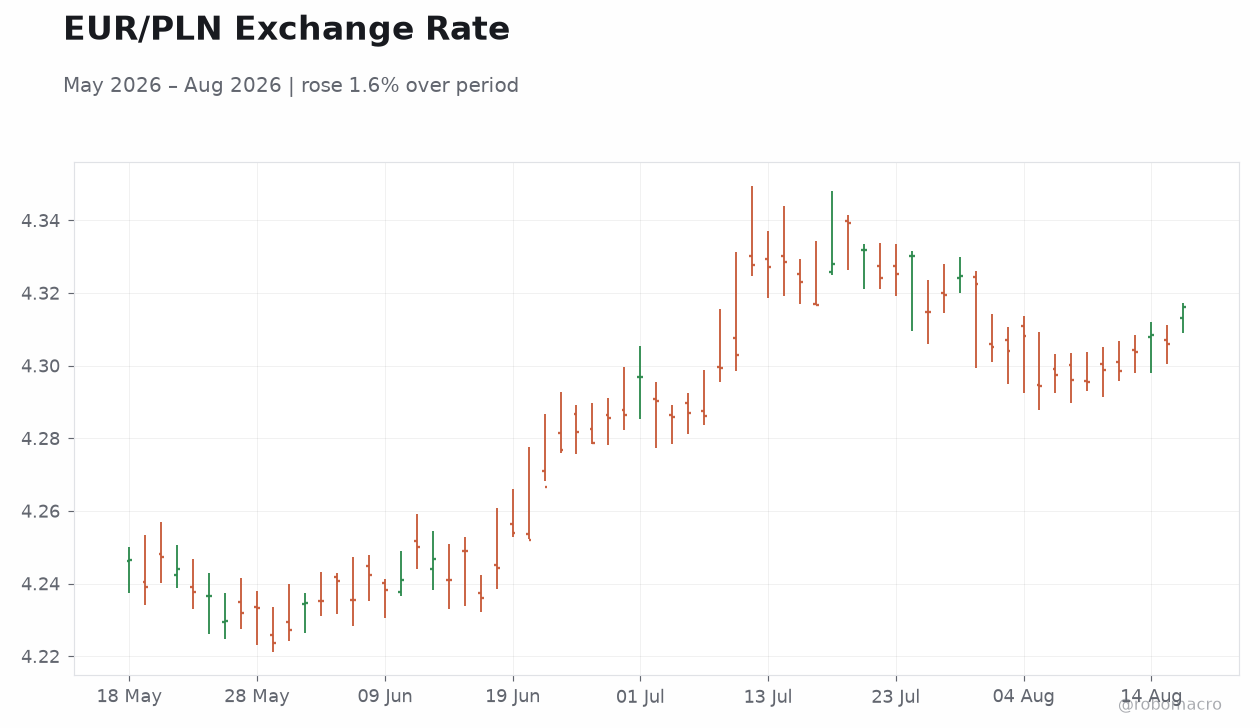
| EUR/PLN | 4.32 | +0.24% |
| EUR/HUF | 364.25 | +0.60% |
| EUR/CZK | 24.20 | +0.00% |
| USD/TRY | 47.92 | +0.12% |
| Brent Crude | 91.29 | +0.46% |
| Gold | 4,451.80 | +0.77% |
| Bitcoin | 64,125.61 | +2.08% |
| Poland 10Y Govt Yield | 5.51% | -4.01% |
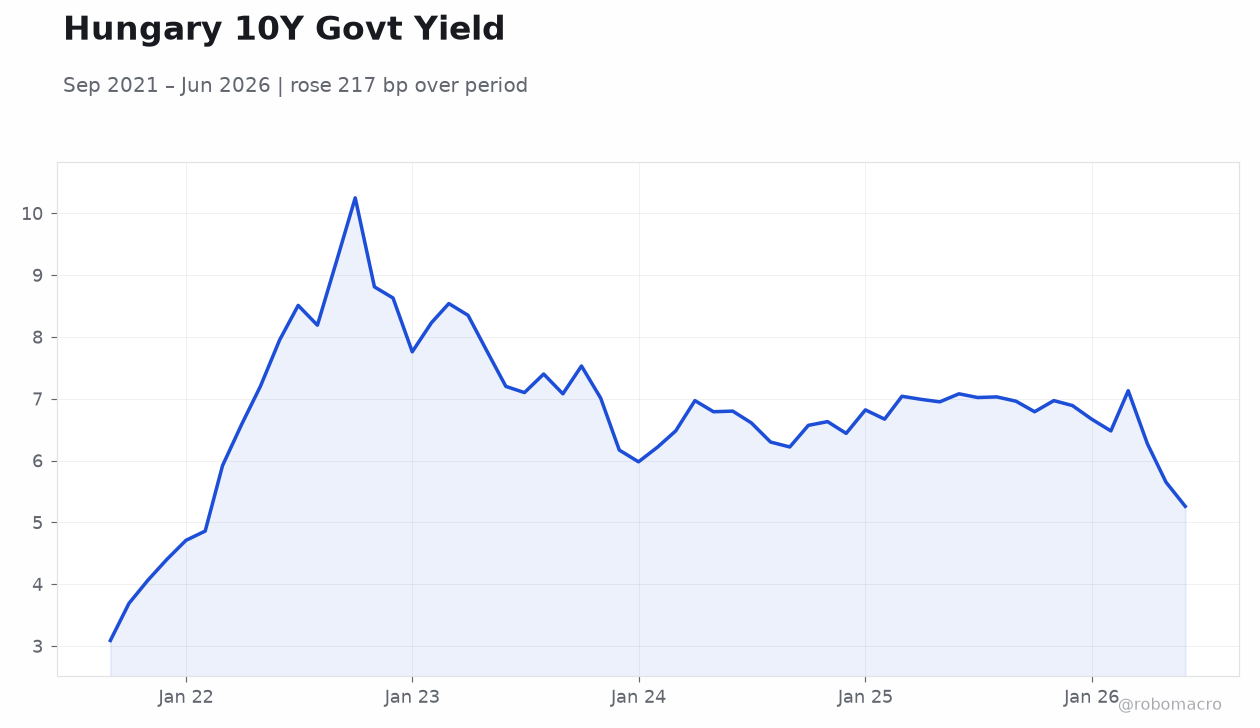
| Hungary 10Y Govt Yield | 5.26% | -6.90% |
Prior Economic Events
| Data | Prior | Cons | Actual |
|---|---|---|---|
| No events available | |||
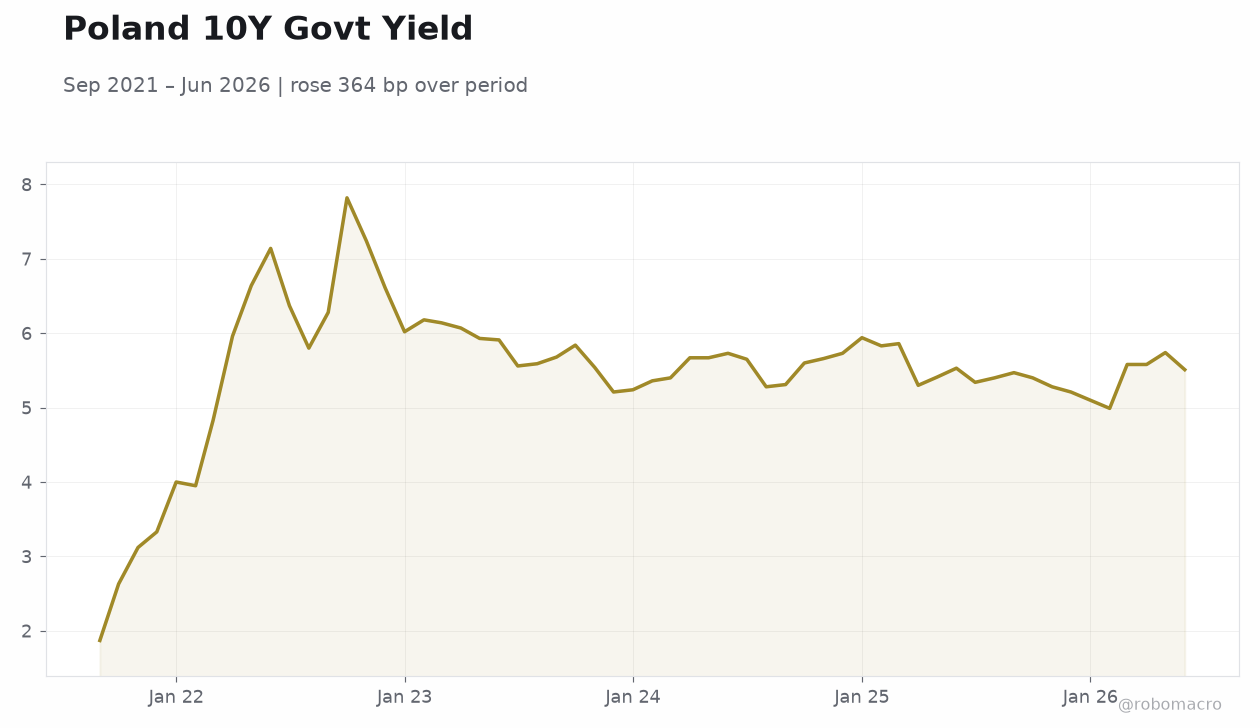 Poland 10Y Govt Yield | Type: macro_line | Yield %: 5.51 (2026-06-01) | Range: 1.87–7.82 | Trend(6pt): 1.87,7.24,5.24,5.86,5.74,5.51
Today's Economic Events
| Data | Prior | Cons | Time |
|---|---|---|---|
| Business Confidence | 102.20 | - | 03:00 |
| Consumer Confidence Index | 89.80 | - | 03:00 |
| Unemployment Rate | 5.80 | - | 03:30 |
- Polish ETF rises 1.11% while Hungary and Poland 10-year yields fall over 4%.
- Growth divergence intensifies as Poland outpaces Hungary amid quiet data day.
- Turkey consumer and business confidence releases scheduled for 21 August.
Yesterday's Recap
Emerging Europe markets posted modest gains on 17 August with limited economic releases across the region. The iShares Poland ETF climbed 1.11% to 44.45, reflecting resilient sentiment toward the largest CEE economy. Hungary 10-year government yields dropped 6.90% to 5.26% while Poland 10-year yields declined 4.01% to 5.51%, signaling reduced risk premia.
The BIST 100 index edged 0.28% higher to 14,172.30 despite ongoing inflation pressures in Turkey. EUR/PLN rose 0.24% to 4.32 and EUR/HUF advanced 0.60% to 364.25, while EUR/CZK remained unchanged at 24.20. USD/TRY ticked up 0.12% to 47.92.
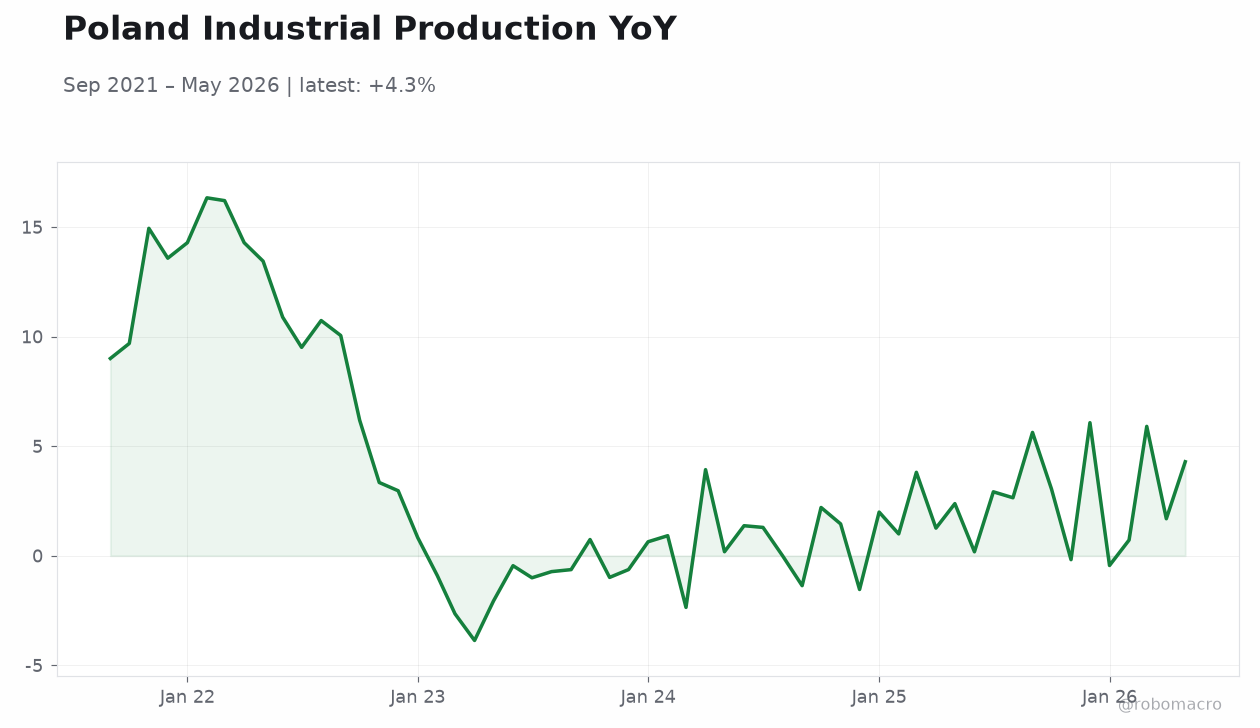
News flow highlighted deepening growth divergence, with Poland maintaining stronger momentum than Hungary. Brent crude gained 0.46% to 91.29 and gold advanced 0.77% to 4,451.80, providing external support for commodity-linked regional assets. Bitcoin rose 2.08% to 64,125.61 amid broader risk appetite.
The Day Ahead
Attention turns to Turkish data releases on 21 August, including business confidence and consumer confidence indices, which will offer fresh readings on domestic demand resilience. Poland’s unemployment rate for July is due on 25 August and is expected to remain near 5.8%, underscoring labor-market stability in the region’s largest EU member. No major releases are scheduled for the Czech Republic, Hungary or Romania in the immediate window.
Markets will also monitor any updates on EU cohesion-fund disbursements to Poland following recent rule-of-law compliance. Energy-security discussions between Poland, Romania and Brussels may generate additional headlines given continued Russian gas transit constraints. Investors will watch for any signals from the CNB or MNB ahead of the next ECB policy meeting.
Other Economic Notes
Poland continues to benefit from stronger consumption and industrial momentum compared with Hungary, where growth has stalled. EU fund flows remain a key support for Warsaw, with the next cohesion tranche of approximately €6.5 billion expected by end-August once final milestones are verified. Romania’s euro-adoption timeline stays on track for a 2029 target, supported by recent industrial production gains.
<i>↓ p.2</i>