Emerging Europe Macro Daily(Beta Mode)
CEE Yields Slide as Turkish Confidence Looms
Market Snapshot
| Asset | Level | Change |
|---|---|---|
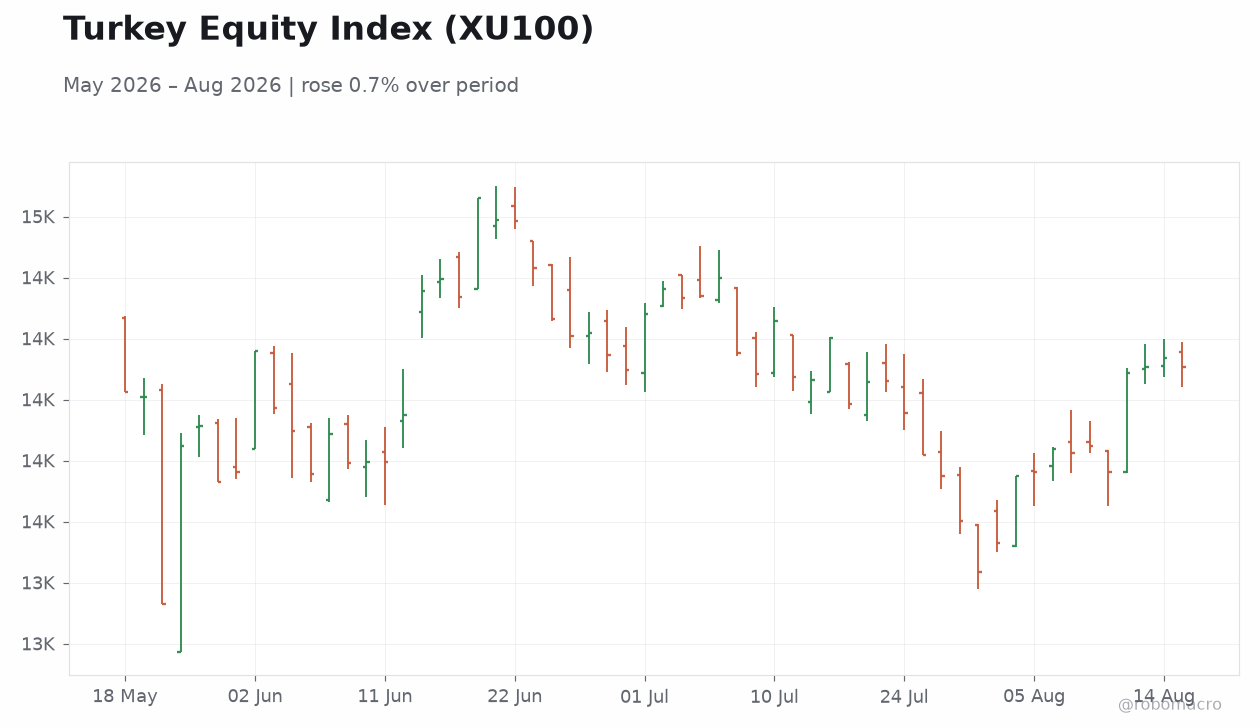
| BIST 100 | 14,128.00 | -0.03% |
| iShares Poland | 43.78 | -1.52% |
| EUR/PLN | 4.33 | +0.33% |
| EUR/HUF | 365.69 | +0.68% |
| EUR/CZK | 24.19 | +0.05% |
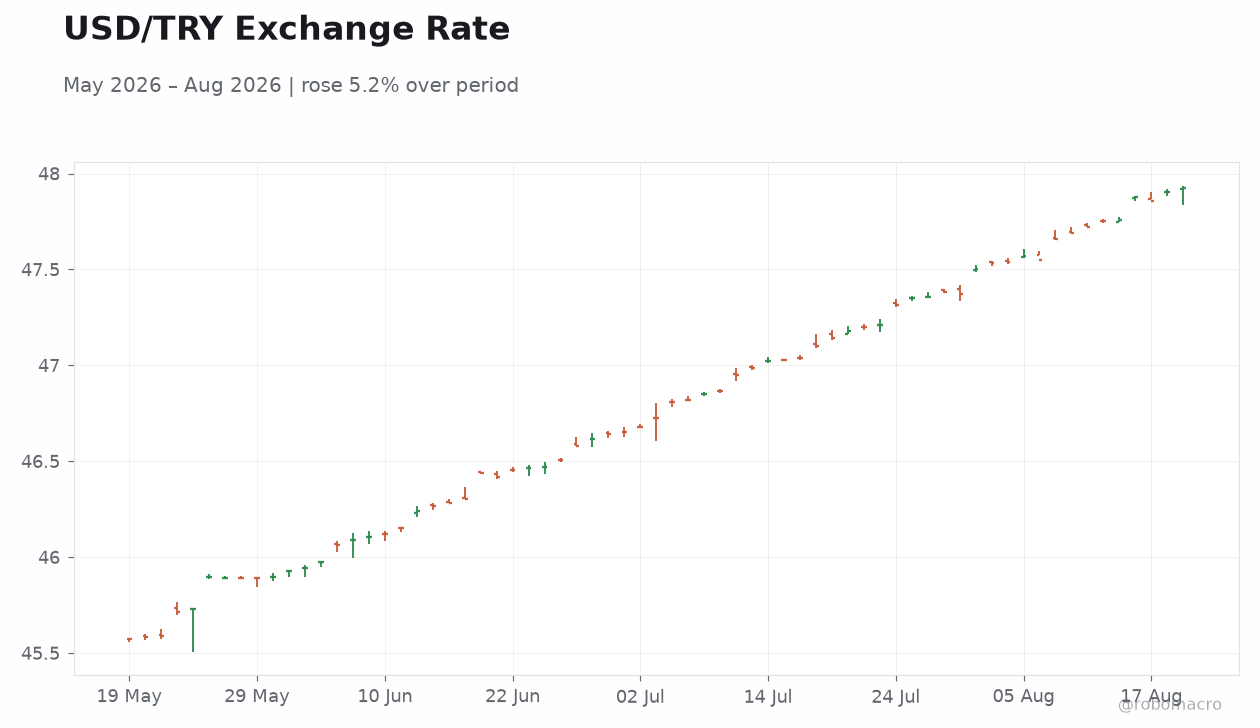
| USD/TRY | 47.90 | +0.10% |
| Brent Crude | 91.65 | +0.69% |
| Gold | 4,391.30 | +0.58% |
| Bitcoin | 64,158.11 | -0.54% |
| Poland 10Y Govt Yield | 5.51% | -4.01% |
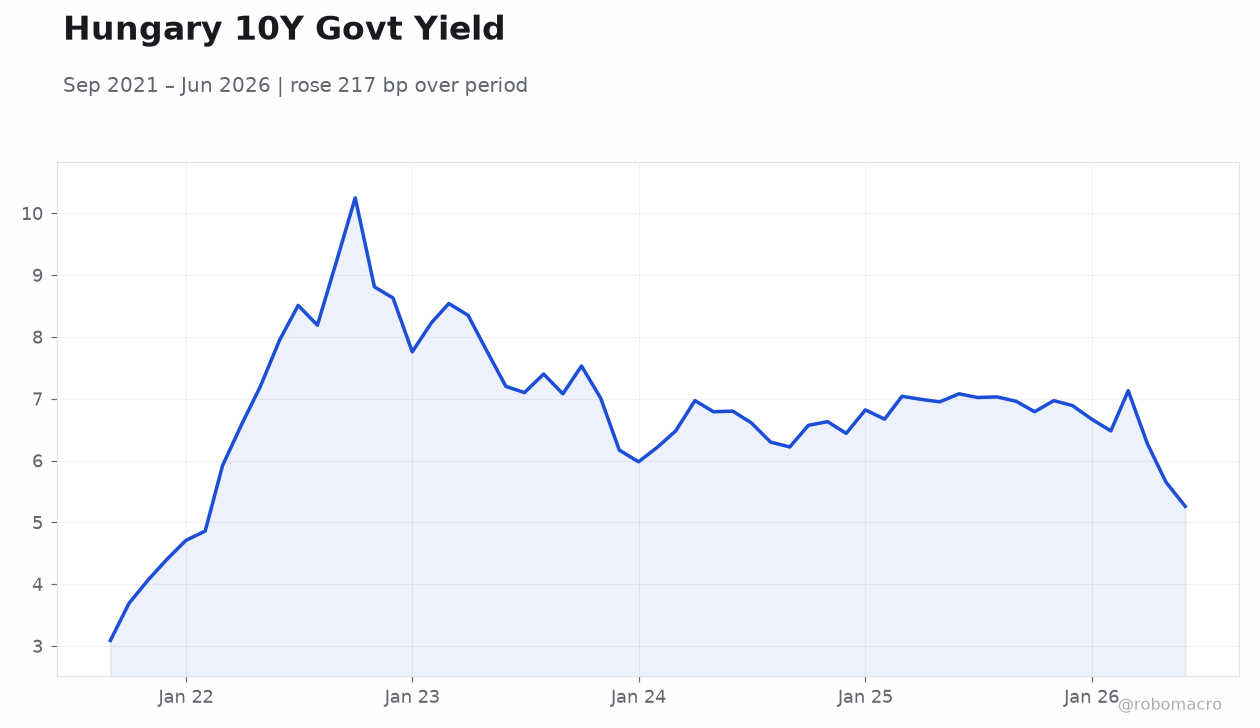
| Hungary 10Y Govt Yield | 5.26% | -6.90% |
Prior Economic Events
| Data | Prior | Cons | Actual |
|---|---|---|---|
| No events available | |||
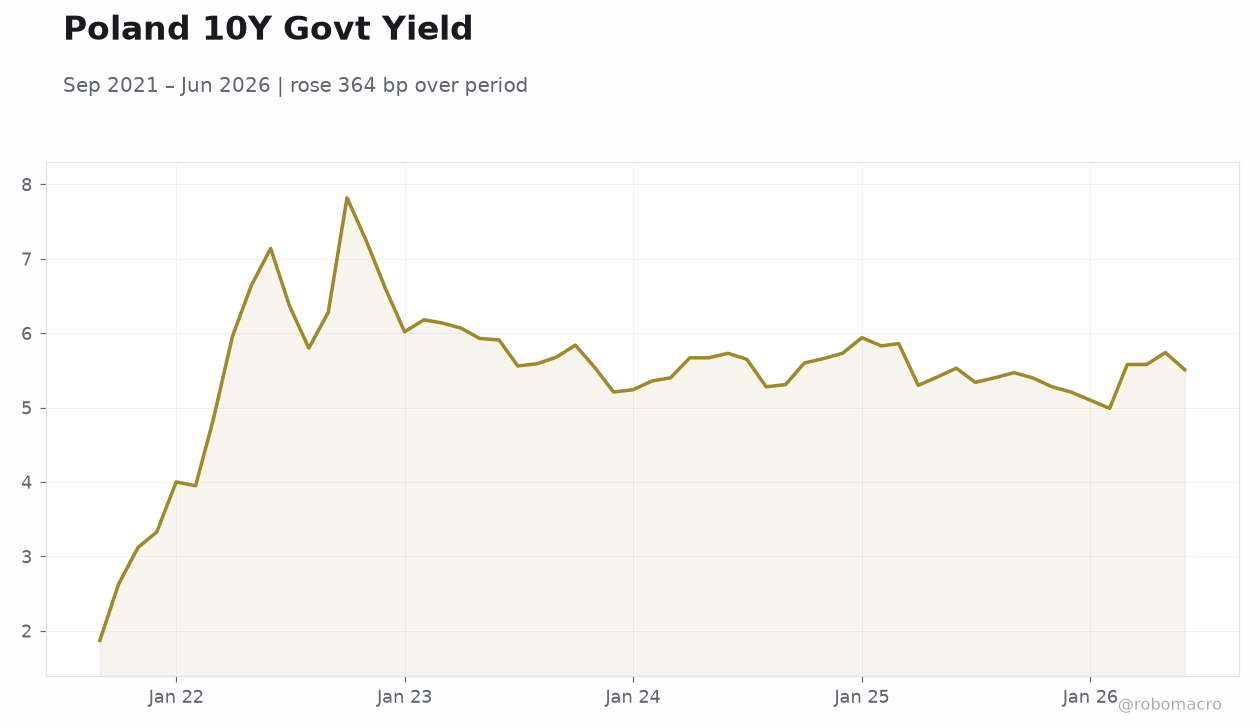 Poland 10Y Govt Yield | Type: macro_line | Yield %: 5.51 (2026-06-01) | Range: 1.87–7.82 | Trend(6pt): 1.87,7.24,5.24,5.86,5.74,5.51
Today's Economic Events
| Data | Prior | Cons | Time |
|---|---|---|---|
| Business Confidence | 102.20 | - | 23:00 |
| Consumer Confidence Index | 89.80 | - | 23:00 |
- Polish and Hungarian 10Y yields fell sharply amid thin volumes, with Poland down 4.01% to 5.51% and Hungary down 6.90% to 5.26%.
- iShares Poland ETF dropped 1.52% while BIST 100 held near flat at 14,128; EUR/HUF rose 0.68% to 365.69.
- No major data releases occurred yesterday across the region, leaving focus on today’s Turkish confidence prints and ECB policy backdrop.
Yesterday's Recap
Emerging Europe markets traded quietly with limited data. Polish equities underperformed as the iShares Poland ETF fell 1.52% to 43.78, reflecting softer external demand signals. Hungarian and Polish sovereign yields declined materially, with the Hungary 10Y dropping 6.90% to 5.26% and Poland 10Y easing 4.01% to 5.51%.
The Hungarian forint weakened most among regional currencies, with EUR/HUF rising 0.68% to 365.69, while EUR/PLN gained 0.33% to 4.33 and EUR/CZK edged up 0.05% to 24.19. BIST 100 remained essentially unchanged at 14,128.00 and USD/TRY ticked up 0.10% to 47.90. Brent crude rose 0.69% to 91.65 while gold advanced 0.58% to 4,391.30.
Bitcoin slipped 0.54% to 64,158.11. No high-impact releases were recorded in Poland, Czech Republic, Hungary, Romania or Turkey.
The Day Ahead
Attention turns to Turkey where Business Confidence and Consumer Confidence Index prints are scheduled for release at 23:00 ET. These medium-impact indicators will provide fresh readings on domestic sentiment ahead of the next CBRT policy meeting. No other scheduled releases appear for Poland, Czech Republic, Hungary or Romania.
Markets will also monitor any follow-through from recent EU fund disbursement discussions affecting Poland and broader regional risk sentiment. Thin summer liquidity may amplify moves in FX and fixed income on limited news flow.
Other Economic Notes
Regional equity and bond markets remain sensitive to external demand trends given Poland’s position as the largest CEE economy. Energy import dependence continues to shape fiscal and inflation outlooks across EU members, while Turkey’s distinct macro regime keeps policy focus on lira stability and inflation persistence. EU recovery fund flows remain a key support channel for Poland and other eligible states, with disbursement pace influencing growth and fiscal trajectories.
Broader commodity price moves, including Brent at 91.65, add to imported inflation pressures for net energy importers. Sovereign spreads tightened modestly in Turkey while Poland and Hungary stayed stable.