Emerging Europe Macro Daily(Beta Mode)
Poland Output Beats, CEE Yields Slide
Market Snapshot
| Asset | Level | Change |
|---|---|---|
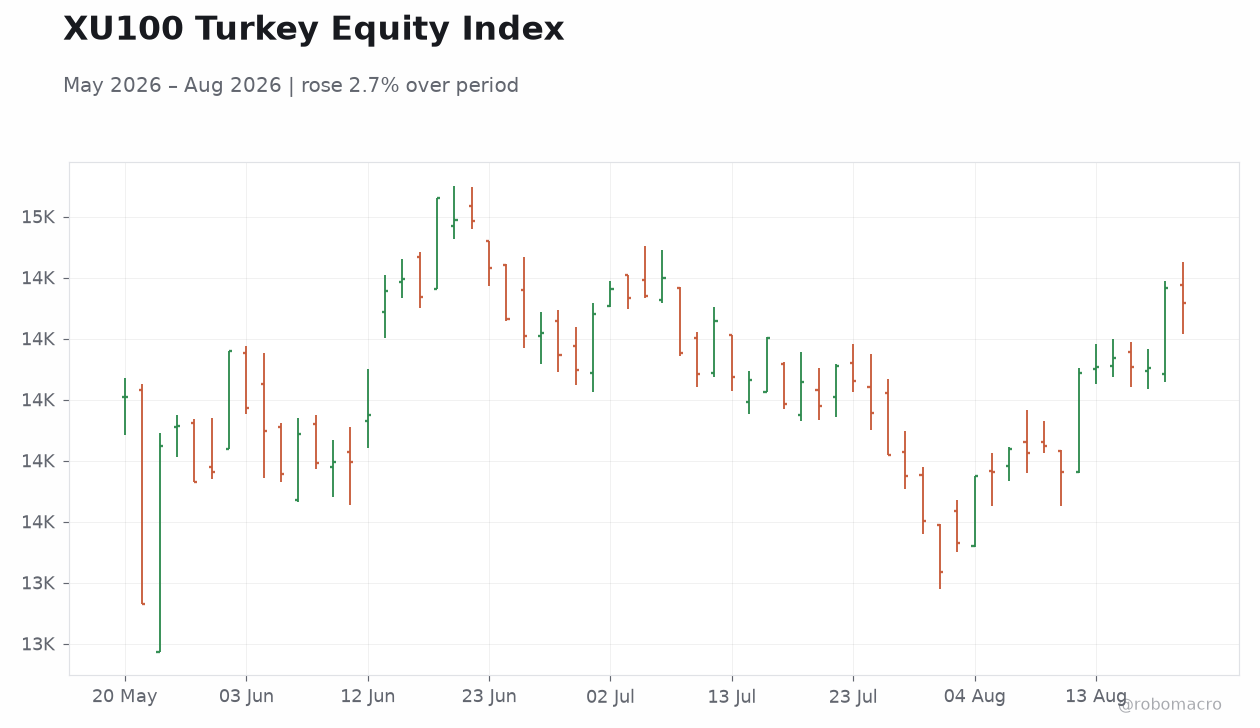
| BIST 100 | 14,396.50 | -0.43% |
| iShares Poland | 44.17 | -0.96% |
| EUR/PLN | 4.32 | +0.07% |
| EUR/HUF | 363.79 | +0.00% |
| EUR/CZK | 24.08 | -0.32% |
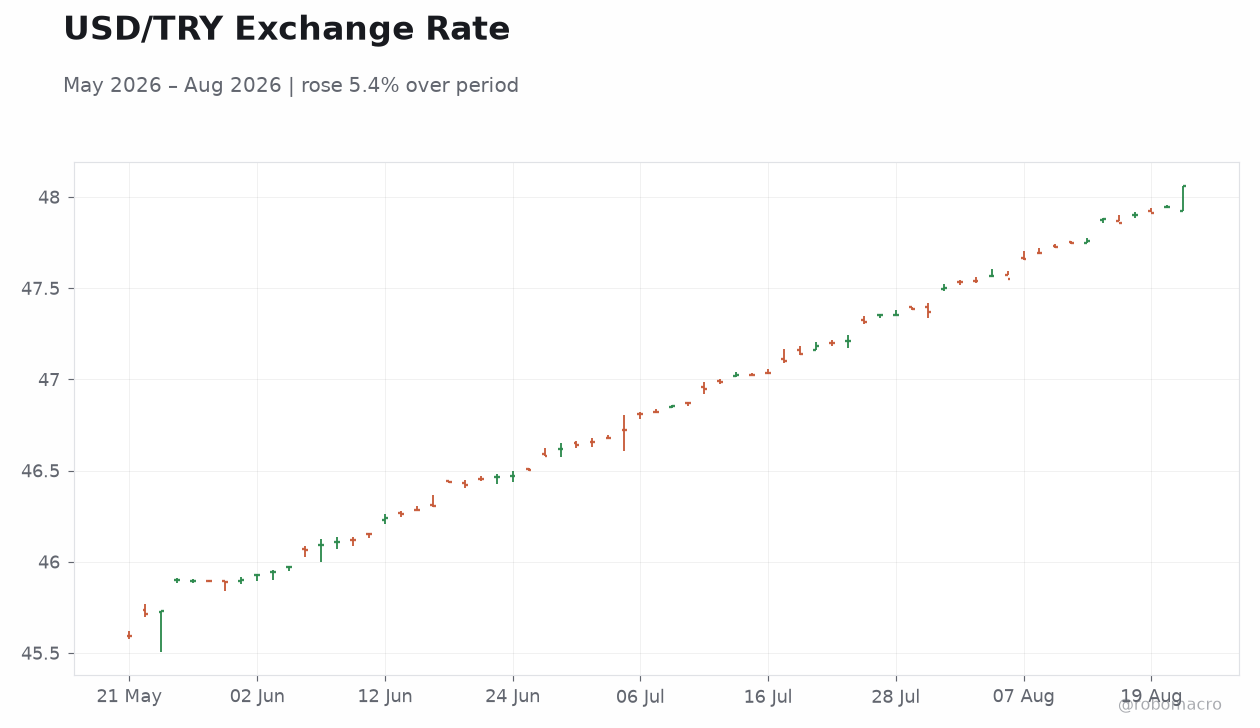
| USD/TRY | 48.06 | +0.24% |
| Brent Crude | 93.33 | -0.48% |
| Gold | 4,605.00 | +1.96% |
| Bitcoin | 75,358.00 | +8.79% |
| Poland 10Y Govt Yield | 5.51% | -4.01% |
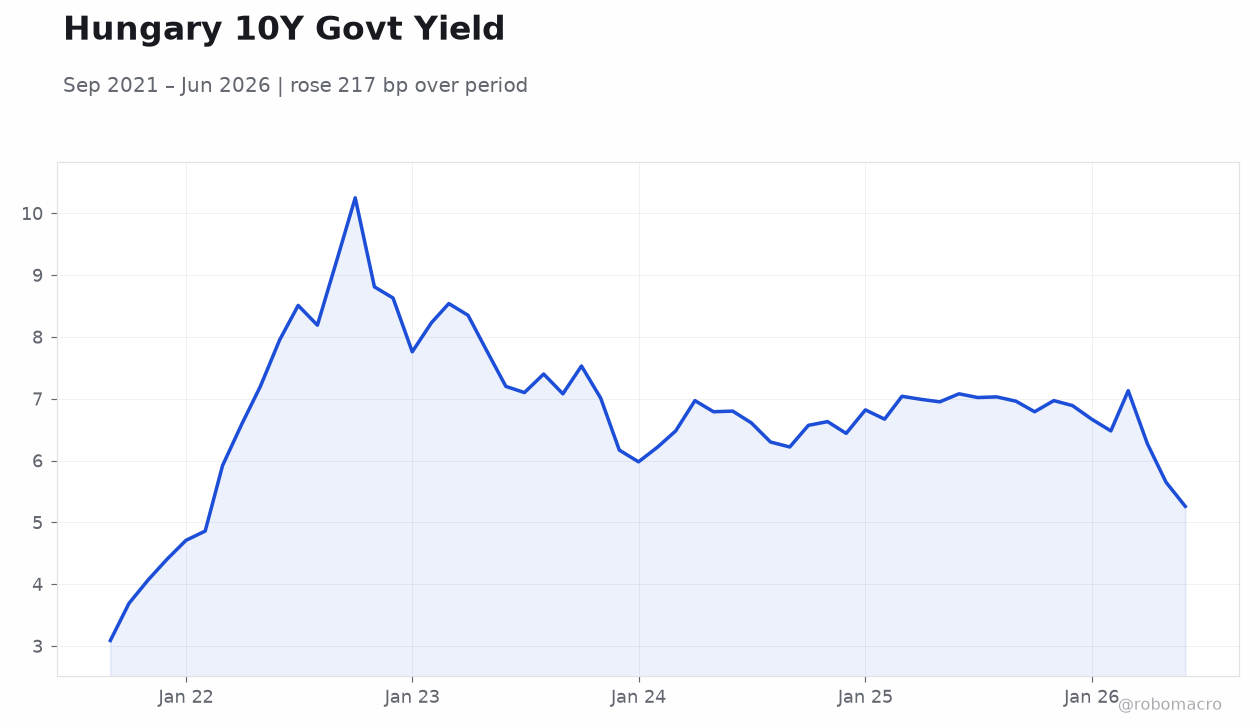
| Hungary 10Y Govt Yield | 5.26% | -6.90% |
Prior Economic Events
| Data | Prior | Cons | Actual |
|---|---|---|---|
| No events available | |||
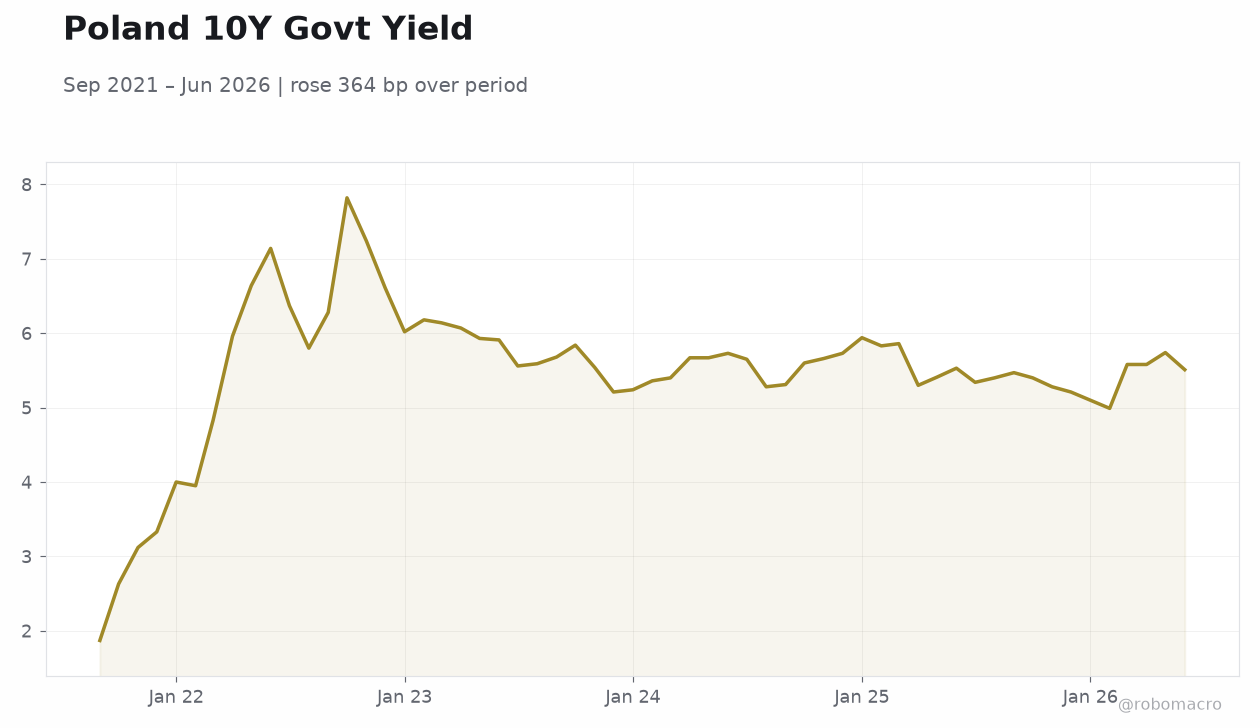 Poland 10Y Govt Yield | Type: macro_line | Yield (%): 5.51 (2026-06-01) | Range: 1.87–7.82 | Trend(6pt): 1.87,7.24,5.24,5.86,5.74,5.51
Today's Economic Events
| Data | Prior | Cons | Time |
|---|---|---|---|
| Business Confidence | 102.20 | - | 23:00 |
| Consumer Confidence Index | 89.80 | - | 23:00 |
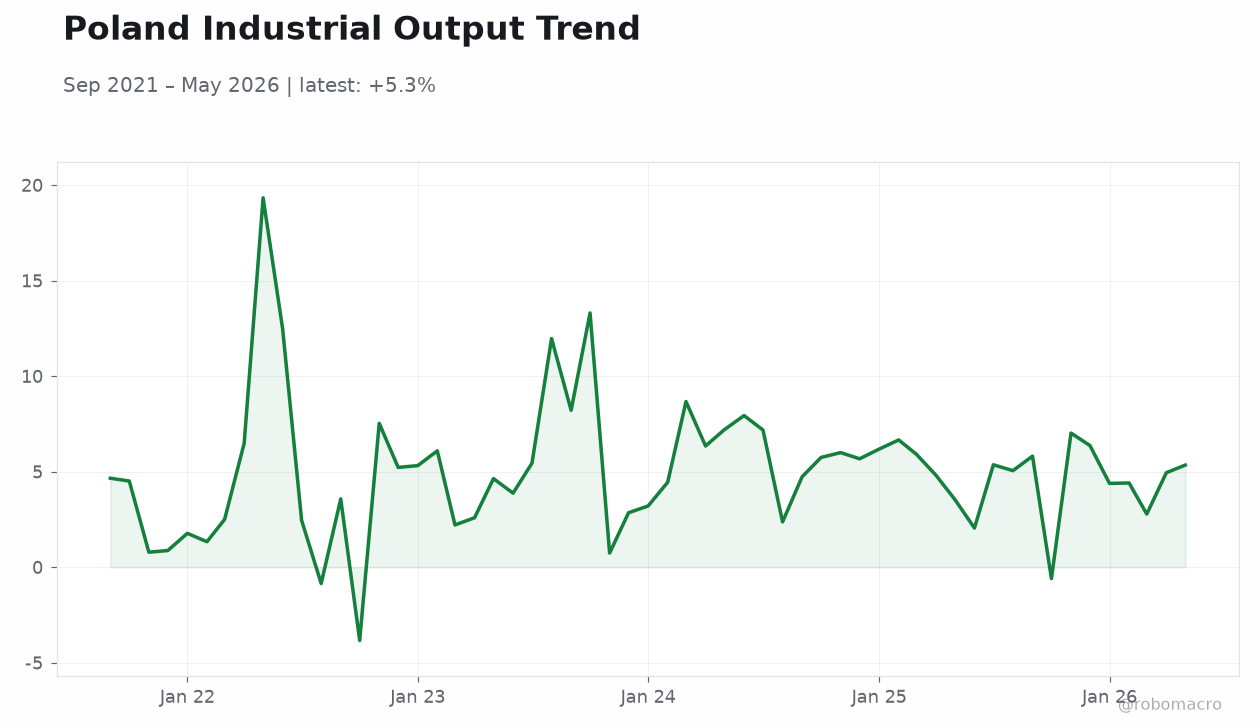
- Poland's July industrial output exceeded forecasts while the economy enters Q3 on uneven footing after crossing the $1 trillion GDP threshold.
- Turkish business and consumer confidence indicators scheduled for release late today amid ongoing CBRT hawkish stance.
- Regional bonds rallied sharply with Poland and Hungary 10-year yields falling over 4% and 6% respectively as risk appetite improved.
Yesterday's Recap
Poland's industrial output rose faster than expected in July, supported by stronger wage growth that outpaced forecasts and reinforced resilience in the largest CEE economy. Equity markets closed mixed, with the BIST 100 declining 0.43% to 14,396.50 while the iShares Poland ETF fell 0.96%. The Polish zloty edged weaker with EUR/PLN at 4.32, up 0.07%, whereas EUR/CZK strengthened 0.32% to 24.08.
Sovereign yields dropped markedly, Poland's 10-year yield easing 4.01% to 5.51% and Hungary's 10-year yield plunging 6.90% to 5.26%. Brent crude settled 0.48% lower at 93.33 while gold advanced 1.96% to 4,605.00 and Bitcoin surged 8.79% to 75,358.00. USD/TRY climbed 0.24% to 48.06 as Turkish assets faced pressure.
No major data releases occurred across the region on 20 August, leaving market moves driven by external flows and positioning ahead of Turkish confidence prints. Hungary's narrower current-account surplus and solid industrial production further supported regional sentiment without triggering immediate policy shifts.
The Day Ahead
Turkey's Business Confidence and Consumer Confidence Index releases are due at 23:00 ET, providing the only scheduled indicators for the region today. Markets will monitor whether readings improve from prior levels of 102.20 and 89.8 amid persistent inflation pressures. No economic events are listed for Poland, Czech Republic, Hungary or Romania on 22 August, suggesting a quiet session.
Traders will also track any follow-through from Poland's recent industrial data and broader euro-area developments. FX and fixed-income markets are expected to remain sensitive to ECB signals given the 2.25% deposit rate. External factors such as oil near 93.33 and gold strength at 4,605.00 may influence positioning in higher-yielding CEE assets.
Other Economic Notes
Poland's economy crossed the $1 trillion GDP mark yet faces an uneven start to the third quarter, with industrial strength offset by softer momentum in other sectors. The Bundesbank noted that depleted rivers continue to constrain German industrial activity, indirectly weighing on CEE supply chains given deep trade linkages. <i>↓ p.2</i>