Emerging Europe Macro Daily(Beta Mode)
Turkish GDP, Polish CPI Set Regional Tone
Market Snapshot
| Asset | Level | Change |
|---|---|---|
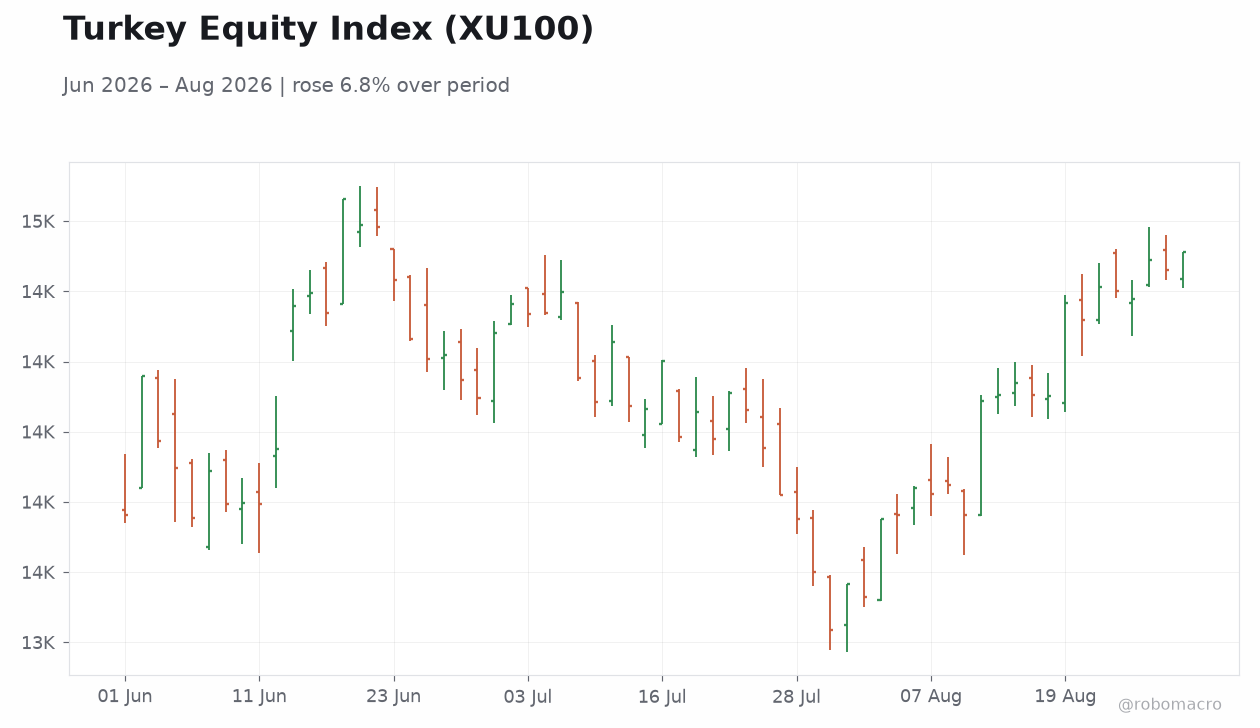
| BIST 100 | 14,641.60 | +0.45% |
| iShares Poland | 43.48 | -0.23% |
| EUR/PLN | 4.34 | +0.28% |
| EUR/HUF | 363.91 | +0.66% |
| EUR/CZK | 24.13 | +0.06% |
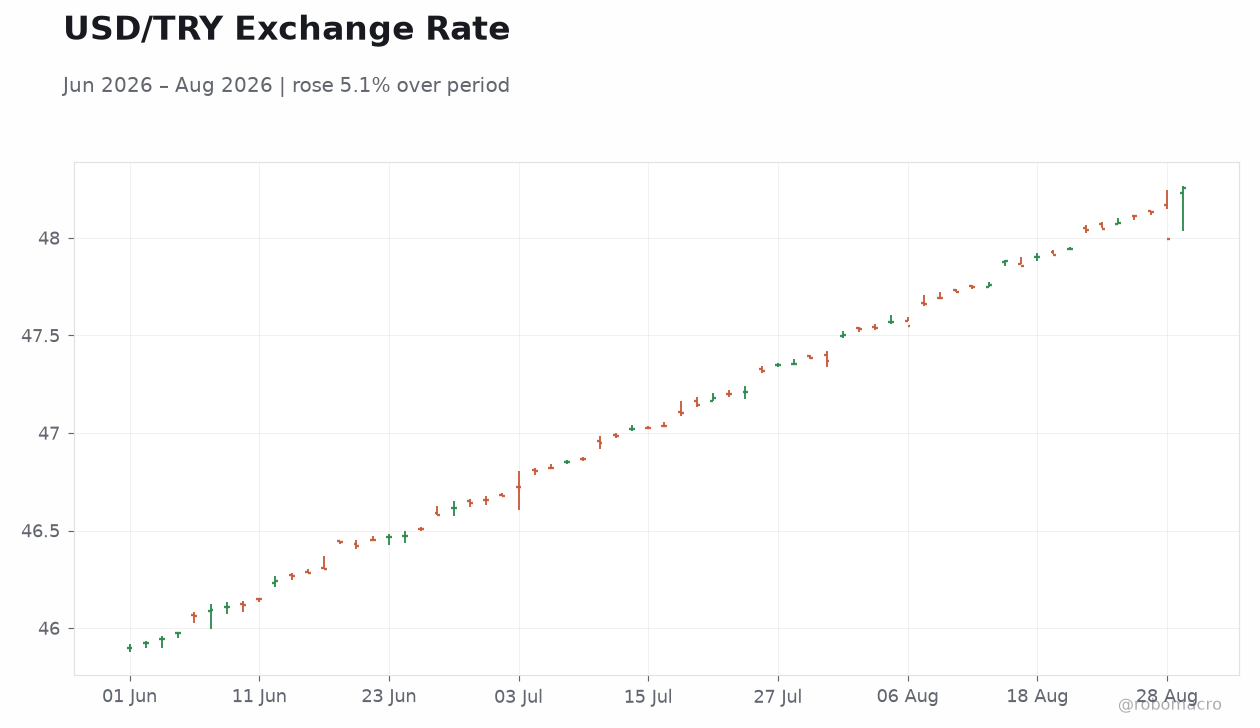
| USD/TRY | 48.26 | +0.55% |
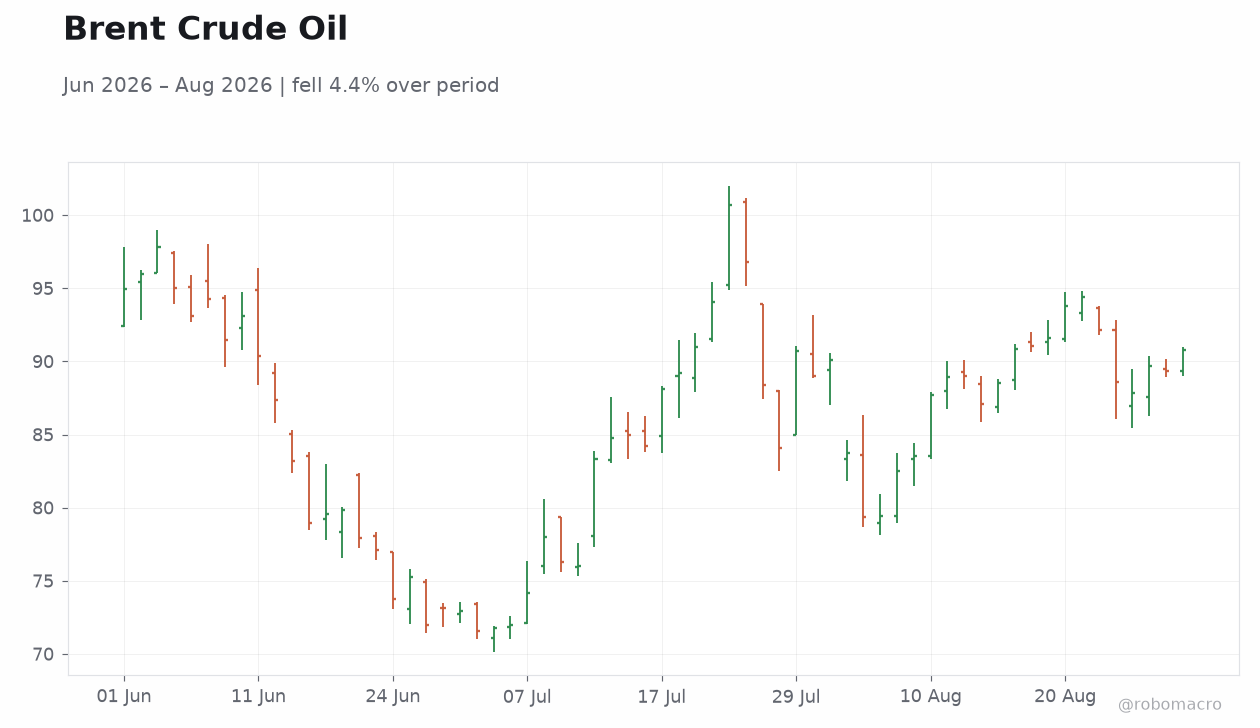
| Brent Crude | 90.77 | +1.63% |
| Gold | 4,483.70 | +0.13% |
| Bitcoin | 77,997.14 | +0.21% |
| Poland 10Y Govt Yield | - | - |
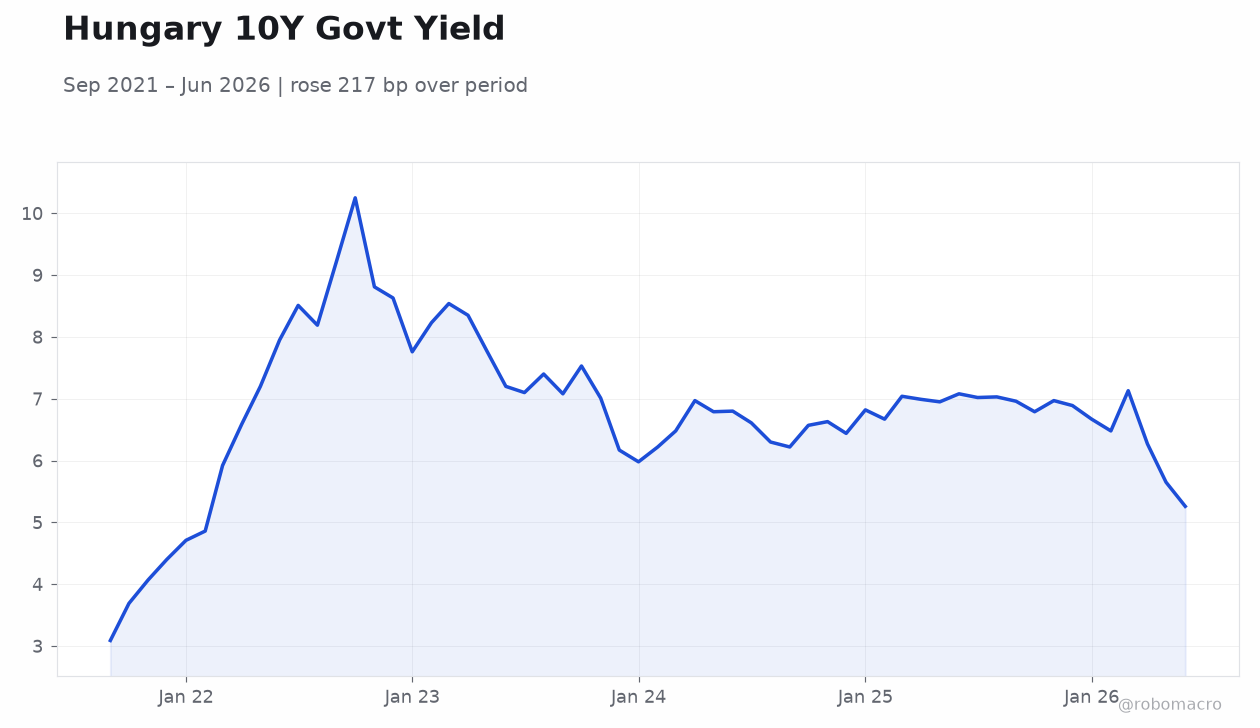
| Hungary 10Y Govt Yield | - | - |
Prior Economic Events
| Data | Prior | Cons | Actual |
|---|---|---|---|
| No events available | |||
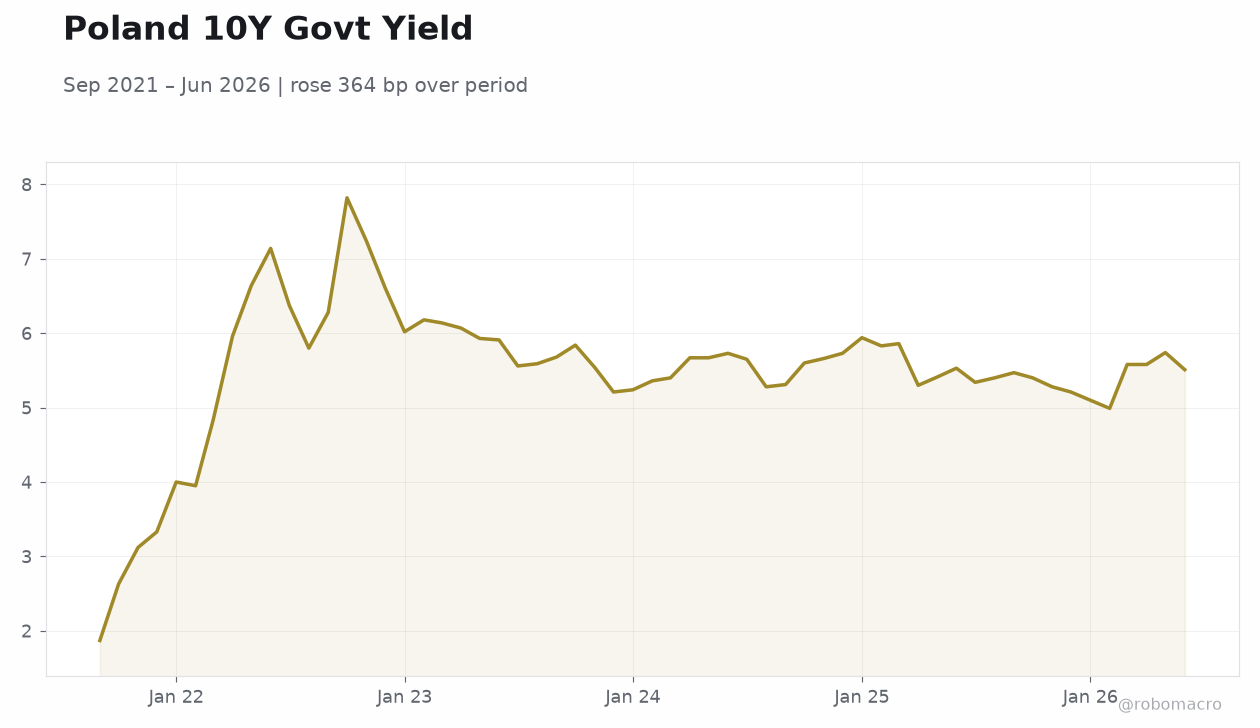 Poland 10Y Govt Yield | Type: macro_line | %: 5.51 (2026-06-01) | Range: 1.87–7.82 | Trend(6pt): 1.87,7.24,5.24,5.86,5.74,5.51
Today's Economic Events
| Data | Prior | Cons | Time |
|---|---|---|---|
| GDP Growth Quarter-over-Quarter | 0.10 | - | 23:00 |
| GDP Growth Year-over-Year | 2.50 | 2.90 | 23:00 |
| Unemployment Rate | 7.60 | - | 23:00 |
| Inflation Rate Year-over-Year Preliminary | 3 | - | 23:30 |
| Inflation Rate Month-over-Month | 1.78 | - | 23:00 |
| Inflation Rate Year-over-Year | 31.75 | - | 23:00 |
- Poland nears full allocation of EU recovery funds while growth forecasts point to a 2% pace by 2030.
- Turkey overnight data on GDP, unemployment and later inflation will test lira resilience amid elevated price pressures.
- Regional sovereign yields fell sharply with Poland 10Y down 4.01% and Hungary 10Y down 6.90% as equities mixed.
Yesterday's Recap
Regional markets closed mixed on light volume. BIST 100 rose 0.45% to 14,641.60 on foreign inflows into banks while iShares Poland slipped 0.23%. EUR/PLN climbed 0.28% to 4.34 and EUR/HUF gained 0.66% to 363.91, reflecting modest forint and zloty weakness.
EUR/CZK edged 0.06% higher to 24.13. USD/TRY rose 0.55% to 48.26. Poland 10Y yields were unavailable from the daily warehouse and Hungary 10Y yields were unavailable from the daily warehouse.
News that nearly 100% of Poland’s EU recovery funds are now allocated supports near-term fiscal momentum, yet the government projects growth slowing to 2% by 2030 amid tighter deficit targets. Brent crude rose 1.63% to 90.77, adding to energy import costs for the region. Gold gained 0.13% to 4,483.70 and Bitcoin added 0.21% to 77,997.14.
No tier-1 data printed in Emerging Europe yesterday.
The Day Ahead
Turkey will release Q2 GDP growth quarter-over-quarter and year-over-year plus the unemployment rate at 23:00 ET, with consensus pointing to 2.9% annual expansion. Poland follows at 23:30 ET with preliminary August inflation year-over-year. Markets will scrutinize both prints for signs of domestic demand resilience ahead of September central bank meetings.
On 2 September Turkey reports August inflation month-over-month and year-over-year, figures that remain critical for CBRT credibility. No major releases are scheduled for the Czech Republic, Hungary or Romania. Traders will also monitor any ECB signals that could influence CNB and MNB positioning.
Other Economic Notes
Poland’s near-complete drawdown of EU recovery funds should sustain infrastructure and green investment through 2026, partially offsetting the projected deceleration in trend growth. Hungary continues to face restricted access to EU funds pending judicial reforms, limiting fiscal space relative to Poland. Energy import dependence remains a shared vulnerability across the EU members, with Brent above 90 amplifying current-account pressures.
Romania’s euro-adoption timeline of 2029 looks increasingly stretched given persistent inflation differentials versus the euro area. Migration trends show more inflows from Germany into Poland, supporting labor supply in key sectors. <i>↓ p.2</i>