Emerging Europe Macro Daily(Beta Mode)
Polish Tensions Hit CEE Equities, MNB Cuts Target
Market Snapshot
| Asset | Level | Change |
|---|---|---|
| BIST 100 | 13,251.90 | -0.64% |
| iShares Poland | 44.35 | -2.26% |
| EUR/PLN | 4.38 | +0.74% |
| EUR/HUF | 364.96 | +1.09% |
| EUR/CZK | 24.42 | +0.31% |
| USD/TRY | 48.84 | +0.01% |
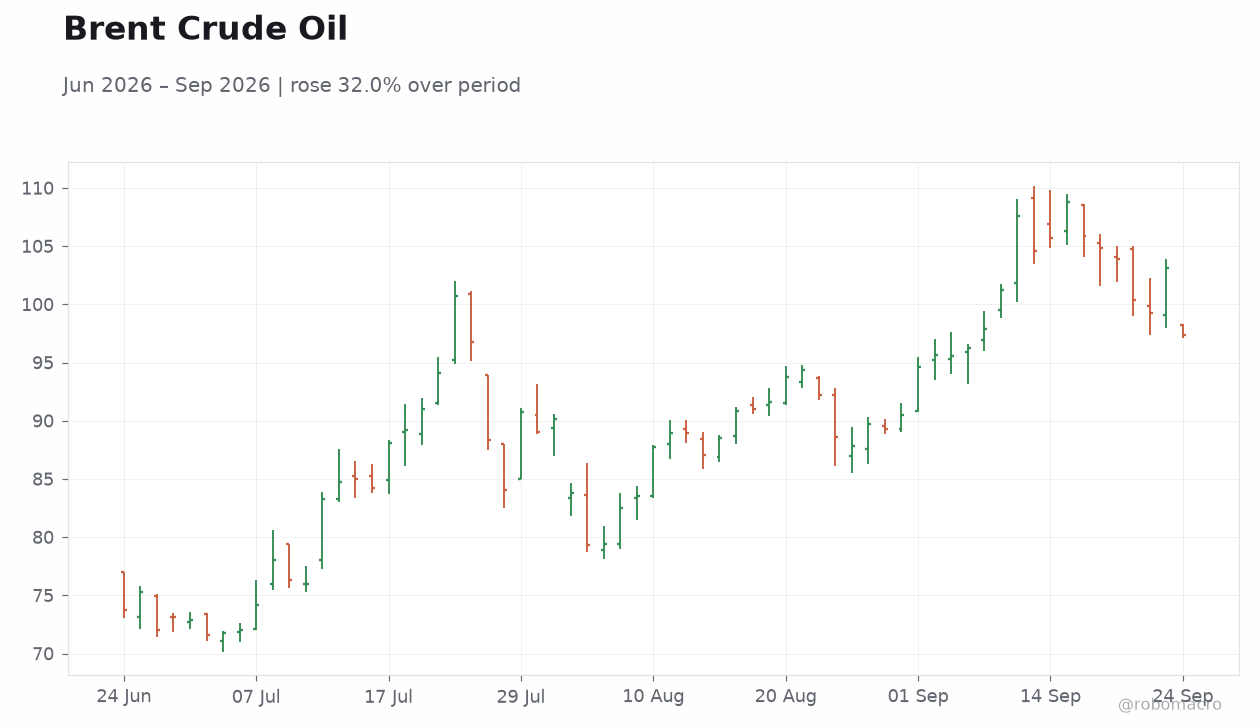
| Brent Crude | 97.36 | -5.55% |
| Gold | 4,326.90 | +0.20% |
| Bitcoin | 84,129.89 | -2.37% |
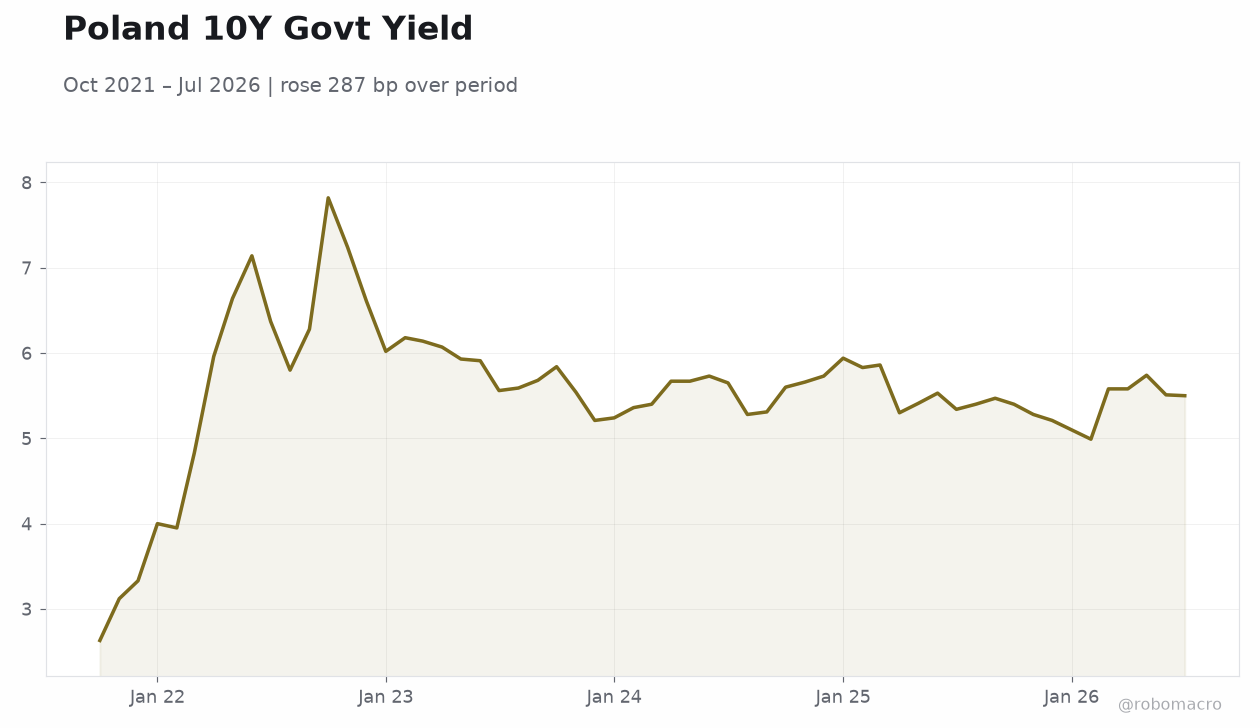
| Poland 10Y Govt Yield | - | - |
| Hungary 10Y Govt Yield | - | - |
Prior Economic Events
| Data | Prior | Cons | Actual |
|---|---|---|---|
| No events available | |||
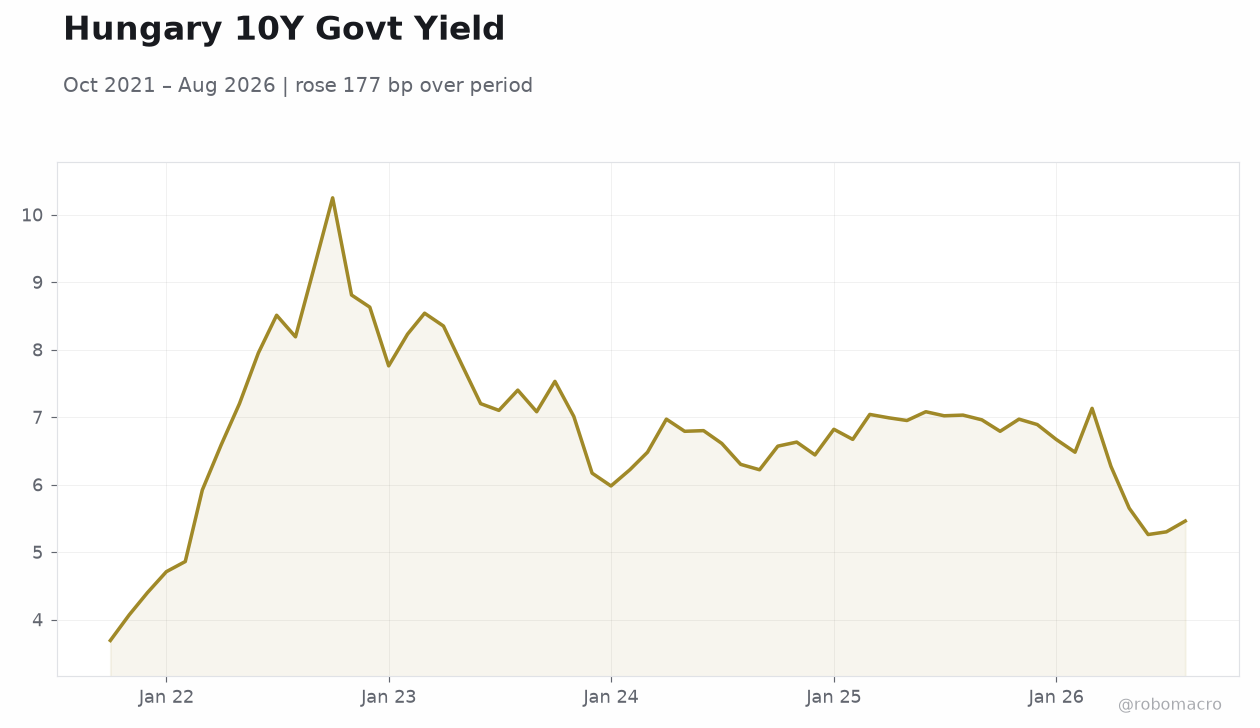 Hungary 10Y Govt Yield | Type: macro_line | Yield %: 5.46 (2026-08-01) | Range: 3.69–10.25 | Trend(6pt): 3.69,8.63,6.22,6.99,5.26,5.46
Today's Economic Events
| Data | Prior | Cons | Time |
|---|---|---|---|
| No events available | |||
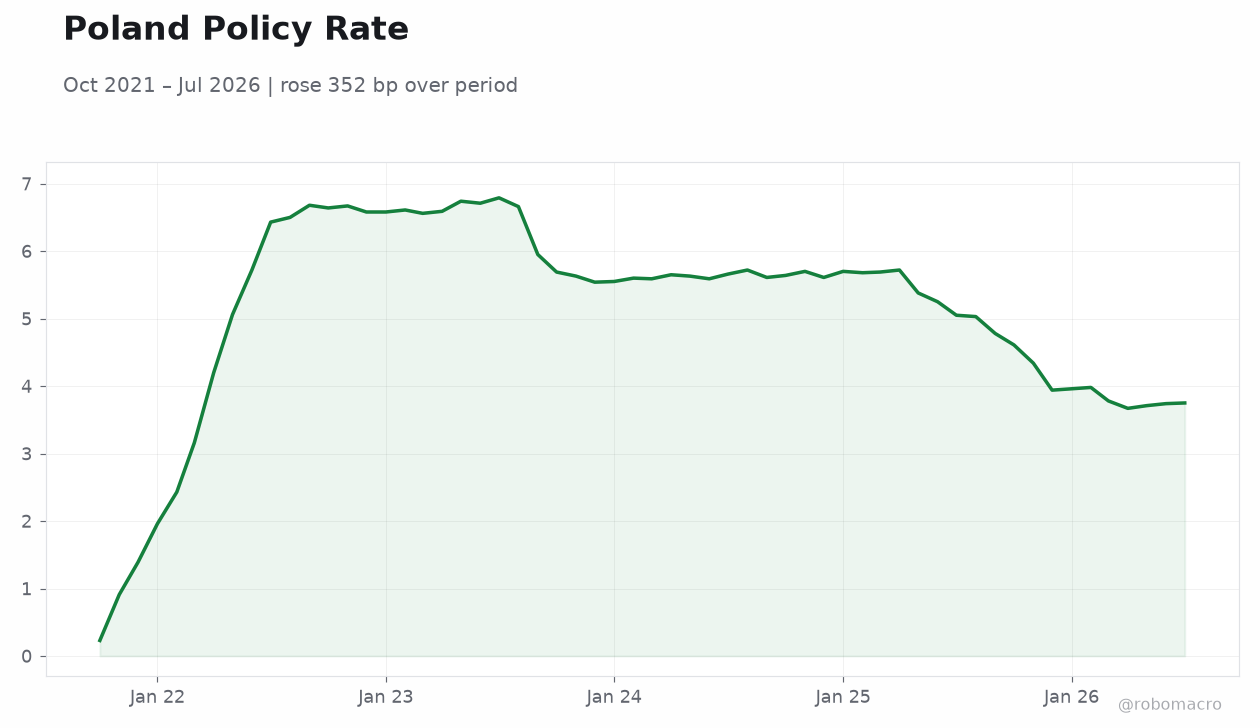
- Polish equities and zloty weakened sharply after Russian airspace breach triggered jet scrambles and heightened NATO-border rhetoric.
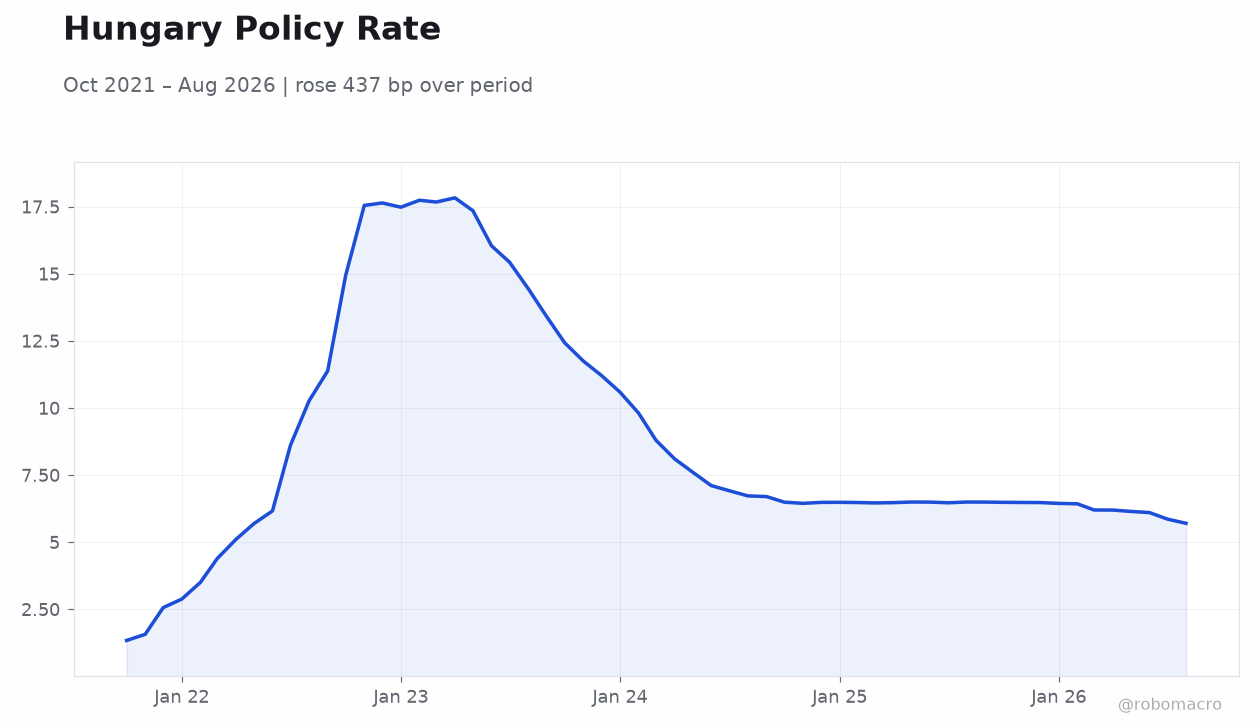
- MNB cut its inflation target effective 2028, the first such shift since 2005, while forint depreciated 1.09% against the euro.
- Turkish assets held steady as President Erdoğan highlighted economic resilience and $100 billion US trade target amid CBRT policy continuity.
Yesterday's Recap
Regional markets reflected Poland-centric risk. iShares Poland fell 2.26% to 44.35 while EUR/PLN rose 0.74% to 4.38. BIST 100 declined 0.64% to 13,251.90 and EUR/HUF climbed 1.09% to 364.96.
EUR/CZK edged 0.31% higher to 24.42 with USD/TRY little changed at 48.84. Brent crude dropped 5.55% to 97.36, pressuring energy importers across the region. No CPI, GDP or industrial production releases occurred in Poland, Czech Republic, Hungary, Romania or Turkey.
Polish President Nawrocki condemned the Russian helicopter incursion as evidence of “ruthless persistence” toward neighboring states, while Foreign Minister Sikorski disclosed personal wartime stockpiles. In Hungary the MNB Monetary Council lowered its inflation target from 2028 onward. Turkish President Erdoğan reiterated progress on external-shock resilience and bilateral trade goals with the United States.
The committee voted to adjust the target after reviewing medium-term price stability metrics.
The Day Ahead
Thursday’s calendar remains empty of scheduled releases across the five economies, leaving investors to digest Wednesday’s geopolitical and policy signals. Poland’s security developments will continue to influence regional risk sentiment and zloty flows. Markets will monitor any follow-through comments from the MNB on its new inflation target path and implications for forint valuation.
Turkish assets may react to further statements on US trade expansion or CBRT reserve management. Broader euro-area data and ECB rhetoric will provide indirect guidance for NBP, CNB and BNR positioning given tight trade linkages. Energy importers will track Brent volatility for any second-round effects on local inflation prints.
Other Economic Notes
Energy-price volatility remains a shared vulnerability for Poland, Hungary and Czech Republic given high import dependence. Hungary’s decision to adjust its inflation target marks a rare policy recalibration that could affect euro-convergence perceptions. Romania’s ongoing political deadlock continues to delay EU fund disbursements and raises questions about fiscal trajectory.
↓ p.2