CEE Slips With Global Risk; NBP Adds Gold
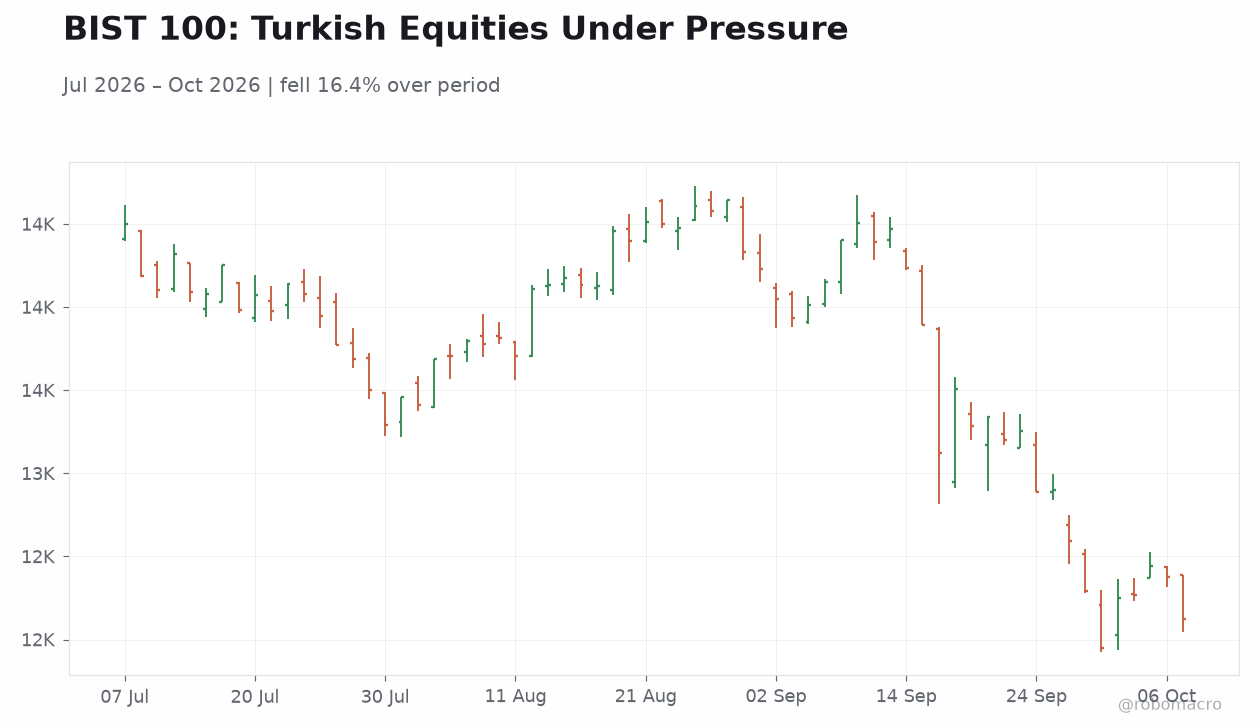
BIST 10012,122.90-2.03%
iShares Poland43.33-2.63%
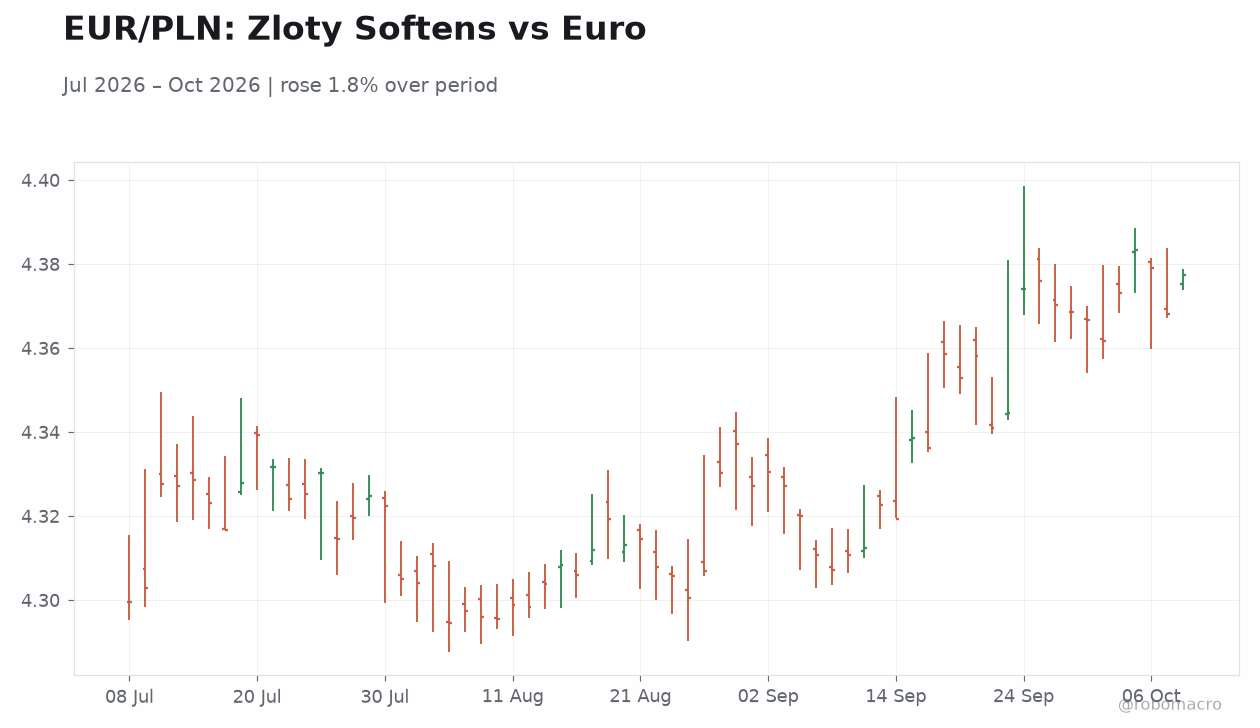
EUR/PLN4.38+0.21%
EUR/HUF365.58+0.30%
Market Snapshot
| Asset | Level | Change |
|---|
| BIST 100 | 12,122.90 | -2.03% |
| iShares Poland | 43.33 | -2.63% |
| EUR/PLN | 4.38 | +0.21% |
| EUR/HUF | 365.58 | +0.30% |
| EUR/CZK | 24.40 | +0.05% |
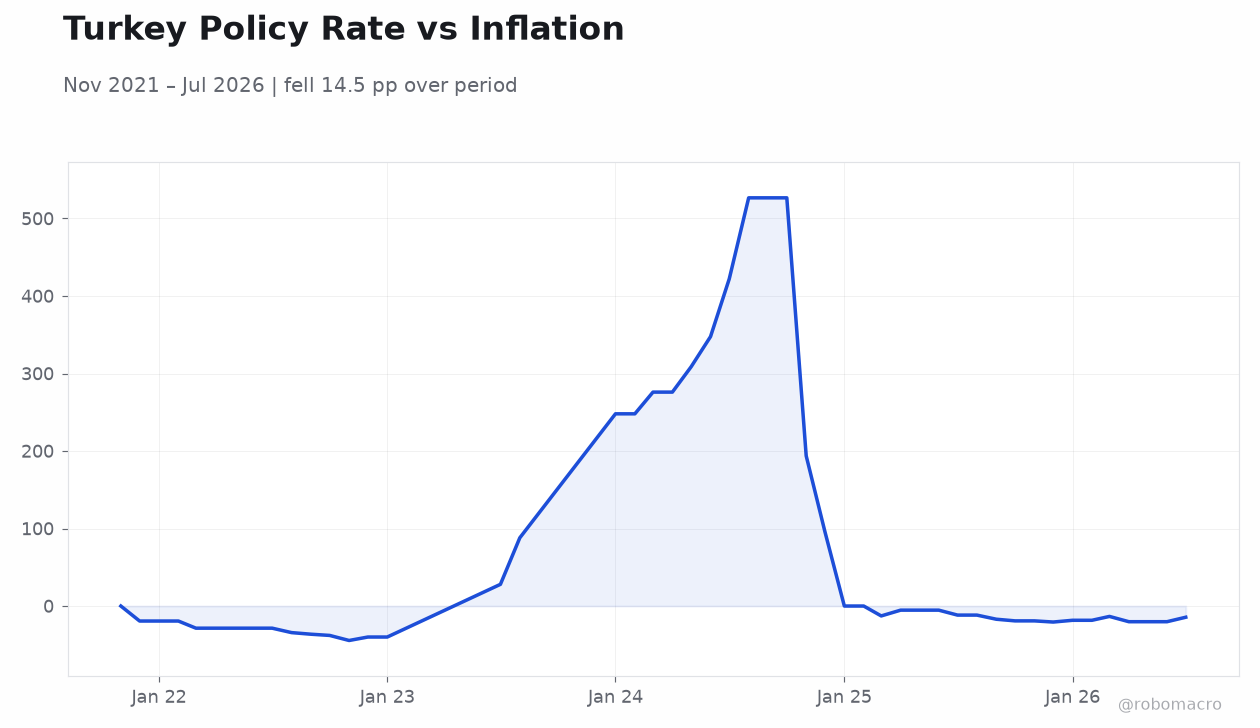
| USD/TRY | 49.20 | +0.00% |
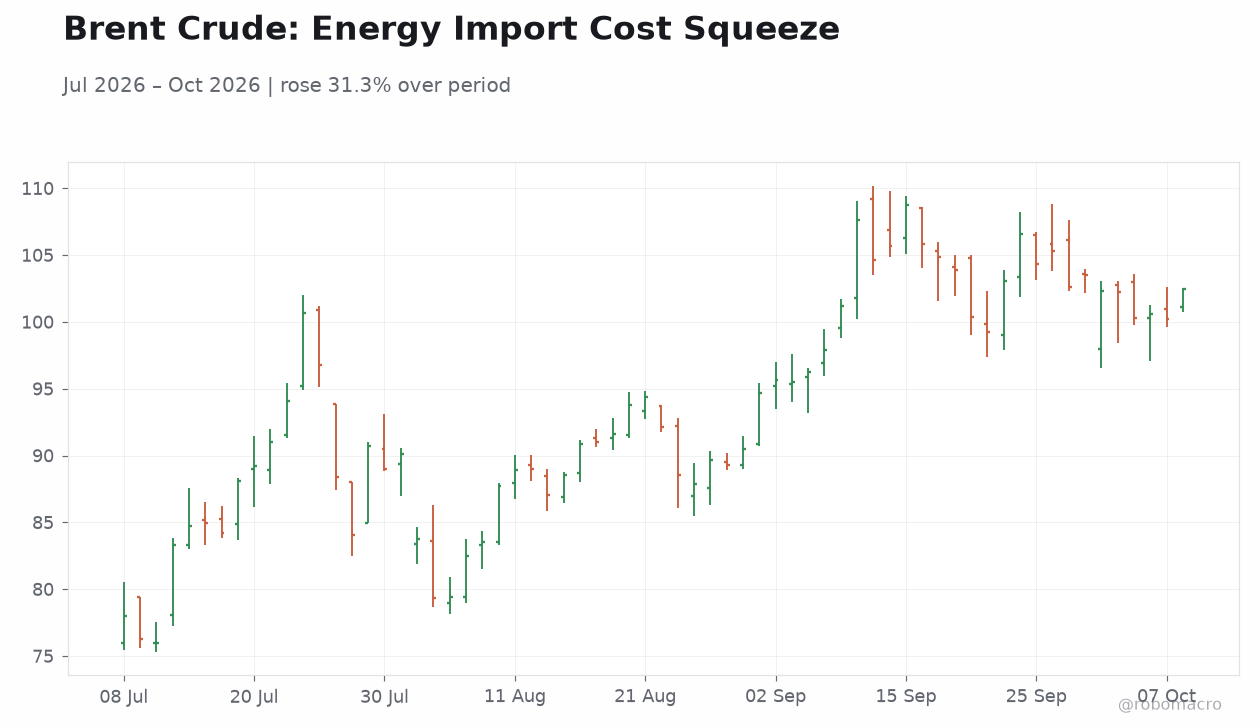
| Brent Crude | 102.45 | +2.25% |
| Gold | 4,156.70 | +0.39% |
| Bitcoin | 82,677.99 | -3.37% |
| Poland 10Y Govt Yield | - | - |
| Hungary 10Y Govt Yield | - | - |
Prior Economic Events
| Data |
Prior |
Cons |
Actual |
| No events available |
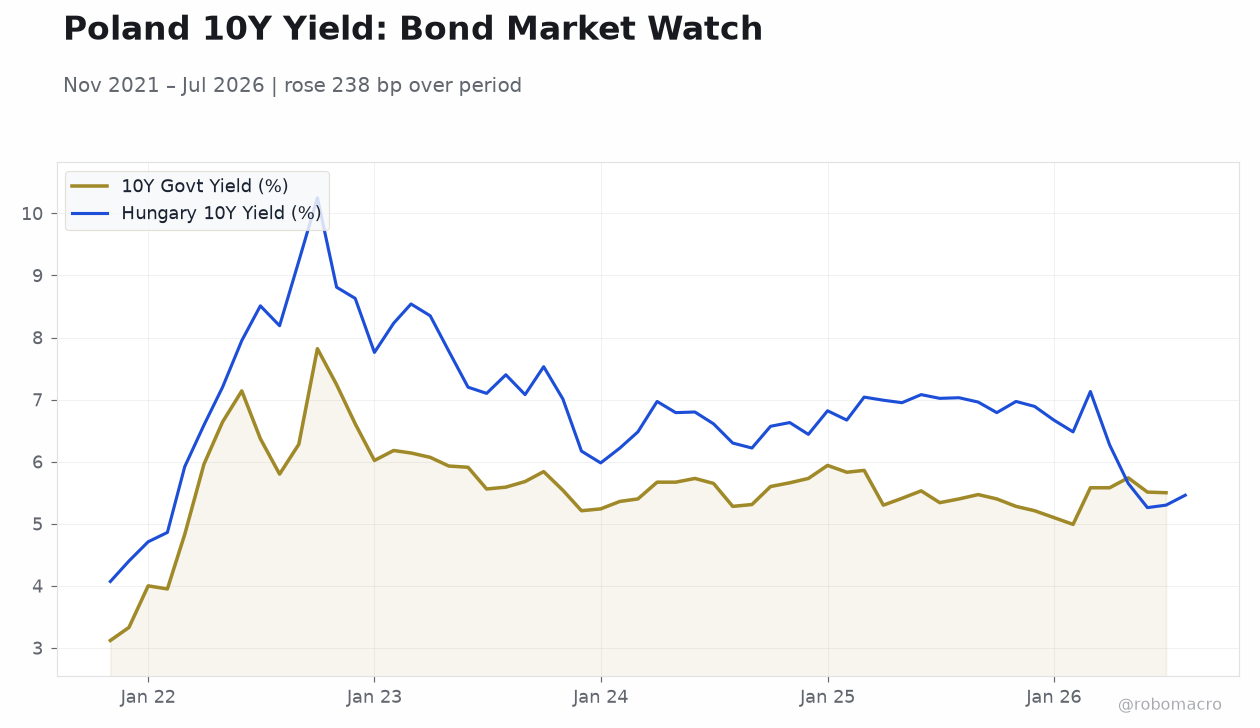 Poland 10Y Yield: Bond Market Watch | Type: macro_line | 10Y Govt Yield (%): 5.5 (2026-07-01) | Range: 3.12–7.82 | Trend(5pt): 3.12,6.02,5.4,5.41,5.5 | Hungary 10Y Yield (%): 5.46 (2026-08-01) | Range: 4.07–10.25 | Trend(6pt): 4.07,7.76,6.48,6.95,5.3,5.46
Today's Economic Events
| Data |
Prior |
Cons |
Time |
| No events available |
- BIST 100 fell 2.03% and iShares Poland dropped 2.63% as global risk appetite deteriorated, while Brent crude surged 2.25% to $102.45, complicating the inflation outlook for energy-importing CEE.
- Poland's NBP bought over 25 tonnes of gold in September — the largest monthly purchase in 19 months — as reserves diversification accelerates toward a stated target.
- Hungary, Poland and Bulgaria are trailing the rest of the EU in drawing down the post-pandemic recovery fund as it enters its final phase, raising the stakes for disbursement-linked fiscal support.
Yesterday's Recap
Emerging European equities underperformed on October 7 as global risk sentiment soured, with Turkey's BIST 100 down 2.03% to 12,122.90 and the iShares Poland ETF falling 2.63% to $43.33. The Polish zloty and Hungarian forint both softened against the euro, with EUR/PLN rising 0.21% to 4.38 and EUR/HUF gaining 0.30% to 365.58, while the Czech koruna was more resilient, edging just 0.05% weaker at 24.40. The Turkish lira held steady at 49.20 against the dollar, a notable calm given the equity selloff in Istanbul.
Oil's sharp 2.25% rally to $102.45 dominated the commodity complex, a mixed blessing for the region: Poland, Hungary and the Czech Republic all run structural energy import bills, so higher Brent feeds directly into headline CPI just as disinflation trends mature. Gold's continued strength — up 0.39% to $4,156.70 — reinforced the reserve-diversification trade that regional central banks, the NBP foremost, have embraced. Bitcoin's 3.37% slide to $82,678 underscored the broader retreat from risk assets.
On the real economy, Poland's services sector output grew 5.4% year-on-year, well above the EU average, confirming the domestic-demand resilience that has kept the NBP cautious on easing.
The Day Ahead
Today's calendar is light on scheduled data releases across the region, shifting attention to policy and structural events. The first meeting of the Türkiye–Hungary Joint Planning Group convenes Thursday, formalizing a new mechanism to deepen strategic cooperation on trade, energy and defense — a notable alignment of two of the region's more independently-minded governments. Attention stays on EU fund mechanics after Bankwatch's assessment that Hungary, Poland and Bulgaria lag the bloc in Recovery and Resilience Facility drawdowns as the program's window narrows.
Watch for any Polish ministry statements on EU fund milestones, as disbursement pace is a key swing factor for the fiscal picture. Turkish markets will look for signals on the CBRT's reserve accumulation and lira stability following the equity rout. Regional bond desks will track secondary-market color on Polish and Hungarian 10-year yields, with no snapshot prints available for today's close.
Page 1
Never miss an issue
Subscribe to Emerging Europe Macro Daily and get each new issue delivered to your inbox.
Already a member? Visit robomacro.com
to log in and manage subscriptions, or use Forgot Password to set a password.