PL Political Risks Weigh, CZ Growth Cut
BIST 10012,250.70+0.82%
iShares Poland44.24+0.72%
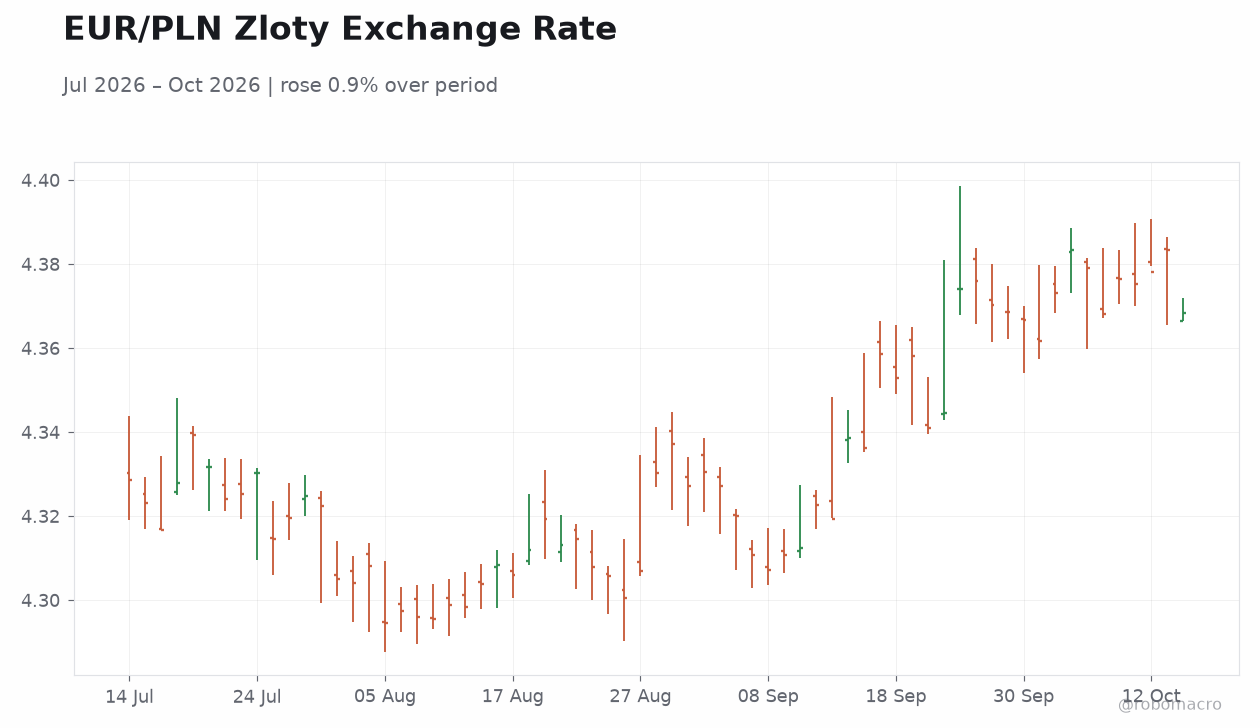
EUR/PLN4.37-0.35%
EUR/HUF363.52-0.32%
Market Snapshot
| Asset | Level | Change |
|---|
| BIST 100 | 12,250.70 | +0.82% |
| iShares Poland | 44.24 | +0.72% |
| EUR/PLN | 4.37 | -0.35% |
| EUR/HUF | 363.52 | -0.32% |
| EUR/CZK | 24.36 | +0.01% |
| USD/TRY | 49.38 | +0.08% |
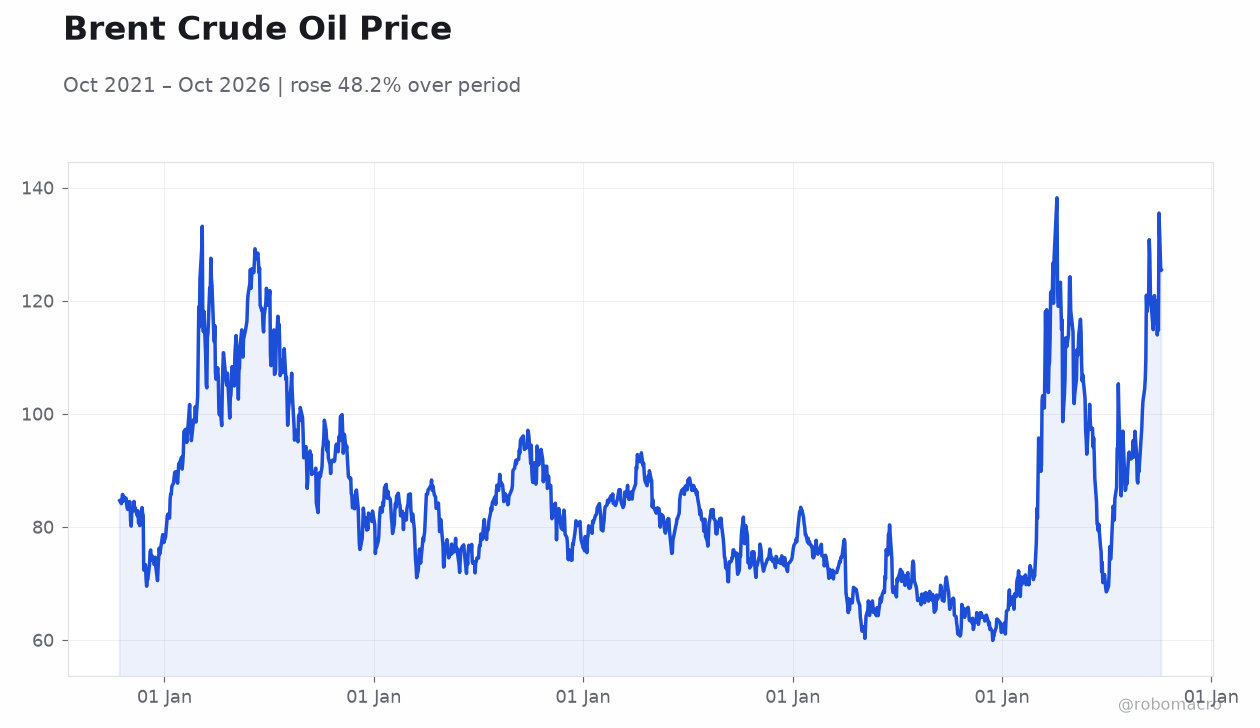
| Brent Crude | 106.34 | +0.62% |
| Gold | 4,188.80 | +0.28% |
| Bitcoin | 83,425.87 | +2.03% |
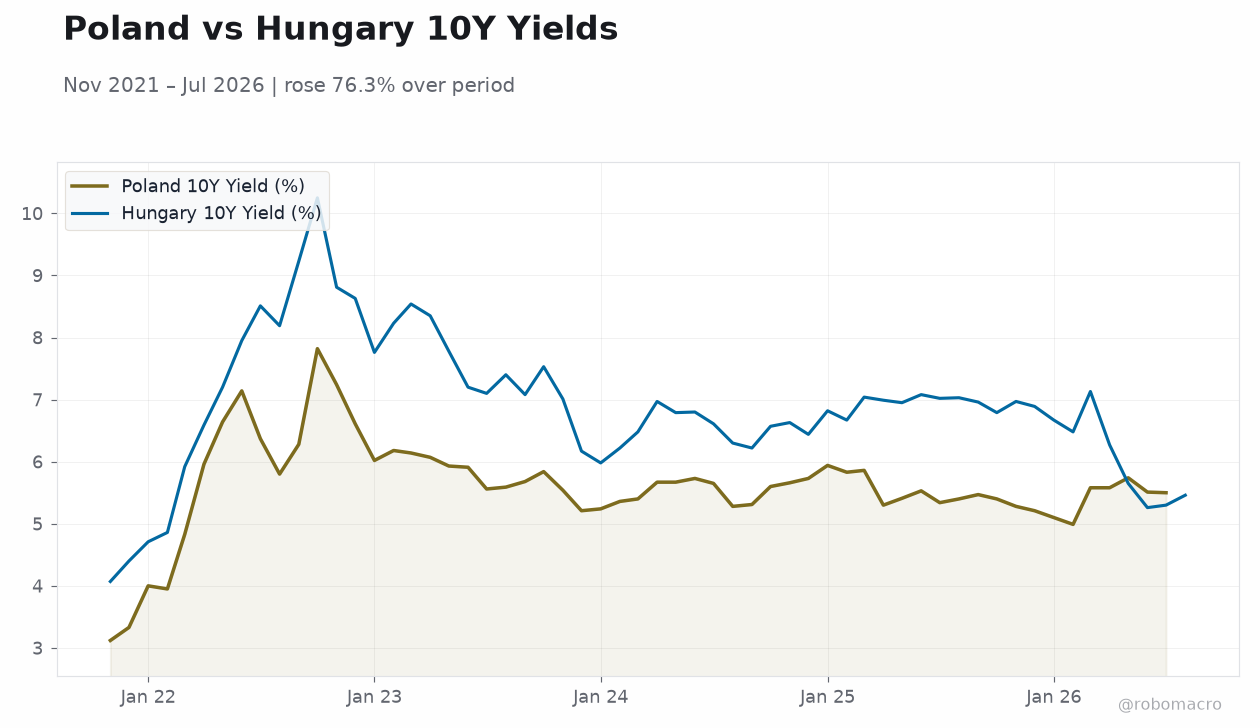
| Poland 10Y Govt Yield | - | - |
| Hungary 10Y Govt Yield | - | - |
Prior Economic Events
| Data |
Prior |
Cons |
Actual |
| No events available |
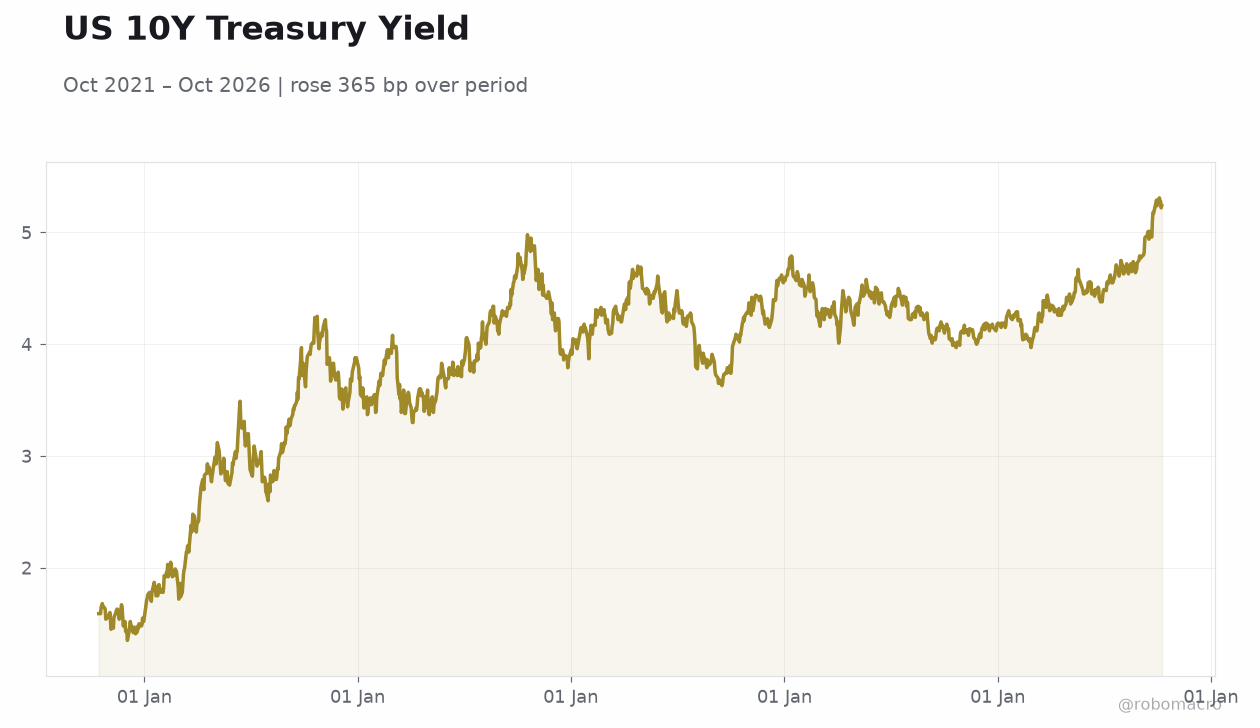 US 10Y Treasury Yield | Type: macro_line | US 10Y Yield (%): 5.24 (2026-10-09) | Range: 1.35–5.31 | Trend(6pt): 1.59,3.53,4.5,4.43,5.22,5.24
Today's Economic Events
| Data |
Prior |
Cons |
Time |
| No events available |
- Bloomberg flags Polish political dysfunction as a growing threat to the region's $1 trillion anchor economy, keeping a risk premium on PLN assets despite Tuesday's firm tone.
- The IMF trims its 2026 Czech GDP forecast to 1.8%, underscoring a sluggish recovery even as koruna holds near 24.36 against the euro.
- Regional FX firmed across the board — EUR/PLN and EUR/HUF each gained about a third of a percent on the zloty and forint — while Brent above $106 supports energy-importer terms-of-trade debates.
Yesterday's Recap
Emerging Europe traded constructively on Tuesday, October 13, with risk appetite carrying over from global strength in gold and bitcoin. The BIST 100 rose 0.82% to 12,250.70, extending Istanbul's run as one of the stronger emerging equity stories, while the iShares Poland ETF added 0.72% to 44.24 on continued foreign interest in Polish assets. The zloty was the standout FX performer, with EUR/PLN easing 0.35% to 4.37, and the forint followed closely, EUR/HUF down 0.32% at 363.52 — both moves consistent with carry-driven demand for higher-yielding EU-member currencies.
The koruna was the quiet one, EUR/CZK essentially flat at 24.36, suggesting the CNB's steady hand continues to anchor expectations. USD/TRY ticked up just 0.08% to 49.38, a remarkably calm session by Turkish standards and a sign the post-normalization lira regime is holding. In commodities, Brent crude climbed 0.62% to $106.34 — a mixed blessing for the region, boosting Russia-exposed transit revenues but raising import bills for Poland, Hungary, and Turkey.
Gold's 0.28% gain to $4,188.80 and bitcoin's 2.03% surge to $83,425.87 rounded out a risk-on session with no adverse sovereign spread action. Polish 10-year and Hungarian 10-year yields were not published in Tuesday's data, leaving the fixed-income picture to be confirmed in today's trading.
The Day Ahead
Wednesday's calendar is light on scheduled statistical releases across the five capitals, so attention shifts to policy and political headlines. In Warsaw, the political story remains front and center after Bloomberg's long-read on governance dysfunction in Europe's largest emerging economy — any movement on the 2027 budget or NBP governance appointments would move the zloty. Prague takes the policy spotlight by proxy: the IMF's downgrade of Czech 2026 growth to 1.8% keeps the focus on how far the CNB can glide toward ECB levels before domestic weakness forces its hand.
In Budapest, watch for any forint-relevant commentary as EUR/HUF sits near 363.50 and the MNB's credibility premium is being tested by fiscal slippage. Energy remains a live theme with Brent above $106 — Hungarian and Slovak refining margins and Russian crude logistics are worth monitoring. Turkish markets will look for confirmation that the calm in USD/TRY near 49.40 extends, with reserve accumulation data the key tell on CBRT positioning.
Page 1
Never miss an issue
Subscribe to Emerging Europe Macro Daily and get each new issue delivered to your inbox.
Already a member? Visit robomacro.com
to log in and manage subscriptions, or use Forgot Password to set a password.