Emerging Europe Macro Daily(Beta Mode)
MNB Holds at 5.5%, Poland Output Beats
Market Snapshot
| Asset | Level | Change |
|---|---|---|
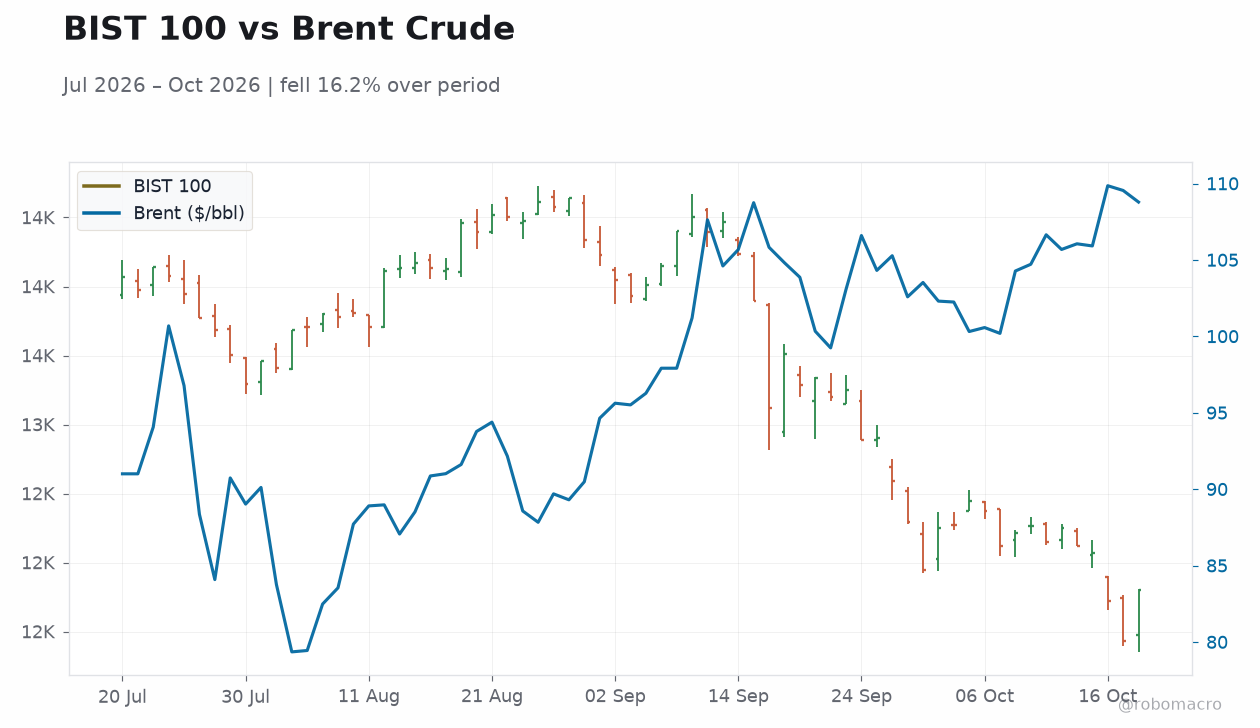
| BIST 100 | 11,797.70 | +3.22% |
| iShares Poland | 44.21 | +0.27% |
| EUR/PLN | 4.36 | -0.03% |
| EUR/HUF | 363.82 | +0.44% |
| EUR/CZK | 24.25 | -0.34% |
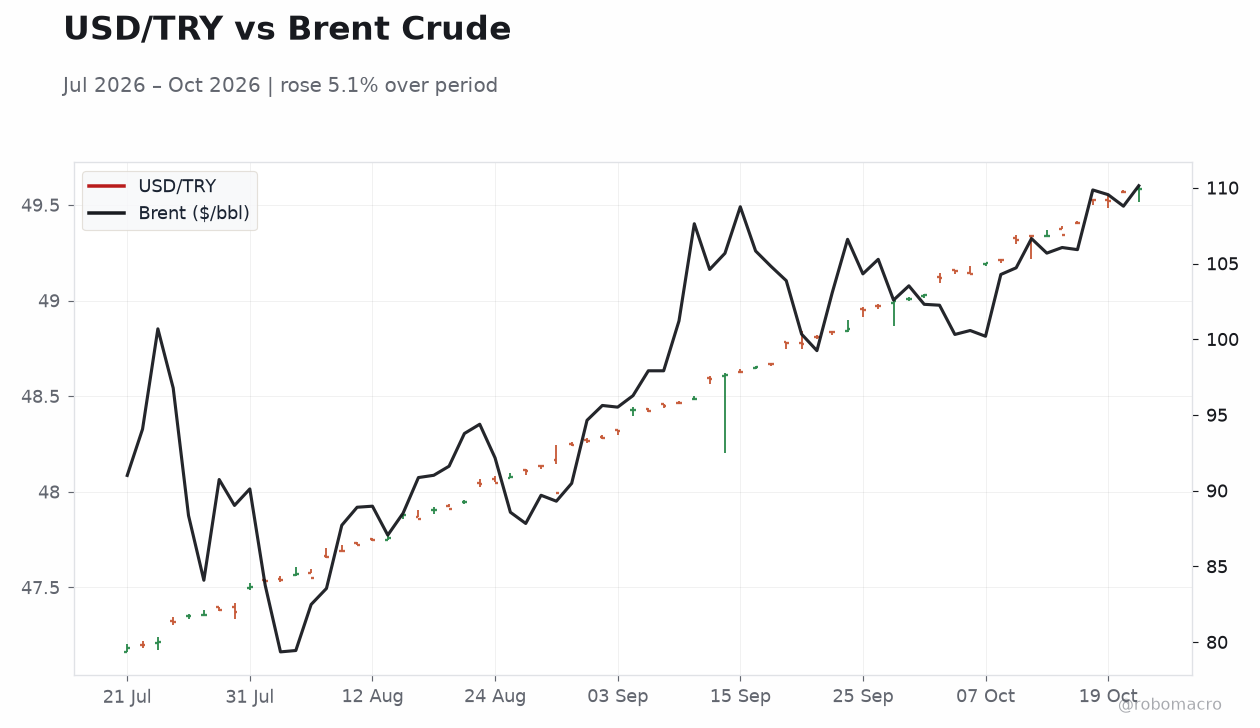
| USD/TRY | 49.57 | +0.09% |
| Brent Crude | 110.14 | +1.24% |
| Gold | 4,138.50 | -0.10% |
| Bitcoin | 82,729.12 | +1.07% |
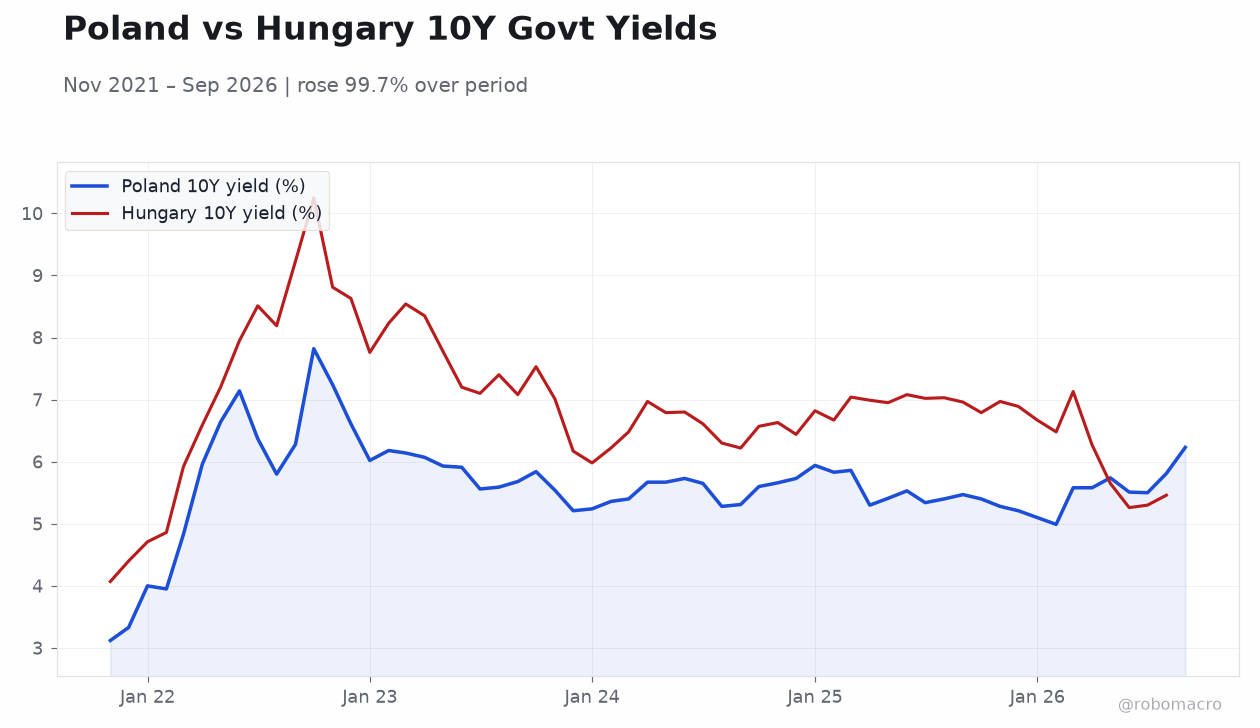
| Poland 10Y Govt Yield | - | - |
| Hungary 10Y Govt Yield | - | - |
Prior Economic Events
| Data | Prior | Cons | Actual |
|---|---|---|---|
| Central Bank Interest Rate Decision | 5.50 | 5.50 | 5.50 |
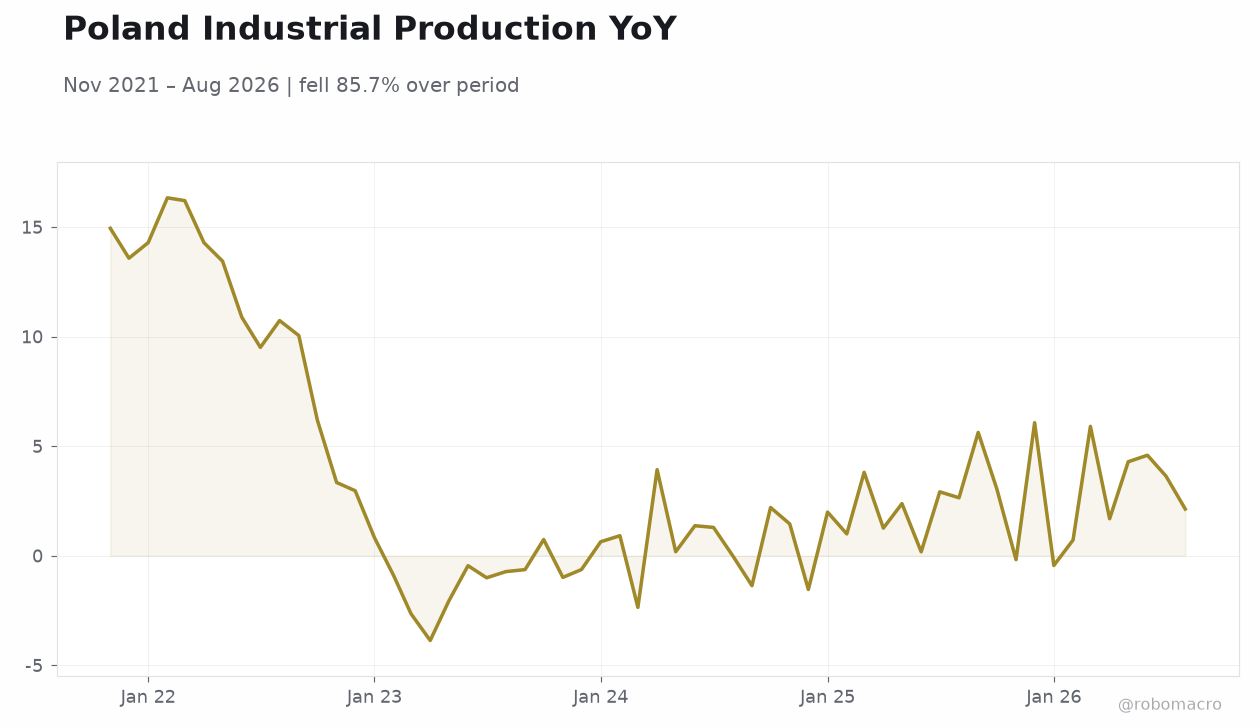 Poland Industrial Production YoY | Type: macro_line | Poland IP YoY (%): 2.133 (2026-08-01) | Range: -3.867–16.33 | Trend(6pt): 14.94,0.8272,-2.357,2.379,3.632,2.133
Today's Economic Events
| Data | Prior | Cons | Time |
|---|---|---|---|
| No events available | |||
- MNB left its base rate unchanged at 5.50% on October 20, matching consensus, with the forint strengthening into the decision as markets digested Monday's 2027 budget presentation.
- Polish September industrial output beat forecasts, reinforcing the view that Poland's economy retains momentum and supporting stable NBP rates.
- BIST 100 surged 3.22% while Brent crude pushed above $110, a combination that keeps Turkish inflation risks and CBRT orthodoxy under scrutiny.
Yesterday's Recap
The MNB's Monetary Council held the base rate at 5.50% on October 20, in line with consensus, with the forint strengthening into the decision as markets digested Monday's parliamentary presentation of the 2027 budget, which featured tax cuts and additional spending commitments. Polish September industrial output beat forecasts, with coverage framing the result as evidence that Poland's economy shows no loss of momentum; the zloty was essentially flat at 4.36 per euro. The forint, however, weakened 0.44% to 363.82 per euro, suggesting the budget's fiscal loosening offset the relief of a steady policy rate.
The Czech koruna firmed 0.34% to 24.25 per euro, while EUR/PLN slipped 0.03%. Turkish assets were the standout: the BIST 100 jumped 3.22% to 11,797.70 even as USD/TRY edged up 0.09% to 49.57, and Brent crude rose 1.24% to $110.14 — a combination that complicates the CBRT's disinflation path. Gold was flat at $4,138.50 and Bitcoin gained 1.07%.
The Day Ahead
The calendar is empty for October 21 across the five economies, leaving markets to trade off yesterday's MNB decision and the Polish output beat. With no scheduled prints, attention shifts to second-tier themes: the HUF's reaction to the budget's fiscal expansion, and whether the zloty can hold its gains after the stronger Polish data. Turkish markets will watch oil above $110 and the lira's crawl, given the direct pass-through to inflation.
Czech and Romanian markets face a quiet session with no domestic catalysts, so external risk sentiment will dominate. Expect thin, positioning-driven flows ahead of the next round of regional data later in the week.
Other Economic Notes
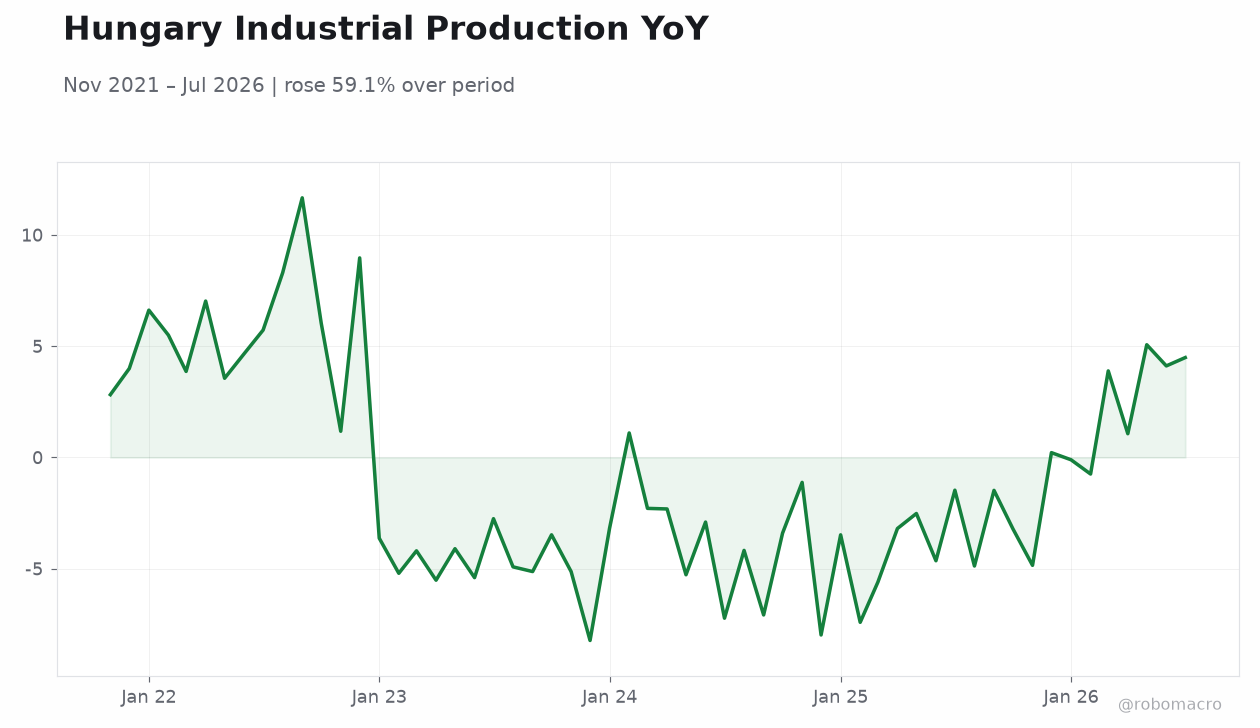
Poland's growth story remains the region's bright spot, with GDP per capita up 266% over 35 years and September output beating forecasts, though ING's "K-shaped recovery" framing suggests uneven sectoral momentum that argues against premature NBP easing. Hungary's 2027 budget, with tax cuts and extra spending, raises questions about the fiscal stance just as the MNB holds rates, a mix that could keep the forint volatile. Turkey's equity rally alongside a firm lira and rising oil prices points to a market betting on policy continuity, but energy import costs remain a structural drag.
↓ p.2