Emerging Europe Macro Daily(Beta Mode)
Poland Court Crisis; CEE CB Week Ahead
Market Snapshot
| Asset | Level | Change |
|---|---|---|
| BIST 100 | 10,759.60 | -3.63% |
| iShares Poland | 43.40 | -2.95% |
| EUR/PLN | 4.41 | +0.55% |
| EUR/HUF | 365.40 | +0.10% |
| EUR/CZK | 24.35 | +0.08% |
| USD/TRY | 49.96 | +0.02% |
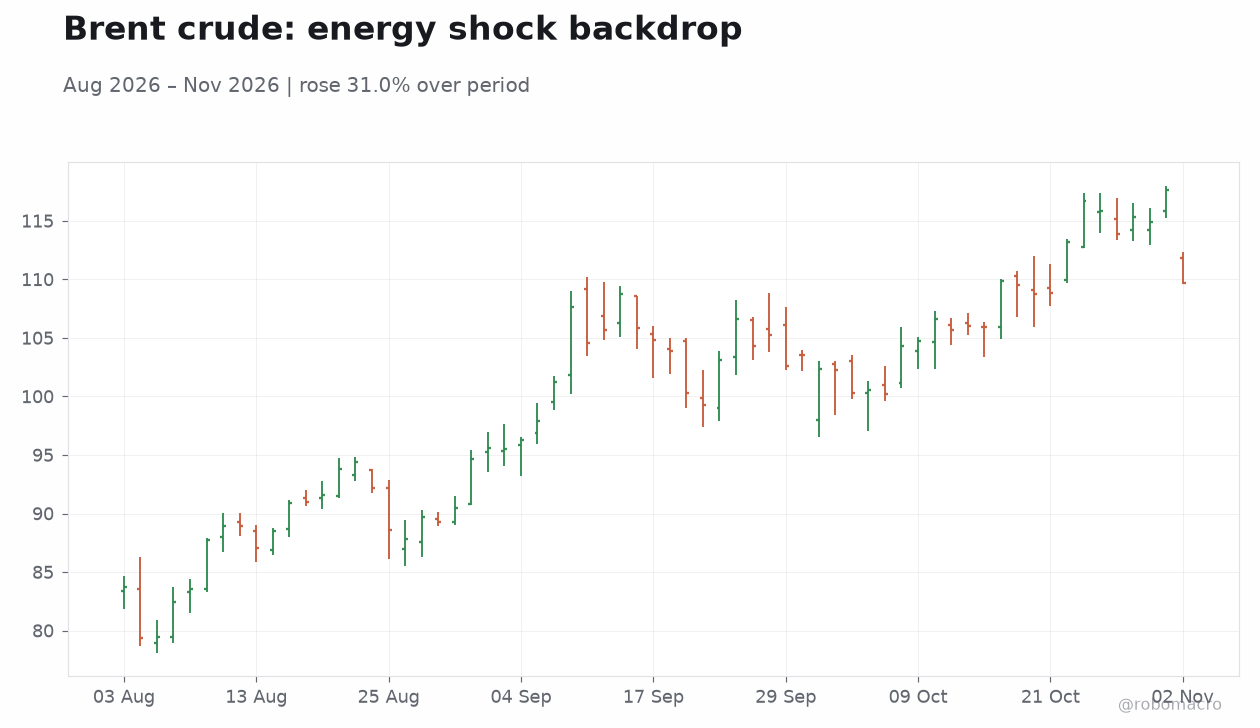
| Brent Crude | 109.79 | -6.67% |
| Gold | 3,915.30 | +0.42% |
| Bitcoin | 78,227.99 | +1.02% |
| Poland 10Y Govt Yield | - | - |
| Hungary 10Y Govt Yield | - | - |
Prior Economic Events
| Data | Prior | Cons | Actual |
|---|---|---|---|
| No events available | |||
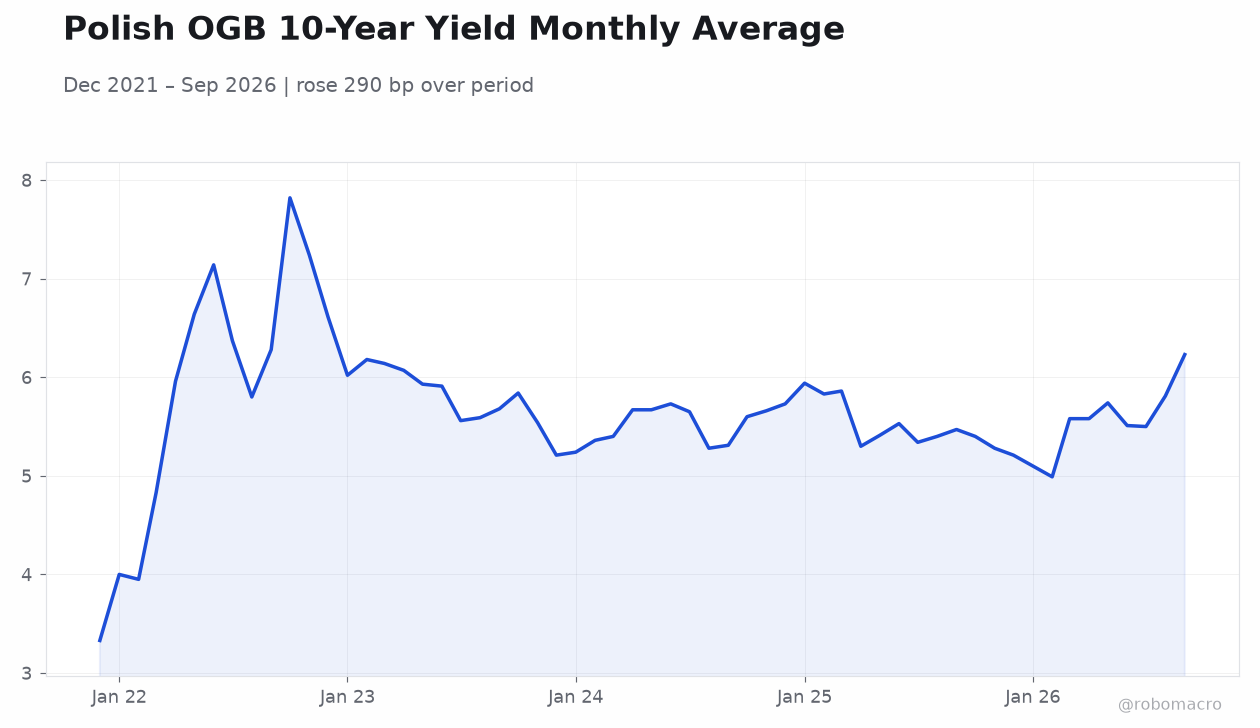
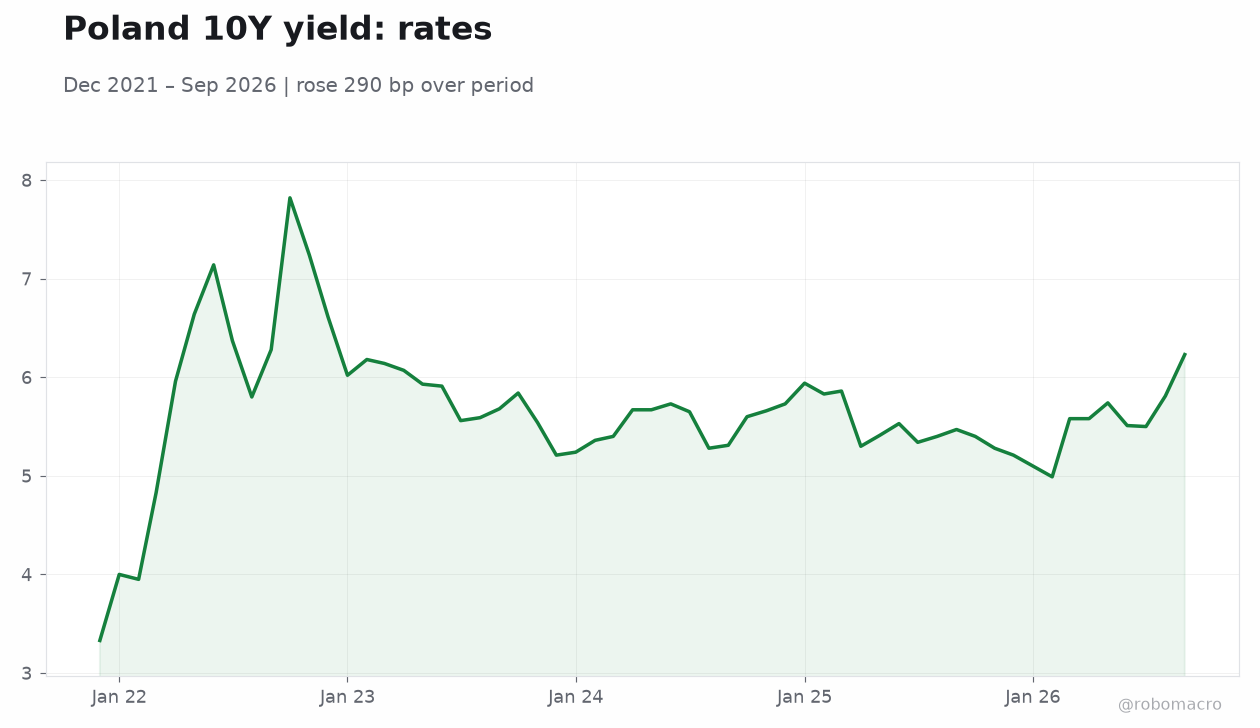
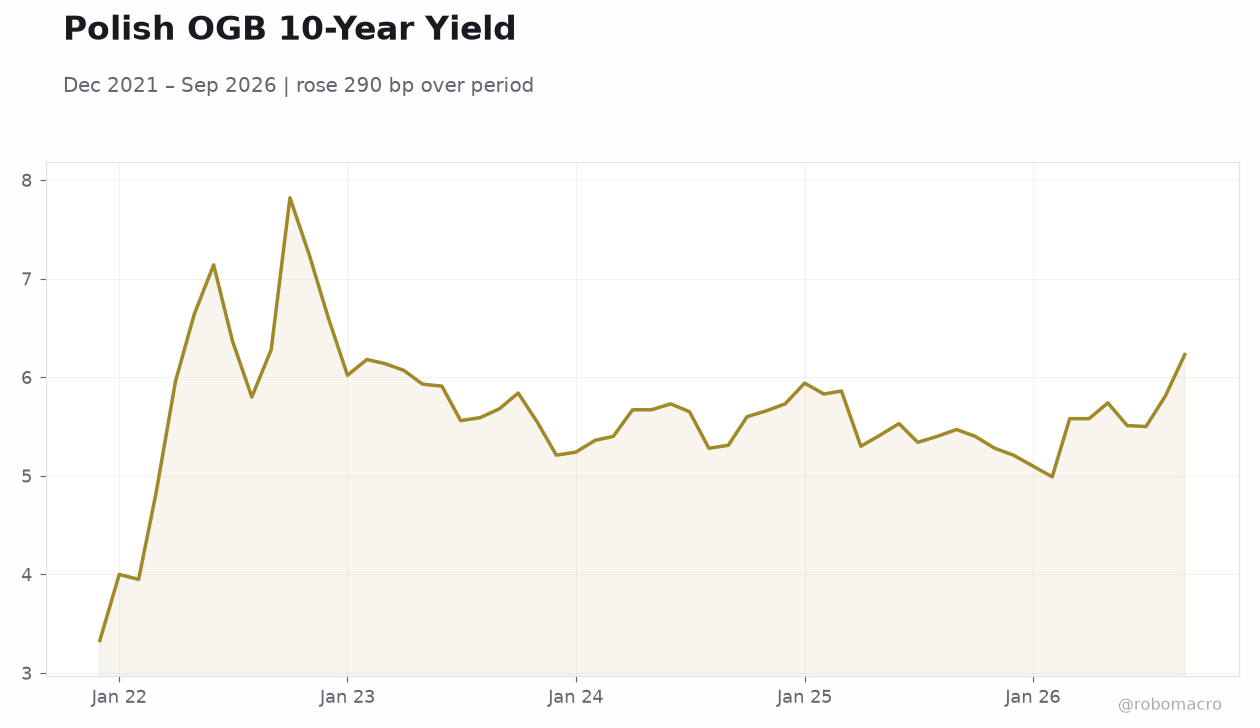 Polish OGB 10-Year Yield | Type: macro_line | Polish OGB 10-Year Yield: 6.23 (2026-09-01) | Range: 3.33–7.82 | Trend(6pt): 3.33,6.18,5.67,5.53,5.81,6.23
Today's Economic Events
| Data | Prior | Cons | Time |
|---|---|---|---|
| Tuesday (2026-11-03) | |||
| Inflation Rate Month-over-Month | 1.84 | - | 02:00 |
| Inflation Rate Year-over-Year | 29.73 | - | 02:00 |
- Poland's constitutional court standoff escalates as PM Tusk suspends chief justice; iShares Poland fell 2.95% and EUR/PLN rose 0.55% to 4.41.
- Turkey CPI due Tuesday (Nov 3) with prior YoY at 29.73%; BIST 100 slumped 3.63% to 10,759.60 amid broad risk-off.
- CEE central bank week: CNB meets Nov 5 with the policy rate at 3.75%, alongside NBP and other CCA decisions.
Yesterday's Recap
Poland dominated the regional narrative as the institutional clash between Prime Minister Donald Tusk's government and President Karol Nawrocki intensified. The government suspended two senior Constitutional Tribunal justices and moved to bring criminal charges, prompting the court's nationalist-linked president to be ousted from leadership; President Nawrocki physically pushed through a group of judges at the tribunal entrance, and police were deployed during the stand-off. Markets responded defensively: iShares Poland fell 2.95% and EUR/PLN rose 0.55% to 4.41, reflecting a modest risk premium on Polish assets.
Elsewhere in the region, EUR/HUF edged up 0.10% to 365.40, while EUR/CZK was essentially flat at 24.35. Turkey's BIST 100 dropped 3.63% to 10,759.60, with USD/TRY edging up 0.02% to 49.96 as the lira's managed crawl continued. On the real economy, Poland reported H1 2026 FDI of $15.9bn, up 36% year-on-year, underscoring continued foreign investment interest despite the political noise.
The Day Ahead
The immediate focus is Turkey's November inflation release on Tuesday (Nov 3), with month-on-month prior at 1.84% and year-on-year prior at 29.73%; no consensus is published, so the print will be judged against the disinflation path implied by the CBRT's tightening stance. Beyond that, the week's central bank calendar is the dominant event risk: the CNB meets Thursday (Nov 5) with the policy rate at 3.75%, set at the June 18 decision and held at the September 17 meeting. The NBP and other CCA central banks also meet this week per ING's week-ahead note, making it a dense policy sequence for CEE rates.
Polish politics will remain in focus as the court standoff evolves, with headline risk to PLN and local yields. No major Romanian or Hungarian data are scheduled for the immediate session.
Other Economic Notes
Poland's 36% jump in H1 FDI to $15.9bn signals that corporate investors are looking through the judicial turbulence, though a prolonged constitutional crisis could test that resilience via higher risk premia and delayed investment decisions. The Tesco-Ahold Delhaize deal for Czech and Slovak retail assets is a reminder that CEE consumer markets remain attractive to strategic buyers even as grocery competition intensifies. ↓ p.2