Emerging Europe Macro Daily(Beta Mode)
BNR Hold Eyed as Turkey Output Rebounds
Market Snapshot
| Asset | Level | Change |
|---|---|---|
| BIST 100 | 11,666.40 | +0.04% |
| iShares Poland | 43.51 | -0.55% |
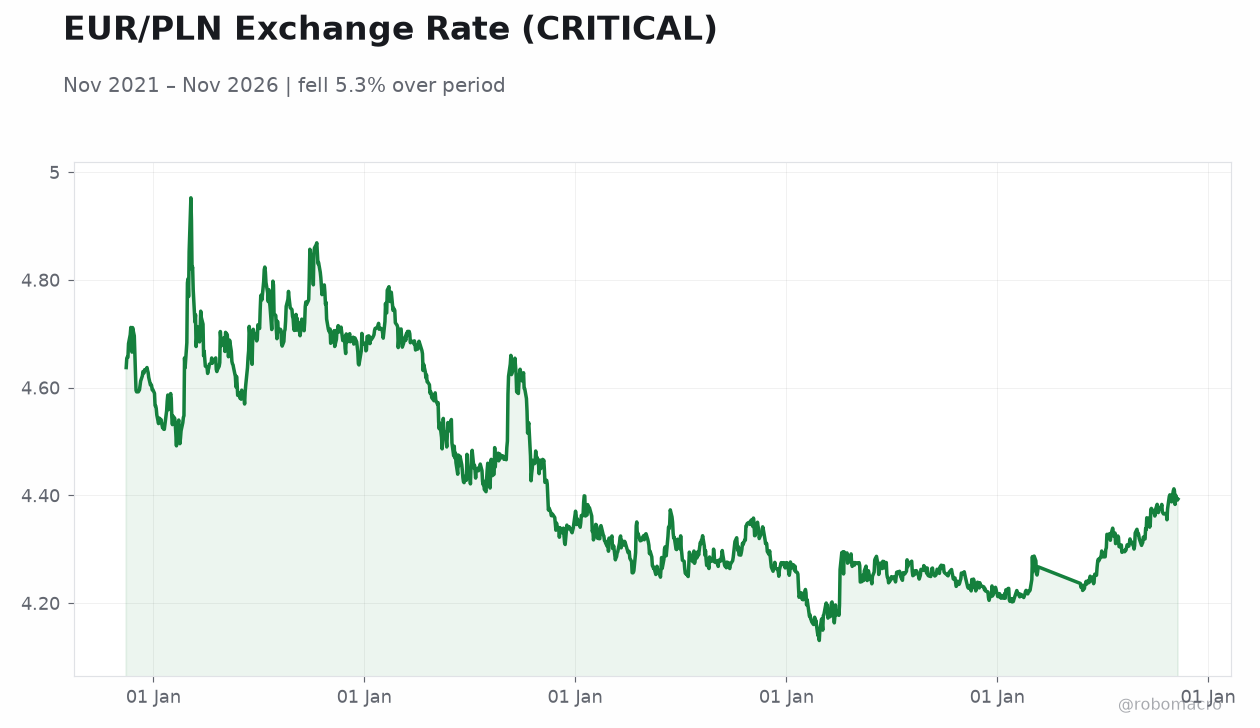
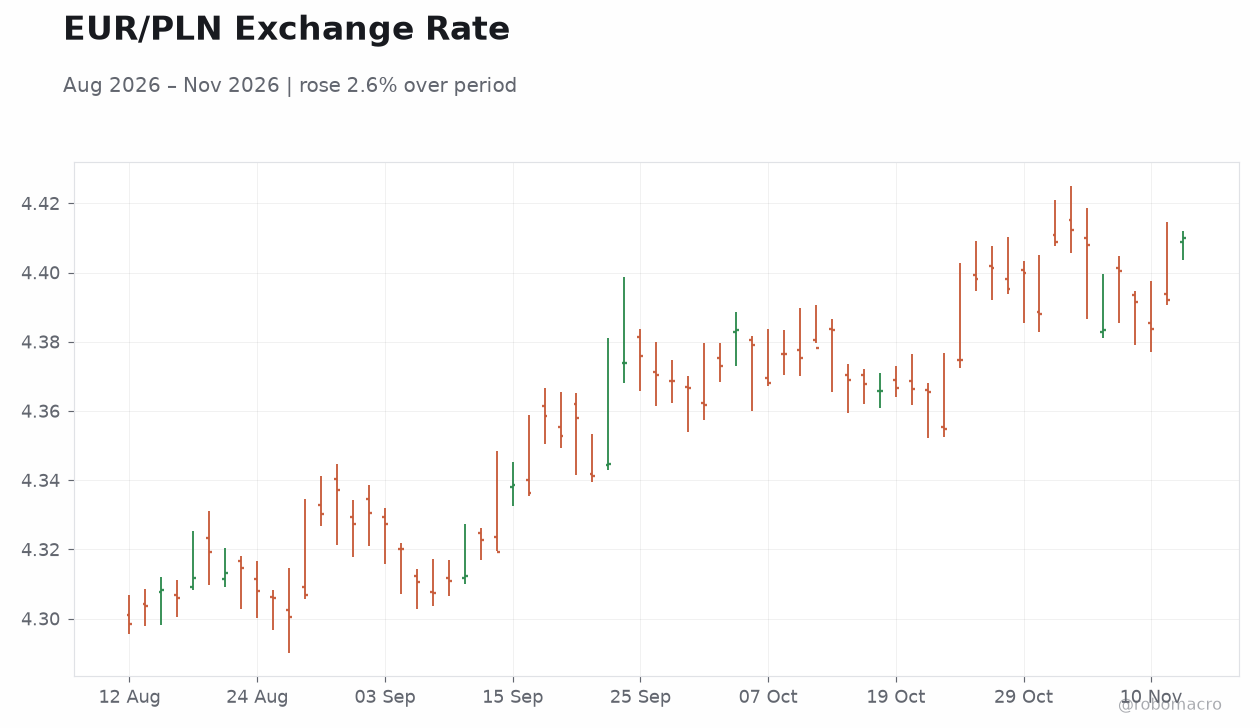
| EUR/PLN | 4.41 | +0.41% |
| EUR/HUF | 364.49 | +0.23% |
| EUR/CZK | 24.38 | +0.19% |
| USD/TRY | 50.24 | +0.06% |
| Brent Crude | 91.67 | -1.18% |
| Gold | 3,976.60 | -0.60% |
| Bitcoin | 73,525.97 | -0.26% |
| Poland 10Y Govt Yield | - | - |
| Hungary 10Y Govt Yield | - | - |
Prior Economic Events
| Data | Prior | Cons | Actual |
|---|---|---|---|
| Industrial Production Year-over-Year | -1.70 | - | 2.60 |
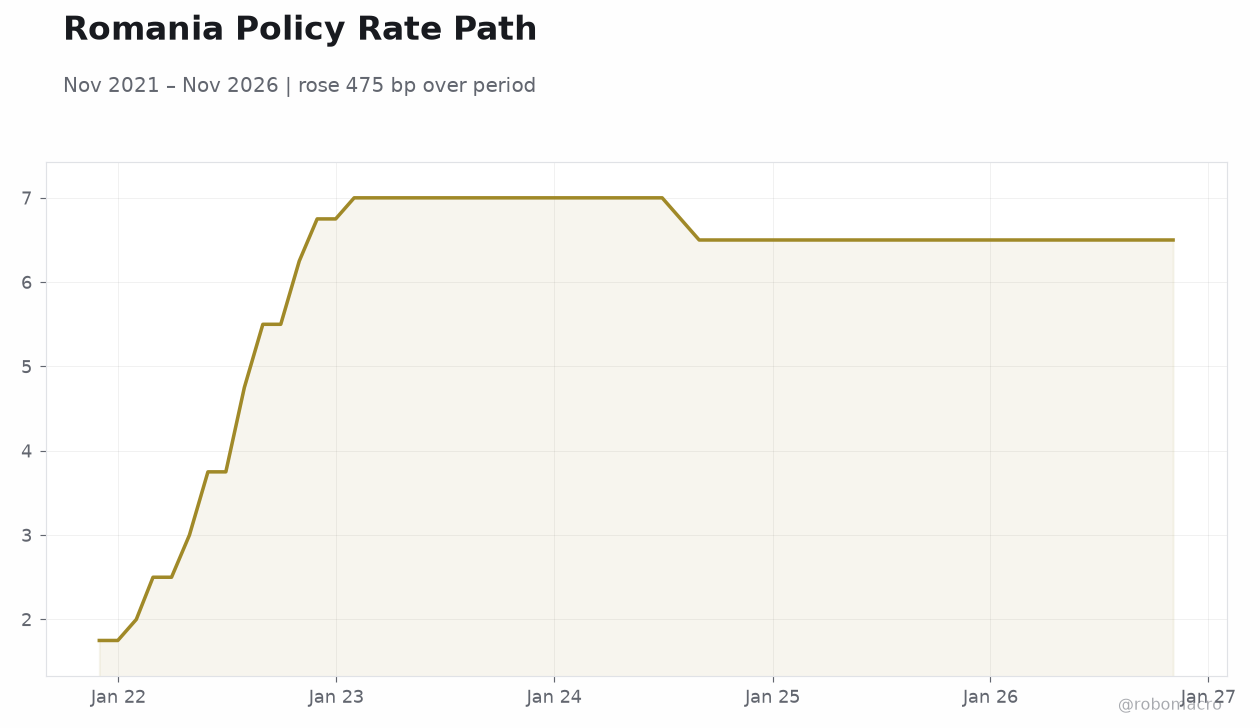 Romania Policy Rate Path | Type: macro_line | Romania policy rate (%): 6.5 (2026-11-03) | Range: 1.75–7 | Trend(5pt): 1.75,7,7,6.5,6.5
Today's Economic Events
| Data | Prior | Cons | Time |
|---|---|---|---|
| Central Bank Interest Rate Decision | 6.50 | - | 08:00 |
| Friday (2026-11-13) | |||
| GDP Growth Quarter-over-Quarter Preliminary | 1 | - | 03:30 |
| GDP Growth Year-over-Year Preliminary | 3.90 | 3.70 | 03:30 |
- Romania's BNR is expected to hold its policy rate at 6.50% today, with markets focused on the accompanying statement for any shift in the inflation outlook amid sticky core pressures.
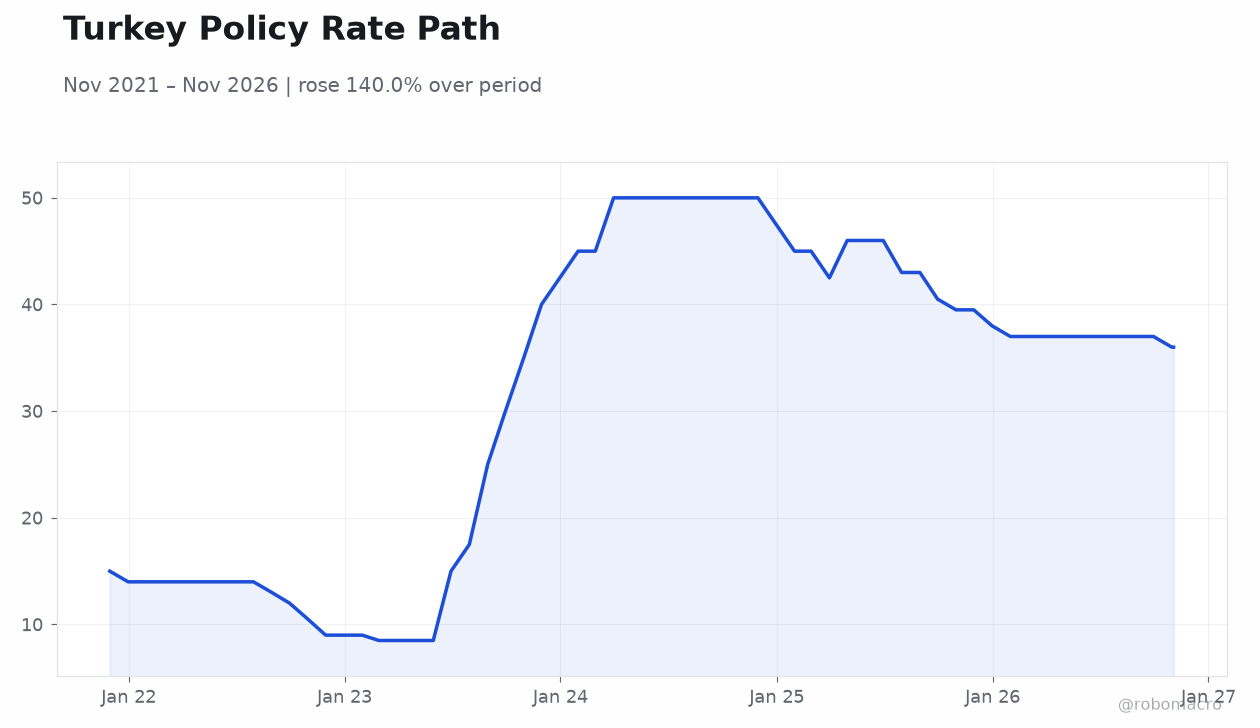
- Turkish industrial production rebounded in November, printing +2.6% y/y versus a prior -1.7%, signaling a modest manufacturing recovery despite tight monetary conditions.
- CEE FX remains on the back foot, with EUR/PLN up 0.41% and EUR/HUF up 0.23%, while Polish GDP preliminary data due Friday will test the regional growth narrative.
Yesterday's Recap
Turkey's industrial production surprised to the upside, printing +2.6% y/y in November against a previous reading of -1.7%, a swing that suggests manufacturing activity is stabilizing after a prolonged contraction under the CBRT's restrictive stance. The print is notable given the scale of lira weakness and elevated input costs, and it may temper expectations of further aggressive easing. Elsewhere in the region, FX markets leaned toward euro strength, with EUR/PLN rising 0.41% to 4.41 and EUR/HUF up 0.23% to 364.49, while EUR/CZK edged 0.19% higher to 24.38.
Polish equities softened, with iShares Poland down 0.55% to 43.51, reflecting cautious positioning ahead of Friday's preliminary GDP release. Turkish equities were essentially flat, with the BIST 100 up 0.04% at 11,666.40, and USD/TRY nudged 0.06% higher to 50.24, underscoring the lira's persistent grind weaker. Regional bond markets were quiet, with no notable yield moves reported.
The Day Ahead
The dominant event is Romania's BNR rate decision at 08:00 ET, where the central bank is widely expected to keep the policy rate at 6.50%, with attention on the tone of the statement given the region's disinflation trend versus lingering fiscal and wage pressures. Poland's preliminary Q3 GDP data lands Friday at 03:30 ET, with consensus pointing to 3.7% y/y growth, a slowdown from the prior 3.9%, alongside a quarter-over-quarter print that will be watched for momentum into year-end. The Polish release is the key regional growth marker this week and will inform NBP's calculus on the timing of any further easing.
No other major Emerging Europe releases are scheduled, leaving markets to trade off the Romanian decision and positioning into the Polish GDP print. Hungarian and Czech data calendars are empty, so flow will be driven by euro-area spillovers and global risk sentiment.
Other Economic Notes
Poland's defense buildup continues to draw attention, with the state-owned Polish Armaments Group playing a central role in the rearmament drive, a theme that supports the industrial and capex outlook even as the group faces its own operational challenges. ↓ p.2