Emerging Europe Macro Daily(Beta Mode)
Poland Slows, Hungary Rate Call Looms
Market Snapshot
| Asset | Level | Change |
|---|---|---|
| BIST 100 | 11,842.80 | +0.27% |
| iShares Poland | 44.13 | +0.43% |
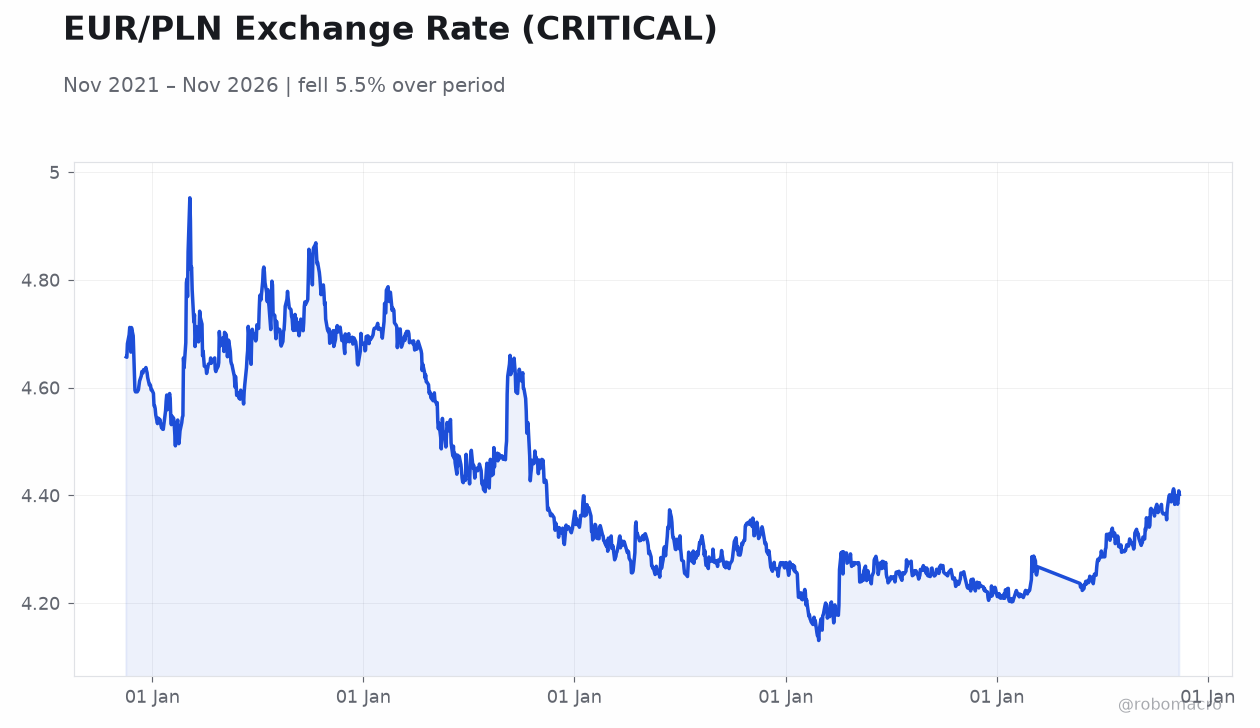
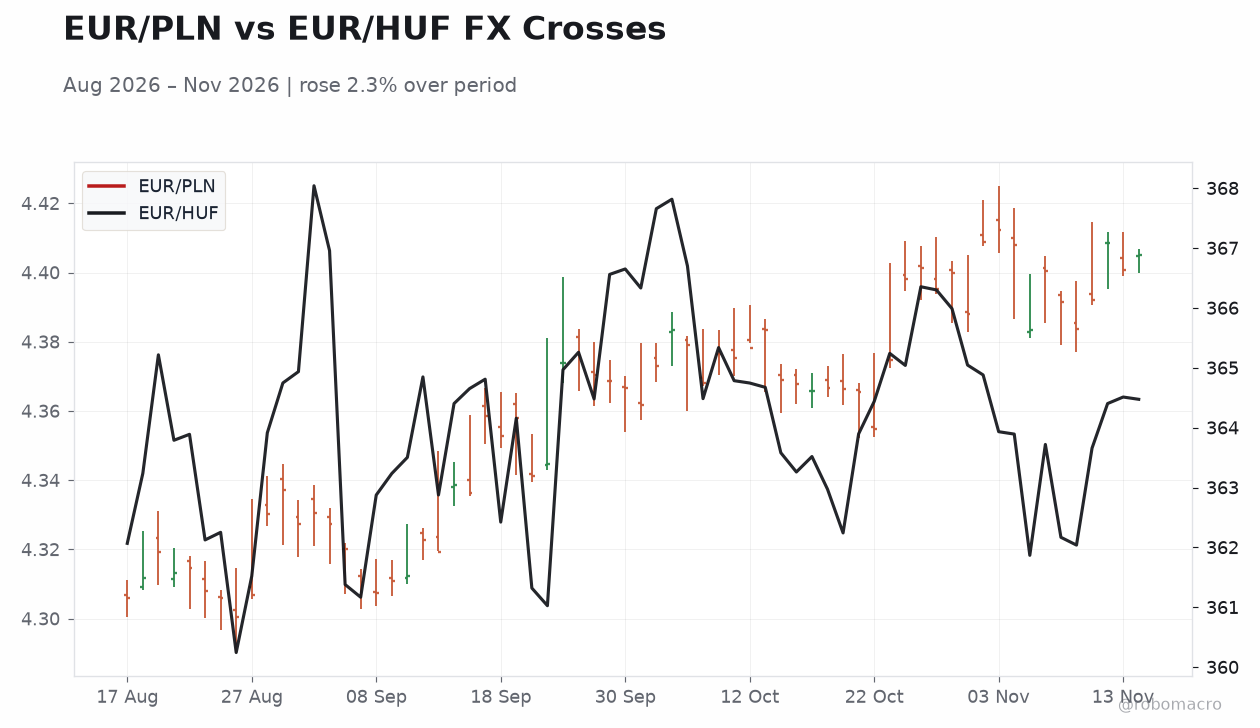
| EUR/PLN | 4.41 | +0.10% |
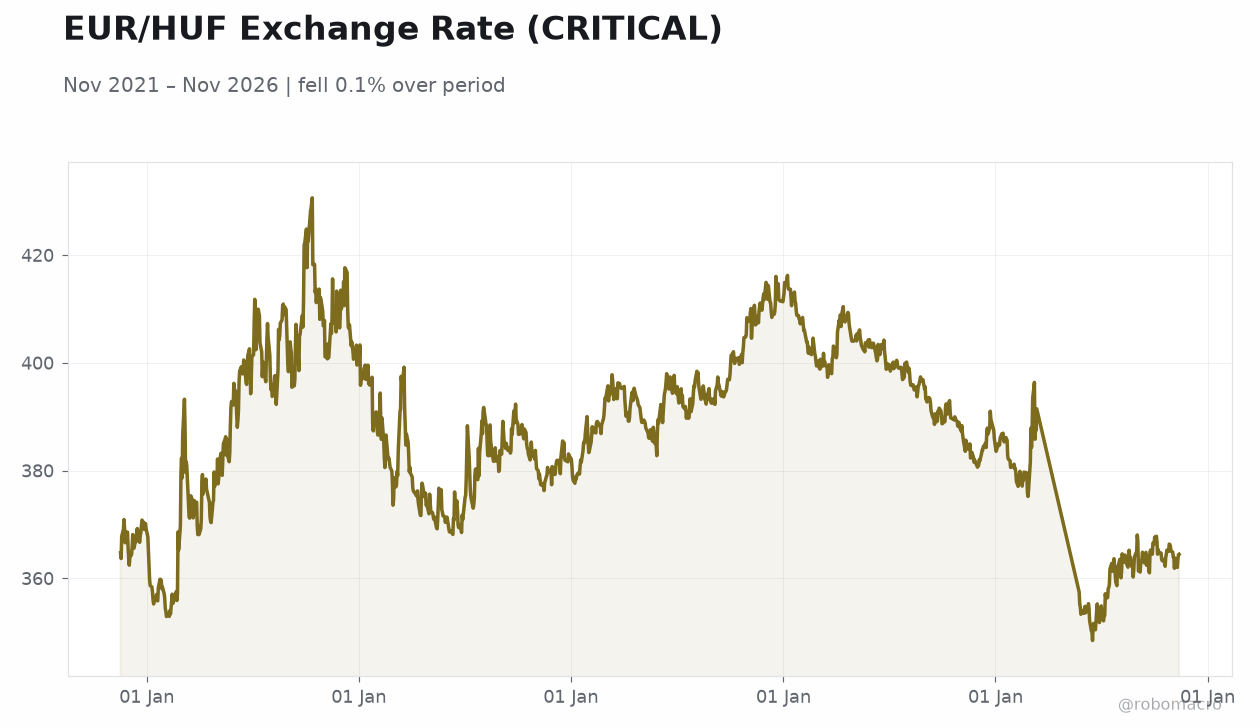
| EUR/HUF | 364.45 | -0.02% |
| EUR/CZK | 24.36 | -0.06% |
| USD/TRY | 50.38 | +0.20% |
| Brent Crude | 95.50 | -0.35% |
| Gold | 3,869.10 | -0.44% |
| Bitcoin | 64,583.81 | +0.71% |
| Poland 10Y Govt Yield | - | - |
| Hungary 10Y Govt Yield | - | - |
Prior Economic Events
| Data | Prior | Cons | Actual |
|---|---|---|---|
| No events available | |||
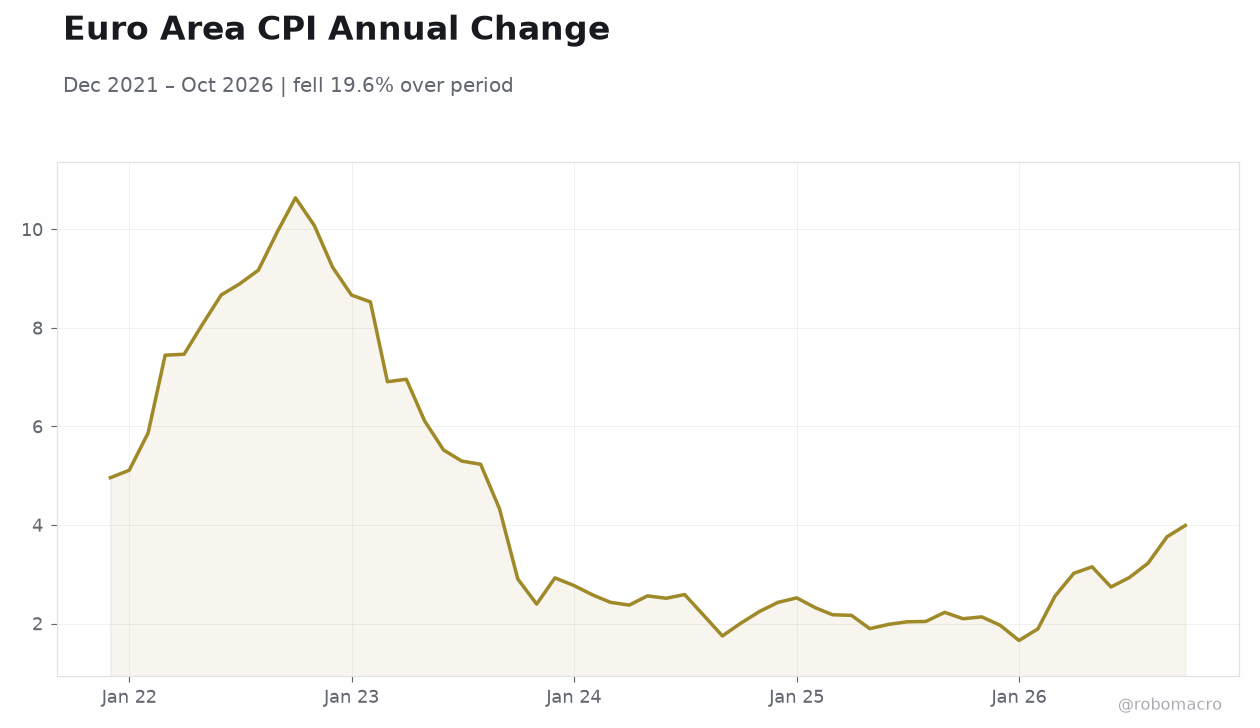 Euro Area CPI Annual Change | Type: macro_line | EA19 CPI YoY (%): 3.99 (2026-10-01) | Range: 1.656–10.64 | Trend(6pt): 4.96,8.528,2.374,1.984,3.226,3.99
Today's Economic Events
| Data | Prior | Cons | Time |
|---|---|---|---|
| No events available | |||
- Poland's GDP growth of 3.6% keeps it ahead of regional peers even as activity cools and employment stalls, with ING still flagging 50bp of NBP hikes in early 2027.
- Hungary's MNB meets tomorrow with the base rate at 5.50% after the August 25 cut; regional price data headline the week.
- EUR/PLN at 4.41 and EUR/HUF at 364.45 show limited FX stress, while USD/TRY at 50.38 keeps lira depreciation on a slow grind.
Yesterday's Recap
Poland was the dominant story. GDP growth of 3.6% was reported, with coverage framing it as a slowdown that nonetheless outpaces regional peers — a pattern consistent with the region's broader loss of momentum as euro-area expansion cools. The accompanying detail that employment has stalled is the more important signal: growth is being carried by investment and net trade rather than the labour market, which limits the pass-through to household consumption and argues against an imminent inflation flare.
ING's call for 50bp of NBP tightening in early 2027 sits awkwardly against that backdrop, but with Polish CPI at 3.91% YoY the central bank's real rate remains only modestly positive, leaving room for a hawkish bias if services inflation proves sticky. Markets were quiet: iShares Poland edged up 0.43%, EUR/PLN firmed 0.10% to 4.41, and EUR/HUF and EUR/CZK were essentially flat at 364.45 and 24.36 respectively. Turkey's BIST 100 added 0.27% while USD/TRY rose 0.20% to 50.38, a textbook crawl that keeps real lira returns negative.
Brent slipped 0.35% to $95.50 and gold fell 0.44%, offering no fresh inflation impulse to the region's energy-importing economies.
The Day Ahead
Hungary's MNB rate decision on November 17 is the week's principal event, with the base rate at 5.50% following the 25bp cut on August 25 and a hold on October 20; the committee's tone on HUF stability and the inflation path will matter more than the decision itself. Regional price data also lands, giving the first read on whether the disinflation that allowed the MNB's August easing is holding through the autumn. Poland's data calendar is light after the GDP print, so attention shifts to whether NBP officials use public appearances to push back on or endorse ING's 2027 hike thesis.
Romania and Turkey have no first-tier releases scheduled, leaving BNR commentary and CBRT reserve dynamics as the secondary focus. Czech markets will trade off the CNB's November 5 hike to 4.00% and any follow-through in EUR/CZK.
Other Economic Notes
Poland's growth composition deserves scrutiny: a 3.6% print with stalling employment implies weak productivity gains and a reliance on capital-intensive drivers that may not sustain into 2027. The region's shared vulnerability remains energy import dependency, and with Brent near $95.50 the terms-of-trade drag is persistent rather than acute. ↓ p.2