Emerging Europe Macro Daily(Beta Mode)
MNB Holds at 5.5%, Forint Slides as CEE FX Weakens
Market Snapshot
| Asset | Level | Change |
|---|---|---|
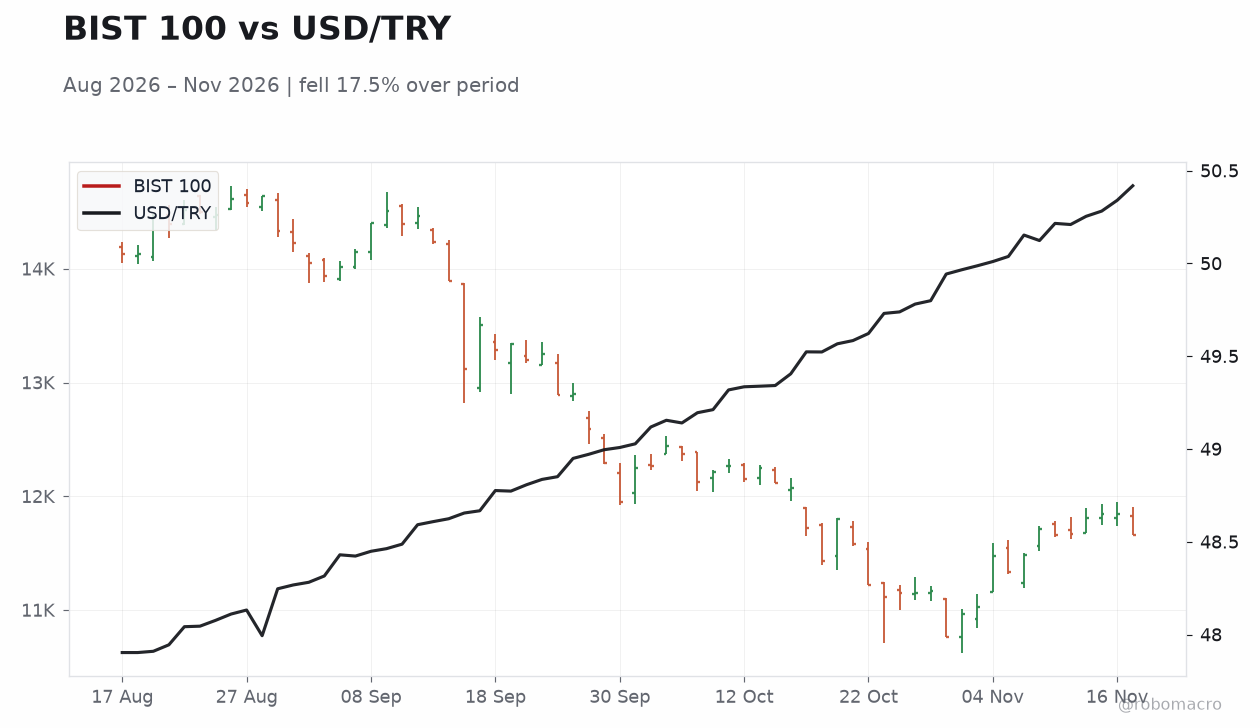
| BIST 100 | 11,661.00 | -1.53% |
| iShares Poland | 43.19 | -1.26% |
| EUR/PLN | 4.40 | +0.10% |
| EUR/HUF | 366.58 | +0.72% |
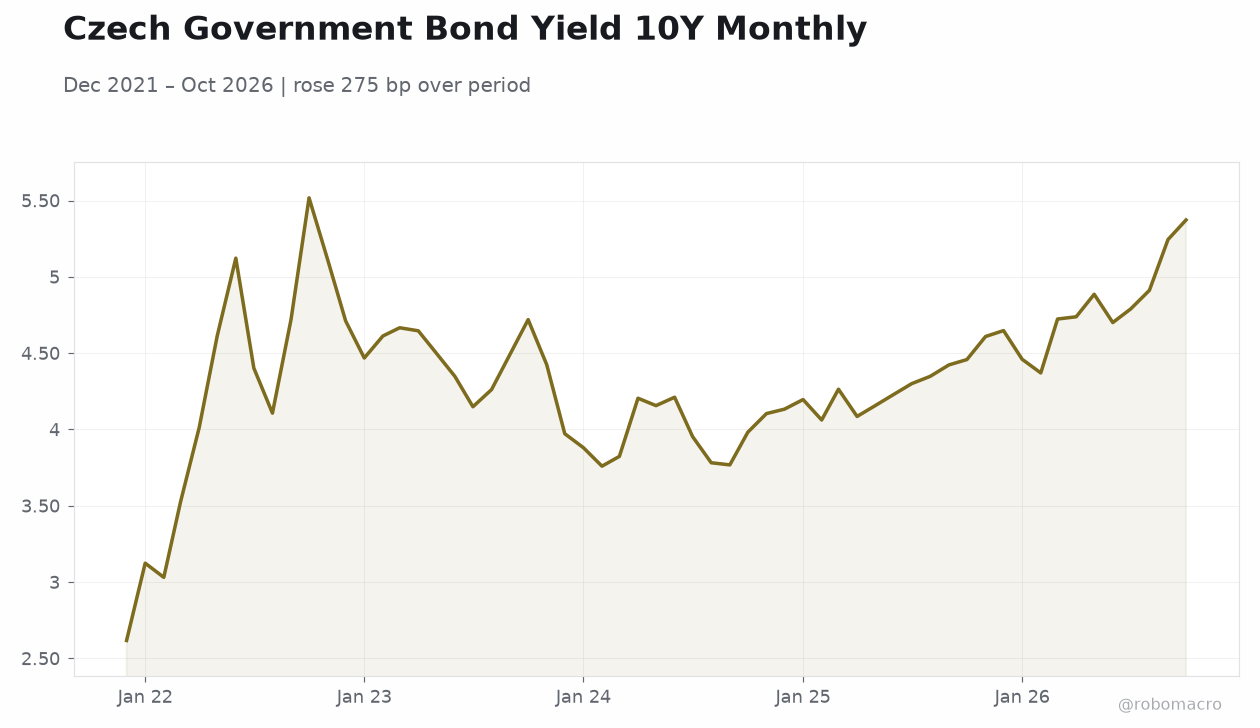
| EUR/CZK | 24.36 | -0.18% |
| USD/TRY | 50.44 | +0.04% |
| Brent Crude | 92.55 | -0.63% |
| Gold | 3,793.50 | -1.83% |
| Bitcoin | 64,601.21 | -0.39% |
| Poland 10Y Govt Yield | - | - |
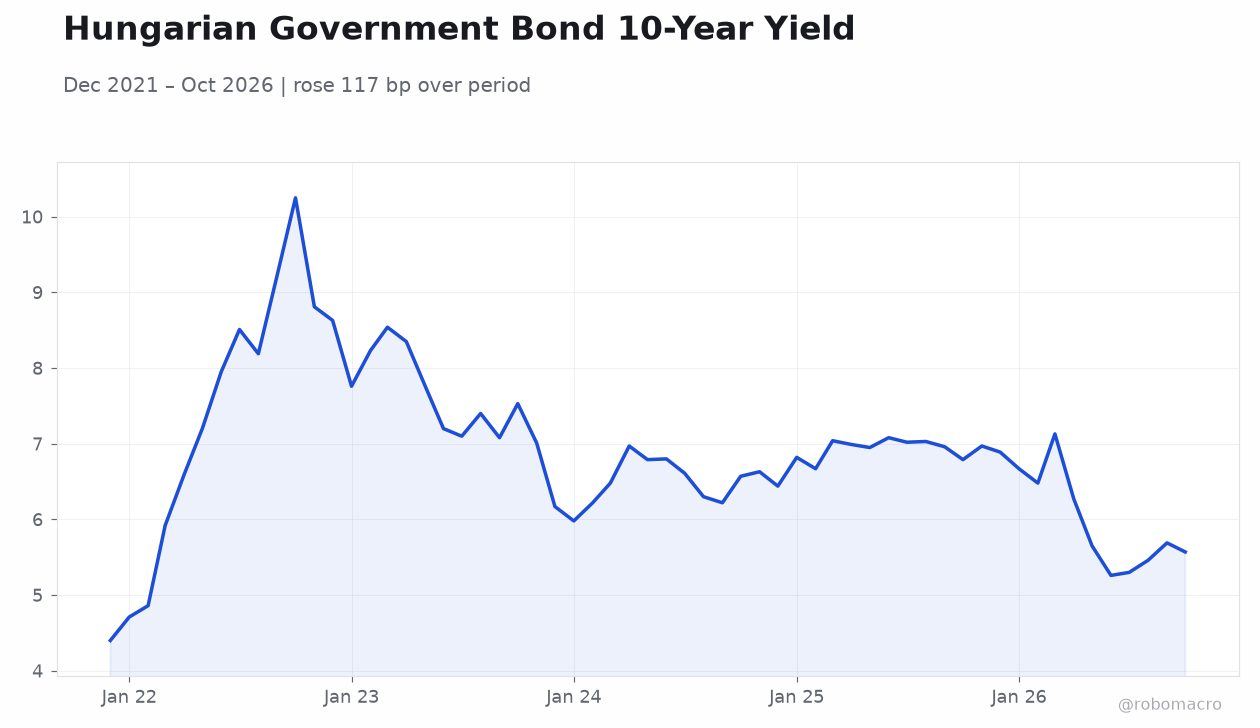
| Hungary 10Y Govt Yield | - | - |
Prior Economic Events
| Data | Prior | Cons | Actual |
|---|---|---|---|
| Central Bank Interest Rate Decision | 5.50 | 5.50 | 5.50 |
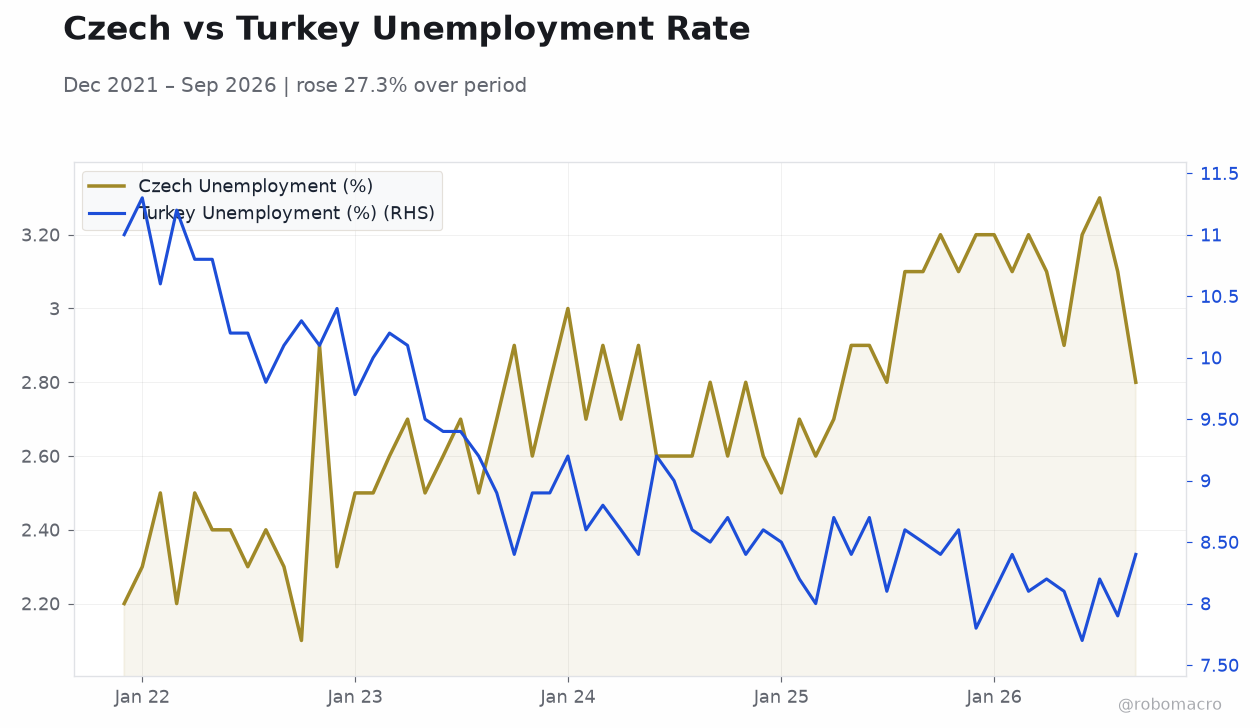 Czech vs Turkey Unemployment Rate | Type: macro_line | Czech Unemployment (%): 2.8 (2026-09-01) | Range: 2.1–3.3 | Trend(6pt): 2.2,2.5,2.7,2.9,3.1,2.8 | Turkey Unemployment (%): 8.4 (2026-09-01) | Range: 7.7–11.3 | Trend(6pt): 11,10,8.6,8.7,7.9,8.4
Today's Economic Events
| Data | Prior | Cons | Time |
|---|---|---|---|
| No events available | |||
- Hungary's MNB left its base rate unchanged at 5.50% for a third consecutive month, citing elevated global risks and a recent uptick in inflation.
- The forint was the region's worst performer, with EUR/HUF up 0.72% to 366.58, while EUR/PLN edged 0.10% higher to 4.40 and EUR/CZK slipped 0.18% to 24.36.
- Regional equities softened, with iShares Poland down 1.26% and Turkey's BIST 100 off 1.53%, as Brent crude fell 0.63% to $92.55 and gold dropped 1.83%.
Yesterday's Recap
Hungary's central bank dominated the regional calendar on Tuesday, holding its base rate at 5.50% for a third straight month as policymakers weighed an inflation uptick against a still-fragile external backdrop. The MNB's accompanying statement pointed to improving domestic risk perception and inflation prospects, but flagged uncertainty around the global environment as reason for continued caution. The forint bore the brunt of the decision, with EUR/HUF climbing 0.72% to 366.58, the sharpest move among CEE currencies.
Poland's zloty also softened modestly, EUR/PLN rising 0.10% to 4.40, while the Czech koruna bucked the trend, EUR/CZK easing 0.18% to 24.36. Regional equities were under pressure: iShares Poland fell 1.26% and Turkey's BIST 100 dropped 1.53%, with USD/TRY essentially flat at 50.44. In Warsaw, headlines focused on the NBP's suspension of transfers to the Constitutional Tribunal, with Finance Minister Andrzej Domański seeking alternative funding solutions — a reminder of lingering institutional friction between the central bank and the government.
The Day Ahead
The regional calendar is empty on Wednesday, with no scheduled Emerging Europe data releases or central bank events across Poland, Czech Republic, Hungary, Romania, or Turkey. Attention will therefore shift to secondary market flows and any commentary from central bank officials following Tuesday's MNB decision. With no domestic catalysts, CEE currencies will take their cue from euro-area sentiment and broader risk appetite.
Traders will also watch for follow-through in Polish rates after the NBP-Tribunal funding dispute, which could colour perceptions of institutional risk. The empty calendar leaves room for positioning ahead of Thursday's session, though no major regional prints are flagged.
Other Economic Notes
The NBP's suspension of transfers to Poland's Constitutional Tribunal has reopened a fiscal-institutional debate in Warsaw, with the finance ministry scrambling for alternative funding channels. ↓ p.2