Emerging Europe Macro Daily(Beta Mode)
Hungary Holds at 5.50%, Forint Falls 1.5%
Market Snapshot
| Asset | Level | Change |
|---|---|---|
| BIST 100 | 11,400.10 | -0.67% |
| iShares Poland | 42.00 | -1.69% |
| EUR/PLN | 4.44 | +0.63% |
| EUR/HUF | 373.36 | +1.45% |
| EUR/CZK | 24.43 | +0.20% |
| USD/TRY | 50.55 | +0.17% |
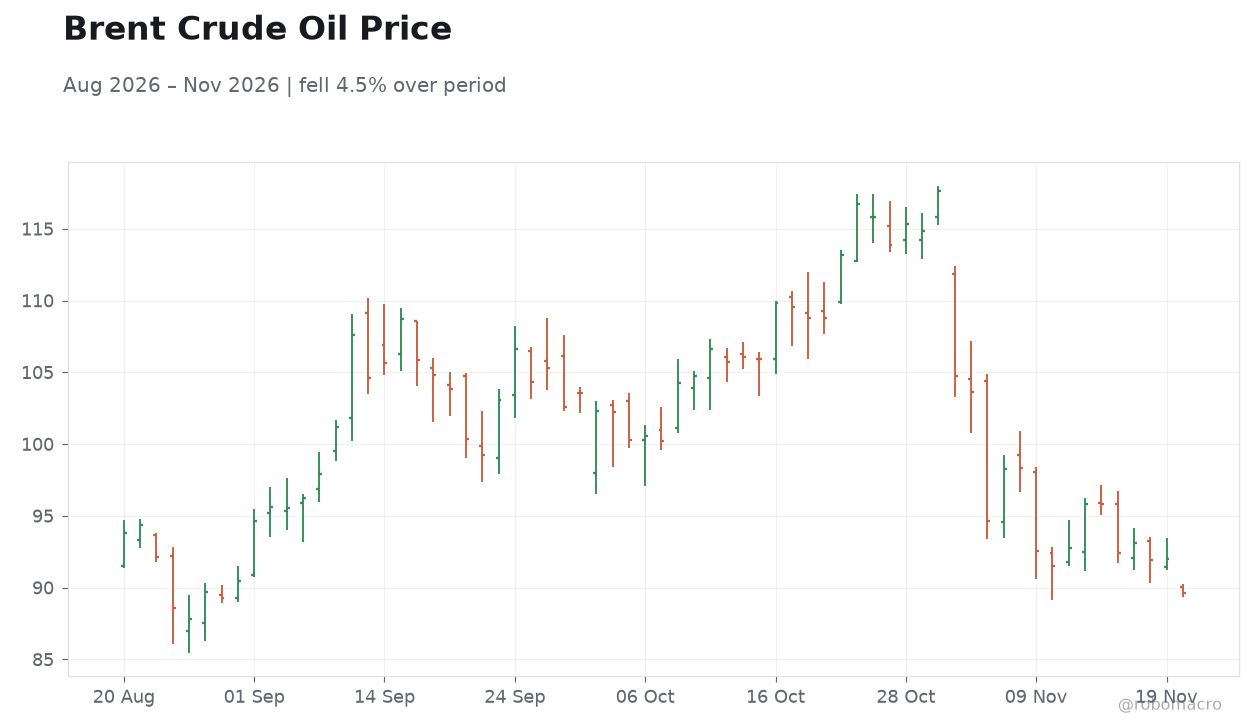
| Brent Crude | 89.64 | -2.54% |
| Gold | 3,530.00 | -4.22% |
| Bitcoin | 61,809.31 | -1.87% |
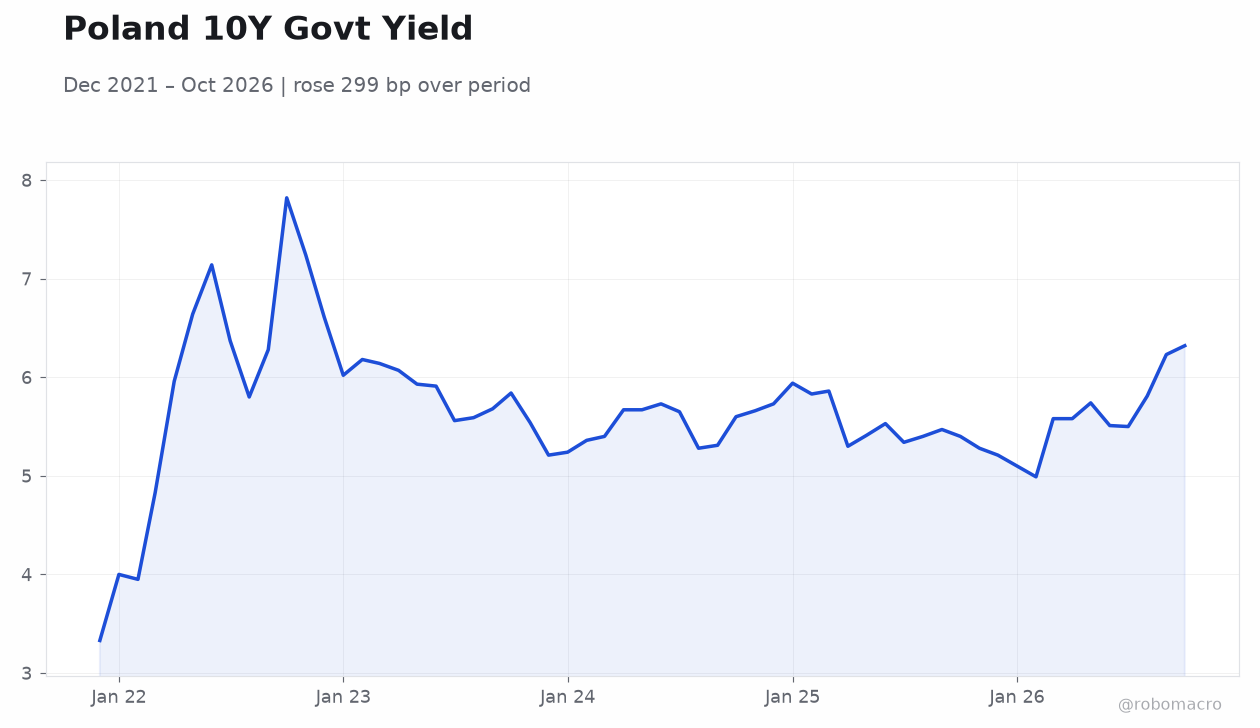
| Poland 10Y Govt Yield | - | - |
| Hungary 10Y Govt Yield | - | - |
Prior Economic Events
| Data | Prior | Cons | Actual |
|---|---|---|---|
| Central Bank Interest Rate Decision | 5.50 | 5.50 | 5.50 |
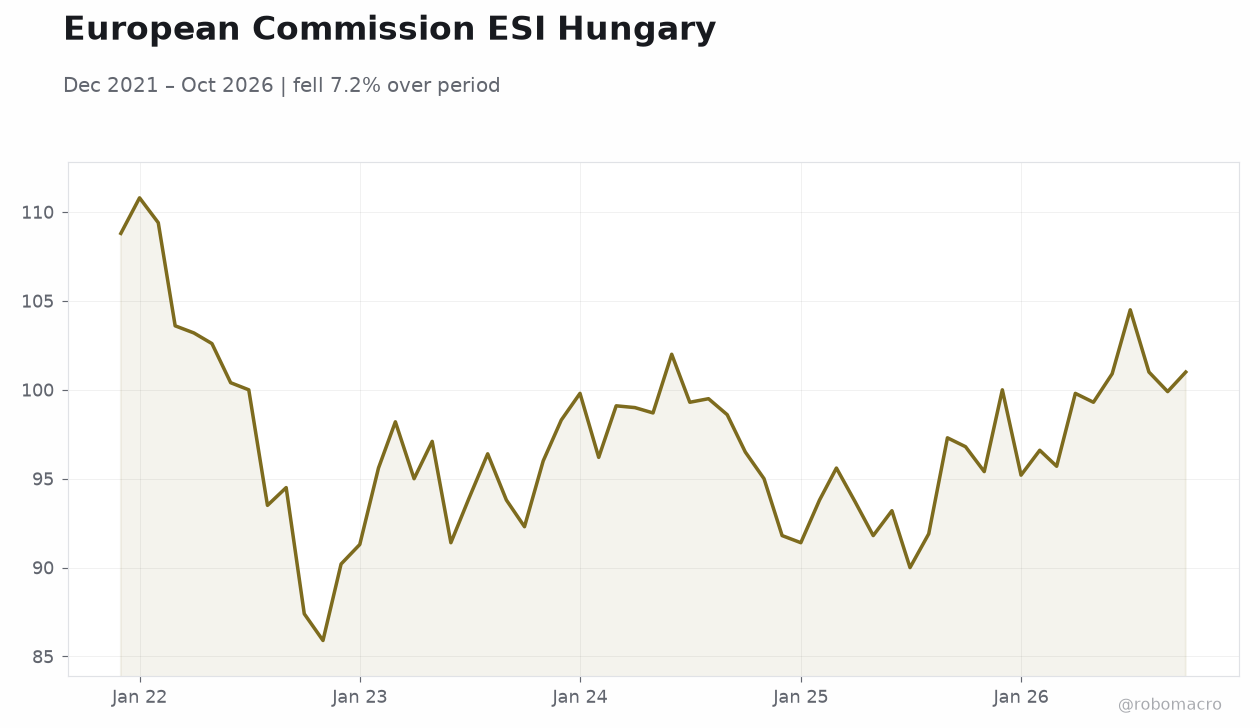
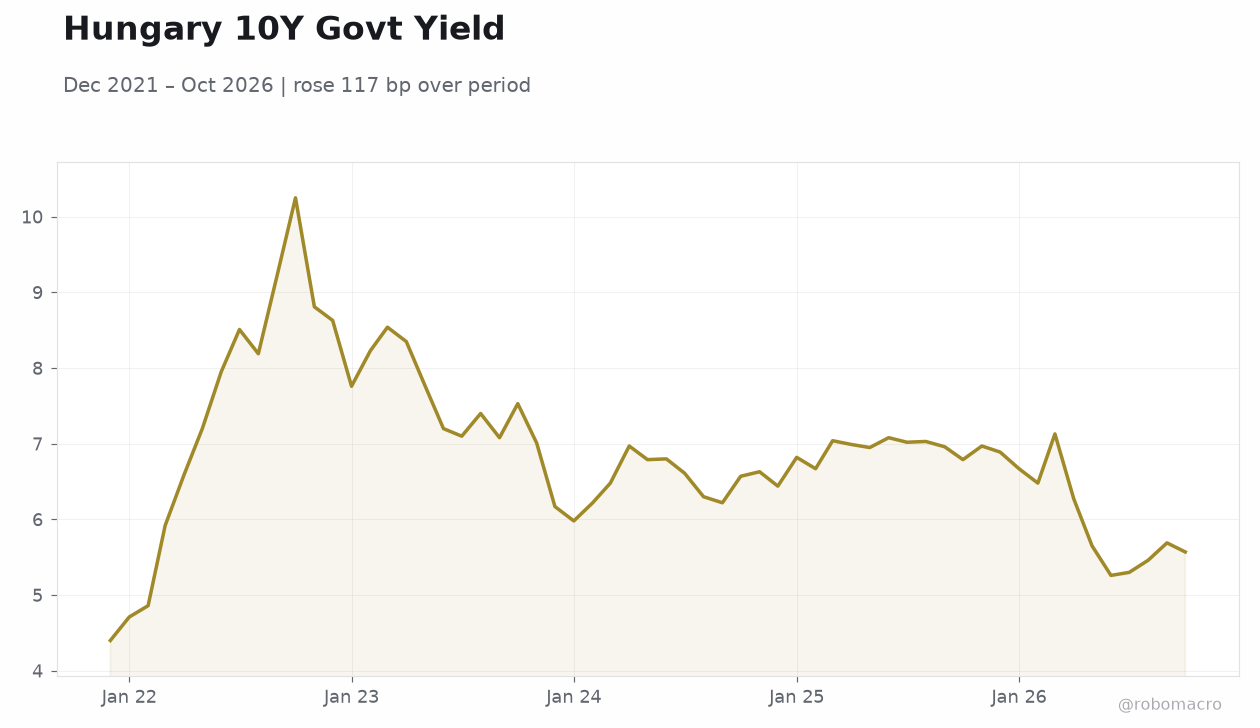 Hungary 10Y Govt Yield | Type: macro_line | Hungary 10Y yield (%): 5.57 (2026-10-01) | Range: 4.4–10.25 | Trend(6pt): 4.4,8.23,6.97,7.08,5.46,5.57
Today's Economic Events
| Data | Prior | Cons | Time |
|---|---|---|---|
| Business Confidence Index | 99.80 | - | 02:00 |
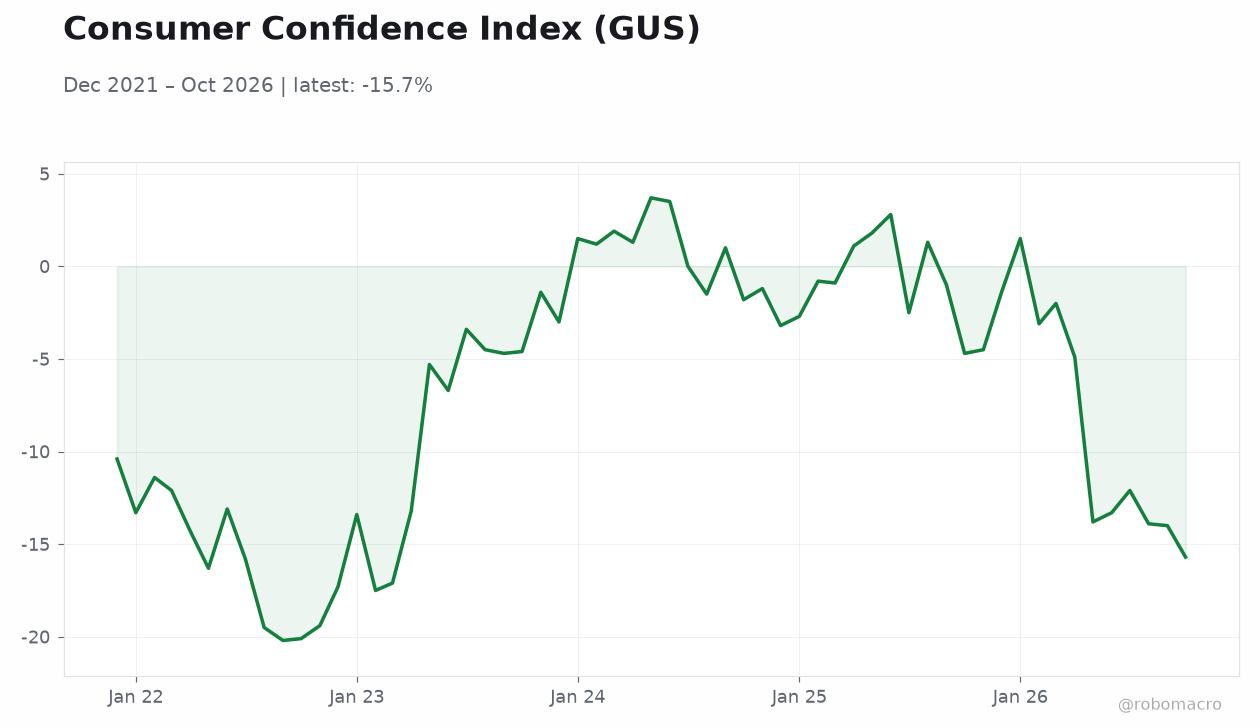
| Consumer Confidence Index | 84.80 | - | 02:00 |
- Hungary's central bank held its policy rate at 5.50% on Nov 17, matching consensus and the prior level; EUR/HUF jumped 1.45% to 373.36 as the forint underperformed the region.
- EUR/PLN rose 0.63% to 4.44 and iShares Poland fell 1.69%, with Polish markets pressured by domestic institutional friction over frozen Constitutional Tribunal payments.
- Turkey's business and consumer confidence indices print today at 02:00 ET; Brent's 2.54% slide to $89.64 eases CEE import bills.
Yesterday's Recap
Hungary's central bank met on Nov 17 and the committee voted to hold the policy rate at 5.50%, matching consensus and the prior level. The forint bore the brunt of the region's FX move, with EUR/HUF climbing 1.45% to 373.36 — a notably sharper depreciation than peers. Poland's zloty also weakened, EUR/PLN rising 0.63% to 4.44, while iShares Poland dropped 1.69% to 42.00.
The Czech koruna was comparatively stable, EUR/CZK edging up 0.20% to 24.43. Turkey's BIST 100 slipped 0.67% to 11,400.10 and USD/TRY firmed 0.17% to 50.55, a modest move by Turkish standards. Domestic Polish politics added noise: the finance ministry confirmed work is underway to restore payments from National Bank of Poland accounts frozen for the Constitutional Tribunal, a technical dispute with limited direct macro impact but a reminder of institutional friction in Warsaw.
Regional bonds tracked the global backdrop, with gold's 4.22% plunge and Brent's 2.54% decline to $89.64 signaling a broader risk-off tone in commodities.
The Day Ahead
Turkey's November business confidence index (prior 99.8) and consumer confidence index (prior 84.8) are due at 02:00 ET, the only scheduled Emerging Europe releases today. Both carry medium impact and no consensus is published, so the prints will be read against the prior levels for directional signal on Turkish domestic demand. A sub-100 business confidence reading would extend the sub-threshold trend and reinforce the case for cautious CBRT easing; a consumer confidence rebound from 84.8 would suggest household sentiment is stabilizing despite elevated inflation.
No major Emerging Europe data is scheduled for tomorrow, leaving today's Turkish prints as the sole regional catalyst. Polish markets will continue to digest the NBP–Tribunal payments dispute, and the zloty's reaction to EUR/PLN at 4.44 will be watched for follow-through.
Other Economic Notes
Poland's government is positioning itself as a hub for Ukraine reconstruction, with the finance minister highlighting support for businesses involved in rebuilding at the Ukraine Recovery Conference. That theme matters for Polish construction and logistics names and for EU fund flows into the region. ↓ p.2