Emerging Europe Macro Daily(Beta Mode)
Missile Fallout Hits PLN; CZ Stagflation Warning
Market Snapshot
| Asset | Level | Change |
|---|---|---|
| BIST 100 | 11,131.30 | -2.36% |
| iShares Poland | 39.83 | -4.92% |
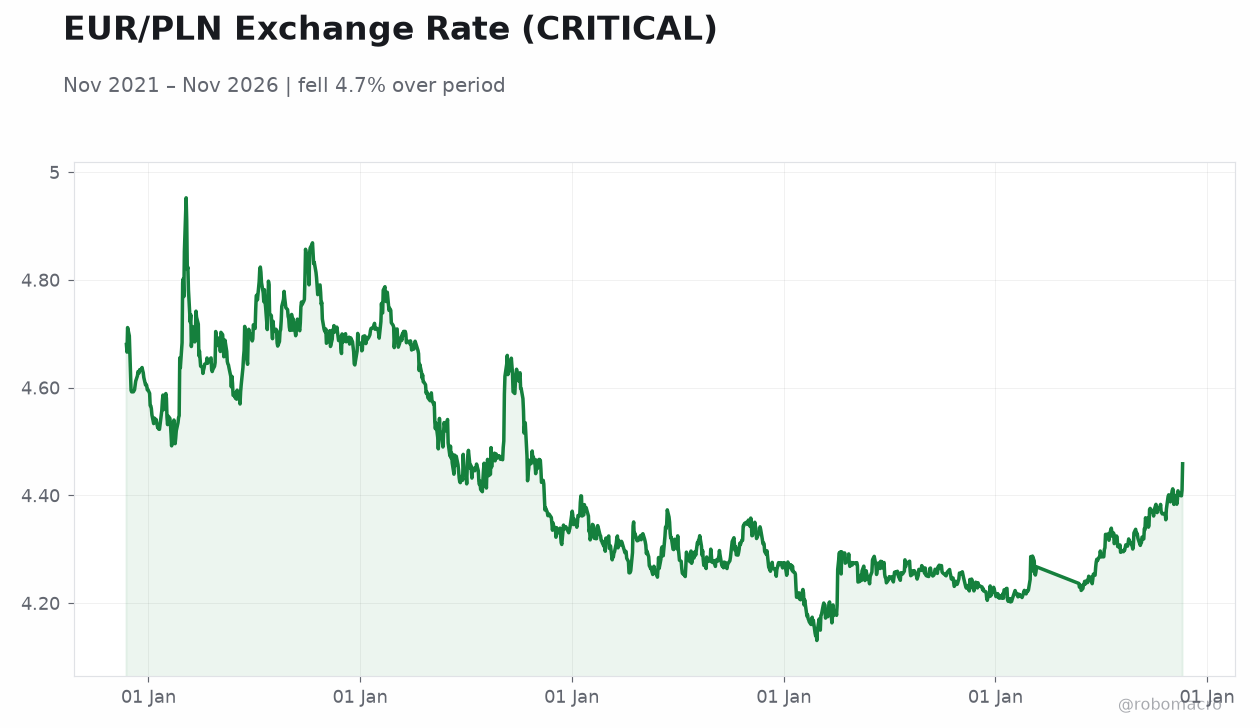
| EUR/PLN | 4.45 | +0.43% |
| EUR/HUF | 372.00 | -0.21% |
| EUR/CZK | 24.45 | +0.17% |
| USD/TRY | 50.59 | +0.05% |
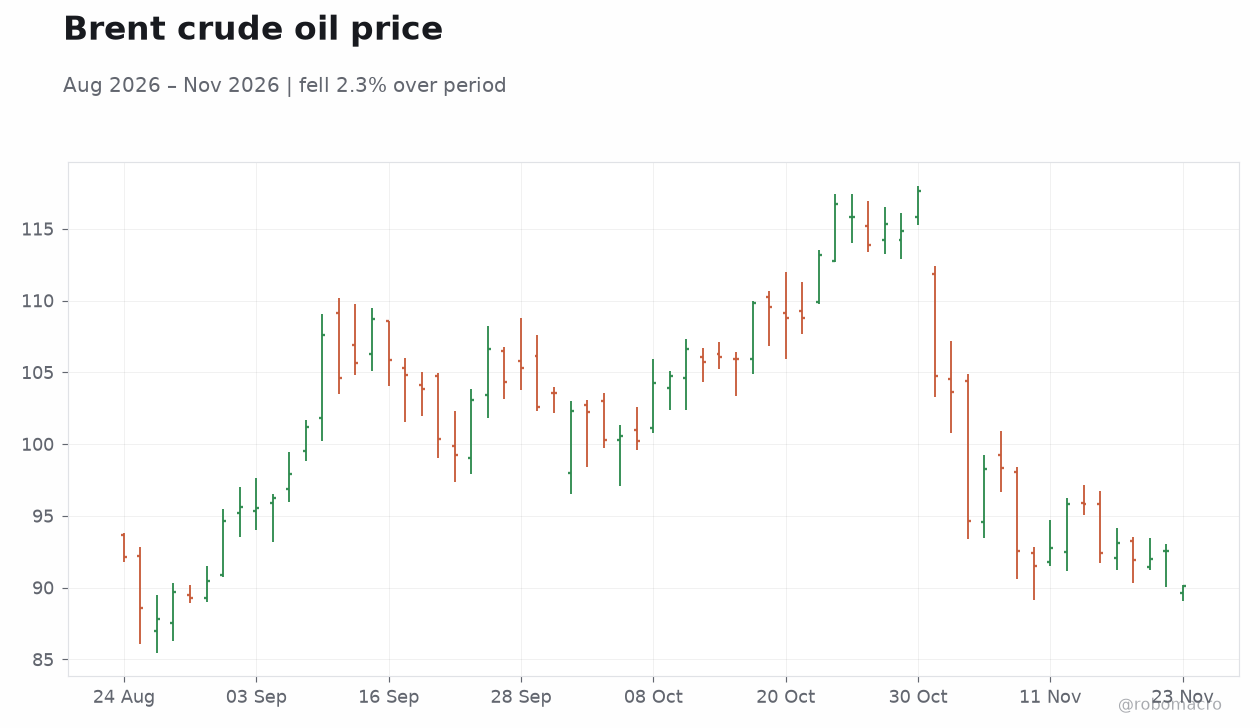
| Brent Crude | 89.99 | -2.79% |
| Gold | 3,612.70 | +2.77% |
| Bitcoin | 61,362.40 | +2.11% |
| Poland 10Y Govt Yield | - | - |
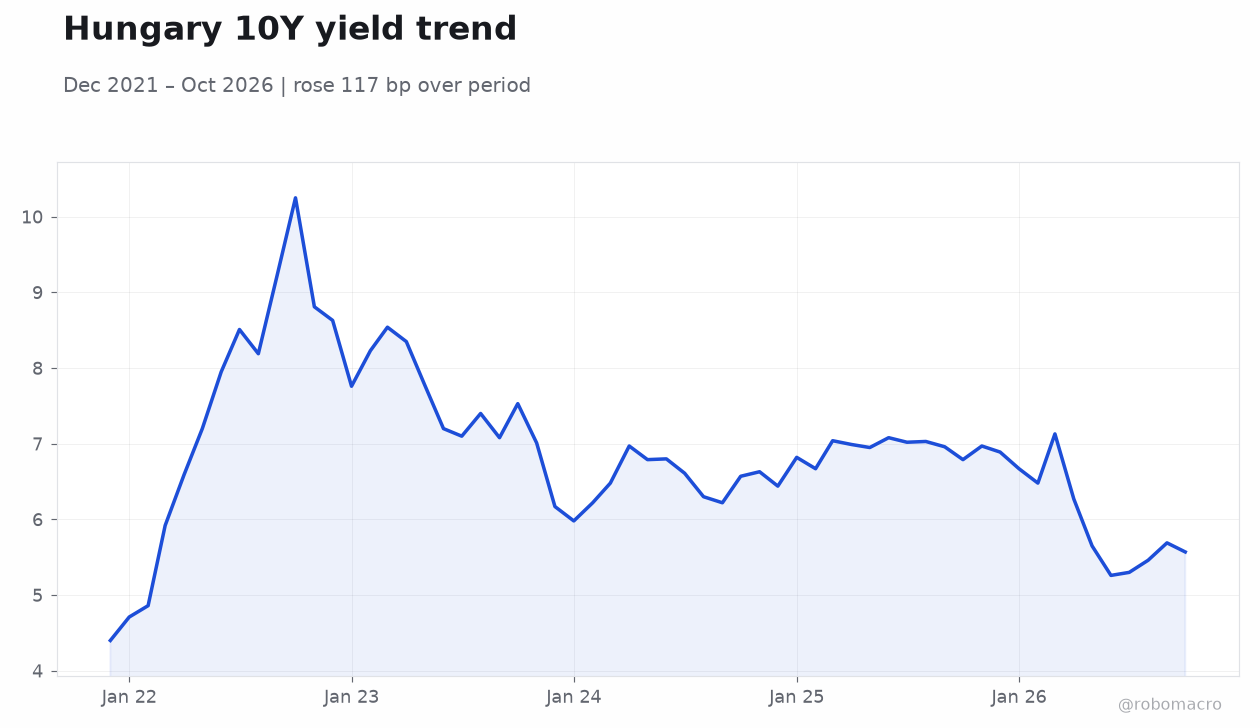
| Hungary 10Y Govt Yield | - | - |
Prior Economic Events
| Data | Prior | Cons | Actual |
|---|---|---|---|
| No events available | |||
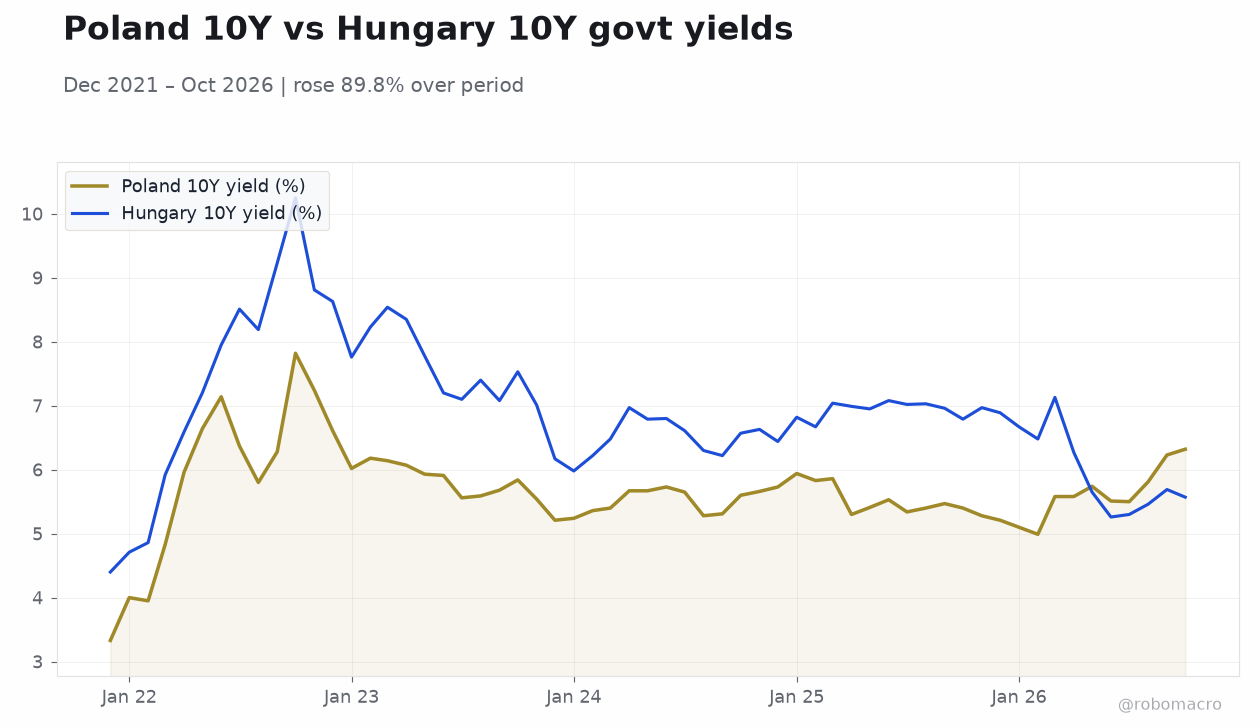 Poland 10Y vs Hungary 10Y govt yields | Type: macro_line | Poland 10Y yield (%): 6.32 (2026-10-01) | Range: 3.33–7.82 | Trend(6pt): 3.33,6.18,5.67,5.53,5.81,6.32 | Hungary 10Y yield (%): 5.57 (2026-10-01) | Range: 4.4–10.25 | Trend(6pt): 4.4,8.23,6.97,7.08,5.46,5.57
Today's Economic Events
| Data | Prior | Cons | Time |
|---|---|---|---|
| No events available | |||
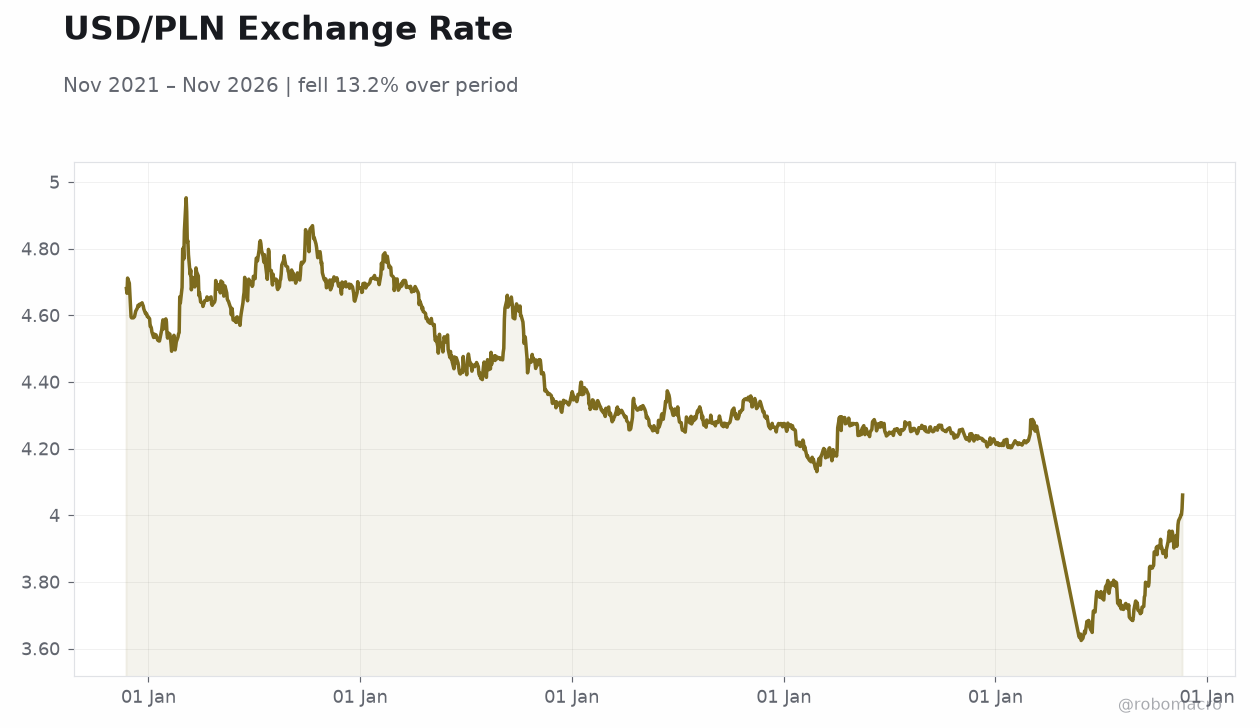
- Polish assets sold off sharply after Russian missiles crossed into Polish airspace, with iShares Poland down 4.92% and EUR/PLN up 0.43% to 4.45.
- CNB board member Seidler flags a stagflation dilemma for the Czech economy as energy-driven inflation collides with weak activity.
- Hungary's EU recovery fund assessment clears the way for roughly HUF 3,500bn in transfers, a meaningful FX and funding backstop.
Yesterday's Recap
Poland dominated the session as Prime Minister Tusk said a Russian cruise missile incursion into Polish airspace appeared "intentional," with two missiles and a suspected drone reportedly coming down on Friday; Warsaw called it a provocation, and no casualties or damage were reported. The risk-off response was pronounced: iShares Poland fell 4.92% and EUR/PLN rose 0.43% to 4.45, while the zloty's weakness stood out against a firmer forint, with EUR/HUF down 0.21% to 372.00 and EUR/CZK up 0.17% to 24.45. Turkey was also under pressure, with the BIST 100 down 2.36% to 11,131.30 and USD/TRY edging 0.05% higher to 50.59.
On the macro side, Bloomberg reported CNB board member Jakub Seidler describing the Czech economy as facing a stagflation shock, with higher energy prices fueling inflation while weighing on activity. In Hungary, Portfolio reported that the European Commission's preliminary assessment found Hungary had met the conditions for its €10bn recovery fund, opening the door to transfers of close to HUF 3,500bn. Separately, Bankier.pl reported that NBP likely added at least 10 tonnes of gold in November, consistent with its reserve-building program.
There were no scheduled regional data releases in the calendar for the session.
The Day Ahead
The calendar is empty for November 23, leaving flow and headline risk to drive regional assets. Polish markets will be most sensitive to any follow-up on the missile incursion and to broader NATO posture, with EUR/PLN the cleanest gauge of risk appetite. Czech rates and the koruna will take their cue from the stagflation debate ahead of the CNB's December 17 meeting.
Hungarian assets should stay supported by the recovery-fund news, though the forint's recent slide remains a live topic. Turkish markets will trade on global risk sentiment and oil, with Brent down 2.79% to $89.99 offering limited relief on the energy-import bill.
Other Economic Notes
The region's shared vulnerability to energy shocks is back at the center of the macro debate, with the Czech stagflation warning a template for how higher energy costs can simultaneously lift CPI and depress activity. ↓ p.2