Emerging Europe Macro Daily(Beta Mode)
Poland Output Slump, Forint Jumps on MNB Guidance
Market Snapshot
| Asset | Level | Change |
|---|---|---|
| BIST 100 | 11,104.40 | -0.24% |
| iShares Poland | 39.83 | -4.92% |
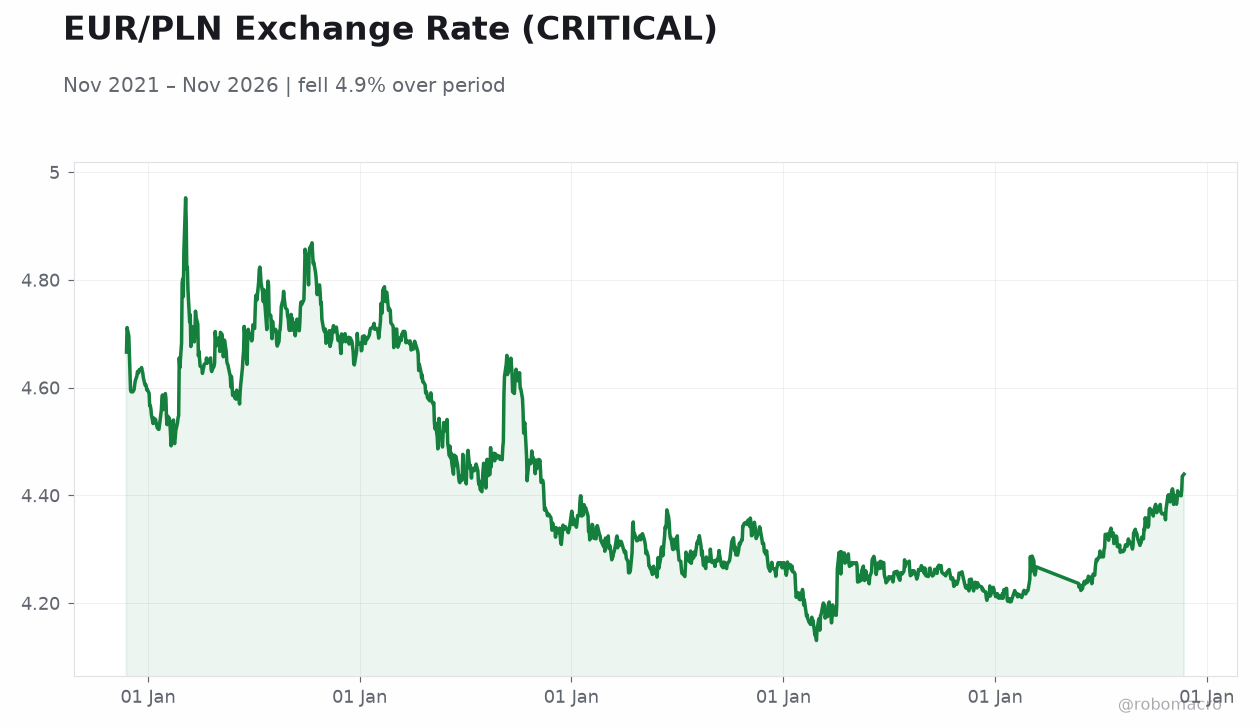
| EUR/PLN | 4.44 | -0.34% |
| EUR/HUF | 368.30 | -0.98% |
| EUR/CZK | 24.42 | -0.15% |
| USD/TRY | 50.62 | +0.08% |
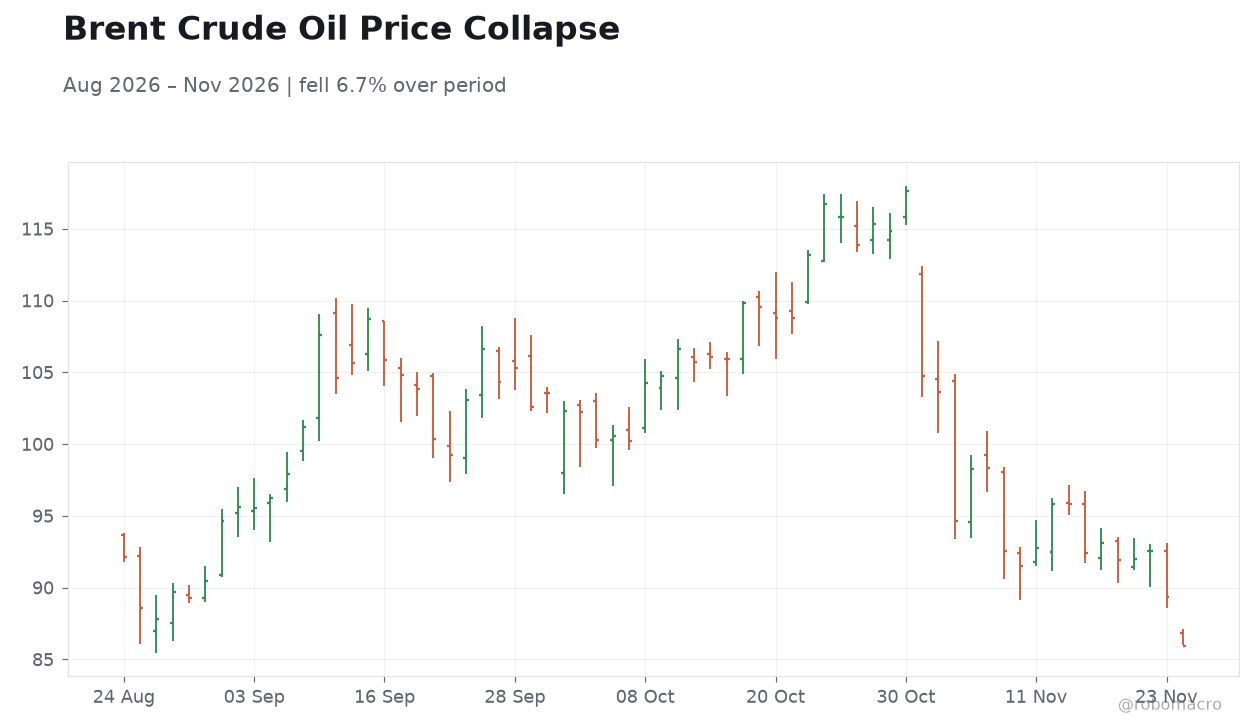
| Brent Crude | 85.96 | -3.82% |
| Gold | 3,634.70 | -0.46% |
| Bitcoin | 60,559.64 | -0.98% |
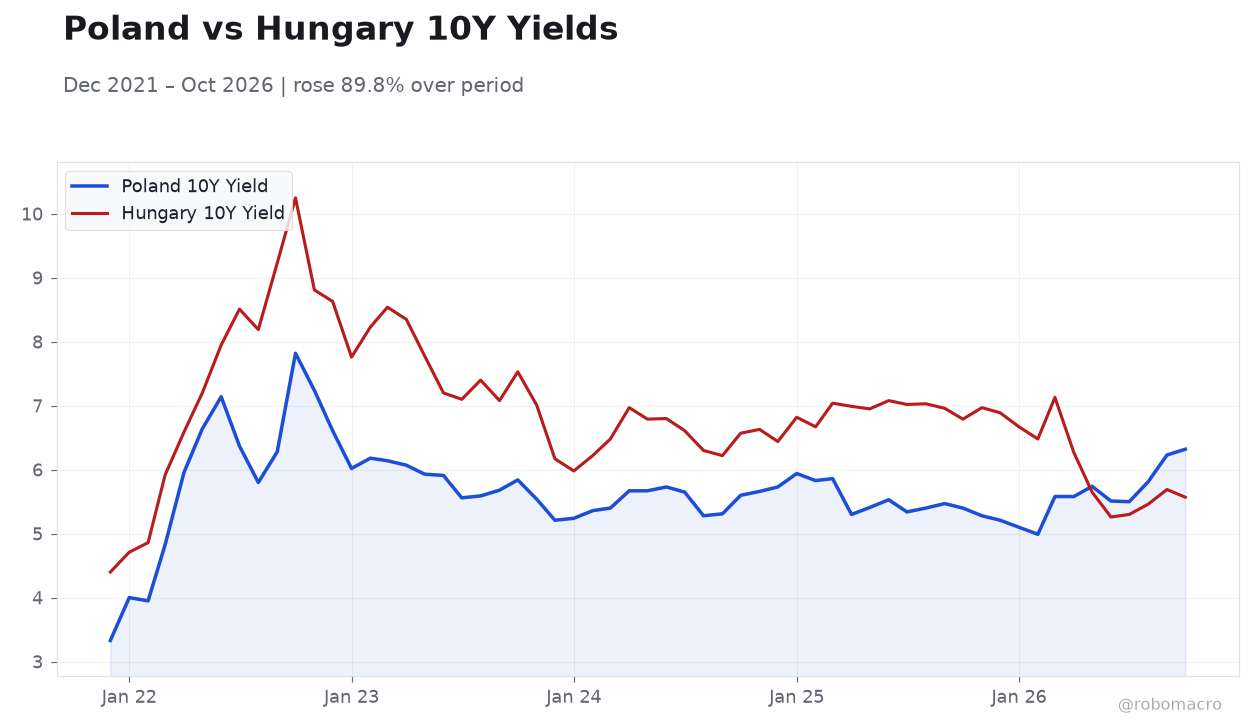
| Poland 10Y Govt Yield | - | - |
| Hungary 10Y Govt Yield | - | - |
Prior Economic Events
| Data | Prior | Cons | Actual |
|---|---|---|---|
| No events available | |||
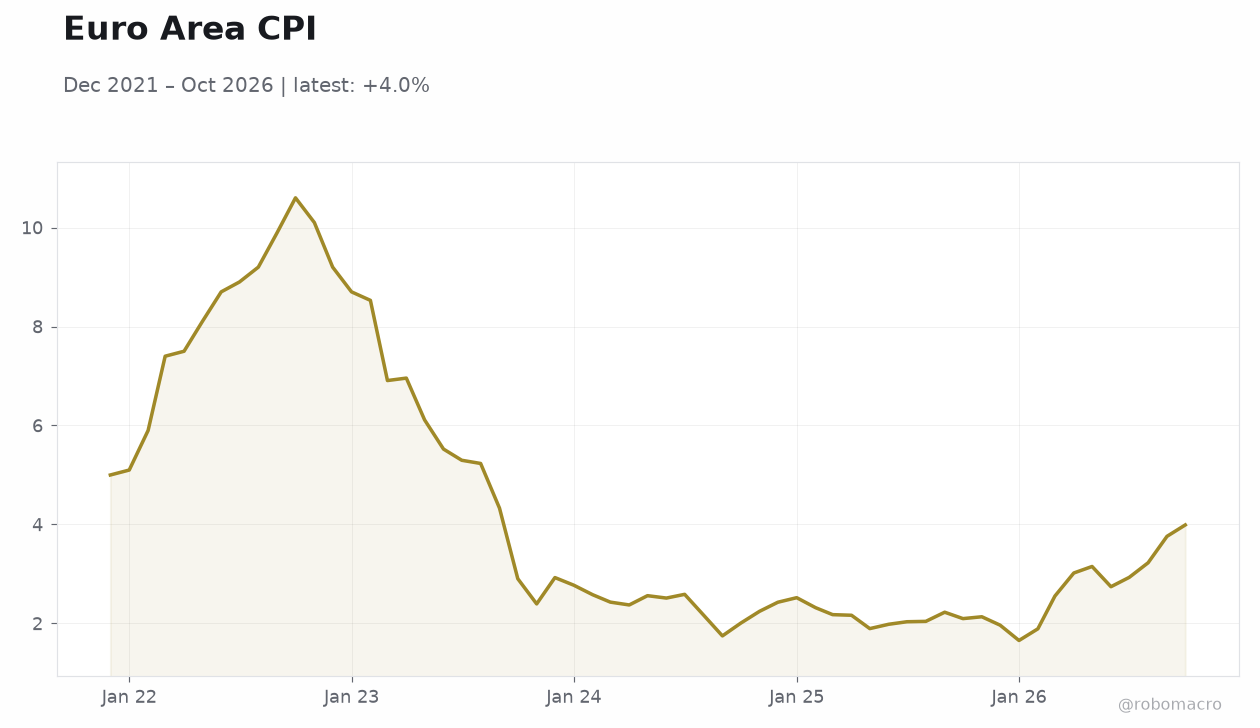 Euro Area CPI | Type: macro_line | EA19 CPI YoY: 3.99 (2026-10-01) | Range: 1.656–10.6 | Trend(6pt): 5,8.528,2.374,1.984,3.226,3.99
Today's Economic Events
| Data | Prior | Cons | Time |
|---|---|---|---|
| Wednesday (2026-11-25) | |||
| Headline Unemployment Rate | 5.80 | - | 03:30 |
- Polish October industrial output disappoints, stoking energy-driven slowdown fears; iShares Poland drops 4.92%
- Forint rallies 0.98% vs EUR after MNB softens rate-cut guidance, citing limited easing room
- Brent crude plunges 3.82% to $85.96, easing imported-energy cost pressure across the region
Yesterday's Recap
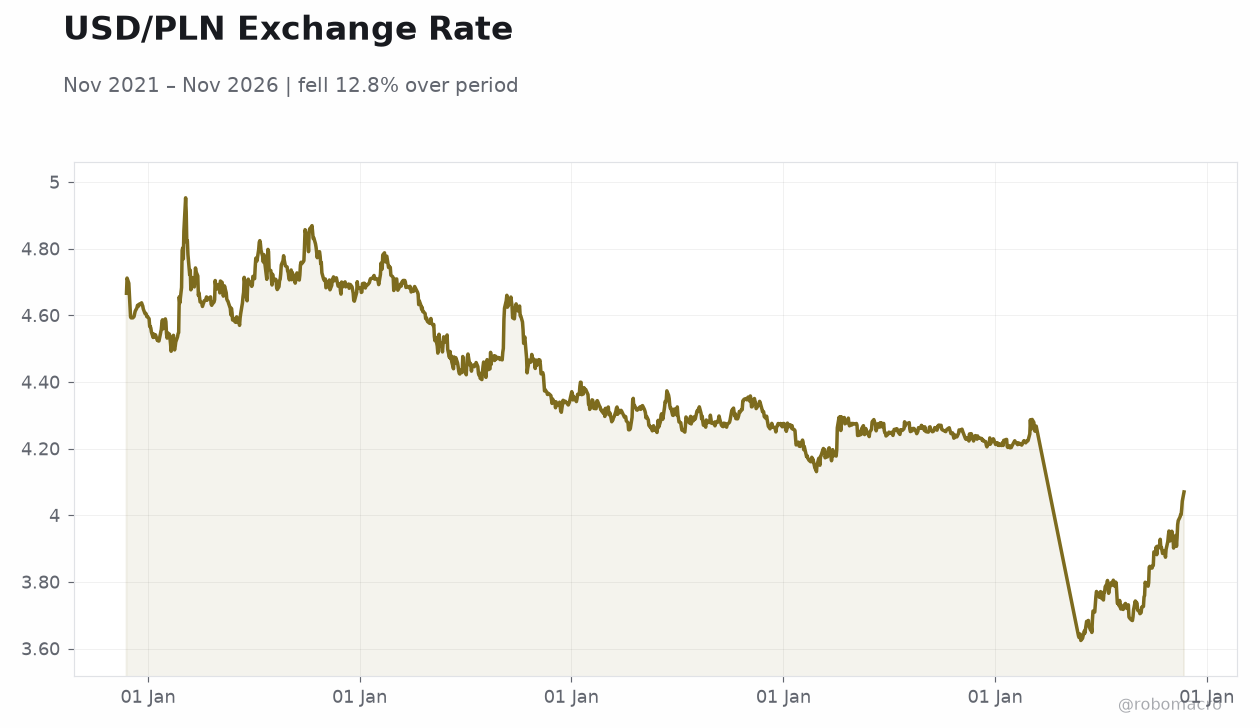
Poland dominated the regional narrative as weak October output data fueled fears of an energy-driven slowdown, with the industrial print underscoring the vulnerability of the region's largest CEE economy to elevated power costs and soft euro-area demand. Equity markets reflected the concern sharply — iShares Poland fell 4.92% — while the zloty actually firmed 0.34% to 4.44 per euro, suggesting the move was growth-specific rather than a broad risk-off repricing. In Hungary, the forint jumped 0.98% to 368.30 versus the euro after the MNB softened its interest-rate guidance, signaling more limited room to cut.
The Czech koruna was essentially flat at 24.42 per euro, and USD/TRY edged up 0.08% to 50.62 as the lira's managed crawl persisted. Regional equities were mixed, with BIST 100 slipping 0.24% to 11,104.40. Brent crude's 3.82% slide to $85.96 offered a modest offset to the energy-cost narrative gripping Polish industry.
The Day Ahead
The calendar is thin, with Poland's headline unemployment rate for the prior month due at 03:30 ET on Wednesday, previous at 5.8% and no consensus published. This is the sole scheduled Emerging Europe release in the window, so positioning will likely be driven by spillovers from global risk sentiment and the forint's post-MNB trajectory. Hungarian FX traders will watch whether the forint consolidates its guidance-driven gains or retraces.
Polish rates and the zloty will take their cue from follow-through on the output story and any commentary on energy costs. With no Turkish, Czech or Romanian data on deck, regional attention stays fixed on Poland and Hungary.
Other Economic Notes
Poland's IPO pipeline is gathering momentum, with defense-linked firms joining the listings wave as the country's record military buildup draws capital-markets interest — a rare bright spot against the soft activity backdrop. Poland's intelligence minister warned that Russian hybrid sabotage against Europe could persist regardless of how the Ukraine war resolves, keeping a geopolitical risk premium embedded in CEE assets. The region's shared energy-import dependency remains the core structural vulnerability, and the crude selloff provides only temporary relief.
Turkey continues to operate on a distinct track, with the lira's slow depreciation and structurally higher inflation insulating it from CEE dynamics.