Emerging Europe Macro Daily(Beta Mode)
Zloty Slips as CEE FX Weakens, Poland Jobs Data Due
Market Snapshot
| Asset | Level | Change |
|---|---|---|
| BIST 100 | 10,965.90 | -1.25% |
| iShares Poland | 40.88 | -1.74% |
| EUR/PLN | 4.46 | +0.51% |
| EUR/HUF | 370.37 | +0.70% |
| EUR/CZK | 24.41 | +0.02% |
| USD/TRY | 50.67 | +0.13% |
| Brent Crude | 87.39 | -4.39% |
| Gold | 3,545.20 | -0.47% |
| Bitcoin | 59,114.57 | -3.42% |
| Poland 10Y Govt Yield | - | - |
| Hungary 10Y Govt Yield | - | - |
Prior Economic Events
| Data | Prior | Cons | Actual |
|---|---|---|---|
| No events available | |||
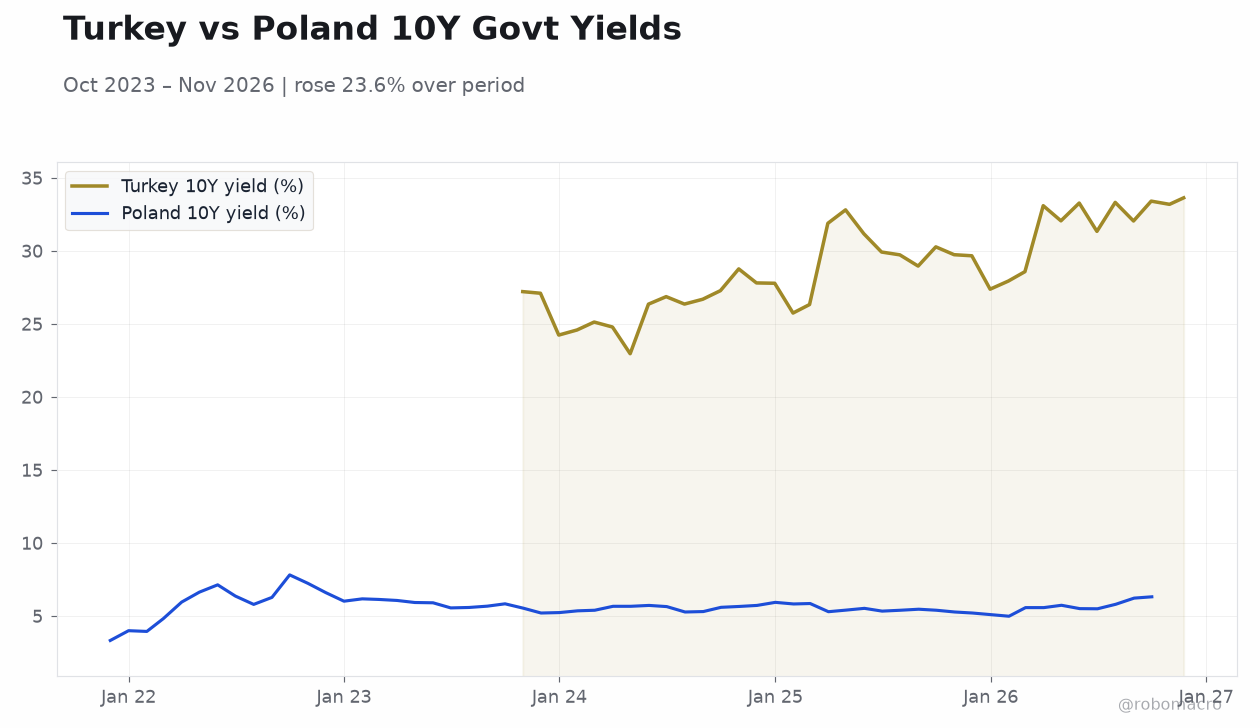 Turkey vs Poland 10Y Govt Yields | Type: macro_line | Turkey 10Y yield (%): 33.64 (2026-11-24) | Range: 22.96–33.64 | Trend(6pt): 27.22,26.36,32.81,27.94,33.19,33.64 | Poland 10Y yield (%): 6.32 (2026-10-01) | Range: 3.33–7.82 | Trend(6pt): 3.33,6.18,5.67,5.53,5.81,6.32
Today's Economic Events
| Data | Prior | Cons | Time |
|---|---|---|---|
| Headline Unemployment Rate | 5.80 | - | 03:30 |
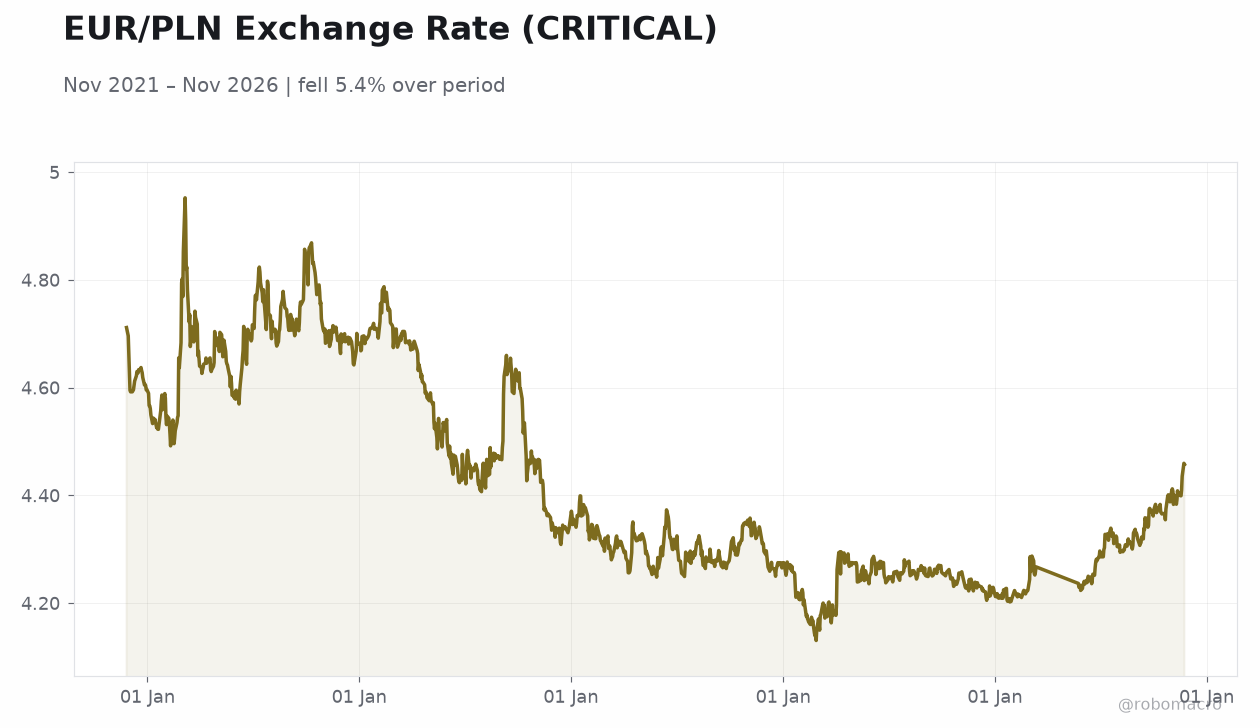
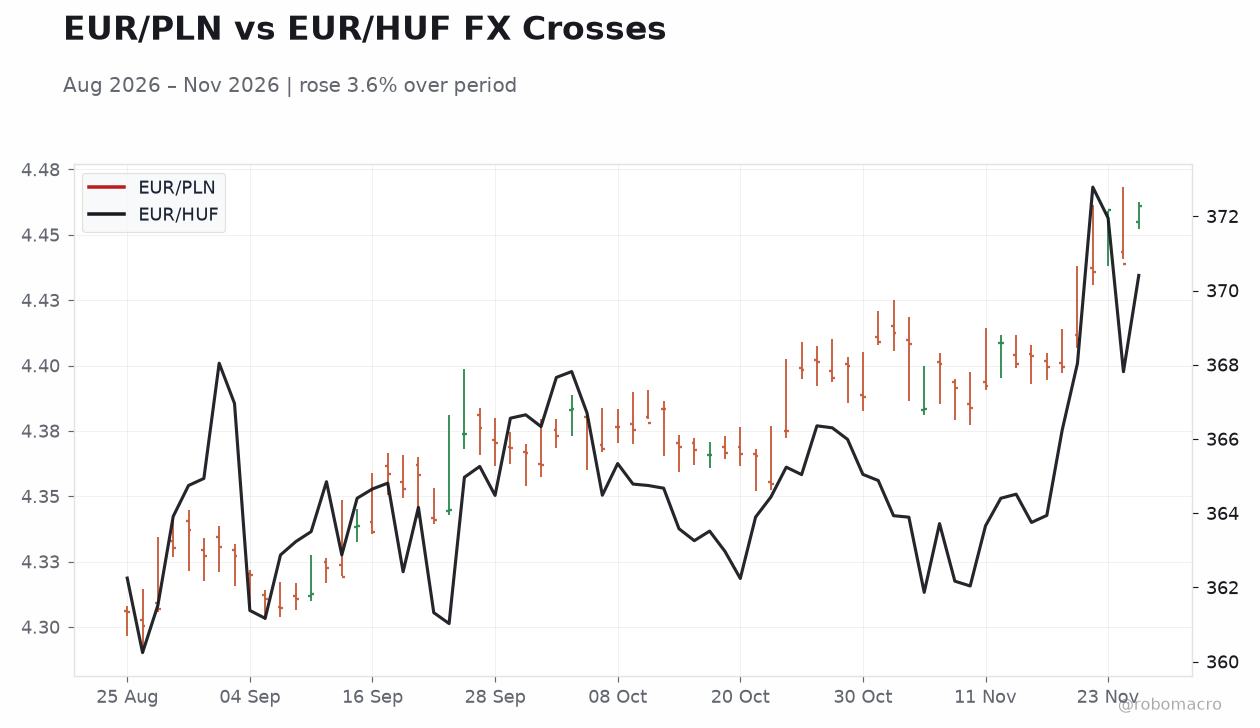
- PLN and HUF lead CEE FX losses against the euro, with EUR/PLN at 4.46 (+0.51%) and EUR/HUF at 370.37 (+0.70%), while EUR/CZK holds near 24.41.
- Polish equity exposure weakens sharply, with iShares Poland down 1.74% and BIST 100 off 1.25%, as Brent crude plunges 4.39% to $87.39.
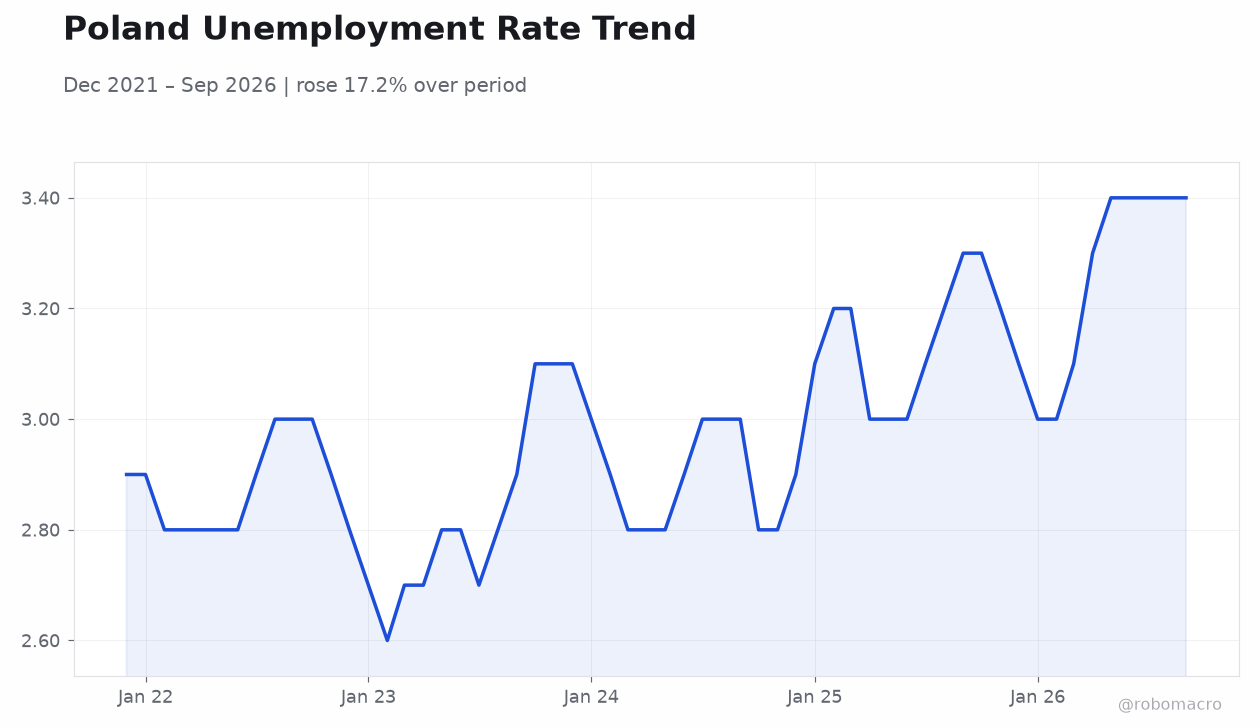
- Poland's headline unemployment rate is due this morning at 03:30 ET, with the prior reading at 5.8% and no consensus published.
Yesterday's Recap
Tuesday's session delivered a broad risk-off tone across Emerging Europe, with CEE currencies under pressure against the euro. The zloty was the region's weakest performer, with EUR/PLN rising 0.51% to 4.46, while the forint also softened, EUR/HUF climbing 0.70% to 370.37. The Czech koruna was the outlier, essentially flat at EUR/CZK 24.41 (+0.02%), reflecting the CNB's comparatively hawkish stance after its November hike.
Equity markets mirrored the FX weakness: iShares Poland fell 1.74% to 40.88 and Turkey's BIST 100 dropped 1.25% to 10,965.90, with no offsetting support from energy given Brent's 4.39% slide to $87.39. USD/TRY edged up 0.13% to 50.67, continuing the lira's slow grind weaker. No Emerging Europe macro releases were scheduled for the day, so price action was driven by global risk sentiment and commodity moves rather than regional data.
Gold slipped 0.47% to $3,545.20 and Bitcoin fell 3.42%, underscoring the defensive cross-asset backdrop.
The Day Ahead
The sole scheduled Emerging Europe release today is Poland's headline unemployment rate at 03:30 ET, with the prior reading at 5.8% and no consensus published. The print will be watched for signs of labour-market cooling after a period of resilient employment, and any upside surprise would reinforce the case for the NBP's extended pause at 3.75%. Beyond the data, attention turns to FX flows given the zloty's underperformance Tuesday and whether EUR/PLN can hold below the 4.46 area.
Regional bond markets will also be in focus after the recent rally, with Hungarian and Polish curves sensitive to any further euro-area rate repricing. No Czech, Romanian or Turkish releases are scheduled, leaving those markets to trade on external cues. Turkey's BIST 100 will be watched for stabilisation after Tuesday's 1.25% decline.
Other Economic Notes
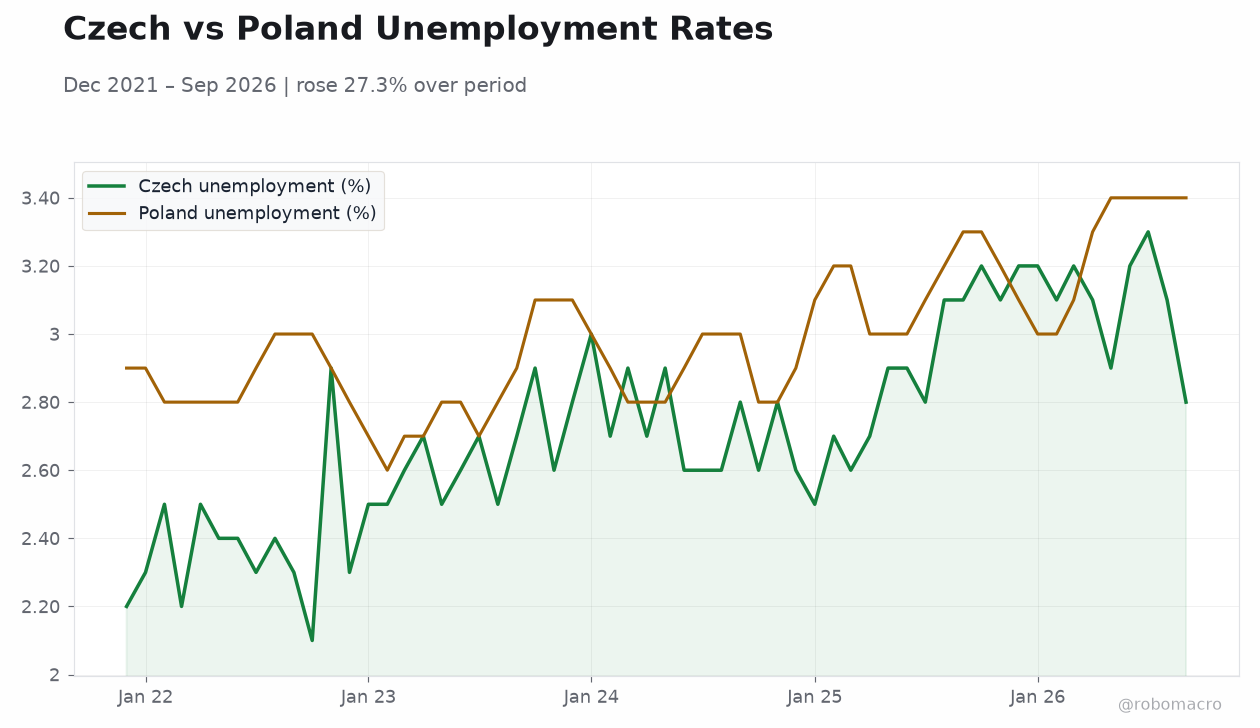
Poland's labour market remains a key macro anchor, with the unemployment rate holding near historic lows even as growth moderates; the employment of Ukrainian workers continues to support activity and is increasingly cited as a structural positive for the economy. ↓ p.2