Eurozone Macro Daily(Beta Mode)
German Orders Beat Forecasts, Equities Advance
Market Snapshot
| Asset | Level | Change |
|---|---|---|
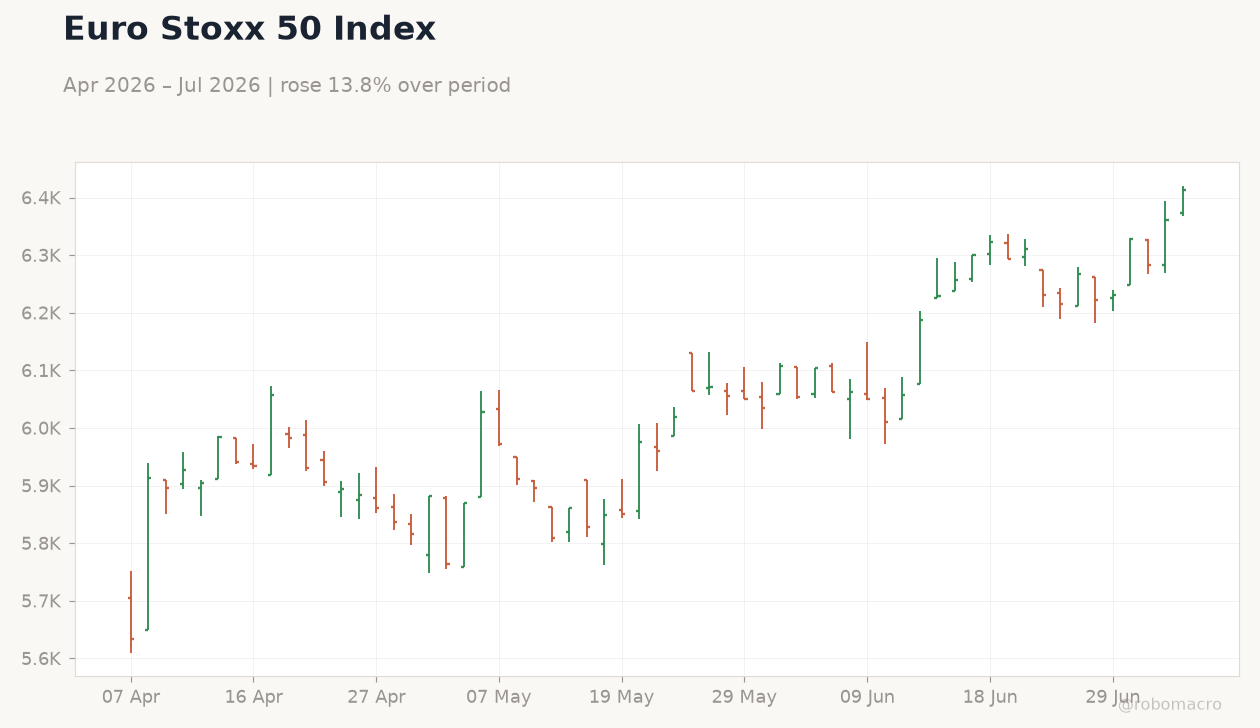
| Euro Stoxx 50 | 6,412.68 | +0.82% |
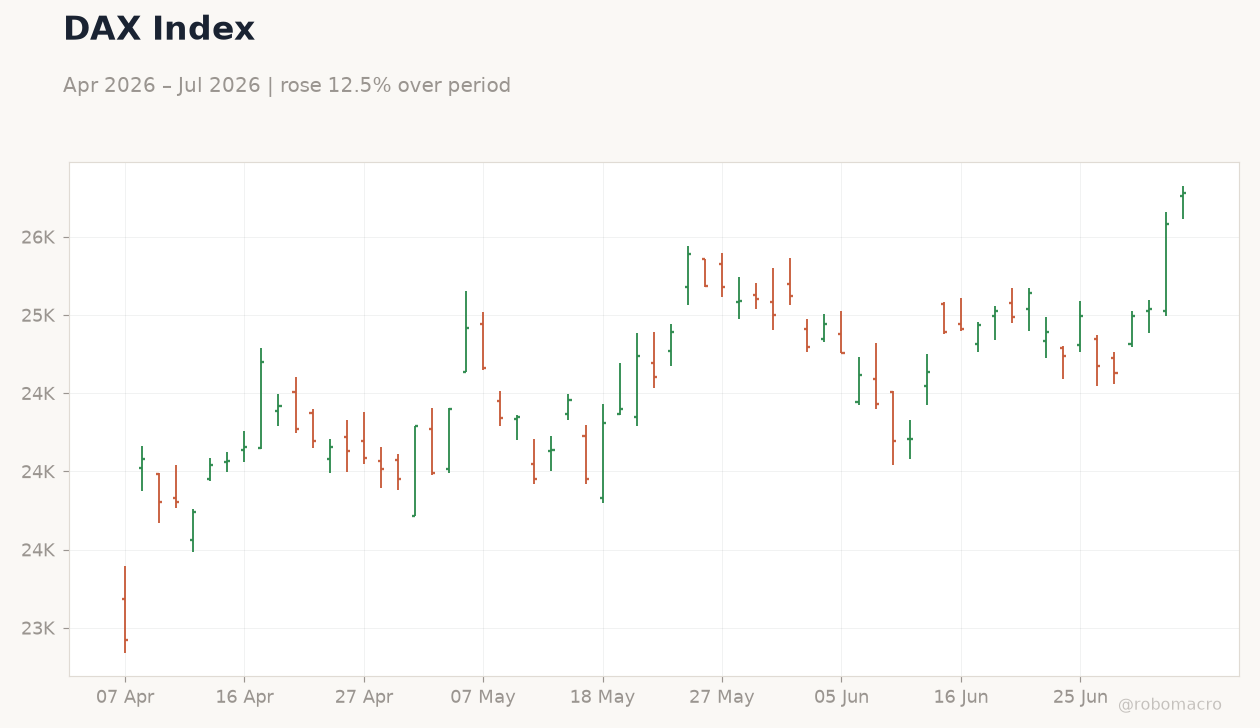
| DAX | 25,779.31 | +0.78% |
| CAC 40 | 8,508.07 | +0.39% |
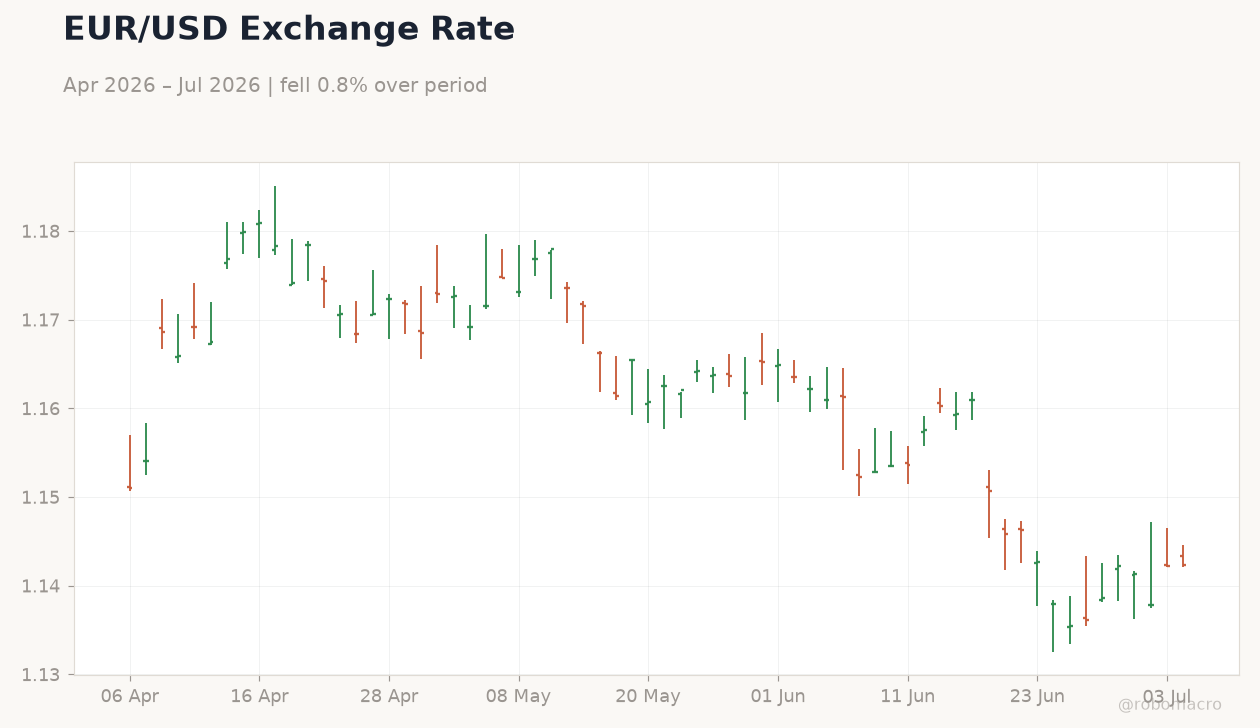
| EUR/USD | 1.14 | +0.01% |
| EUR/GBP | 0.86 | +0.05% |
| EUR/JPY | 185.29 | +0.48% |
| Gold | 4,163.70 | +1.24% |
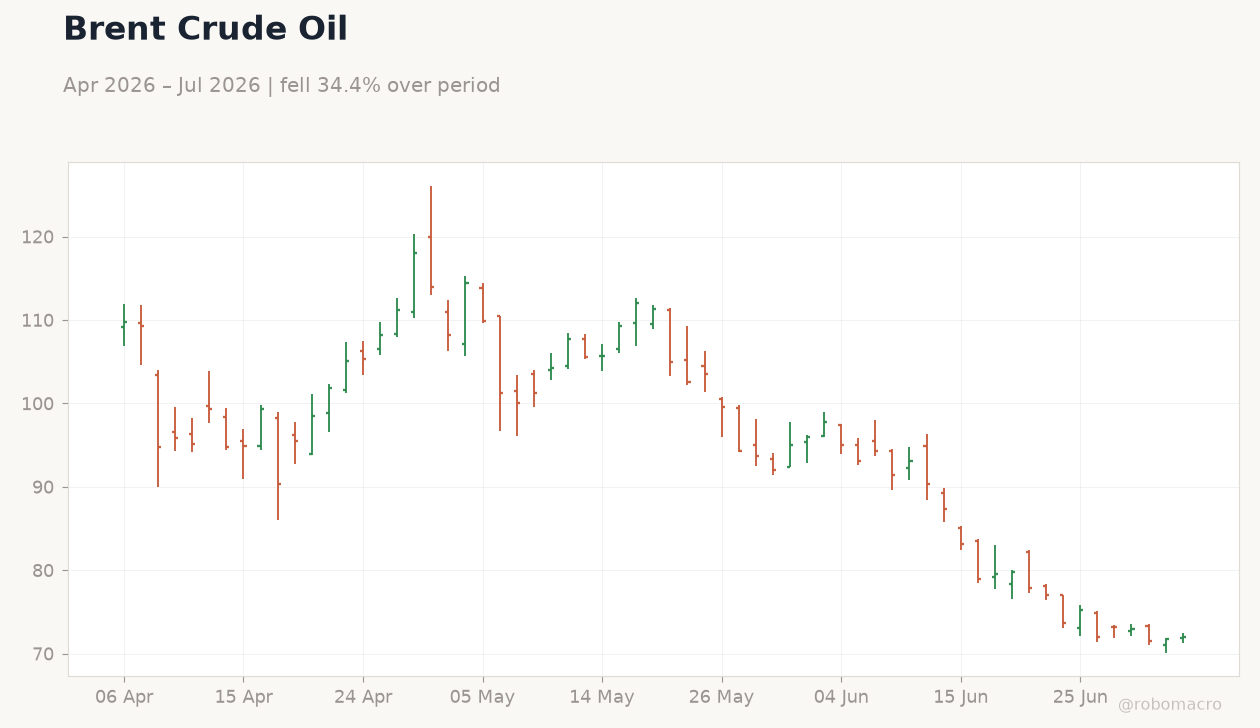
| Brent Crude | 72.00 | +0.28% |
| Bitcoin | 62,831.34 | -1.13% |
| German 2Y Bund | - | - |
| German 10Y Bund | 3.05% | +1.52% |
Prior Economic Events
| Data | Prior | Cons | Actual |
|---|---|---|---|
| Factory Orders Month-over-Month | -3.80 | 1.20 | 1.90 |
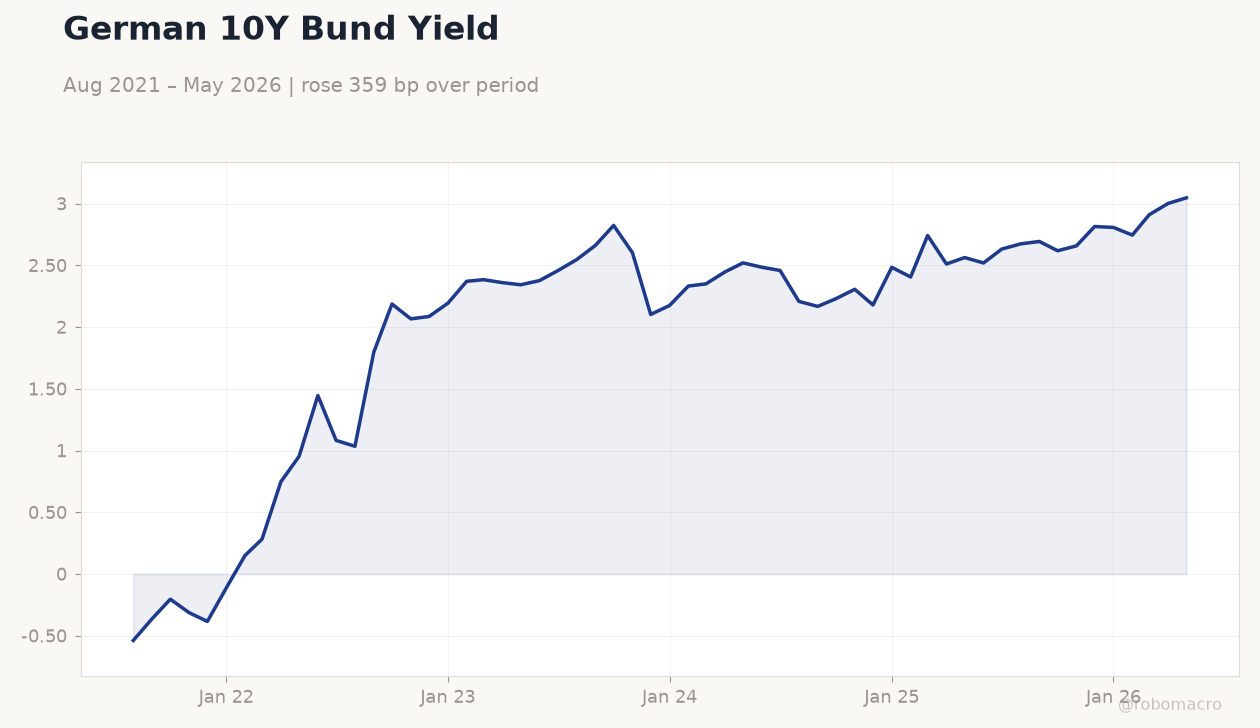 German 10Y Bund Yield | Type: macro_line | Yield %: 3.046 (2026-05-01) | Range: -0.5386–3.046 | Trend(6pt): -0.5386,2.187,2.102,2.405,3.001,3.046
Today's Economic Events
| Data | Prior | Cons | Time |
|---|---|---|---|
| Industrial Production Month-over-Month | 0.40 | 0.20 | 22:00 |
| Trade Balance | -5,600m | -5,200m | 22:45 |
| Trade Balance | 14,500m | 14,000m | 22:00 |
| Exports Month-over-Month | 0.90 | - | 22:00 |
| Industrial Production Month-over-Month | 0.50 | 0.10 | 00:00 |
- German factory orders rose 1.9% m/m in May, exceeding the 1.2% consensus and signalling industrial stabilisation.
- Euro Stoxx 50 gained 0.82% to 6,412.68 while the DAX added 0.78%, led by autos and technology.
- German 10-year Bund yields rose 1.52% to 3.05% as mixed inflation prints tempered rate-cut expectations.
Yesterday's Recap
German factory orders posted a 1.9% m/m gain, reversing the prior -3.8% contraction and topping consensus. North Rhine-Westphalia inflation eased to 2.1% in June, aligning with the broader cooling trend across Germany. Equity markets responded positively, with the CAC 40 advancing 0.39% and EUR/USD edging 0.01% higher to 1.14.
Brent crude climbed 0.28% to $72.00 while gold rose 1.24% to $4,163.70 on safe-haven demand. EUR/GBP increased 0.05% to 0.86 and EUR/JPY gained 0.48% to 185.29. Bitcoin fell 1.13% to $62,831.34 amid risk-off flows in crypto.
The German data reinforced views that industrial momentum is stabilising without altering the ECB’s current 2.25% deposit rate stance.
The Day Ahead
German industrial production and French trade balance are scheduled for release this evening, followed by German trade figures on 8 July. Italian industrial production data will follow on 10 July. Markets will focus on whether German output matches the 0.2% consensus after last month’s 0.4% print.
Any surprise in French trade narrowing could support euro crosses. No ECB speakers are listed, leaving data as the primary driver for short-term Bund and equity positioning.
Other Economic Notes
Germany plans to raise 2027 net borrowing to €118 billion on weaker tax receipts, widening fiscal space for defence and infrastructure. French inflation remains among the lowest in the euro area at roughly 2%, limiting pressure on household spending. Broader euro-area unemployment stands at 6.70%, providing room for gradual labour-market recovery without immediate wage-price risks.
Global Macro News
NATO discussions on €140 billion in Ukrainian defence support over two years place Germany as the largest contributor, adding to fiscal outlays. US tariff threats prompted Chancellor Merz to defend Germany’s defence spending record. French services PMI contraction deepened, raising downside risks for euro-area growth and CAC 40 volatility.
<i>↓ p.2</i>