Eurozone Macro Daily(Beta Mode)
German Prices Miss, Markets Mixed
Market Snapshot
| Asset | Level | Change |
|---|---|---|
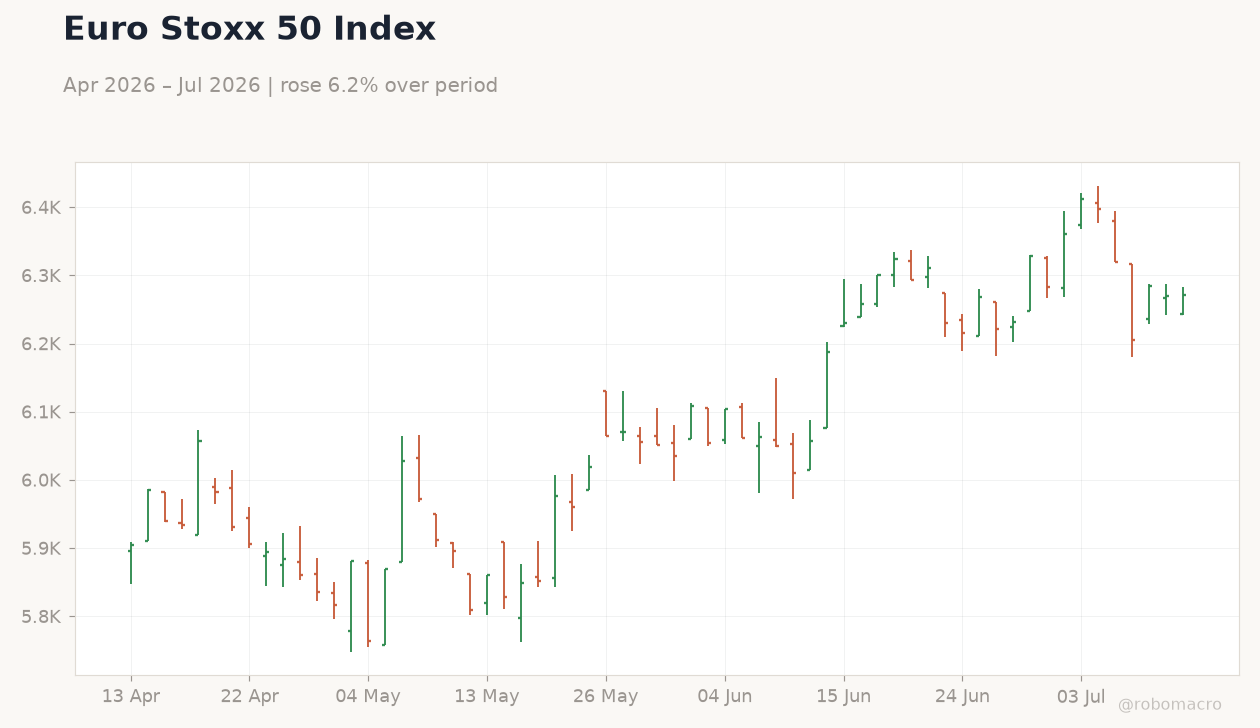
| Euro Stoxx 50 | 6,271.02 | +0.02% |
| DAX | 25,067.09 | -0.20% |
| CAC 40 | 8,364.65 | +0.31% |
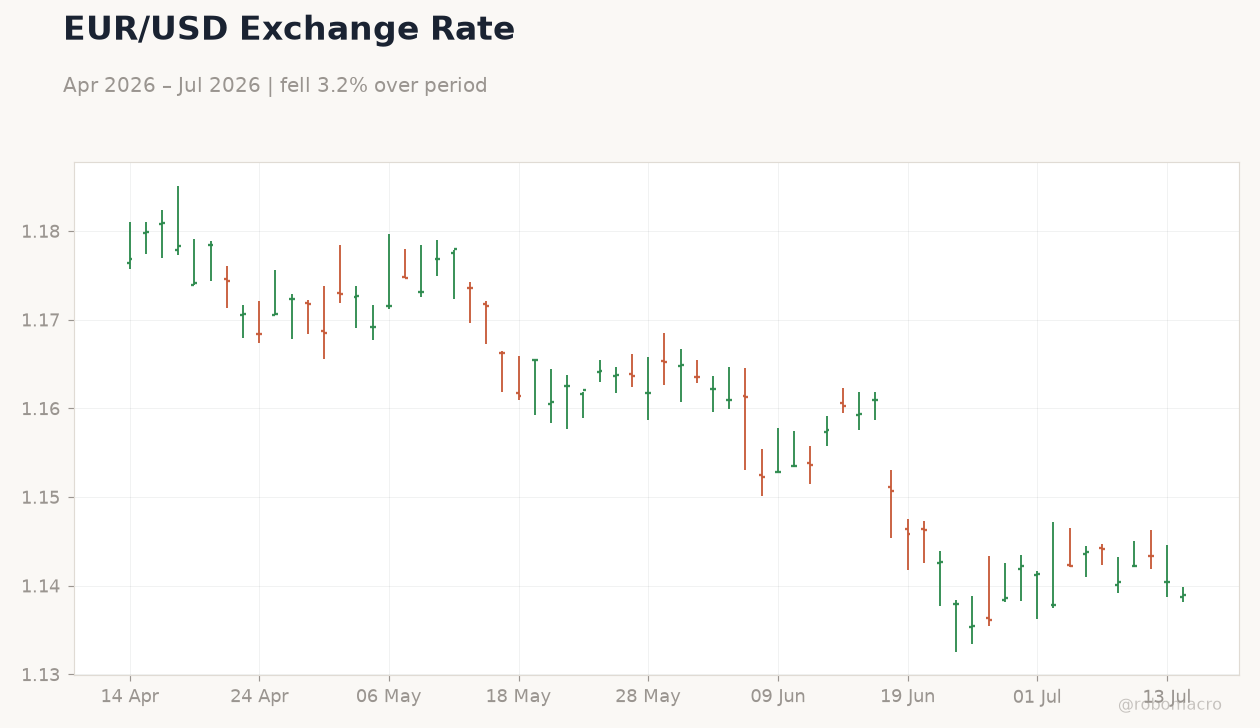
| EUR/USD | 1.14 | -0.12% |
| EUR/GBP | 0.85 | +0.08% |
| EUR/JPY | 184.86 | +0.13% |
| Gold | 4,031.00 | +0.85% |
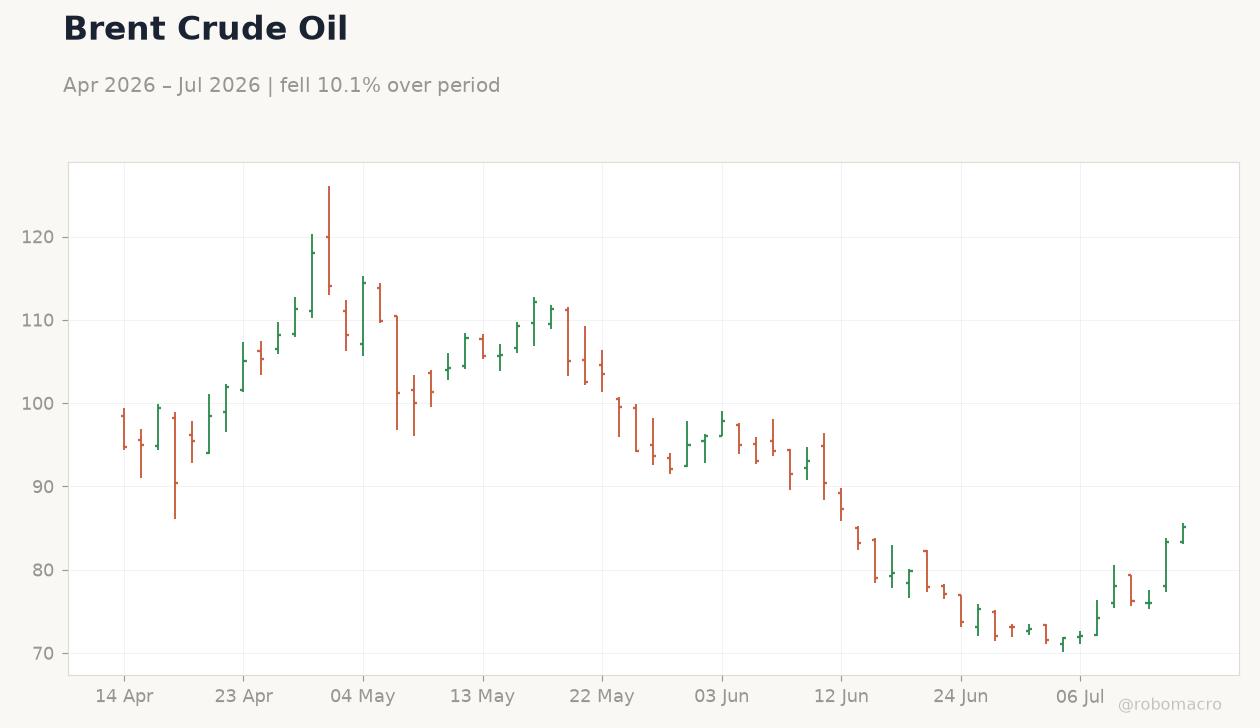
| Brent Crude | 85.18 | +2.26% |
| Bitcoin | 62,599.10 | +0.58% |
| German 2Y Bund | - | - |
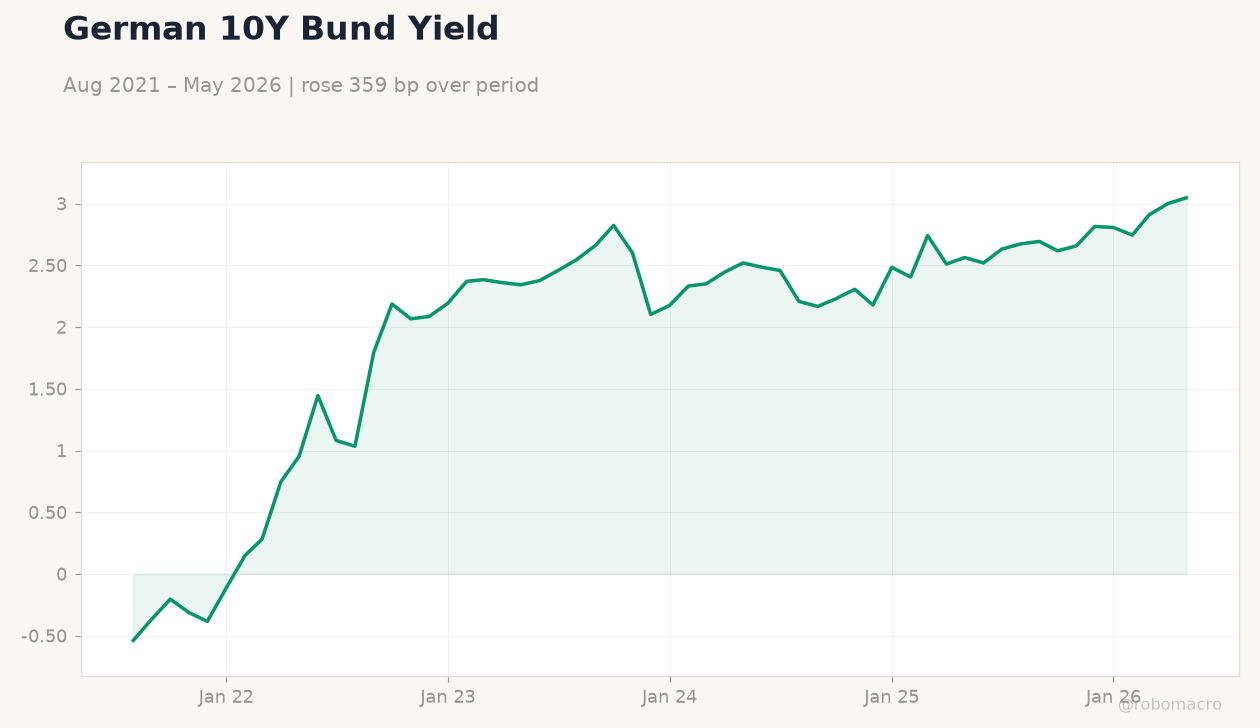
| German 10Y Bund | 3.05% | +1.52% |
Prior Economic Events
| Data | Prior | Cons | Actual |
|---|---|---|---|
| Wholesale Prices Month-over-Month | -0.60 | 0.20 | -0.70 |
| Wholesale Prices Year-over-Year | 5.90 | - | 4.90 |
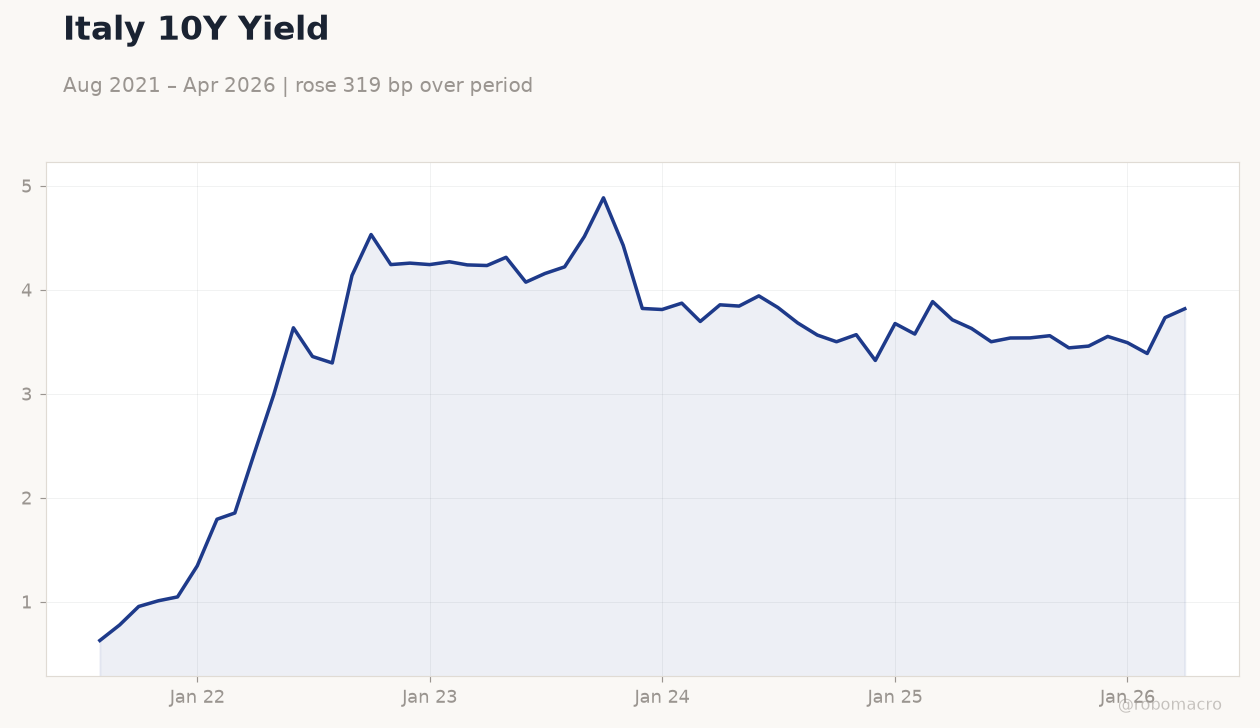 Italy 10Y Yield | Type: macro_line | Yield %: 3.818 (2026-04-01) | Range: 0.628–4.885 | Trend(5pt): 0.628,4.532,3.821,3.575,3.818
Today's Economic Events
| Data | Prior | Cons | Time |
|---|---|---|---|
| Headline Unemployment Rate | 3.90 | - | 20:30 |
| Trade Balance | 4,293m | 4,500m | 01:00 |
- German wholesale prices fell 0.7% month-over-month in June, missing consensus and signaling softer pipeline pressures.
- Euro Stoxx 50 edged up 0.02% while DAX declined 0.20% and CAC 40 gained 0.31% amid mixed regional flows.
- EUR/USD slipped 0.12% to 1.14 as German 10-year Bund yields rose 1.52% to 3.05%.
Yesterday's Recap
German wholesale prices declined 0.7% month-over-month against a 0.2% consensus and 4.9% year-over-year versus 5.9% prior, pointing to cooling input costs in Europe’s largest economy. The softer print aligned with Eurozone CPI at 2.80% for June and unemployment at 6.20% for May, leaving the inflation trajectory intact. Equity markets showed limited reaction, with Euro Stoxx 50 closing at 6,271.02, DAX at 25,067.09 and CAC 40 at 8,364.65.
EUR/USD traded at 1.14 while EUR/GBP held near 0.85 and EUR/JPY near 184.86. Brent crude rose 2.26% to 85.18 and gold advanced 0.85% to 4,031.00 on safe-haven demand. No Governing Council members spoke, keeping policy expectations anchored around the 2.25% deposit rate.
Bunds saw modest selling as the 10-year yield climbed to 3.05%. The data reinforced that recent German price weakness has not yet altered the broader Eurozone inflation path.
The Day Ahead
Attention turns to the Netherlands headline unemployment rate and Italy’s trade balance release. The Dutch labor market has remained tight near 3.9%, with any upside surprise likely to reinforce wage pressures across core economies. Italy’s trade surplus is expected near 4.5 billion euros, offering insight into external demand resilience amid slowing domestic orders.
Markets will parse these figures for clues on whether the modest German price weakness extends to other member states. No ECB speakers are scheduled, leaving focus on incoming data rather than rhetoric. A soft Italian print could support expectations for further easing later in the year while a strong Dutch outcome may temper such bets.
Traders will also monitor any follow-through from yesterday’s wholesale price miss for signs of broader disinflation.
Other Economic Notes
Germany’s gas supply agreement with Algeria aims to diversify energy imports and reduce methane emissions, supporting industrial stability. Volkswagen’s ongoing challenges underscore the need for EU-level measures against external competition to safeguard employment in key manufacturing sectors. French economic forecasts have been revised lower, highlighting risks of record unemployment that could weigh on consumption across the bloc.
<i>↓ p.2</i>