Eurozone Macro Daily(Beta Mode)
Inflation Steady at 2.9% as Equities Rise
Market Snapshot
| Asset | Level | Change |
|---|---|---|
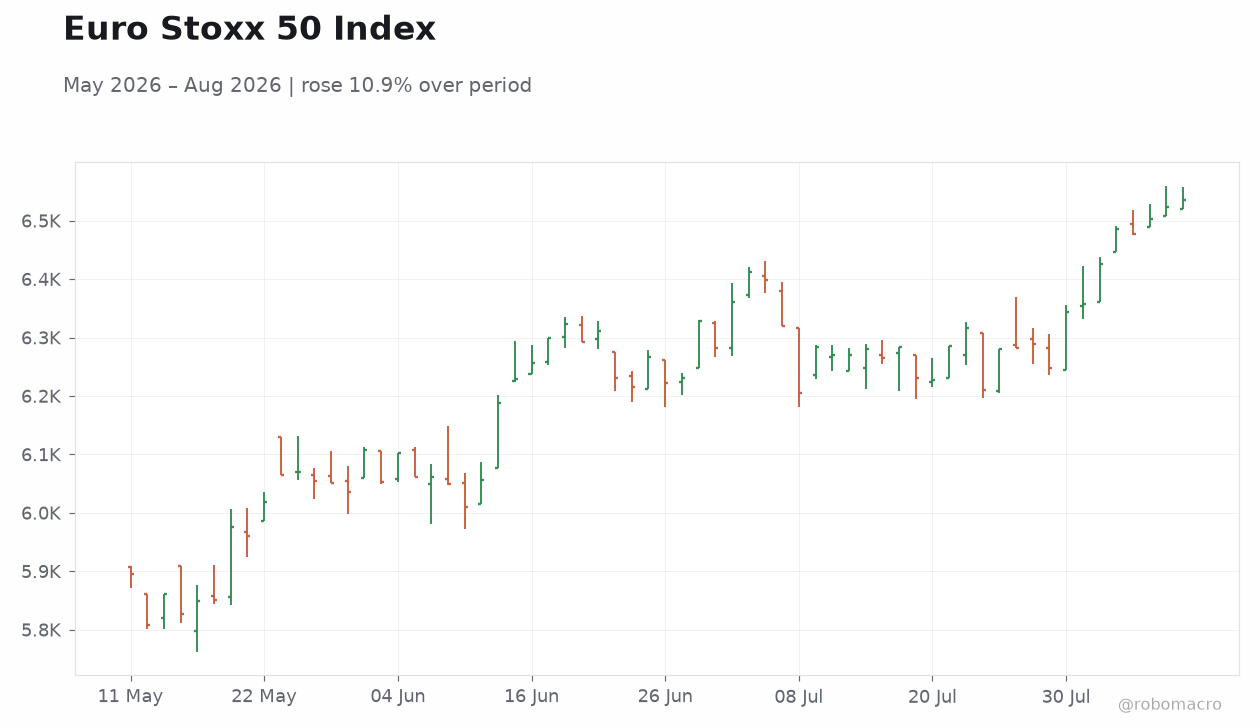
| Euro Stoxx 50 | 6,535.62 | +0.18% |
| DAX | 26,319.45 | +0.69% |
| CAC 40 | 8,726.03 | +0.13% |
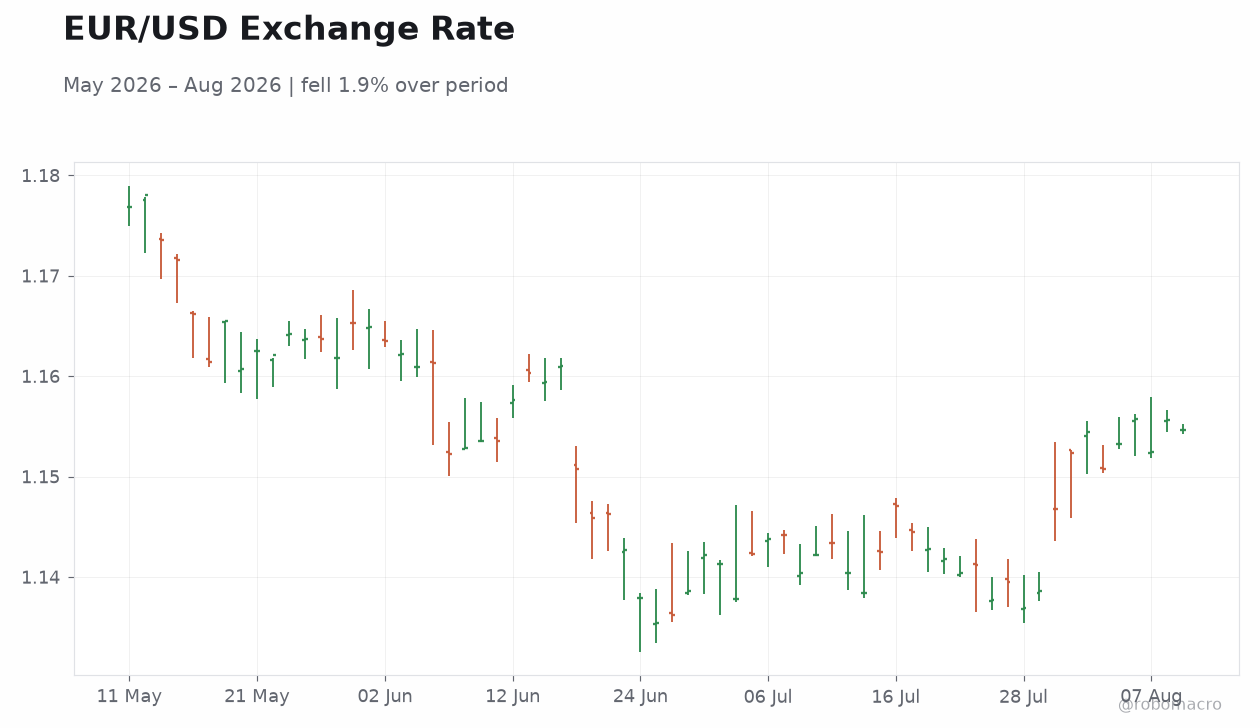
| EUR/USD | 1.15 | -0.10% |
| EUR/GBP | 0.85 | -0.30% |
| EUR/JPY | 183.73 | +0.69% |
| Gold | 4,430.70 | +1.58% |
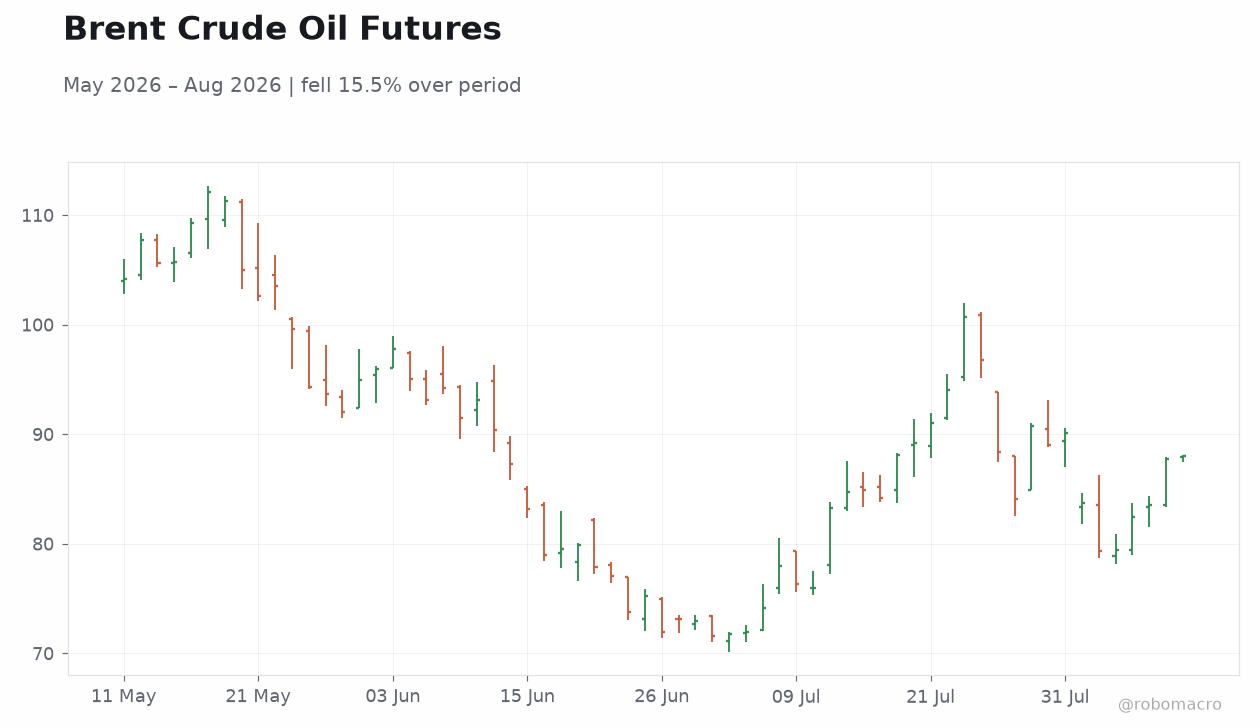
| Brent Crude | 87.93 | +0.24% |
| Bitcoin | 63,926.90 | -1.42% |
| German 2Y Bund | - | - |
| German 10Y Bund | 2.97% | -2.51% |
Prior Economic Events
| Data | Prior | Cons | Actual |
|---|---|---|---|
| No events available | |||
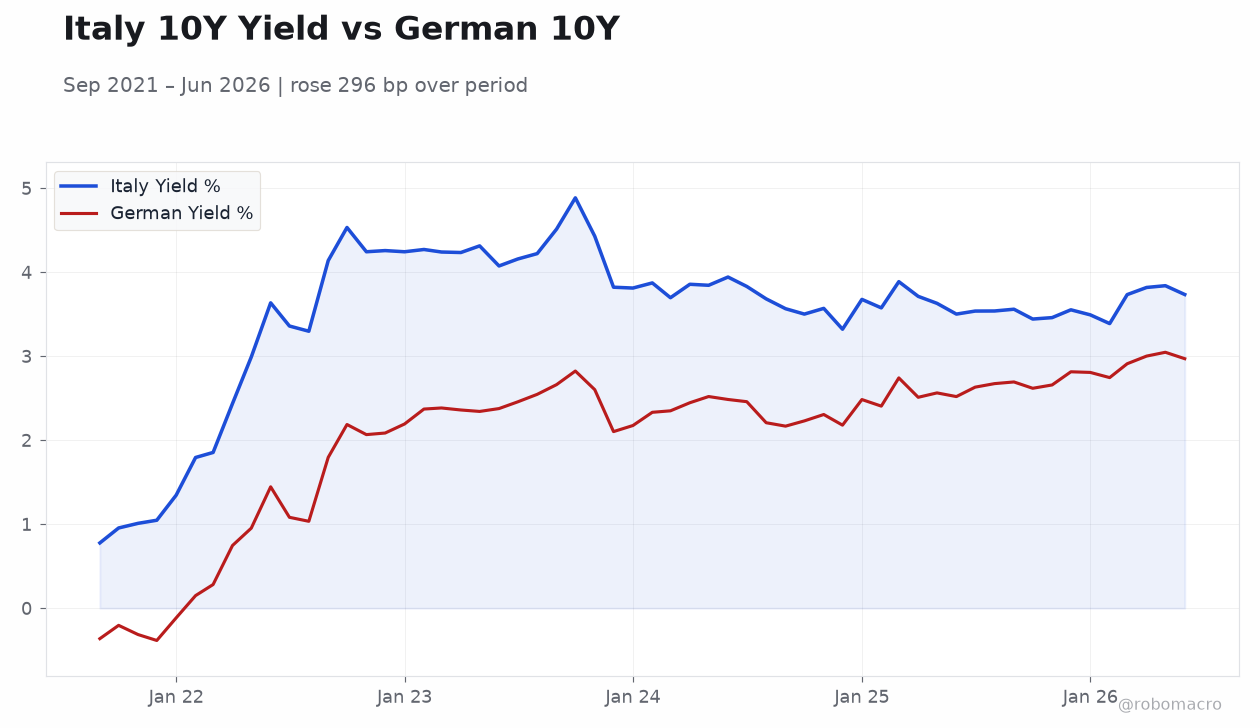
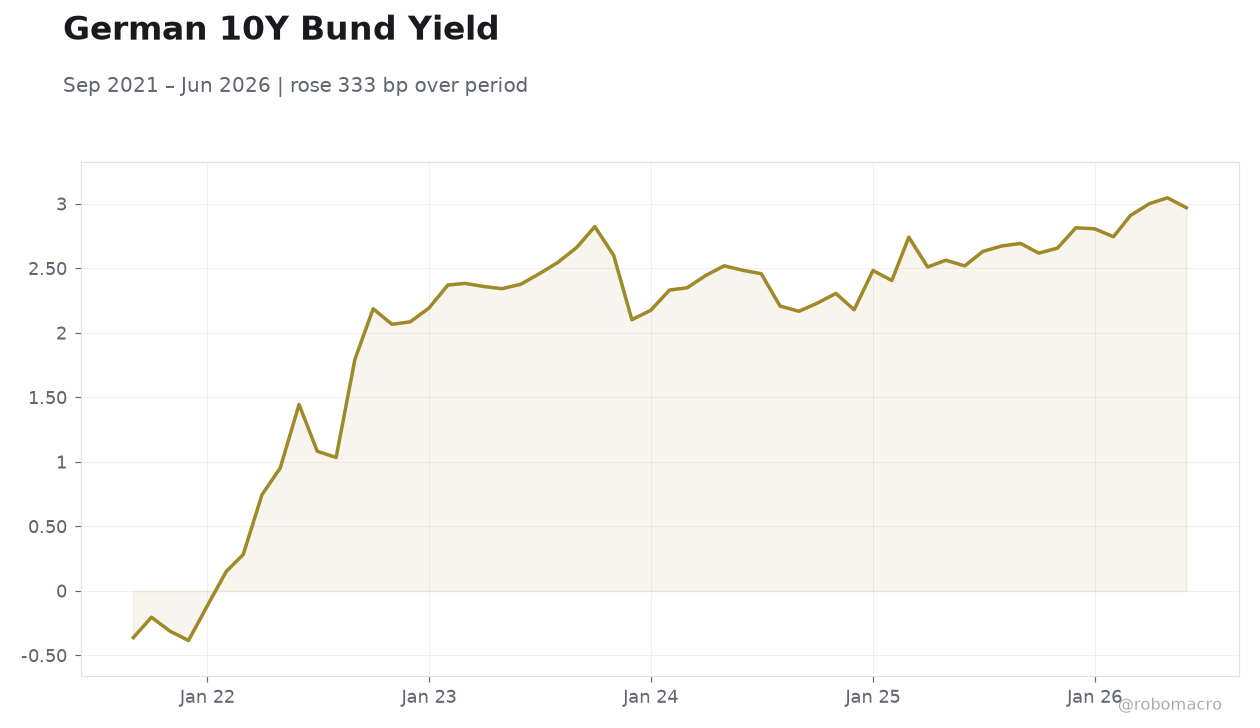 German 10Y Bund Yield | Type: macro_line | Yield %: 2.97 (2026-06-01) | Range: -0.3843–3.046 | Trend(6pt): -0.3627,2.066,2.175,2.741,3.046,2.97
Today's Economic Events
| Data | Prior | Cons | Time |
|---|---|---|---|
| Trade Balance | 4,793m | 4,740m | 00:00 |
| Wholesale Prices Month-over-Month | -0.70 | 0.40 | 22:00 |
| Wholesale Prices Year-over-Year | 4.90 | - | 22:00 |
- Eurozone CPI held at 2.9% YoY in July, leaving the ECB on hold ahead of September.
- Equities advanced modestly, led by the DAX up 0.69%, while the 10-year Bund yield fell 2.51% to 2.97%.
- Italian trade balance prints today and German wholesale prices Thursday add limited near-term risk.
Yesterday's Recap
Equity markets rose across the Eurozone, with the Euro Stoxx 50 gaining 0.18%, the DAX climbing 0.69% and the CAC 40 adding 0.13% as Middle East tensions eased. The German 10-year Bund yield dropped 2.51% to 2.97%, reflecting stronger demand for duration. EUR/USD eased 0.10% to 1.15 and EUR/GBP fell 0.30%, while EUR/JPY rose 0.69%.
July inflation printed at 2.9% YoY, confirming the uptick and highlighting persistent energy pressures. Unemployment stayed at 6.3% through June. Brent crude rose 0.24% to 87.93, adding a mild cost consideration.
Record summer heat imposed measurable costs on power, transport and agriculture, with Germany and France most exposed. These supply shocks risk feeding into both headline and core inflation while weighing on near-term growth.
The Day Ahead
Attention turns to Italy’s trade balance at midnight, with consensus at a €4.74 billion surplus versus the prior €4.793 billion. The print offers an early read on external demand for the bloc’s third-largest economy. Thursday brings German wholesale prices month-over-month and year-over-year, expected to rebound from recent deflationary prints.
No major ECB speakers are scheduled. Limited event risk should keep ranges contained ahead of next week’s flash PMI releases. Climate-driven disruptions in agriculture and logistics continue to hit the Eurozone’s open economies through higher food and energy volatility.
Other Economic Notes
Record heat across Western Europe has already cost billions via power strains, transport disruptions and agricultural losses. Germany recorded the highest heat-related deaths. These shocks complicate the path back to the 2% target and may add to debt burdens in Italy and Spain.
Policymakers must weigh the 2.9% inflation print against these pressures. Broader fiscal support for adaptation could further elevate debt loads while supply-side effects threaten both growth and price stability.