Eurozone Macro Daily(Beta Mode)
Equities Advance as Bund Yields Ease
Market Snapshot
| Asset | Level | Change |
|---|---|---|
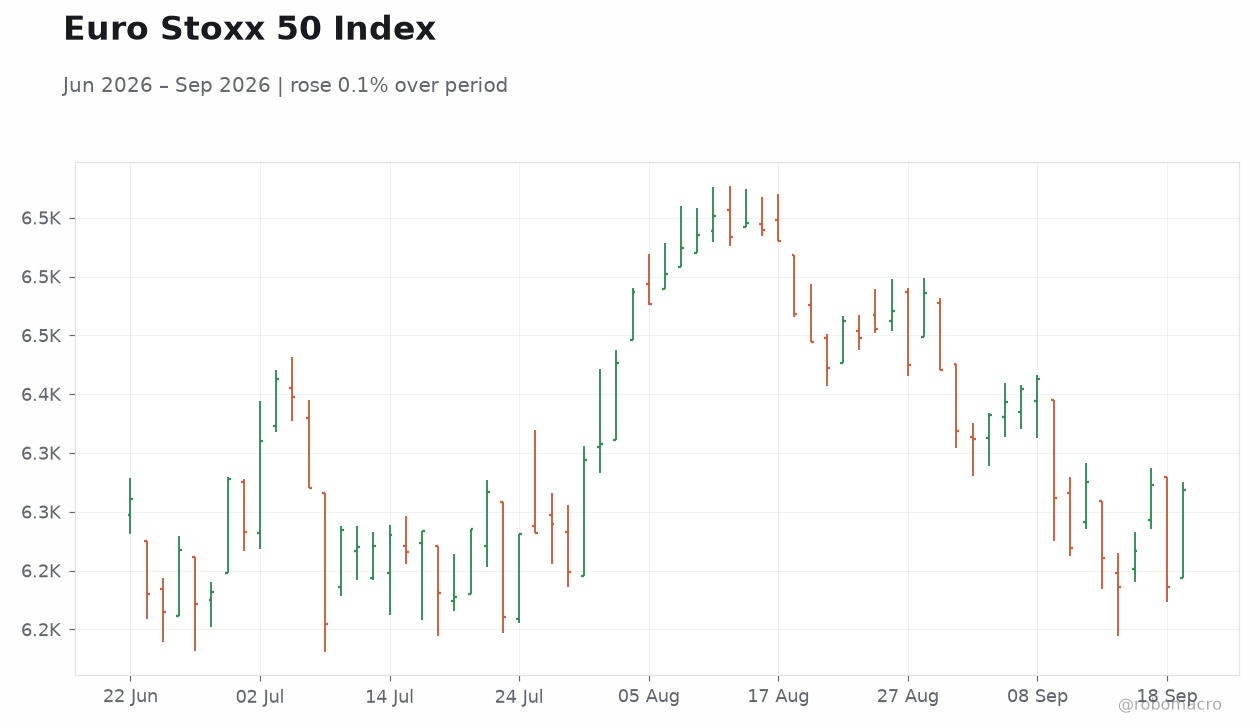
| Euro Stoxx 50 | 6,318.20 | +1.31% |
| DAX | 25,607.67 | +0.13% |
| CAC 40 | 8,138.94 | +0.92% |
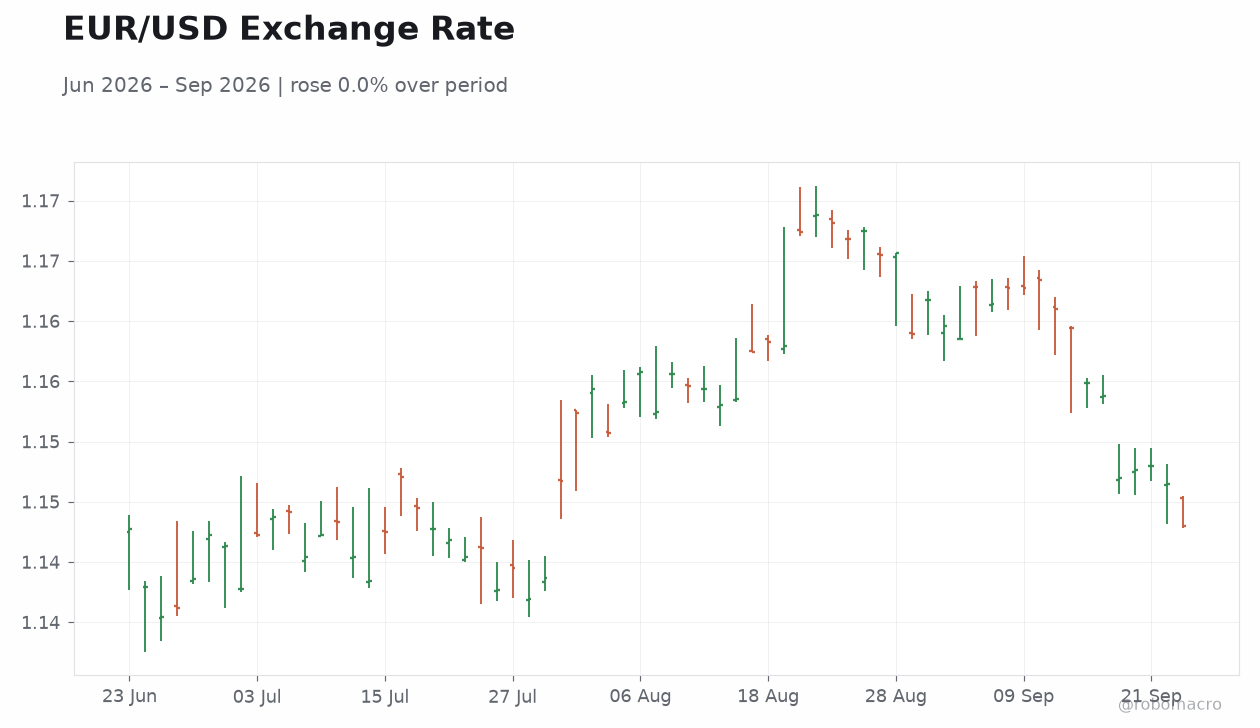
| EUR/USD | 1.14 | -0.30% |
| EUR/GBP | 0.86 | +0.08% |
| EUR/JPY | 180.08 | -0.17% |
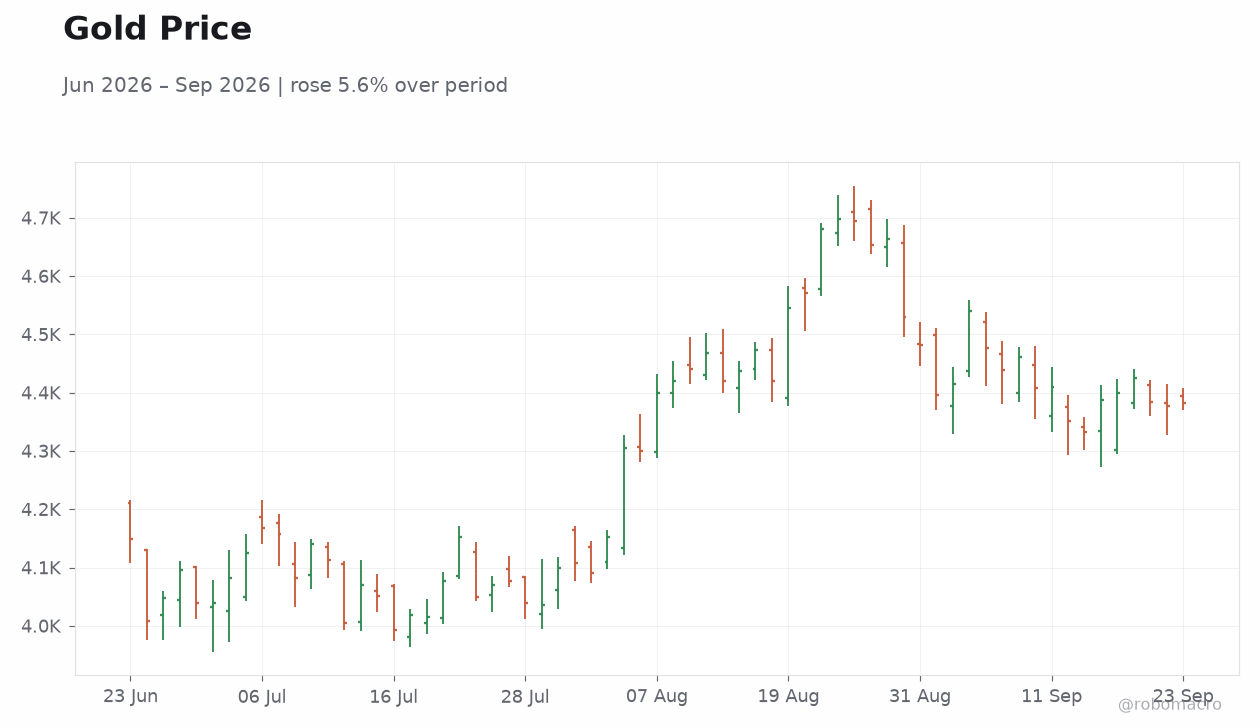
| Gold | 4,383.30 | +0.16% |
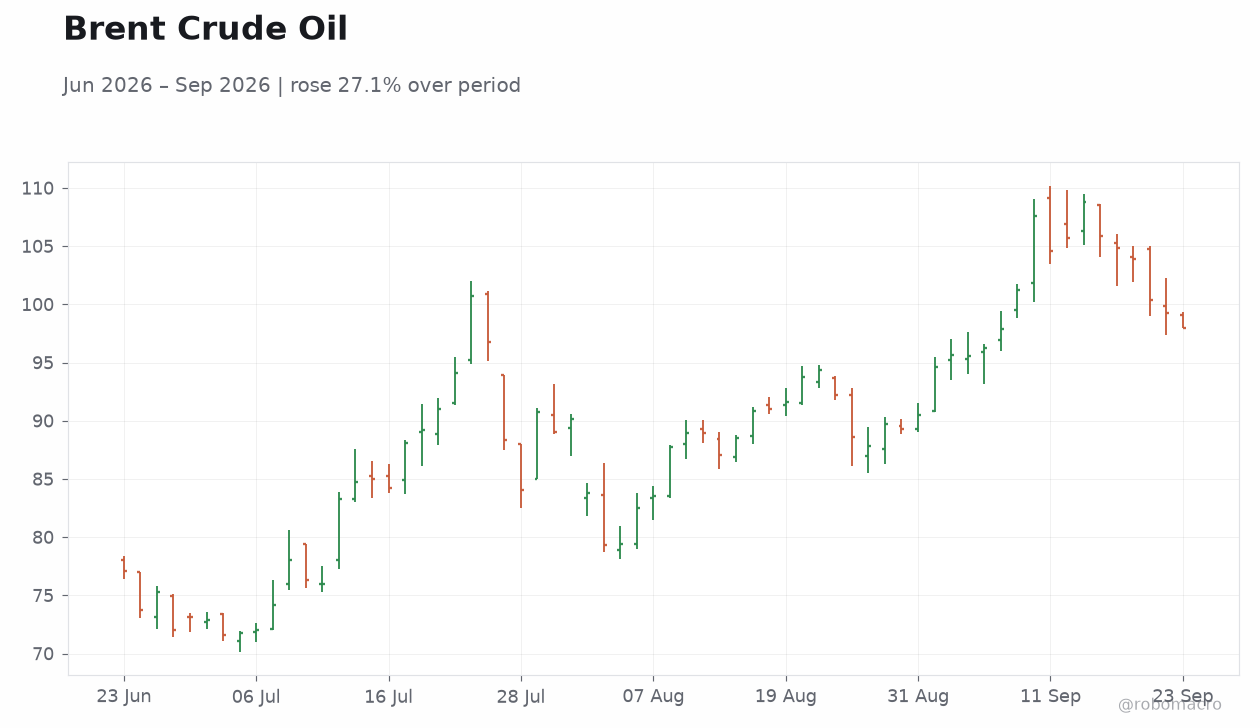
| Brent Crude | 98.05 | -1.21% |
| Bitcoin | 87,111.02 | +0.59% |
| German 2Y Bund | 3.22% | -2 bp |
| German 10Y Bund | 3.52% | -3 bp |
Prior Economic Events
| Data | Prior | Cons | Actual |
|---|---|---|---|
| No events available | |||
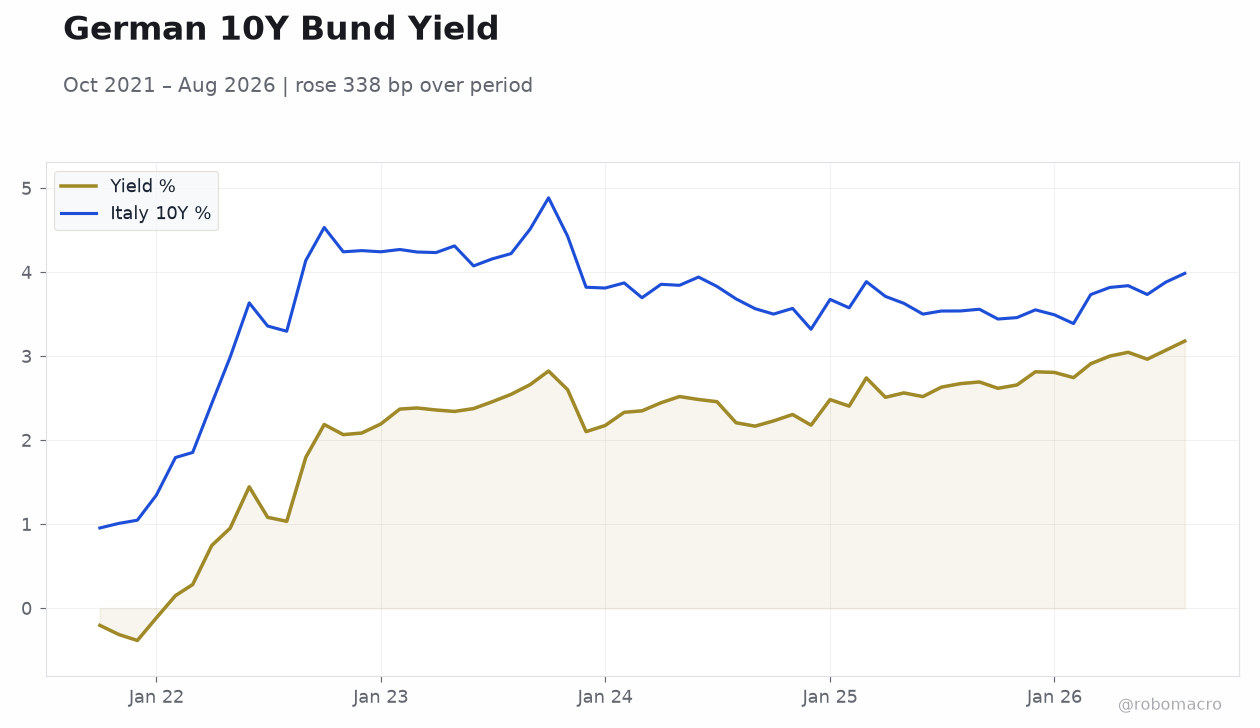 German 10Y Bund Yield | Type: macro_line | Yield %: 3.18 (2026-08-01) | Range: -0.3843–3.18 | Trend(6pt): -0.2043,2.085,2.332,2.51,2.964,3.18 | Italy 10Y %: 3.986 (2026-08-01) | Range: 0.9549–4.885 | Trend(6pt): 0.9549,4.257,3.872,3.712,3.734,3.986
Today's Economic Events
| Data | Prior | Cons | Time |
|---|---|---|---|
| No events available | |||
- Euro Stoxx 50 rises 1.31% to 6,318.20 while German 10Y Bund yield falls 3 bp to 3.52%
- No Eurozone data releases reported on 22 September across Germany, France, Italy or Spain
- ECB Deposit Rate holds at 2.50% with Eurozone CPI at 3.20% YoY and unemployment at 6.40%
Yesterday's Recap
European equities posted gains on 22 September with the Euro Stoxx 50 up 1.31% to 6,318.20, the CAC 40 advancing 0.92% to 8,138.94 and the DAX adding 0.13% to 25,607.67. German Bund yields declined modestly as the 2-year eased 2 bp to 3.22% and the 10-year fell 3 bp to 3.52%. The euro traded mixed against major crosses, with EUR/USD down 0.30% at 1.14 while EUR/GBP edged 0.08% higher at 0.86.
No macroeconomic releases occurred in Germany, France, Italy, Spain or the Netherlands. An ECB analysis showed China’s shift to high-value-added goods has reduced EU export shares, hitting Germany hardest. Mercedes-Benz stated German production lacks international competitiveness due to elevated labour costs.
TUI narrowed its 2026 operating-profit outlook citing later bookings linked to Middle East tensions. Germany’s fiscal headroom remains available to support recovery if political constraints allow.
The Day Ahead
No economic data releases or ECB Governing Council speeches are scheduled for 23 September across the euro area. Markets will focus on any follow-up commentary from Philip R. Lane’s recent Le Temps interview.
Investors continue to monitor French fiscal developments and their potential impact on euro-area bond spreads. Brent crude at $98.05 and gold at $4,383.30 will influence inflation expectations. The absence of fresh indicators leaves rate expectations anchored around the current 2.50% deposit rate.
Broader attention may turn to any signals on how lower oil prices interact with services inflation persistence.
Other Economic Notes
Germany retains fiscal headroom to support its recovery provided political constraints do not intervene. Mercedes-Benz warnings on plant viability underscore structural cost pressures facing German manufacturing. An ECB study highlights how China’s export upgrading has eroded market share for euro-area producers, particularly in Germany.
Broader European commentary points to political fragmentation that could complicate fiscal coordination. ↓ p.2