Eurozone Macro Daily(Beta Mode)
Bunds Mixed, Equities Firm; France Fiscal Focus
Market Snapshot
| Asset | Level | Change |
|---|---|---|
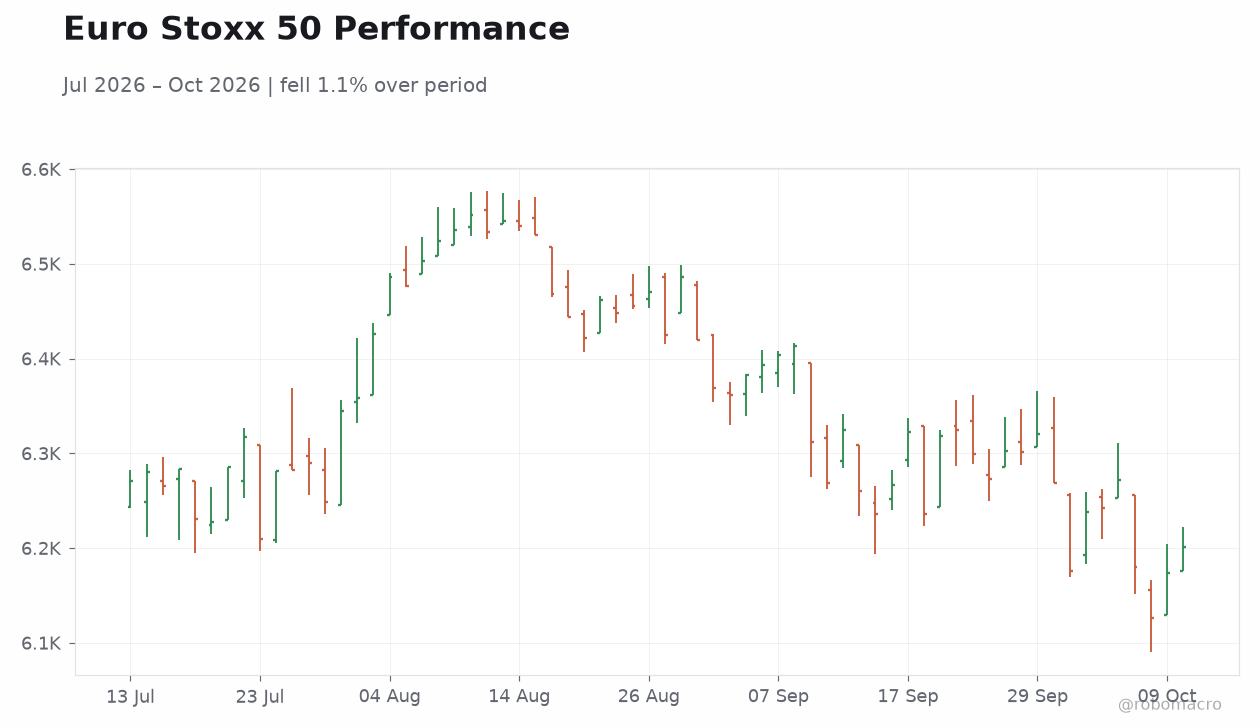
| Euro Stoxx 50 | 6,201.21 | +0.45% |
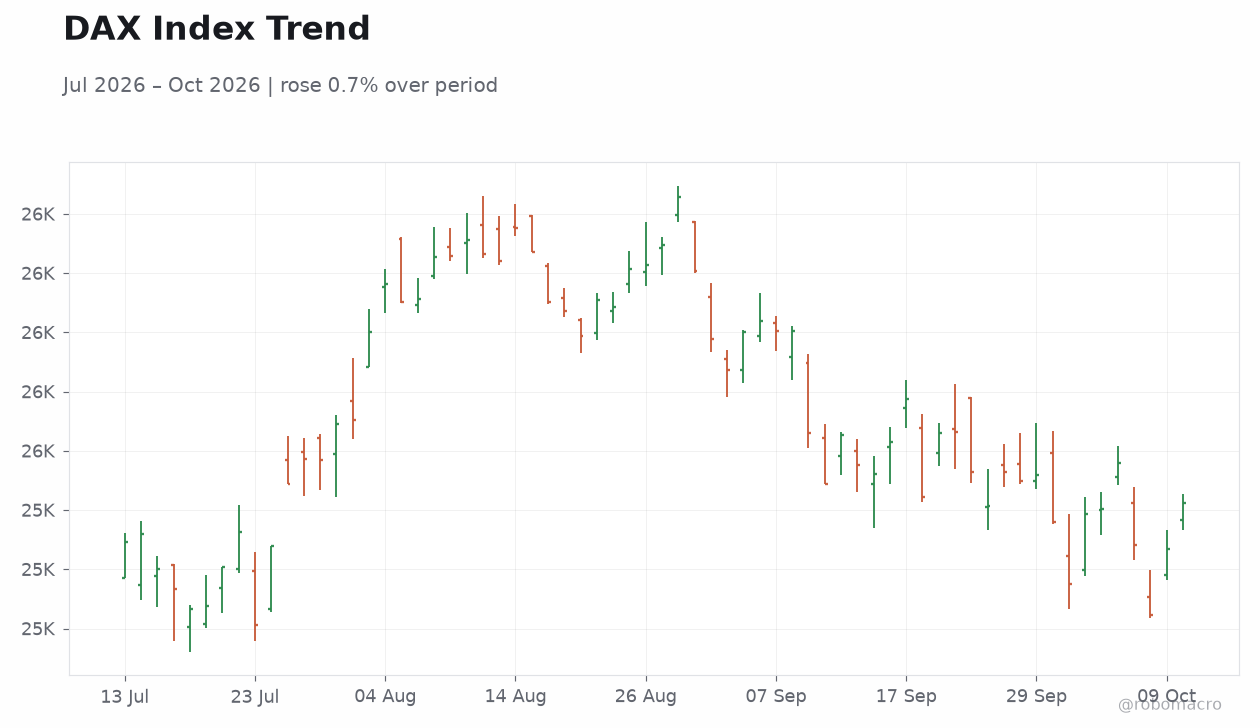
| DAX | 25,087.27 | +1.13% |
| CAC 40 | 7,832.88 | +0.38% |
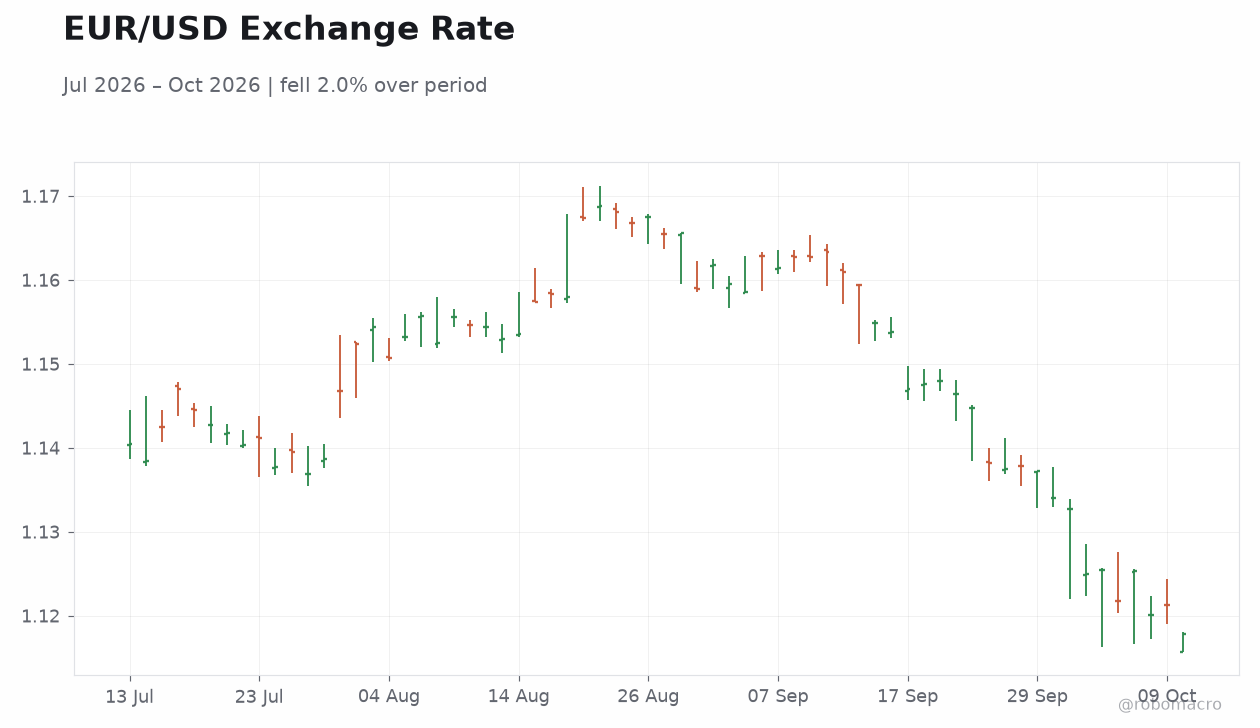
| EUR/USD | 1.12 | -0.34% |
| EUR/GBP | 0.85 | -0.01% |
| EUR/JPY | 177.23 | +0.10% |
| Gold | 4,218.60 | +0.67% |
| Brent Crude | 105.47 | -1.11% |
| Bitcoin | 83,296.24 | -0.46% |
| German 2Y Bund | 3.09% | +2 bp |
| German 10Y Bund | 3.49% | -1 bp |
Prior Economic Events
| Data | Prior | Cons | Actual |
|---|---|---|---|
| No events available | |||
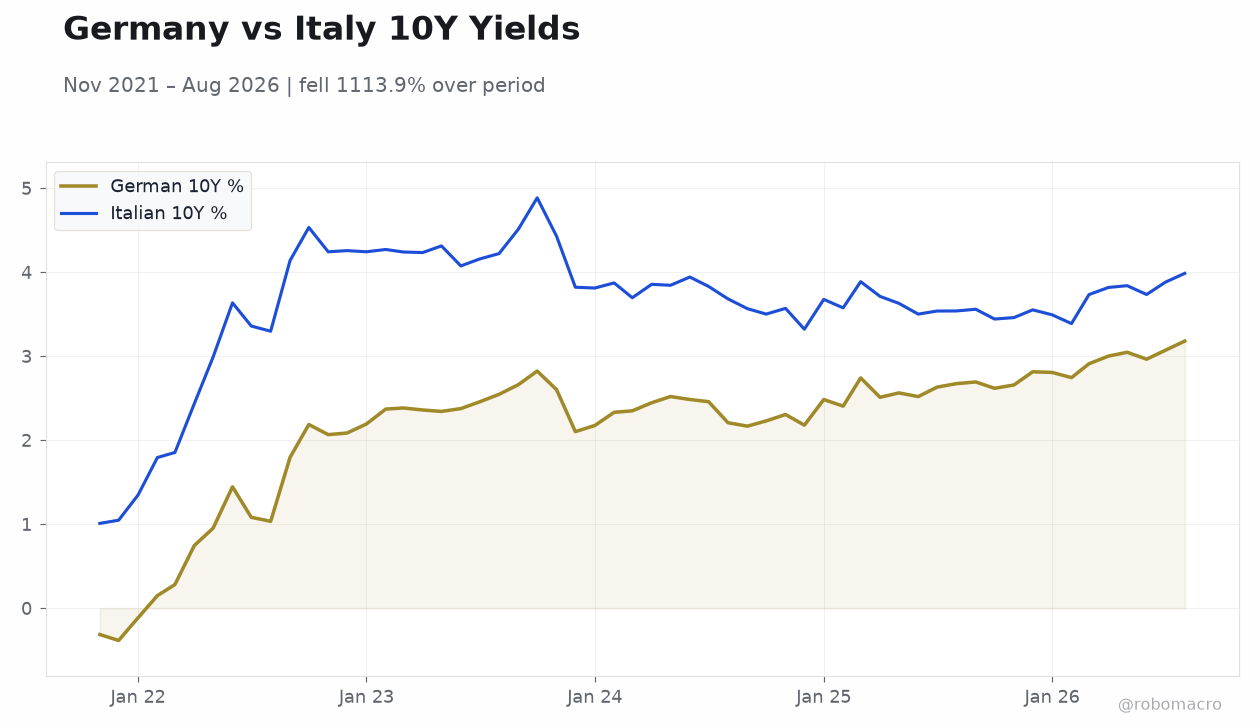 Germany vs Italy 10Y Yields | Type: macro_line | German 10Y %: 3.18 (2026-08-01) | Range: -0.3843–3.18 | Trend(6pt): -0.3136,2.193,2.349,2.563,3.07,3.18 | Italian 10Y %: 3.986 (2026-08-01) | Range: 1.01–4.885 | Trend(6pt): 1.01,4.243,3.696,3.629,3.881,3.986
Today's Economic Events
| Data | Prior | Cons | Time |
|---|---|---|---|
| Wholesale Prices Month-over-Month | 0.90 | 0.70 | 02:00 |
| Wholesale Prices Year-over-Year | 6.80 | - | 02:00 |
| Headline Unemployment Rate | 4 | - | 00:30 |
| Trade Balance | 8,240m | 7,500m | 06:00 |
- Eurozone equities advanced, with the DAX up 1.13% to 25,087.27, while EUR/USD slipped 0.34% to 1.12 on dollar strength and French fiscal concerns.
- German 2-year Bund yields rose 2 bp to 3.09% while the 10-year eased 1 bp to 3.49%, flattening the curve ahead of German wholesale price data.
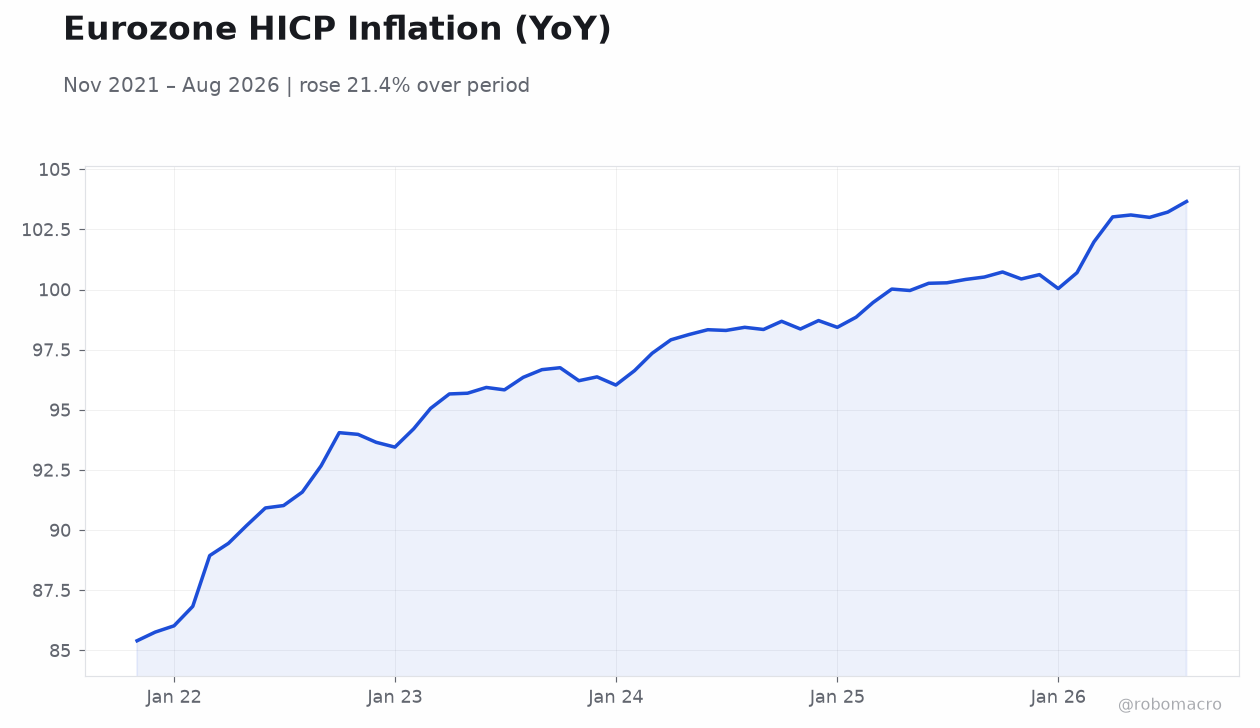
- ECB Watch: Officials signalled no imminent intervention in the French bond selloff, with the deposit rate at 2.50% and September CPI at 3.80% keeping policy on hold.
Yesterday's Recap
Eurozone equities closed higher on Monday, with the Euro Stoxx 50 gaining 0.45% to 6,201.21 and the DAX outperforming at 1.13% to 25,087.27, while the CAC 40 lagged, up just 0.38% to 7,832.88. German fixed income was mixed: the 2-year Bund yield rose 2 bp to 3.09%, while the 10-year eased 1 bp to 3.49%, a modest bull-flattening that suggests investors see the growth picture softening even as near-term inflation risks linger. In FX, EUR/USD fell 0.34% to 1.12, pressured by dollar strength and persistent concerns over France's fiscal trajectory, though the euro held above the 1.1150 level.
EUR/GBP was essentially flat at 0.85, while EUR/JPY edged up 0.10% to 177.23. Commodities diverged: Brent crude fell 1.11% to $105.47, offering a modest tailwind for energy-importing members such as Germany and Italy, while gold rose 0.67% to $4,218.60 on safe-haven demand. Bitcoin slipped 0.46% to $83,296.
The calendar was quiet on the data front, leaving price action to be driven by fiscal headlines and positioning ahead of this week's inflation prints.
The Day Ahead
Wednesday brings German wholesale price inflation for September, with the month-over-month consensus at 0.7% versus the prior 0.9% print — a deceleration that would reinforce the disinflation narrative at the producer level. The year-over-year comparison, which ran at 6.8% previously, will be scrutinised for signs of pipeline pressure easing. Thursday sees the Netherlands release its headline unemployment rate, with the prior reading at 4.0%; a stable print would underscore the resilience of the Dutch labour market.
Friday closes the week with Italy's trade balance, where the consensus of €7.5 billion sits below the prior €8.24 billion surplus. With no eurozone aggregate data scheduled, attention will remain on member-state prints and ECB commentary.
Other Economic Notes
The EU's capital markets reform package moved forward after frantic behind-the-scenes talks produced a political agreement, a milestone for the long-stalled Savings and Investments Union agenda. ↓ p.2