Eurozone Macro Daily(Beta Mode)
Bunds Rally as Risk Assets Slide
Market Snapshot
| Asset | Level | Change |
|---|---|---|
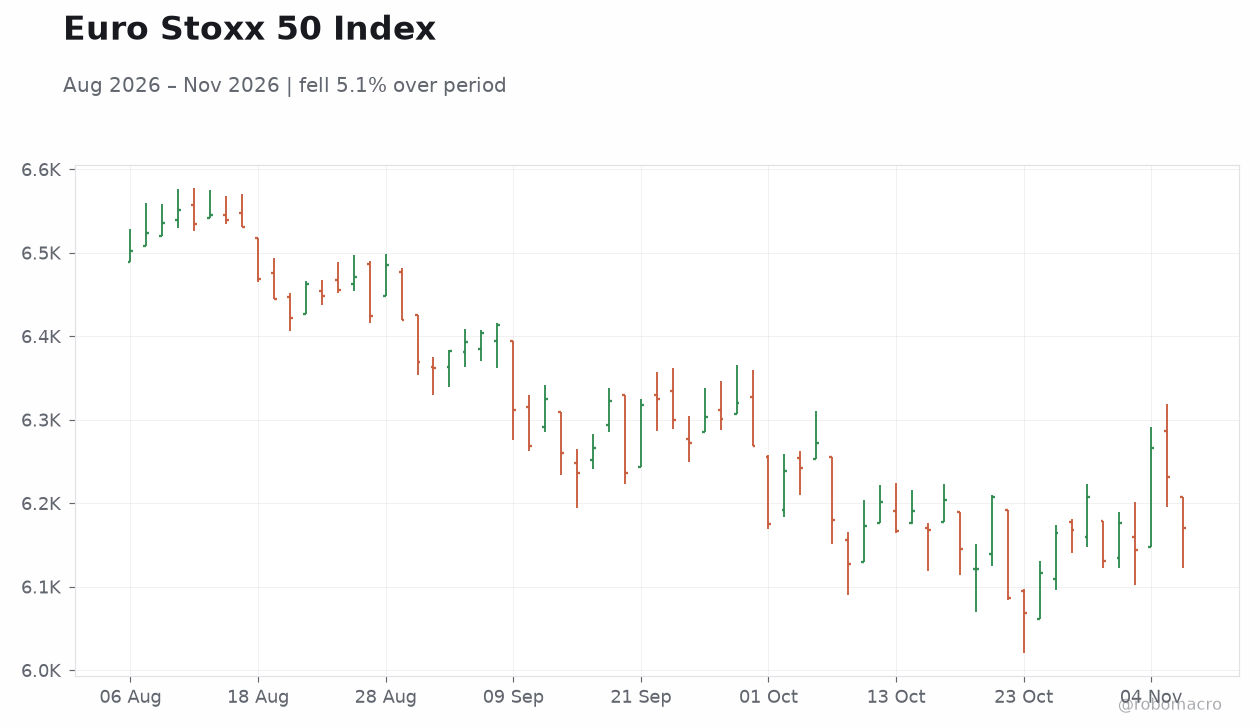
| Euro Stoxx 50 | 6,170.49 | -0.98% |
| DAX | 25,820.36 | -1.92% |
| CAC 40 | 8,139.00 | -0.81% |
| EUR/USD | 1.12 | -0.59% |
| EUR/GBP | 0.83 | -0.03% |
| EUR/JPY | 176.60 | -0.13% |
| Gold | 4,074.90 | -0.94% |
| Brent Crude | 98.32 | +0.03% |
| Bitcoin | 74,662.85 | -1.43% |
| German 2Y Bund | 2.95% | -6 bp |
| German 10Y Bund | 3.29% | -4 bp |
Prior Economic Events
| Data | Prior | Cons | Actual |
|---|---|---|---|
| No events available | |||
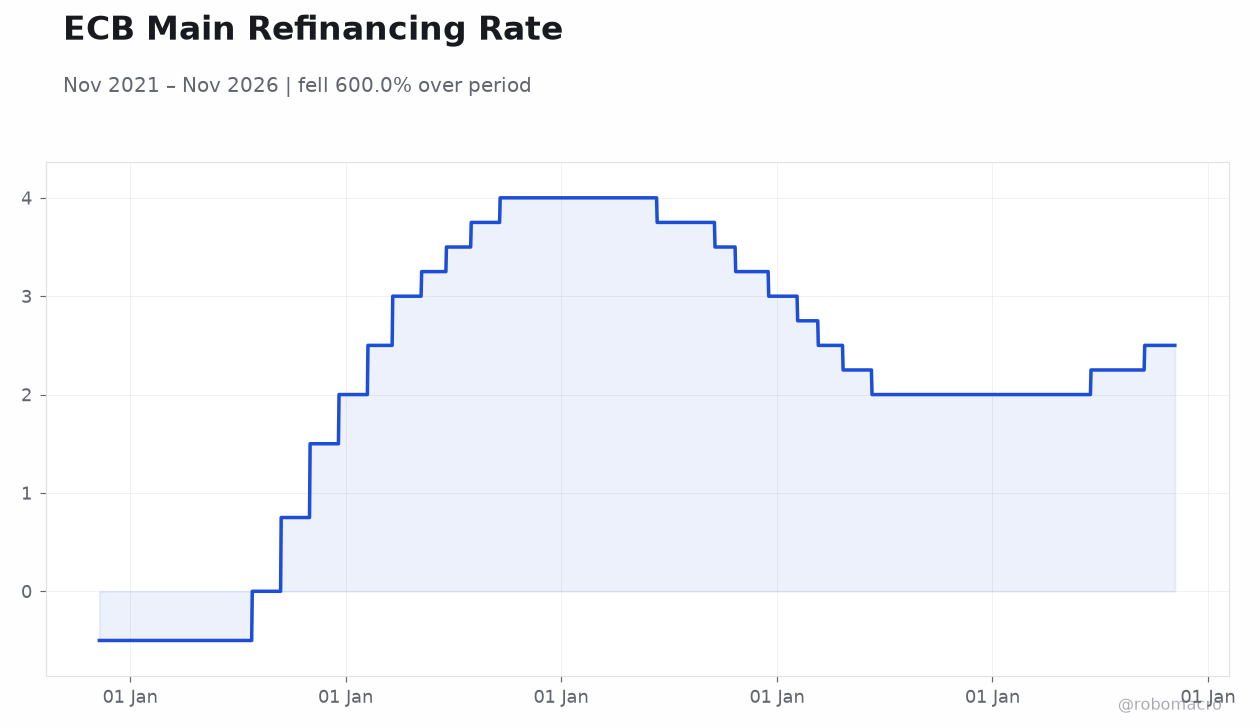
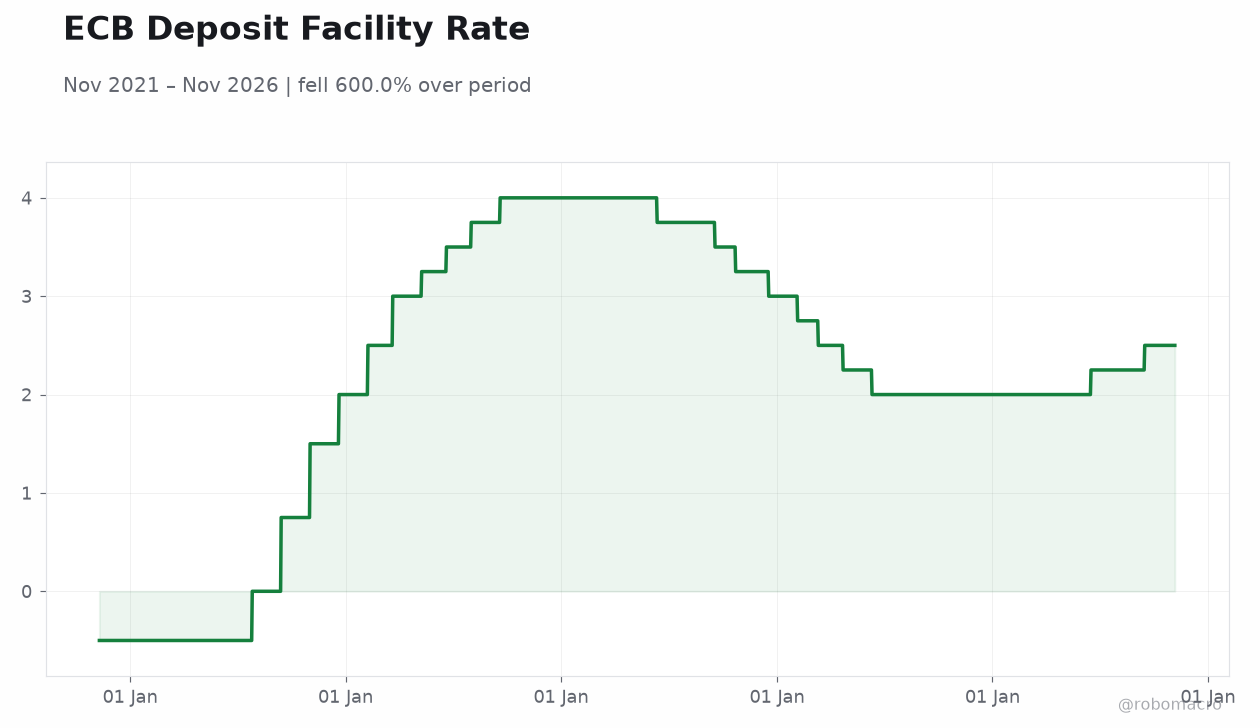
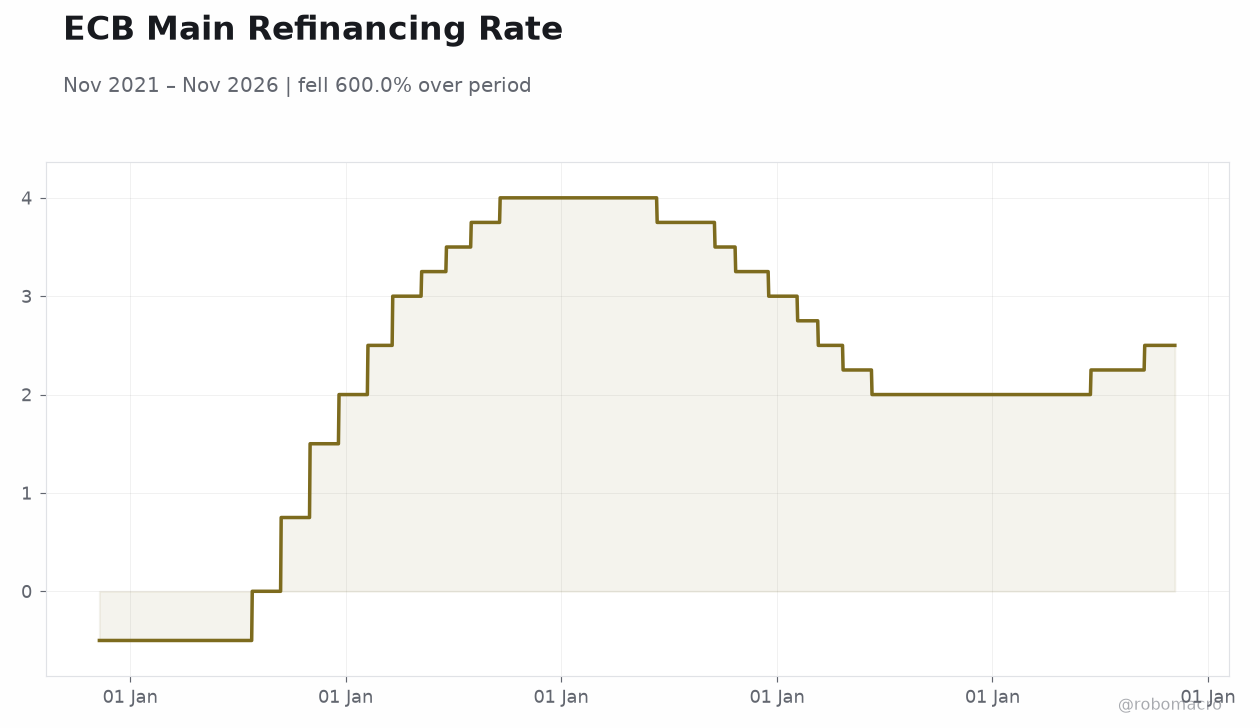
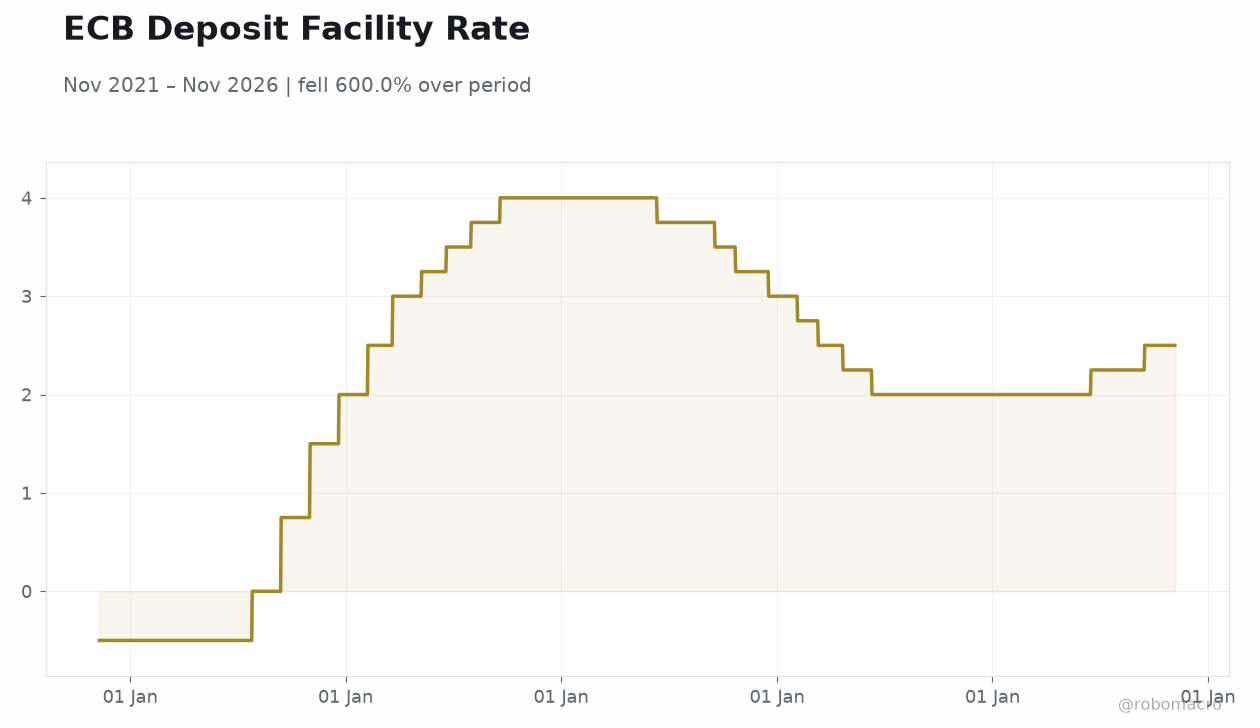 ECB Deposit Facility Rate | Type: macro_line | ECB Deposit Facility Rate: 2.5 (2026-11-06) | Range: -0.5–4 | Trend(5pt): -0.5,2.5,4,2,2.5
Today's Economic Events
| Data | Prior | Cons | Time |
|---|---|---|---|
| Trade Balance | 19,500m | 19,400m | 02:00 |
| Exports Month-over-Month | -0.80 | - | 02:00 |
| Tuesday (2026-11-10) | |||
| Headline Unemployment Rate | 8.30 | - | 01:30 |
- German industrial production rose unexpectedly in September, offering a rare upside surprise for the bloc's largest economy.
- Bunds rallied, with the 2-year yield easing 6 bp to 2.95% and the 10-year down 4 bp to 3.29%, as investors sought safety.
- Eurozone CPI stands at 4.00% as of October, complicating the ECB's holding pattern at a 2.50% deposit rate.
Yesterday's Recap
Friday's session was defined by a broad risk-off move across Eurozone assets. The Euro Stoxx 50 fell 0.98% to 6,170.49, the DAX dropped 1.92% to 25,820.36, and the CAC 40 lost 0.81% to 8,139.00. German industrial production jumped unexpectedly in September, a rare bright spot for a manufacturing sector squeezed by high energy costs.
The euro weakened against the dollar, with EUR/USD down 0.59% to 1.12, while EUR/GBP slipped 0.03% to 0.83. Safe-haven demand drove Bunds higher, with the 2-year yield easing 6 bp to 2.95% and the 10-year down 4 bp to 3.29%. Gold fell 0.94% to $4,074.90 despite the risk-off tone, while Brent crude was essentially flat at $98.32.
The Day Ahead
Germany's trade balance for September is due at 02:00 ET, with consensus at €19.4bn versus a previous €19.5bn, alongside exports month-over-month data. France's headline unemployment rate follows on Tuesday at 01:30 ET, with the prior reading at 8.3%. The calendar is otherwise light, leaving markets to digest Friday's selloff and the implications of the 4.00% CPI reading.
Attention will increasingly turn toward the ECB's December 17 meeting, the final decision of the year. With inflation running well above target, the scope for near-term easing remains constrained.
Other Economic Notes
The Eurozone faces a difficult combination of sticky inflation at 4.00% and soft growth momentum, with unemployment at 6.50% offering limited comfort. Germany's unexpected industrial production gain suggests some resilience, but the sector remains vulnerable to energy price shocks. France's fiscal trajectory is drawing scrutiny, with commentary increasingly framing the debt path as a potential systemic risk for the bloc.
Political discontent is spreading, with student and cost-of-living protests widening across EU member states. These pressures complicate fiscal coordination just as the ECB's leadership transition approaches.
Global Macro News
US Treasury yields rose on robust labor data, with markets now awaiting next week's inflation reports. ↓ p.2