Eurozone Macro Daily(Beta Mode)
ZEW Surges, Stocks Fall as ECB Warns France
Market Snapshot
| Asset | Level | Change |
|---|---|---|
| Euro Stoxx 50 | 6,154.39 | -0.93% |
| DAX | 25,736.24 | -1.19% |
| CAC 40 | 8,146.83 | -0.85% |
| EUR/USD | 1.10 | -0.24% |
| EUR/GBP | 0.83 | +0.28% |
| EUR/JPY | 174.95 | -0.22% |
| Gold | 3,741.90 | -3.16% |
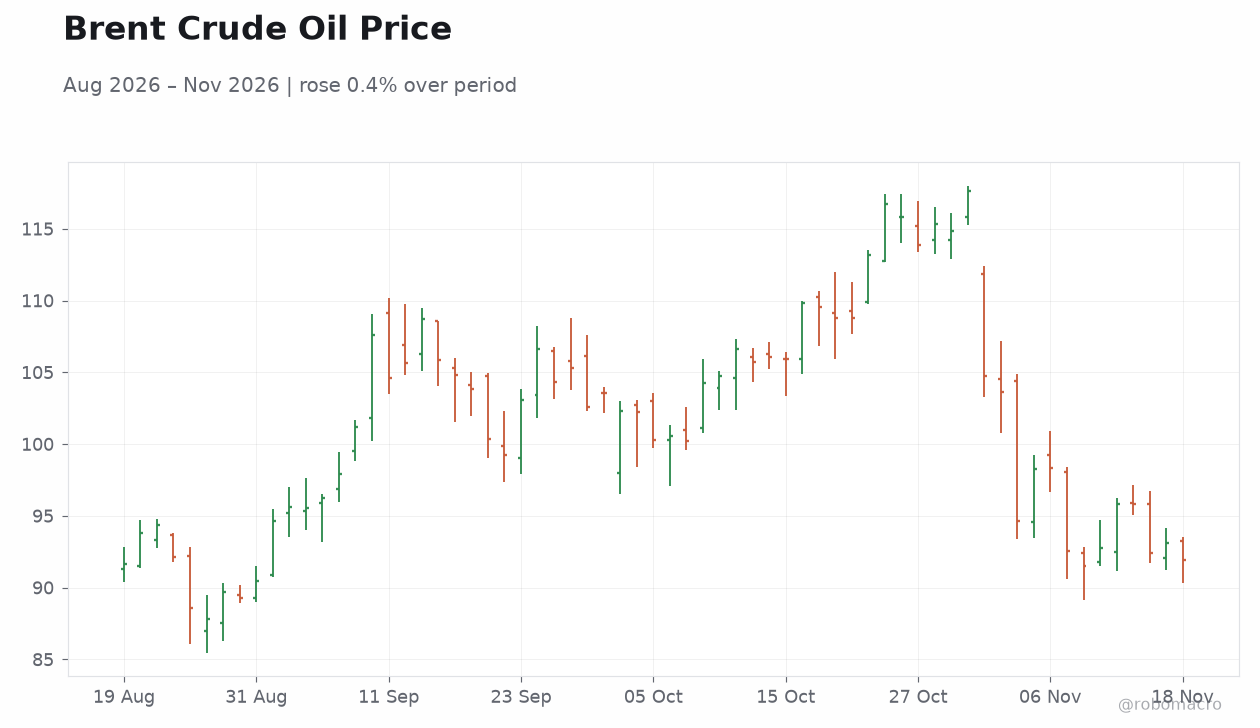
| Brent Crude | 91.95 | -1.28% |
| Bitcoin | 63,469.00 | -2.20% |
| German 2Y Bund | 3.12% | +1 bp |
| German 10Y Bund | 3.43% | +1 bp |
Prior Economic Events
| Data | Prior | Cons | Actual |
|---|---|---|---|
| Trade Balance | -5,980m | - | -7,820m |
| ZEW Economic Sentiment Index | 28.10 | 29 | 35.60 |
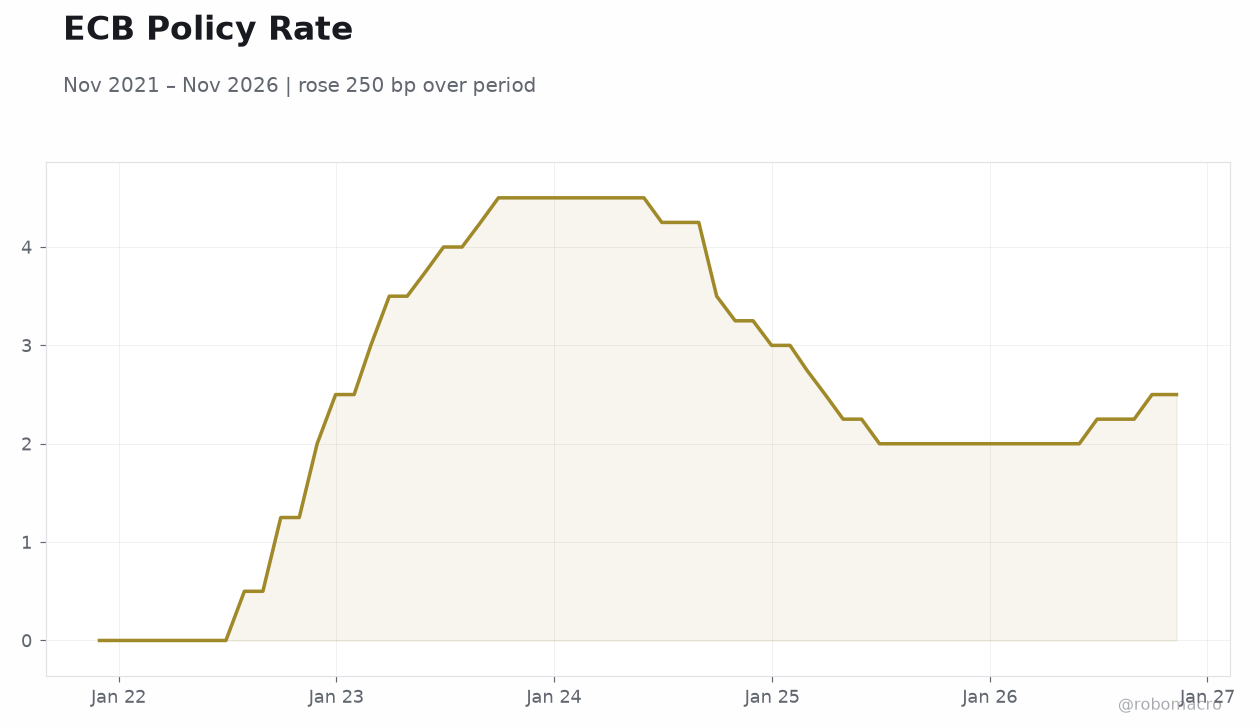 ECB Policy Rate | Type: macro_line | Policy rate (%): 2.5 (2026-11-10) | Range: 0–4.5 | Trend(5pt): 0,3,4.5,2,2.5
Today's Economic Events
| Data | Prior | Cons | Time |
|---|---|---|---|
| Headline Unemployment Rate | 4 | - | 00:30 |
| Friday (2026-11-20) | |||
| Consumer Confidence Index | -34 | - | 00:30 |
| Producer Price Index Year-over-Year | 6.70 | 7.20 | 02:00 |
| Business Confidence Index | 105 | - | 02:45 |
- German ZEW economic sentiment jumped to 35.6 in November, well above the 29.0 consensus and prior 28.1, signaling improving investor expectations for Europe's largest economy.
- Risk assets sold off broadly: Euro Stoxx 50 fell 0.93%, DAX dropped 1.19%, and CAC 40 lost 0.85%, while EUR/USD slipped 0.24% to 1.10.
- ECB officials reiterated that market pressure should help discipline France over its elevated debt trajectory, with the central bank facing a potential stand-off with Paris.
Yesterday's Recap
German ZEW economic sentiment for November printed at 35.6, comfortably beating the 29.0 consensus and rising sharply from 28.1 in October — the strongest signal in months that investors expect a German cyclical recovery. Spain's trade balance deteriorated to a deficit of €7.82 billion from €5.98 billion previously, reflecting weaker export momentum. Despite the constructive German survey, Eurozone equities sold off hard: the Euro Stoxx 50 fell 0.93%, the DAX dropped 1.19%, and the CAC 40 lost 0.85%, with the DAX underperforming on renewed growth concerns.
EUR/USD declined 0.24% to 1.10, while EUR/GBP gained 0.28% to 0.83. German Bunds were marginally softer, with the 2-year yield up 1 bp to 3.12% and the 10-year up 1 bp to 3.43%, leaving the curve steep at 31 bp. Gold plunged 3.16% to $3,741.90/oz and Brent crude fell 1.28% to $91.95/bbl, weighing on commodity-linked sentiment.
The Day Ahead
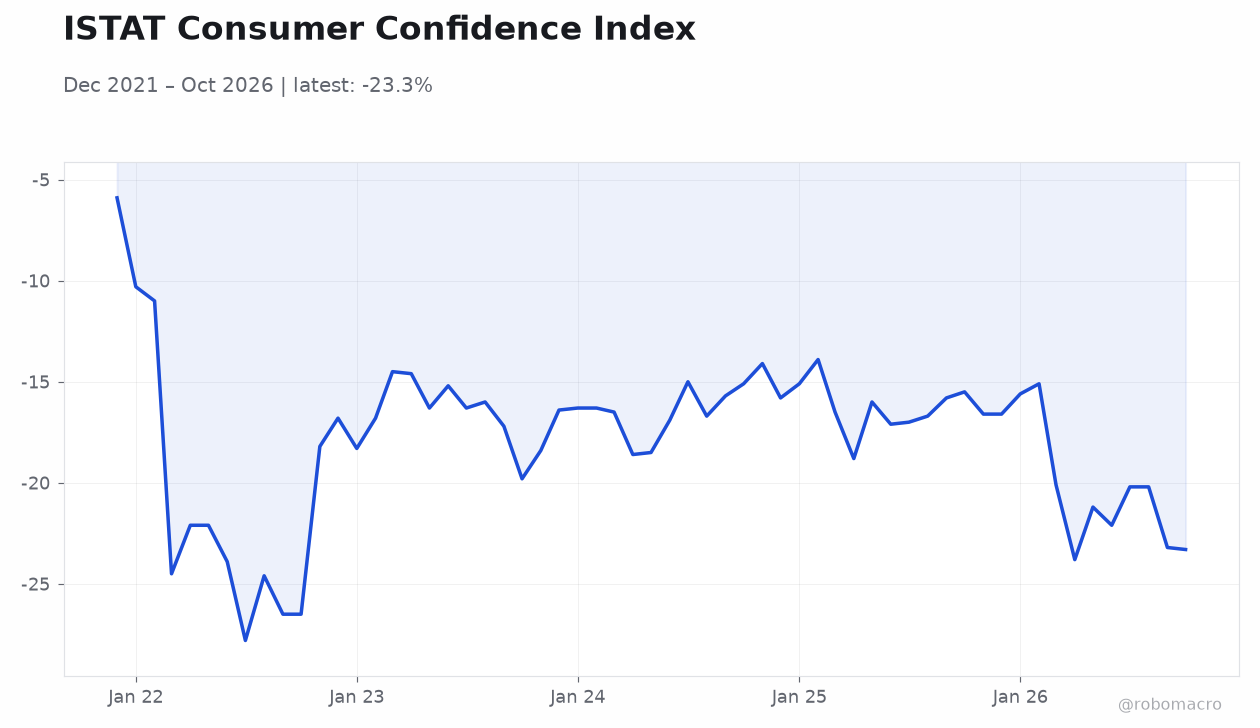
The Dutch headline unemployment rate is due at 00:30 ET, with the prior reading at 4.0% and no consensus published. Friday's slate brings the Netherlands consumer confidence index (prior -34.0), German producer price index for October (consensus 7.2% y/y versus 6.7% prior), and French business confidence (prior 105). The German PPI print will be watched closely for pipeline inflation pressure given elevated energy costs.
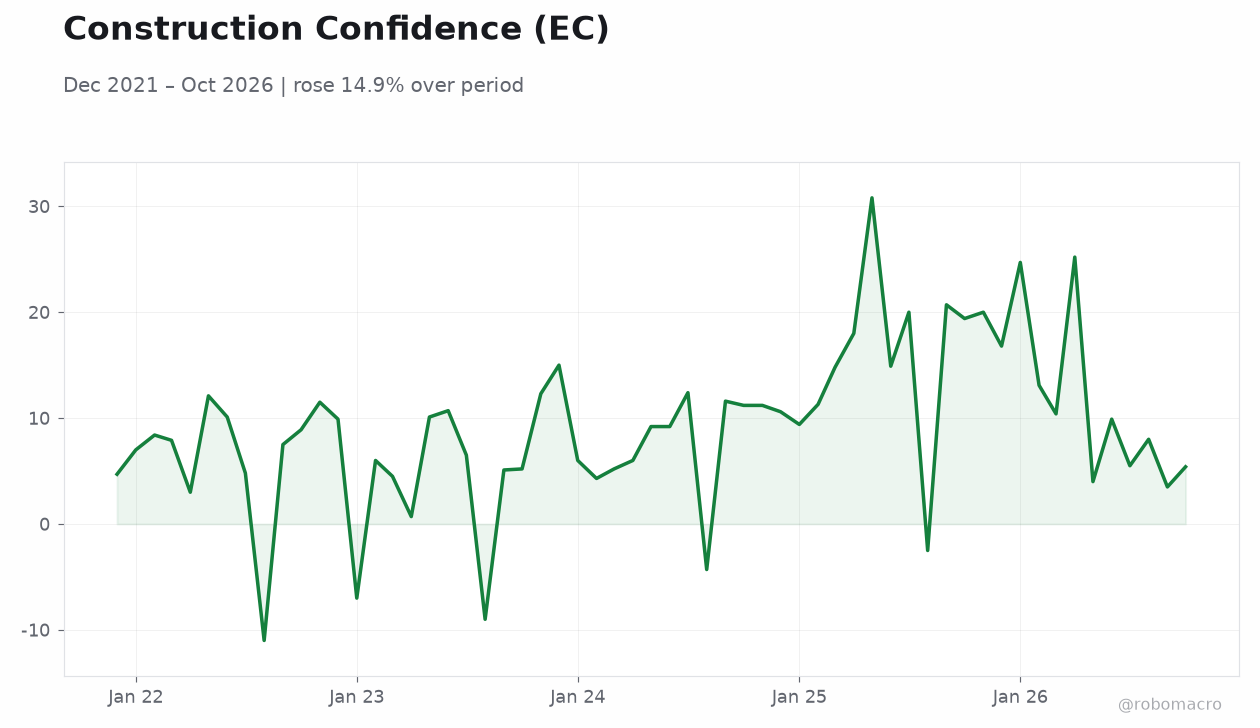
French business confidence will offer an early read on whether political and fiscal uncertainty is denting corporate sentiment. With no tier-one Eurozone releases today, markets will likely trade on global risk appetite and ECB commentary.
Other Economic Notes
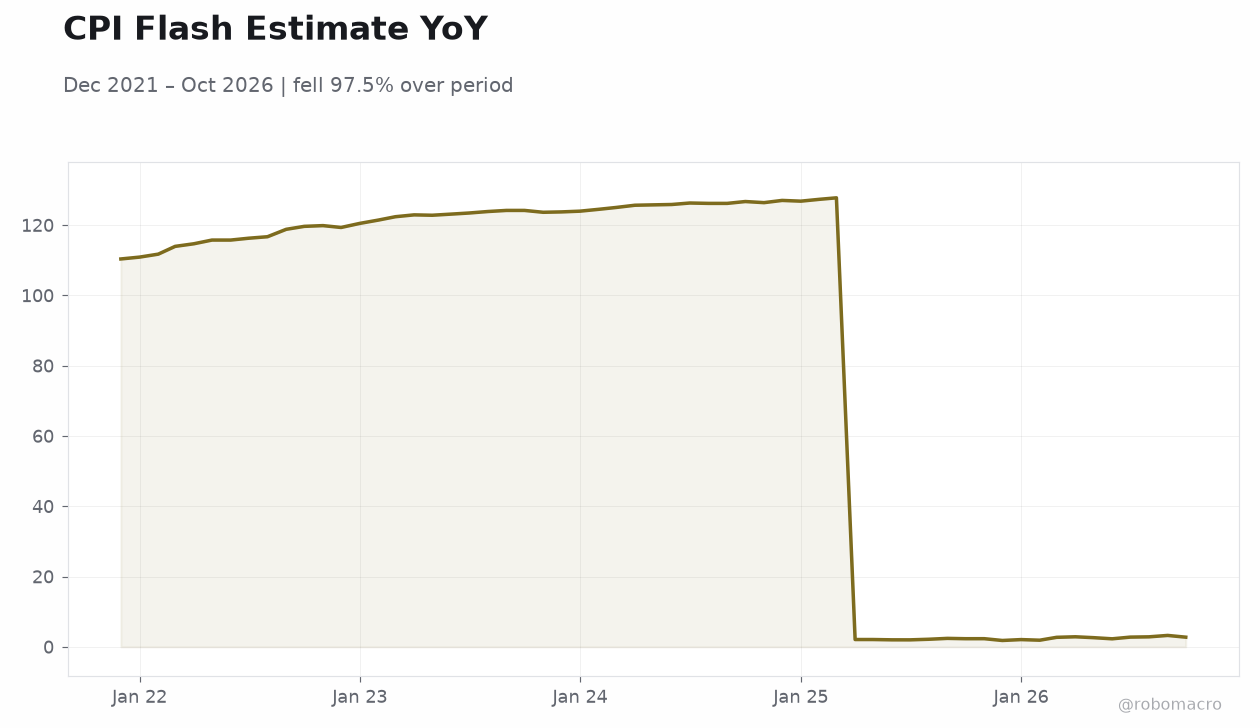
Eurozone CPI stands at 4.00% y/y as of October, with high energy prices cited as the primary driver of the elevated reading. The Commission's growth projections point to 1.4% for the EU, with France singled out as a laggard relative to the bloc. Eurozone unemployment remains at 6.50% as of September, underscoring a still-resilient labor market despite weak activity.
↓ p.2